Subgraph retrieval is the process of extracting a relevant, connected subgraph from a larger knowledge graph in response to a query. Unlike retrieving isolated text chunks or single facts, this technique preserves the local network of entities and their relationships, providing the language model with rich, structured context. This is a fundamental component of Graph-Based RAG architectures, designed to enhance factual accuracy and reduce hallucinations by grounding generation in verifiable, interconnected data.

Glossary
Subgraph Retrieval
Subgraph retrieval is the process of extracting a relevant, connected subgraph from a larger knowledge graph in response to a query, preserving the local network of entities and relationships for context-aware generation.
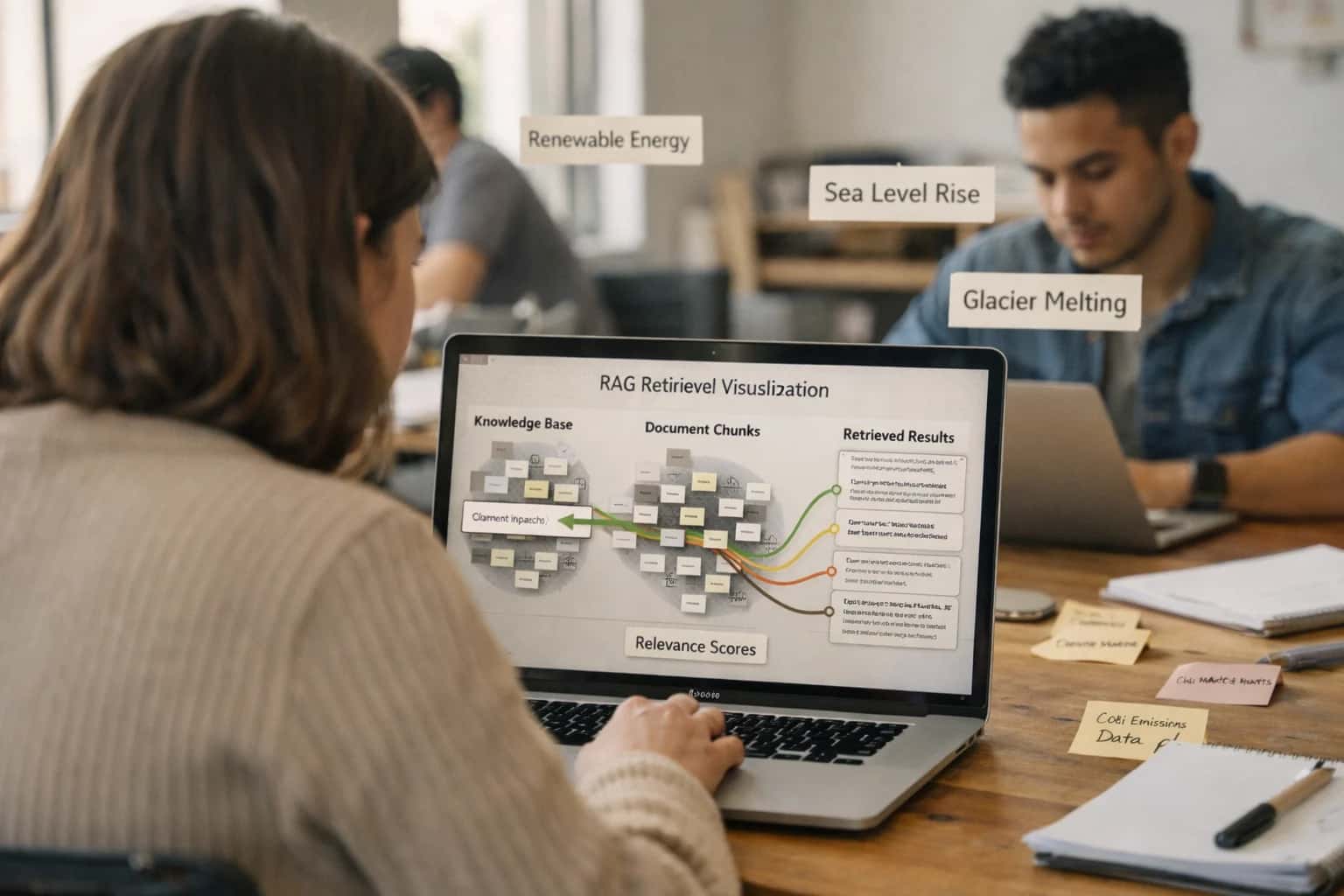
GRAPH-BASED RAG
What is Subgraph Retrieval?
Subgraph retrieval is the core operation in Graph-Based Retrieval-Augmented Generation (RAG), where a relevant, connected subgraph is extracted from a larger knowledge graph to provide deterministic factual grounding for a language model.
The process typically involves parsing a natural language query, identifying key entities, and then executing a graph traversal or pattern-matching operation to fetch not only those entities but also their neighboring nodes and the edges connecting them. This retrieved subgraph, which maintains the original graph's semantics and topology, is then formatted and injected into the model's context window. This method enables multi-hop reasoning by providing the chains of relationships necessary for answering complex questions that require connecting disparate facts.
GRAPH-BASED RAG
Key Characteristics of Subgraph Retrieval
Subgraph retrieval is the process of extracting a relevant, connected subgraph from a larger knowledge graph in response to a query. Its defining characteristics center on preserving the local network of entities and relationships to provide deterministic, context-aware grounding for a language model.
01
Preservation of Local Structure
Unlike retrieving isolated facts or text chunks, subgraph retrieval extracts a connected component of nodes and edges. This preserves the local network context around a queried entity, allowing a language model to understand relationships, hierarchies, and indirect connections. For example, retrieving a subgraph for "Marie Curie" would include nodes for her Nobel Prizes, her discoveries (Polonium, Radium), and her collaborators, along with the edges defining these relationships.
02
Deterministic Factual Grounding
Every fact provided to the language model is explicitly linked to a verifiable source within the knowledge graph. This creates a deterministic chain of evidence from the user's query to the model's output. Key techniques enabling this include:
- Source Node Tracing: Recording the specific graph nodes used for each generated claim.
- Graph-Based Verification: Using logical constraints in the graph to check output plausibility. This contrasts with vector search over text, where the provenance of individual facts can be ambiguous.
03
Multi-Hop Reasoning Capability
The process can traverse multiple relationships (edges) to gather information from entities not directly connected to the initial query. This enables complex, multi-step reasoning. For instance, to answer "What awards have been won by researchers who worked with Enrico Fermi?", the retrieval must:
- Find researchers connected to Fermi via a
collaboratedWithedge. - Hop from those researcher nodes to award nodes via a
wonAwardedge. The retrieved subgraph inherently contains this multi-hop path, providing the necessary context for the language model to synthesize an answer.
04
Schema-Guided Semantic Validity
Retrieval is constrained and directed by the knowledge graph's ontology or schema. This ensures semantically valid results by respecting defined:
- Class Hierarchies (e.g.,
Scientistis a subclass ofPerson). - Relationship Domains and Ranges (e.g.,
wonAwarddomain isPerson, range isAward). A query for "companies founded in 1998" will only retrieve entities of typeCompanywith afoundedInproperty, ignoring unrelated nodes that might be textually similar in a vector space.
05
Integration with Hybrid Search
Modern implementations often combine subgraph retrieval with other search paradigms in a hybrid architecture to balance precision and recall. Common patterns include:
- Vector-Graph Hybrid: Using vector similarity to find candidate entities, then expanding to their local subgraphs.
- SPARQL-Enhanced Retrieval: Converting natural language to a precise SPARQL query for structured retrieval, then augmenting the result set with an embedding-based similarity search. This leverages both the semantic understanding of vectors and the structural precision of graph patterns.
06
Explicit Relationship Context
The retrieved data includes not just entity attributes, but the labeled relationships between them. This provides critical context that is often lost in pure text retrieval. For a query about a merger, the subgraph delivers explicit acquired, mergedWith, or subsidiaryOf edges with their properties (date, stake), rather than forcing the language model to infer the relationship type from unstructured prose. This is fundamental for complex relationship queries and generating accurate, structured outputs.
GRAPH-BASED RAG
How Does Subgraph Retrieval Work?
Subgraph retrieval is the core mechanism in Graph-Based RAG for extracting precise, interconnected facts from a knowledge graph to ground language model generation.
Subgraph retrieval is the process of extracting a relevant, connected subgraph from a larger knowledge graph in response to a query. Unlike retrieving isolated text chunks, it preserves the local network of entities, relationships, and attributes, providing the language model with structured, deterministic context. This is typically executed via a graph query language like SPARQL or Cypher, or through graph-aware embedding models that score and retrieve connected node neighborhoods.
The retrieved subgraph is then formatted—often as a set of triples or a natural language summary—and injected into the model's prompt. This graph context injection provides factual grounding, enabling the model to generate answers that are consistent with the verified relationships in the source graph. The process ensures deterministic grounding and supports multi-hop reasoning by following paths through the graph structure.
SUBGRAPH RETRIEVAL
Use Cases and Examples
Subgraph retrieval is the core operation for extracting context-rich, interconnected facts from a knowledge graph. These examples illustrate its practical applications in enterprise AI systems.
01
Multi-Hop Question Answering
Subgraph retrieval enables complex reasoning by traversing multiple relationships. For example, to answer "What projects did the manager of the Paris office work on?", the system retrieves a connected subgraph linking:
- The Paris office entity.
- Its manager relationship to a person.
- That person's worked-on relationship to specific projects. This preserves the logical chain of evidence, allowing a language model to synthesize a coherent answer from the retrieved paths.
02
Context-Aware Customer Support
In a customer service knowledge graph, a query about a "billing error on invoice INV-789" triggers retrieval of a subgraph containing:
- The Invoice entity and its status.
- The linked Customer account details.
- Related prior Support Tickets.
- The applicable Refund Policy document node. This provides the support agent (or AI assistant) with a complete, interconnected context of the customer's situation, far surpassing a simple document search.
03
Drug Discovery & Biomedical Research
Researchers query a biomedical knowledge graph to "find pathways linking Gene X to Disease Y." Subgraph retrieval returns a network of:
- Gene X and its protein products.
- Biological pathways those proteins participate in.
- Other genes/proteins in those pathways.
- Known disease associations for those entities. This connected subgraph reveals non-obvious therapeutic targets and mechanisms, accelerating hypothesis generation.
04
Financial Fraud Investigation
An alert on a suspicious transaction initiates subgraph retrieval to build an investigation timeline. The retrieved subgraph connects:
- The Transaction entity, amount, and timestamp.
- The involved Account nodes and their holders.
- Beneficial ownership links through corporate structures.
- Past transactions forming a network pattern. Analysts see not just a single event, but the surrounding network of entities and relationships crucial for identifying complex fraud schemes.
05
Supply Chain Risk Analysis
A query to "assess risk for supplier ABC" retrieves a subgraph exposing multi-tier dependencies:
- Supplier ABC node and its location.
- Parts it supplies and the Products they go into.
- Alternative suppliers for those same parts.
- Recent Disruption events (e.g., weather, geopolitical) in its region. This holistic view enables proactive mitigation by understanding the cascading impact of a potential supplier failure.
06
Dynamic Content Personalization
For a user interested in "sustainable architecture," a media knowledge graph retrieves a personalized subgraph:
- Architectural styles tagged as sustainable.
- Notable architects specializing in them.
- Example buildings with images and articles.
- Related concepts like green materials and certifications. This structured bundle of entities feeds a recommendation engine to generate a coherent, interconnected content stream, not just a list of unrelated articles.
RETRIEVAL ARCHITECTURE COMPARISON
Subgraph Retrieval vs. Other Retrieval Methods
A technical comparison of subgraph retrieval against other common methods used in Retrieval-Augmented Generation (RAG) systems, highlighting core mechanisms, data structures, and trade-offs for deterministic factual grounding.
| Feature / Mechanism | Subgraph Retrieval | Vector Semantic Search | Keyword / Sparse Retrieval | Hybrid (Vector + Keyword) |
|---|---|---|---|---|
Primary Data Structure | Knowledge Graph (Nodes & Edges) | Vector Database (Embeddings) | Inverted Index (Term Frequencies) | Vector DB + Inverted Index |
Retrieval Unit | Connected Subgraph (Entities & Relationships) | Text Chunk / Document | Keyword / Term | Text Chunk & Keywords |
Preserves Structural Context | ||||
Enables Multi-Hop Reasoning | ||||
Query Mechanism | Graph Pattern Matching / Traversal | Cosine Similarity / ANN Search | Lexical Overlap (e.g., BM25) | Combined Score Fusion |
Deterministic Fact Grounding | ||||
Handles Relationship Queries | ||||
Requires Schema/Ontology | ||||
Typical Latency | 10-100 ms (indexed) | < 10 ms | < 5 ms | 10-50 ms |
Hallucination Mitigation Strength | High (structured facts) | Medium (semantic context) | Low (lexical match) | Medium-High |
SUBGRAPH RETRIEVAL
Frequently Asked Questions
Subgraph retrieval is a core technique in Graph-Based RAG, focusing on extracting relevant, connected portions of a knowledge graph. These FAQs address its mechanisms, benefits, and implementation for AI architects and ML engineers.
Subgraph retrieval is the process of extracting a relevant, connected subgraph from a larger knowledge graph in response to a query, preserving the local network of entities and relationships for context-aware generation. It works by first identifying seed entities relevant to the query, then traversing the graph's edges to gather neighboring nodes and relationships up to a defined hop distance. This creates a cohesive, structured context of facts, unlike retrieving isolated text chunks. The retrieved subgraph is then formatted (e.g., as triples or naturalized text) and injected into the language model's prompt, providing deterministic factual grounding for generation.
Key steps include:
- Entity Linking: Mapping query terms to nodes in the knowledge graph.
- Graph Traversal: Executing a multi-hop retrieval pattern from the seed nodes.
- Subgraph Formation: Aggregating traversed nodes and edges into a connected structure.
- Context Injection: Serializing the subgraph for the language model.
Enabling Efficiency, Speed & Accuracy
Intelligent Analysis, Decision & Execution
We build AI systems for teams that need search across company data, workflow automation across tools, or AI features inside products and internal software.
Talk to Us
Search across company data
Give teams answers from docs, tickets, runbooks, and product data with sources and permissions.
Useful when people spend too long searching or get different answers from different systems.
Enterprise searchRAGPermissions
Read more
Automate internal workflows
Use AI to route work, draft outputs, trigger actions, and keep approvals and logs in place.
Useful when repetitive work moves across multiple tools and teams.
AI agentsWorkflow automationGovernance
Read more
Add AI to products and internal tools
Build assistants, guided actions, or decision support into the software your team or customers already use.
Useful when AI needs to be part of the product, not a separate tool.
AI integrationDecision supportModel routing
Read more
About the author
Prasad Kumkar
CEO & MD, Inference Systems
Prasad Kumkar is the CEO & MD of Inference Systems and writes about AI systems architecture, LLM infrastructure, model serving, evaluation, and production deployment. Over 5+ years, he has worked across computer vision models, L5 autonomous vehicle systems, and LLM research, with a focus on taking complex AI ideas into real-world engineering systems.
His work and writing cover AI systems, large language models, AI agents, multimodal systems, autonomous systems, inference optimization, RAG, evaluation, and production AI engineering.
LinkedIn
Limited slotsGet a Free AI Consultation
Partnered with leading AI, data, and software stack.





How We Work
Custom AI workflows for your Business
One-fit-all AI don't work for modern businesses. At Inferensys, we aim to understand your business & custom requirements; which we use to define most efficient agentic workflows, the data, and the tools for your business.
01
Review the use case
We understand the task, the users, and where AI can actually help.
Read more02
Pick the right approach
We define what needs search, automation, or product integration.
Read more03
Build the first useful version
We implement the part that proves the value first.
Read more04
Improve from there
We add the checks and visibility needed to keep it useful.
Read moreThe first call is a practical review of your use case and the right next step.
Talk to Us