Graph query optimization for RAG comprises techniques like index selection, query planning, and caching to accelerate the retrieval of relevant subgraphs from a knowledge graph. The goal is to minimize the end-to-end latency of a RAG pipeline by reducing the time spent on structured pattern matching, which is critical for real-time applications. This involves analyzing query patterns, pre-computing common traversals, and selecting optimal data structures like vector-graph hybrid indexes to balance recall with speed.

Glossary
Graph Query Optimization for RAG
Graph query optimization for RAG is the application of database optimization techniques—like index selection, query planning, and caching—to minimize the latency of retrieving relevant subgraphs from a knowledge graph for use in a Retrieval-Augmented Generation pipeline.
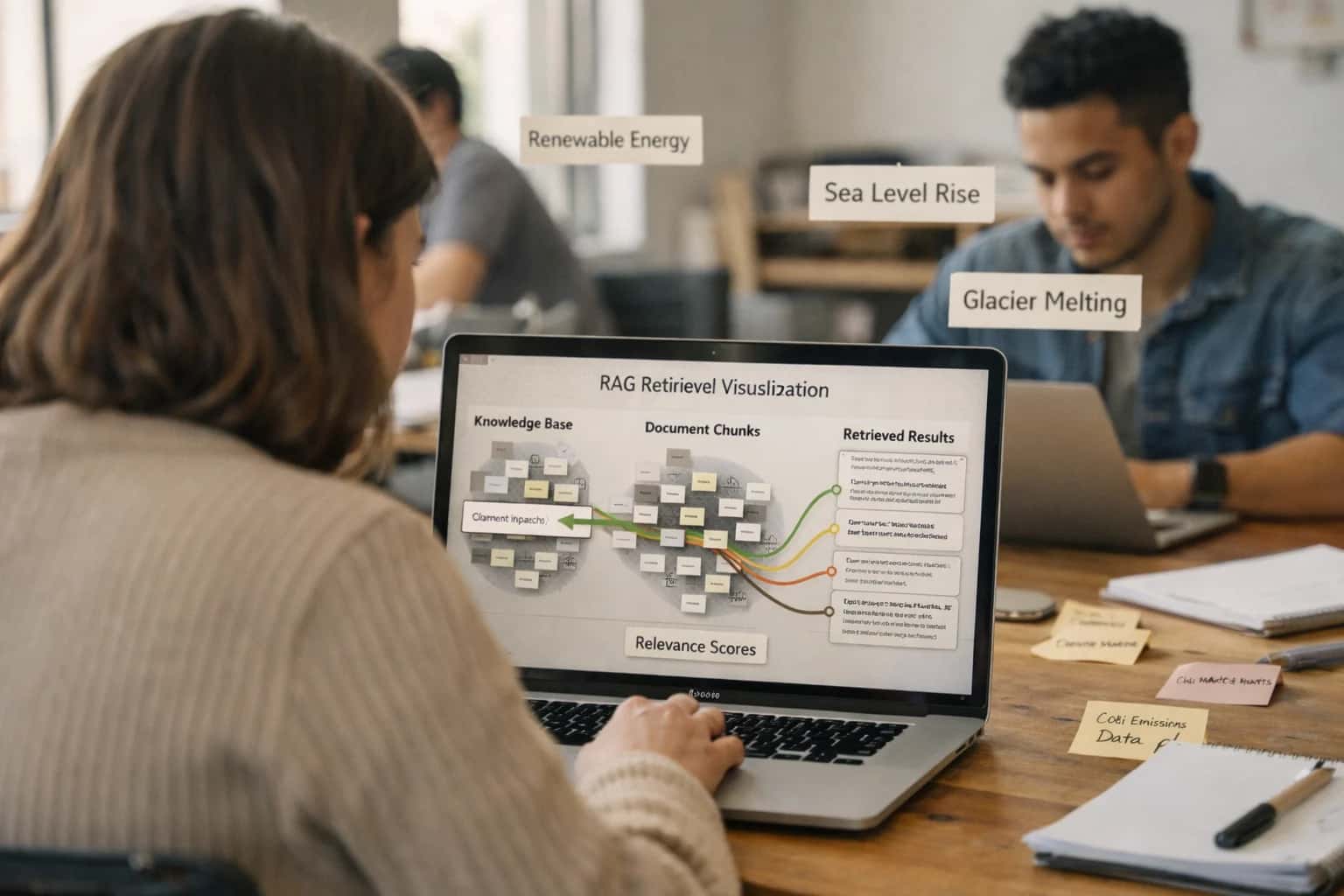
GRAPH-BASED RAG
What is Graph Query Optimization for RAG?
Graph query optimization for RAG is the systematic engineering of knowledge graph retrieval to minimize latency and maximize precision within a retrieval-augmented generation pipeline.
Optimization strategies are tightly coupled with the knowledge graph schema and the retrieval mechanism, such as SPARQL or graph neural retrieval. Engineers must profile query workloads to apply optimizations like predicate pushdown, join reordering, and materialized view creation. Effective optimization ensures deterministic grounding is achieved with minimal computational overhead, directly impacting the responsiveness and cost-efficiency of production Graph-Based RAG systems.
GRAPH QUERY OPTIMIZATION FOR RAG
Core Optimization Techniques
These techniques are engineered to minimize the latency of retrieving relevant subgraphs from a knowledge graph, which is the critical path for deterministic factual grounding in a RAG pipeline.
03
Caching Strategies
Storing the results of frequent or expensive queries in memory to serve subsequent identical or similar requests with near-zero latency. Critical for RAG systems with repetitive query patterns.
- Subgraph Result Cache: Stores the exact graph structures (nodes, edges, properties) returned for a specific query pattern.
- Embedding Cache: Stores pre-computed vector embeddings for entities or subgraphs to avoid redundant model inference.
- Semantic Cache: Uses the vector similarity of query embeddings to serve cached results for semantically similar, but not identical, natural language queries. Requires invalidation policies for dynamic knowledge graphs.
04
Join Algorithms & Traversal
The low-level algorithms used to navigate the graph and combine data from multiple nodes and edges. The choice of algorithm is a primary determinant of query performance.
- Index Nested Loop Join: Uses an index to find starting nodes and then traverses edges. Efficient for selective starting points.
- Hash Join: Builds a hash table from one part of the query to quickly match nodes from another part. Effective for merging large intermediate results.
- Expand-Into Operations: Simultaneously traverses and filters, avoiding the materialization of large intermediate result sets. Optimizes multi-hop queries common in RAG.
05
Approximate Retrieval
Techniques that trade a marginal, controlled reduction in recall for significant gains in retrieval speed, essential for user-facing RAG applications.
- Approximate Nearest Neighbor (ANN): Algorithms like HNSW or IVF that find approximate similar vectors much faster than exact K-NN search.
- Sampling-Based Traversal: Instead of exploring all possible paths, the system samples a subset of high-probability edges during multi-hop retrieval.
- Top-K Pruning: Early termination of search processes once a sufficient number of high-confidence results are found, based on a heuristic score.
06
Materialized Views / Pre-Computation
The proactive computation and persistent storage of complex, frequently accessed subgraphs or aggregations. This shifts computational cost from query-time to update-time.
- Pre-Computed Neighborhoods: For core entities (e.g., key customers, products), their 1-hop or 2-hop subgraph is materialized.
- Aggregate Graphs: Summarized graph structures that answer common analytical questions (e.g., "co-purchase network") without real-time traversal.
- Denormalized Text Contexts: Pre-generating and storing the natural language text representation of a subgraph for immediate injection into the LLM prompt. Requires careful synchronization with graph updates.
GRAPH-BASED RAG
How Graph Query Optimization Works in a RAG Pipeline
Graph query optimization is the set of techniques applied to minimize the latency and computational cost of retrieving relevant subgraphs from a knowledge graph within a Retrieval-Augmented Generation (RAG) pipeline.
Graph query optimization in a RAG pipeline involves index selection, query planning, and caching to accelerate subgraph retrieval. The system first analyzes the natural language query to generate an efficient execution plan, often converting it to a structured query language like Cypher or SPARQL. The optimizer selects the most effective indices—such as those for node labels, relationship types, or vector embeddings—to minimize the number of traversed edges and nodes, directly reducing retrieval latency before context is passed to the LLM.
Advanced techniques include cost-based optimization, where the system estimates the computational expense of different query execution paths using graph statistics. Hybrid search optimization balances structured graph pattern matching with vector similarity search for entities. Result caching stores frequently accessed subgraphs to bypass repeated complex traversals. This ensures the RAG pipeline meets strict real-time inference requirements by delivering deterministic, verifiable facts to the language model with minimal delay.
PERFORMANCE TRADEOFFS
Optimization Strategy Comparison
A comparison of core techniques for minimizing retrieval latency and computational cost when querying a knowledge graph within a RAG pipeline.
| Optimization Technique | Index Selection | Query Planning | Caching Strategy | Hybrid Approach |
|---|---|---|---|---|
Primary Mechanism | Pre-computed data structures (e.g., vector, path, property indexes) | Cost-based optimization of traversal order and join algorithms | Storing and reusing results of frequent or expensive sub-queries | Orchestrates multiple techniques (e.g., vector-graph hybrid search) |
Latency Reduction | < 10 ms for indexed lookups | 10-100 ms via optimal plan | < 5 ms for cache hits | Varies by component; targets < 50 ms end-to-end |
Memory Overhead | High (15-30% of graph size) | Low (< 1% for plan metadata) | Medium (configurable cache size) | Very High (combines index + cache overhead) |
Query Complexity Supported | Simple to moderate pattern matching | Complex multi-hop and join queries | Repetitive queries with identical parameters | Broad spectrum, from simple lookups to complex reasoning |
Implementation Effort | High (requires upfront schema analysis) | Medium (integrates with graph DB engine) | Low (leveraging existing caching layers) | Very High (custom orchestration logic required) |
Deterministic Grounding | ||||
Adapts to Query Workload | ||||
Best For | High-volume lookup of entities/embeddings | Ad-hoc, analytical, or exploratory queries | Applications with predictable, repetitive query patterns | Enterprise systems requiring balanced performance across diverse query types |
GRAPH QUERY OPTIMIZATION FOR RAG
Primary Use Cases & Applications
Optimizing graph queries is critical for making Graph-Based RAG systems production-ready. These techniques minimize retrieval latency, ensuring the language model receives relevant, structured context within strict response time windows.
01
Reducing End-to-End RAG Latency
The primary goal is to minimize the time between a user's query and the model's factually grounded response. Slow graph retrieval becomes the bottleneck in a RAG pipeline. Optimization focuses on:
- Index selection for fast entity lookup.
- Query planning to reorder and prune graph pattern matches.
- Caching frequently accessed subgraphs or query results. This ensures the overall system meets interactive latency requirements (often < 500ms).
02
Scaling Complex Multi-Hop Queries
As queries require traversing multiple relationships (e.g., "What drugs target the protein involved in Disease X?"), naive graph traversal becomes computationally expensive. Optimization techniques include:
- Path indexing to pre-compute or accelerate multi-hop connections.
- Early pruning of irrelevant graph branches during traversal.
- Using approximate methods for very long paths where exact results are not critical. This enables the system to answer complex, relational questions in real-time.
03
Optimizing Hybrid Vector-Graph Search
Many advanced RAG systems combine semantic vector search with structured graph lookup. Optimizing this hybrid requires:
- Joint indexing of entity embeddings and graph adjacency lists.
- Cost-based optimization to decide whether to start with a vector similarity scan or a graph pattern match.
- Fusion ranking that efficiently combines scores from both retrieval pathways. This maximizes both recall (finding all relevant info) and precision (ensuring it's factually connected).
04
Managing High-Concurrency Query Loads
In enterprise deployments, thousands of users or agents may query the knowledge graph simultaneously. Optimization ensures system stability under load:
- Query batching to combine similar lookups into single graph operations.
- Connection pooling and efficient session management with the graph database.
- Load-aware routing that directs queries to the least busy index or cache replica. This maintains consistent performance during peak usage without degrading response quality.
05
Supporting Dynamic, Incremental Updates
Enterprise knowledge graphs are constantly updated. The retrieval index must stay synchronized without costly full rebuilds. Optimization involves:
- Incremental indexing that only updates affected portions of the graph.
- Hot-swappable index versions to deploy updates with zero downtime.
- Consistency checks to ensure queries run against a coherent graph state. This allows the RAG system to provide answers based on the very latest data.
06
Enabling Cost-Effective Cloud Deployment
Graph database compute and memory resources are significant cost drivers. Optimization directly reduces infrastructure spend by:
- Reducing query complexity, which lowers CPU cycles consumed.
- Improving cache hit rates, which reduces expensive disk I/O operations.
- Right-sizing indices, eliminating unused indexes that waste memory. For CTOs, this translates the technical benefit of faster queries into a clear operational cost saving.
GRAPH QUERY OPTIMIZATION FOR RAG
Frequently Asked Questions
These questions address the core techniques and engineering considerations for minimizing latency and maximizing efficiency when retrieving structured facts from a knowledge graph within a Retrieval-Augmented Generation pipeline.
Graph query optimization for RAG is the systematic application of database and algorithmic techniques to minimize the latency and computational cost of retrieving relevant subgraphs from a knowledge graph in response to a user query, ensuring fast, deterministic factual grounding for a language model. It treats the knowledge graph as a high-performance database, not just a data store, applying principles from decades of relational and graph database research to the unique constraints of real-time AI inference. The goal is to deliver the necessary contextual facts—entities, relationships, and their local network—within the strict latency budget of an interactive RAG application, often requiring sub-second response times. Optimization occurs at multiple layers: index selection (choosing the right data structures for graph patterns or embeddings), query planning (determining the most efficient order to traverse edges and match patterns), and caching strategies (storing frequent or recent query results). Unlike vector-only RAG, graph retrieval must handle complex multi-hop traversals and join operations across nodes and edges, making query planning critical. Techniques include exploiting graph schema to prune impossible paths, using cost-based optimizers to estimate the cardinality of intermediate results, and implementing parallel execution for independent sub-queries. The performance metric is end-to-end retrieval latency, directly impacting user experience and the feasibility of deploying graph-based RAG in production environments.
Enabling Efficiency, Speed & Accuracy
Intelligent Analysis, Decision & Execution
We build AI systems for teams that need search across company data, workflow automation across tools, or AI features inside products and internal software.
Talk to Us
Search across company data
Give teams answers from docs, tickets, runbooks, and product data with sources and permissions.
Useful when people spend too long searching or get different answers from different systems.
Enterprise searchRAGPermissions
Read more
Automate internal workflows
Use AI to route work, draft outputs, trigger actions, and keep approvals and logs in place.
Useful when repetitive work moves across multiple tools and teams.
AI agentsWorkflow automationGovernance
Read more
Add AI to products and internal tools
Build assistants, guided actions, or decision support into the software your team or customers already use.
Useful when AI needs to be part of the product, not a separate tool.
AI integrationDecision supportModel routing
Read more
About the author
Prasad Kumkar
CEO & MD, Inference Systems
Prasad Kumkar is the CEO & MD of Inference Systems and writes about AI systems architecture, LLM infrastructure, model serving, evaluation, and production deployment. Over 5+ years, he has worked across computer vision models, L5 autonomous vehicle systems, and LLM research, with a focus on taking complex AI ideas into real-world engineering systems.
His work and writing cover AI systems, large language models, AI agents, multimodal systems, autonomous systems, inference optimization, RAG, evaluation, and production AI engineering.
LinkedIn
Limited slotsGet a Free AI Consultation
Partnered with leading AI, data, and software stack.





How We Work
Custom AI workflows for your Business
One-fit-all AI don't work for modern businesses. At Inferensys, we aim to understand your business & custom requirements; which we use to define most efficient agentic workflows, the data, and the tools for your business.
01
Review the use case
We understand the task, the users, and where AI can actually help.
Read more02
Pick the right approach
We define what needs search, automation, or product integration.
Read more03
Build the first useful version
We implement the part that proves the value first.
Read more04
Improve from there
We add the checks and visibility needed to keep it useful.
Read moreThe first call is a practical review of your use case and the right next step.
Talk to Us