An air-gapped environment is a network security measure that enforces physical and electromagnetic isolation between a protected system and all external, unsecured networks. The term derives from the literal 'gap of air' that exists between the secure system and standard infrastructure, ensuring no wireless or wired connection exists. This architecture is the gold standard for protecting high-value intellectual property, classified state secrets, and critical infrastructure control systems from remote exploitation.

Glossary
Air-Gapped Environment
A highly secure deployment architecture where the AI system is physically disconnected from the public internet to prevent remote exfiltration of sensitive data or model weights.
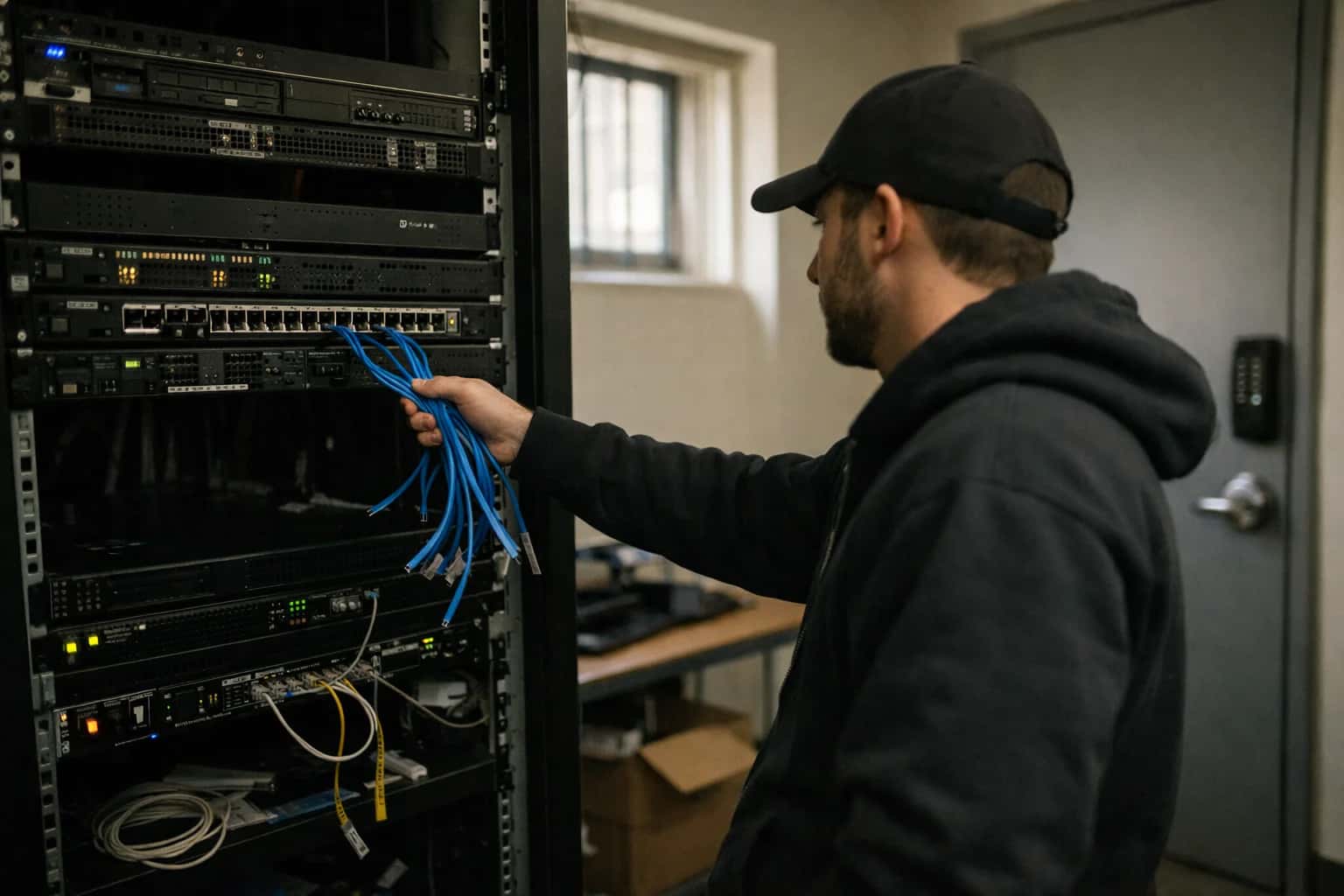
ISOLATED DEPLOYMENT ARCHITECTURE
What is Air-Gapped Environment?
An air-gapped environment is a security architecture where a computer system or network is physically isolated from unsecured networks, most notably the public internet, to prevent unauthorized data transfer and remote cyberattacks.
In the context of enterprise AI governance, air-gapped deployments are mandated for fine-tuning models on highly sensitive data or running inference on proprietary algorithms where model extraction defense is paramount. Data transfer into and out of the environment occurs exclusively via strict, human-mediated processes using sanitized physical media, a protocol known as a sneakernet. This ensures that data sovereignty is absolute and that the attack surface for remote adversaries is reduced to zero.
ARCHITECTURAL PREREQUISITES
Core Characteristics of an Air-Gapped AI Deployment
An air-gapped environment is not merely a network configuration; it is a holistic security architecture that physically severs connectivity to the public internet. This section details the foundational technical and operational controls required to maintain a true high-security enclave.
01
Physical Network Isolation
The defining characteristic of an air gap is the absence of any physical or logical connection to an external network. This is enforced through disconnected network interface controllers (NICs), disabled wireless radios (Wi-Fi, Bluetooth), and physically locked-down switch ports. Data ingress relies on strictly controlled sneakernet procedures using hardware-encrypted removable media that is sanitized in a dedicated sheep-dip station before crossing the boundary.
02
Hardware-Level Security
Security extends to the silicon. Air-gapped AI systems often require Trusted Execution Environments (TEEs) and confidential computing to protect model weights in use. Physical tamper-proofing is critical, including:
- Chassis intrusion detection
- Epoxy-encapsulated memory buses to prevent probing
- Disabled JTAG/debug ports
- Hardware Security Modules (HSMs) for cryptographic key management
03
Data Transfer Protocols
Moving data across the gap is a high-risk operation governed by strict Data Transfer Diode policies. Unidirectional gateways ensure data can flow in but never out. All inbound data must pass through a Content Disarm and Reconstruction (CDR) process, which deconstructs files and rebuilds them, stripping hidden malware. Outbound transfers, if permitted, require multi-person authorization and a manual, human-reviewed release process.
04
Operational Sustainment
Maintaining an air-gapped AI deployment requires a disconnected software supply chain. This involves:
- An on-premise, mirrored package repository for OS patches and dependencies.
- Offline model updates where fine-tuned weights are imported via encrypted physical media.
- Manual log retrieval for audit trail immutability.
- A dedicated, on-site operations team with no remote access privileges.
05
Electromagnetic Shielding
A true air gap must defend against side-channel attacks that bypass the physical disconnect. This requires TEMPEST-level shielding to prevent electromagnetic emanations from monitors and cables from being reconstructed. Faraday cages or shielded rooms block radio frequency leakage. Power line monitoring and acoustic dampening are employed to prevent sophisticated Van Eck phreaking or power analysis attacks on the AI hardware.
06
Regulatory Alignment
Air-gapped architectures are often mandated for Sovereign AI Infrastructure and classified workloads. They directly satisfy the strictest data residency and purpose limitation controls by making unauthorized data exfiltration physically impossible. This architecture provides a defensible posture for compliance with EU AI Act high-risk classification requirements and national security directives where a Zero-Trust Architecture alone is insufficient.
Enabling Efficiency, Speed & Accuracy
Intelligent Analysis, Decision & Execution
We build AI systems for teams that need search across company data, workflow automation across tools, or AI features inside products and internal software.
Talk to Us
Search across company data
Give teams answers from docs, tickets, runbooks, and product data with sources and permissions.
Useful when people spend too long searching or get different answers from different systems.
Enterprise searchRAGPermissions
Read more
Automate internal workflows
Use AI to route work, draft outputs, trigger actions, and keep approvals and logs in place.
Useful when repetitive work moves across multiple tools and teams.
AI agentsWorkflow automationGovernance
Read more
Add AI to products and internal tools
Build assistants, guided actions, or decision support into the software your team or customers already use.
Useful when AI needs to be part of the product, not a separate tool.
AI integrationDecision supportModel routing
Read moreAIR-GAPPED AI DEPLOYMENT
Frequently Asked Questions
Clear answers to the most common questions about deploying artificial intelligence in physically isolated, high-security environments disconnected from the public internet.
An air-gapped environment is a computing infrastructure that is physically disconnected from all public networks, including the internet, creating an impenetrable security boundary. The term originates from the literal 'air gap' between the secure system and any external connection. In practice, data transfer occurs exclusively through strictly controlled physical media—such as encrypted USB drives, optical discs, or dedicated one-way data diodes—that are subject to rigorous malware scanning and human approval workflows. No wireless interfaces, Bluetooth radios, or modem connections are permitted. This architecture ensures that remote cyberattacks, exfiltration attempts, and unauthorized access are physically impossible, making it the gold standard for protecting classified national security data, critical infrastructure control systems, and proprietary AI model weights.

About the author
Prasad Kumkar
CEO & MD, Inference Systems
Prasad Kumkar is the CEO & MD of Inference Systems and writes about AI systems architecture, LLM infrastructure, model serving, evaluation, and production deployment. Over 5+ years, he has worked across computer vision models, L5 autonomous vehicle systems, and LLM research, with a focus on taking complex AI ideas into real-world engineering systems.
His work and writing cover AI systems, large language models, AI agents, multimodal systems, autonomous systems, inference optimization, RAG, evaluation, and production AI engineering.
LinkedIn
Limited slotsGet a Free AI Consultation
Partnered with leading AI, data, and software stack.





How We Work
Custom AI workflows for your Business
One-fit-all AI don't work for modern businesses. At Inferensys, we aim to understand your business & custom requirements; which we use to define most efficient agentic workflows, the data, and the tools for your business.
01
Review the use case
We understand the task, the users, and where AI can actually help.
Read more02
Pick the right approach
We define what needs search, automation, or product integration.
Read more03
Build the first useful version
We implement the part that proves the value first.
Read more04
Improve from there
We add the checks and visibility needed to keep it useful.
Read moreThe first call is a practical review of your use case and the right next step.
Talk to Us