Confidential computing protects data in use—the previously unaddressed third state of the data lifecycle alongside data at rest (encryption) and data in transit (TLS). It achieves this by creating a hardware-enforced, isolated Trusted Execution Environment (TEE) within the CPU. This secure enclave decrypts data only inside the processor and prevents any external entity, including the operating system or cloud administrator, from accessing it. The core mechanism relies on memory encryption and hardware attestation, which cryptographically verifies the integrity of the enclave before releasing secrets.

Glossary
Confidential Computing
A hardware-based security paradigm that protects data in use by performing computation within a hardware-based Trusted Execution Environment, shielding sensitive data from the operating system and cloud provider.
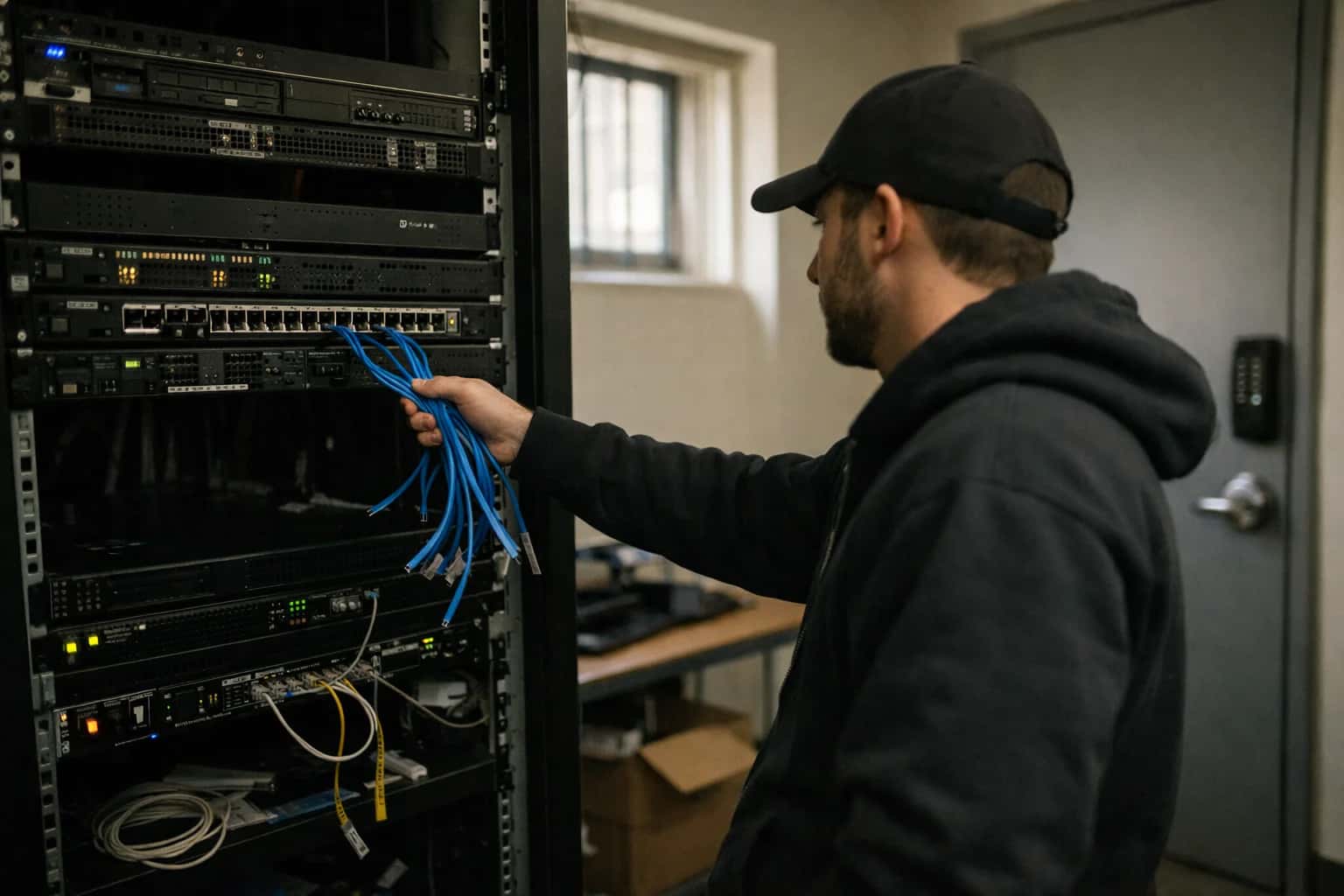
HARDWARE-BASED DATA-IN-USE PROTECTION
What is Confidential Computing?
Confidential computing is a hardware-based security paradigm that protects data in use by performing computation within a hardware-based Trusted Execution Environment (TEE), shielding sensitive data from the operating system, hypervisor, and cloud provider.
This paradigm directly enables secure purpose limitation controls by ensuring that even the infrastructure provider cannot repurpose data. It allows multiple distrusting parties to collaborate on sensitive datasets—such as training a shared AI model via federated learning—within a data clean room without exposing raw data. Key implementations include Intel SGX, AMD SEV-SNP, and NVIDIA Confidential Computing for GPU-accelerated workloads. By removing the cloud provider from the trust boundary, confidential computing satisfies stringent regulatory requirements for sovereign data processing and privacy-preserving machine learning.
HARDWARE-BASED DATA PROTECTION
Core Characteristics of Confidential Computing
Confidential Computing protects data in use by performing computation within a hardware-based Trusted Execution Environment (TEE). This isolates sensitive data from the operating system, hypervisor, and cloud provider, ensuring data remains encrypted even during processing.
01
Hardware-Based Trusted Execution Environment (TEE)
A secure enclave within the main processor that isolates code and data from the host operating system and hypervisor. The TEE provides hardware-enforced memory encryption and integrity protection, ensuring that even a compromised OS cannot access the data inside. Key implementations include Intel SGX, AMD SEV-SNP, and Arm Confidential Compute Architecture (CCA). The TEE creates a boundary where data is decrypted only within the CPU package, remaining encrypted in memory, storage, and network transit.
Hardware Root of Trust
Security Foundation
02
Attestation
A cryptographic mechanism that verifies the identity and integrity of the TEE before releasing secrets or processing data. Attestation produces a signed measurement of the enclave's code, configuration, and hardware state, allowing a remote party to confirm the environment is genuine and unmodified. This process relies on a chain of trust anchored in the hardware manufacturer's root certificate. Without successful attestation, sensitive data is never released into the environment, preventing man-in-the-middle and firmware-level attacks.
Cryptographic Proof
Verification Method
03
Memory Encryption Engine
A dedicated hardware unit integrated into the memory controller that transparently encrypts and decrypts data as it moves between the processor cache and main memory. This engine operates at line speed with negligible latency overhead, using AES-XTS or similar ciphers with keys generated at boot and sealed within the TEE. Each virtual machine or enclave receives a unique encryption key, providing strong cryptographic isolation between workloads sharing the same physical DRAM.
AES-XTS
Encryption Standard
04
Data-in-Use Protection
Unlike traditional encryption that protects data at rest (storage) and in transit (network), Confidential Computing addresses the critical gap of data in use—when information is actively being processed in memory. This prevents exposure to:
- Malicious insiders with hypervisor access
- Cloud provider administrators with physical server access
- Compromised operating systems or firmware
- Memory scraping attacks and cold boot attacks This completes the triad of data protection across all states.
3 States
At Rest, In Transit, In Use
05
Confidential Virtual Machines
A deployment model where an entire virtual machine runs within a hardware-protected boundary, encrypting its full memory space. Technologies like AMD SEV-SNP and Intel TDX extend TEE protection to lift-and-shift workloads without application modification. The hypervisor retains management functions but cannot access VM memory, registers, or state. This enables confidential multi-tenancy where workloads from different organizations run on shared infrastructure with cryptographic isolation guarantees.
No Code Changes
Application Compatibility
06
Side-Channel Resistance
Modern TEE designs incorporate hardware and software mitigations against side-channel attacks that attempt to infer data through timing, power consumption, or cache access patterns. Techniques include:
- Cache partitioning to prevent cross-enclave cache timing attacks
- Constant-time cryptographic operations to eliminate timing leakage
- Address space layout randomization (ASLR) within enclaves
- Speculative execution barriers against Spectre-class vulnerabilities These defenses are essential for protecting against sophisticated attackers with physical access.
CONFIDENTIAL COMPUTING
Frequently Asked Questions
Clear, technically precise answers to the most common questions about protecting data in use with hardware-based Trusted Execution Environments.
Confidential computing is a hardware-based security paradigm that protects data in use by performing computation within a Trusted Execution Environment (TEE)—a secure enclave inside the CPU that isolates sensitive data and code from the host operating system, hypervisor, and cloud provider. The TEE encrypts data in memory during processing, ensuring that even a compromised kernel or a malicious cloud administrator cannot access plaintext data. The mechanism relies on hardware root of trust: the CPU measures and attests to the integrity of the enclave contents before decryption keys are released. Major implementations include Intel SGX, AMD SEV-SNP, and Arm CCA, each providing cryptographic isolation at the silicon level. This enables organizations to run sensitive AI training workloads, multi-party analytics, and proprietary algorithms in untrusted cloud environments while maintaining strict data sovereignty and purpose limitation controls.
HARDWARE-ENFORCED DATA PRIVACY
Confidential Computing Use Cases in AI
Confidential computing protects data in use—during active computation—by isolating sensitive workloads within hardware-based Trusted Execution Environments (TEEs). This enables AI pipelines to process regulated data without exposing it to the operating system, hypervisor, or cloud provider.
01
Multi-Party AI Training on Sensitive Data
Enables competing organizations or regulated entities to collaboratively train models on combined datasets without revealing raw data to each other or the cloud operator.
- Healthcare consortiums: Hospitals jointly train diagnostic models on patient records while each institution's data remains encrypted and invisible to others
- Financial crime detection: Banks pool transaction data for AML models without exposing customer PII
- Supply chain optimization: Manufacturers share proprietary inventory data for demand forecasting without revealing trade secrets
The TEE acts as a neutral computation zone where data is decrypted only inside the CPU, processed, and re-encrypted before leaving the enclave.
Zero
Raw data exposure to other parties
02
Privacy-Preserving Model Inference
Protects both the model owner's intellectual property and the user's input data during inference by running the model inside a TEE.
- Model IP protection: Proprietary model weights remain encrypted and invisible to the end-user or deployment platform
- Input privacy: User prompts and queries are shielded from the model provider and infrastructure operator
- Regulatory compliance: Enables processing of PII, PHI, or financial data through AI APIs without violating data residency or GDPR constraints
This architecture allows SaaS providers to offer AI services to regulated industries without taking custody of sensitive data.
Dual
Protection: model weights + user inputs
03
Attestation-Verified AI Pipelines
Cryptographic attestation provides verifiable proof that an AI workload is running on genuine, untampered hardware with a specific software stack.
- Remote attestation: A relying party cryptographically verifies the TEE's identity, firmware hash, and loaded code before sending sensitive data
- Supply chain integrity: Ensures the model serving pipeline hasn't been compromised from training through deployment
- Audit trail generation: Produces immutable evidence that data was processed only within an approved environment and for the specified purpose
This creates a hardware root of trust for AI governance, enabling automated policy enforcement where data is released only to attested enclaves.
Cryptographic
Proof of execution environment integrity
04
Confidential Federated Learning Aggregation
Strengthens federated learning by performing model weight aggregation inside a TEE, preventing the central coordinator from inspecting individual client updates.
- Gradient leakage prevention: Individual model updates can leak training data; TEE aggregation ensures the coordinator sees only the combined result
- Byzantine robustness: Attested enclaves can enforce that only valid, untampered updates are incorporated
- Cross-silo federation: Enables enterprises to participate in federated training without trusting a third-party aggregator with their model updates
Combines the data residency benefits of federated learning with hardware-enforced confidentiality at the aggregation point.
End-to-end
Data-in-use protection across federation
05
Regulated AI Inference with Data Clean Rooms
Confidential computing provides the technical enforcement layer for data clean rooms, ensuring that mutually agreed-upon rules are enforced by hardware, not just contracts.
- Query-level governance: Only approved queries or model operations execute; the TEE blocks unauthorized data access attempts
- Output filtering: Differential privacy noise or aggregation thresholds are applied inside the enclave before results are released
- Immutable logging: Every computation is recorded within the TEE for compliance audit
This transforms data clean rooms from trust-based agreements into technically verifiable secure computation environments.
Hardware-enforced
Policy execution, not contractual
06
Sovereign AI Deployment Across Jurisdictions
Enables organizations to deploy AI workloads in public cloud infrastructure while maintaining data sovereignty and compliance with local regulations.
- Geographic data residency: Data remains encrypted outside the TEE, satisfying requirements that data never leaves a jurisdiction in plaintext
- Operator access exclusion: Cloud administrators cannot inspect data or model internals, even with physical access
- Cross-border computation: Multinational enterprises can process data in centralized cloud regions while proving to regulators that data was never exposed
Confidential computing decouples physical infrastructure location from data exposure risk, a critical capability for global AI governance.
Zero
Plaintext access by cloud operators
DATA-IN-USE PROTECTION COMPARISON
Confidential Computing vs. Other Privacy Technologies
Comparing hardware-based confidential computing with cryptographic and architectural privacy-preserving techniques across key operational dimensions
| Feature | Confidential Computing | Homomorphic Encryption | Secure Multi-Party Computation |
|---|---|---|---|
Protection Phase | Data in use | Data in use | Data in use |
Hardware Root of Trust | |||
Computational Overhead | 2-10% | 100-1000x | 10-100x |
General-Purpose Computation | |||
Requires Modified Code | Minimal | Complete rewrite | Protocol redesign |
Multi-Party Data Sharing | |||
Cloud Provider Attestation | |||
Maturity Level | Production-ready | Research/early production | Specialized production |
Enabling Efficiency, Speed & Accuracy
Intelligent Analysis, Decision & Execution
We build AI systems for teams that need search across company data, workflow automation across tools, or AI features inside products and internal software.
Talk to Us
Search across company data
Give teams answers from docs, tickets, runbooks, and product data with sources and permissions.
Useful when people spend too long searching or get different answers from different systems.
Enterprise searchRAGPermissions
Read more
Automate internal workflows
Use AI to route work, draft outputs, trigger actions, and keep approvals and logs in place.
Useful when repetitive work moves across multiple tools and teams.
AI agentsWorkflow automationGovernance
Read more
Add AI to products and internal tools
Build assistants, guided actions, or decision support into the software your team or customers already use.
Useful when AI needs to be part of the product, not a separate tool.
AI integrationDecision supportModel routing
Read more
About the author
Prasad Kumkar
CEO & MD, Inference Systems
Prasad Kumkar is the CEO & MD of Inference Systems and writes about AI systems architecture, LLM infrastructure, model serving, evaluation, and production deployment. Over 5+ years, he has worked across computer vision models, L5 autonomous vehicle systems, and LLM research, with a focus on taking complex AI ideas into real-world engineering systems.
His work and writing cover AI systems, large language models, AI agents, multimodal systems, autonomous systems, inference optimization, RAG, evaluation, and production AI engineering.
LinkedIn
Limited slotsGet a Free AI Consultation
Partnered with leading AI, data, and software stack.





How We Work
Custom AI workflows for your Business
One-fit-all AI don't work for modern businesses. At Inferensys, we aim to understand your business & custom requirements; which we use to define most efficient agentic workflows, the data, and the tools for your business.
01
Review the use case
We understand the task, the users, and where AI can actually help.
Read more02
Pick the right approach
We define what needs search, automation, or product integration.
Read more03
Build the first useful version
We implement the part that proves the value first.
Read more04
Improve from there
We add the checks and visibility needed to keep it useful.
Read moreThe first call is a practical review of your use case and the right next step.
Talk to Us