Supervisory control is a human-machine interaction paradigm where a human operator intermittently programs, monitors, and adjusts a largely autonomous AI system rather than controlling it continuously in real-time. The operator sets high-level goals, constraints, and operating parameters, then the AI executes tasks independently within those boundaries. This contrasts with direct manual control, where every action requires explicit human input. The paradigm is foundational to human-on-the-loop (HOTL) architectures, where the human role shifts from active controller to vigilant overseer who intervenes only when the system encounters edge cases, anomalies, or confidence degradation.

Glossary
Supervisory Control
A human-machine interaction paradigm where a human operator intermittently programs, monitors, and adjusts a largely autonomous AI system rather than controlling it continuously in real-time.
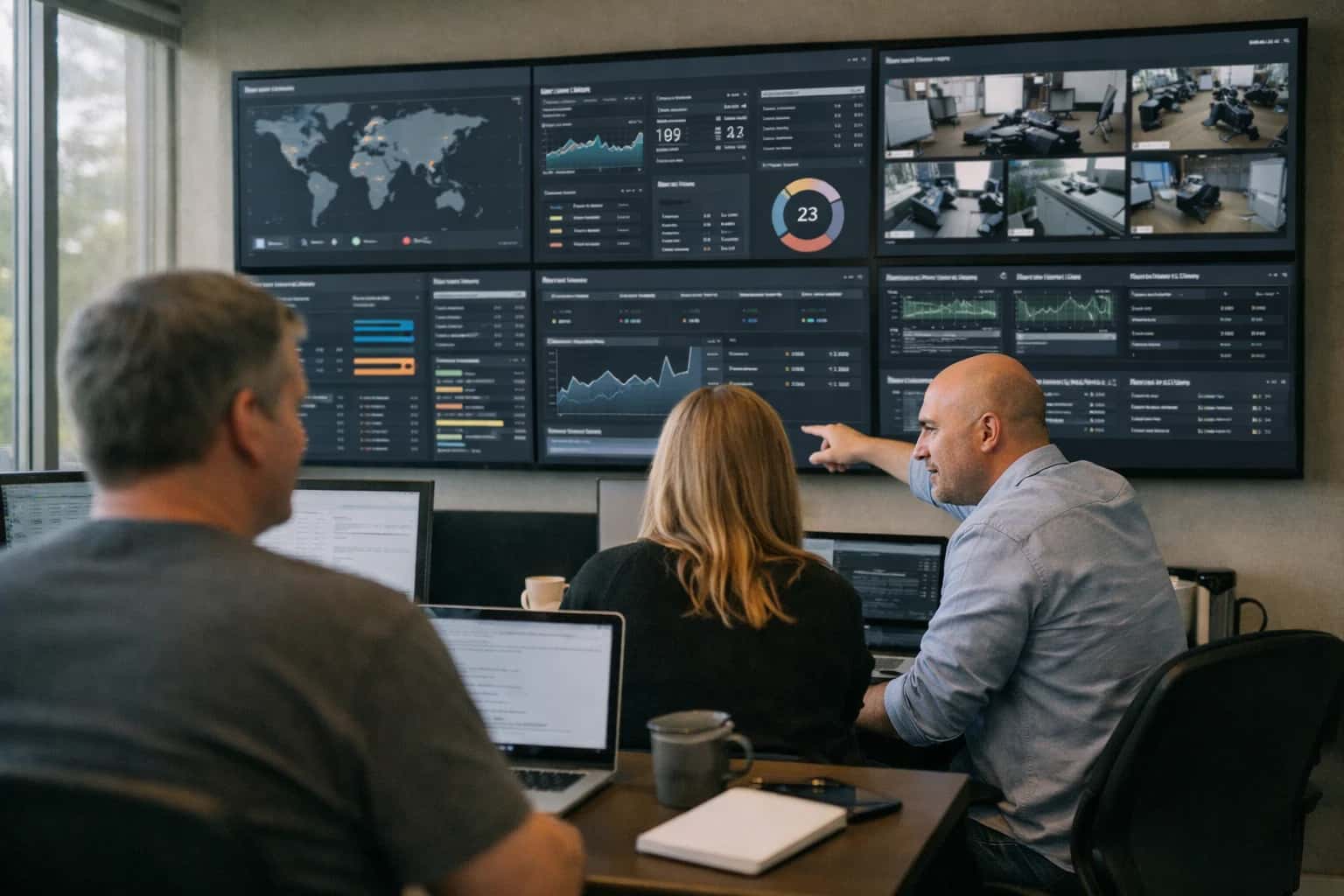
HUMAN-MACHINE INTERACTION PARADIGM
What is Supervisory Control?
Supervisory control is a human-machine interaction paradigm where a human operator intermittently programs, monitors, and adjusts a largely autonomous AI system rather than controlling it continuously in real-time.
The core engineering challenge of supervisory control lies in designing effective deferral policies and confidence threshold gating that determine precisely when the system should escalate to the human operator. Poorly calibrated thresholds risk automation complacency, where operators over-trust the system and miss critical failures. Effective implementations require clear mode awareness indicators so operators always understand the system's current level of automation (LoA). This paradigm is essential for managing fleets of autonomous systems—from warehouse robots to drone swarms—where one human supervisor oversees multiple agents simultaneously through a sliding autonomy interface that dynamically adjusts control transfer based on task complexity and risk.
HUMAN-MACHINE INTERACTION PARADIGM
Core Characteristics of Supervisory Control
Supervisory control defines a relationship where a human operator intermittently programs, monitors, and adjusts a largely autonomous AI system rather than controlling it continuously in real-time. The following characteristics distinguish it from direct manual control and full autonomy.
01
Intermittent Command and Monitoring
The human operator issues high-level goals and constraints, then monitors system performance through a command-and-response loop. Unlike direct teleoperation, the operator does not control every actuator or micro-decision. Interaction occurs at variable intervals—when the system flags an anomaly, reaches a decision boundary, or completes a task segment. This architecture reduces cognitive load while maintaining human authority over critical path decisions.
02
Dynamic Task Allocation
Functions are dynamically allocated between human and machine based on real-time context. The system handles routine, high-frequency tasks within defined parameters, while the human retains responsibility for:
- Exception handling and edge cases
- Goal reprioritization when mission parameters shift
- Ethical judgments requiring contextual understanding This allocation is not static; it shifts along the Level of Automation (LoA) spectrum as situational complexity changes.
03
Shared Mental Model
Effective supervisory control requires a shared representation of the system's state, intent, and environment between the human and the AI. The machine must communicate its current plan, confidence levels, and detected anomalies transparently. The human must understand the system's capabilities and limitations. Breakdowns in this shared model lead to mode confusion and automation surprises, where the operator is unaware of what the system is doing or why.
04
Delegation with Constrained Autonomy
The AI operates within a bounded authority envelope defined by the human supervisor. This includes:
- Pre-authorized action sets the system may execute independently
- Confidence thresholds below which decisions are escalated
- Geofenced or rule-based boundaries that trigger automatic fallback This constraint architecture ensures the system can act autonomously at speed while preventing unauthorized actions outside its designated scope.
05
Intervention Latency Tolerance
Unlike direct manual control, supervisory control assumes a non-zero intervention latency. The human operator requires time to perceive a situation, diagnose the problem, and execute a corrective action. System design must account for this lag through:
- Predictive alerts that provide advance warning
- Graceful degradation rather than catastrophic failure during the intervention window
- Buffered execution that allows safe pausing or rollback This characteristic is critical in high-tempo domains like autonomous driving or drone fleet management.
06
Loop Closure and Feedback
The supervisory control loop closes when the human operator evaluates system outcomes against intended goals and adjusts parameters accordingly. This outer-loop feedback distinguishes supervisory control from fire-and-forget automation. The operator analyzes performance data, updates constraints, retrains models, or modifies the allocation of authority. This iterative calibration process is essential for maintaining Meaningful Human Control over time as operational contexts evolve.
SUPERVISORY CONTROL
Frequently Asked Questions
Clear answers to the most common questions about the human-machine interaction paradigm where operators program, monitor, and adjust largely autonomous AI systems.
Supervisory control is a human-machine interaction paradigm where a human operator intermittently programs, monitors, and adjusts a largely autonomous AI system rather than controlling it continuously in real-time. Unlike direct control, where every actuator movement or micro-decision requires human input, supervisory control involves the operator setting high-level goals, constraints, and parameters, then allowing the AI to execute the task independently. The human intervenes only when the system encounters an edge case, violates a boundary, or requests guidance. This paradigm is foundational to managing fleets of autonomous systems—such as drone swarms or robotic process automation bots—where one-to-one teleoperation is impossible. It relies on a robust Level of Automation (LoA) design, typically operating at levels 4-6 on the Sheridan-Verplanck scale, where the computer executes actions and informs the human only if asked or if an exception occurs.
HUMAN-MACHINE INTERACTION ARCHITECTURES
Supervisory Control vs. Related Oversight Paradigms
A comparative analysis of supervisory control against other human oversight mechanisms, delineating the locus of real-time agency, intervention latency, and accountability structures.
| Feature | Supervisory Control | Human-in-the-Loop (HITL) | Human-on-the-Loop (HOTL) |
|---|---|---|---|
Primary Interaction Mode | Intermittent programming and monitoring | Continuous step-by-step approval | Passive observation with override capability |
Human Intervention Latency | Seconds to minutes | Real-time (< 1 sec) | Seconds to minutes |
AI Autonomy During Operation | High; executes sequences autonomously | Low; blocked until human gate clears | High; acts independently until flagged |
Human Cognitive Load | Moderate; strategic oversight | High; constant micro-management | Low; vigilance-dependent monitoring |
Primary Failure Mode | Mode confusion or programming error | Operator bottleneck and fatigue | Automation complacency |
Accountability Locus | Operator for programming and monitoring | Operator for each approved decision | Operator for failure to override |
Typical Use Case | Drone mission management | Medical diagnosis approval | Content moderation flagging |
Enabling Efficiency, Speed & Accuracy
Intelligent Analysis, Decision & Execution
We build AI systems for teams that need search across company data, workflow automation across tools, or AI features inside products and internal software.
Talk to Us
Search across company data
Give teams answers from docs, tickets, runbooks, and product data with sources and permissions.
Useful when people spend too long searching or get different answers from different systems.
Enterprise searchRAGPermissions
Read more
Automate internal workflows
Use AI to route work, draft outputs, trigger actions, and keep approvals and logs in place.
Useful when repetitive work moves across multiple tools and teams.
AI agentsWorkflow automationGovernance
Read more
Add AI to products and internal tools
Build assistants, guided actions, or decision support into the software your team or customers already use.
Useful when AI needs to be part of the product, not a separate tool.
AI integrationDecision supportModel routing
Read more
About the author
Prasad Kumkar
CEO & MD, Inference Systems
Prasad Kumkar is the CEO & MD of Inference Systems and writes about AI systems architecture, LLM infrastructure, model serving, evaluation, and production deployment. Over 5+ years, he has worked across computer vision models, L5 autonomous vehicle systems, and LLM research, with a focus on taking complex AI ideas into real-world engineering systems.
His work and writing cover AI systems, large language models, AI agents, multimodal systems, autonomous systems, inference optimization, RAG, evaluation, and production AI engineering.
LinkedIn
Limited slotsGet a Free AI Consultation
Partnered with leading AI, data, and software stack.





How We Work
Custom AI workflows for your Business
One-fit-all AI don't work for modern businesses. At Inferensys, we aim to understand your business & custom requirements; which we use to define most efficient agentic workflows, the data, and the tools for your business.
01
Review the use case
We understand the task, the users, and where AI can actually help.
Read more02
Pick the right approach
We define what needs search, automation, or product integration.
Read more03
Build the first useful version
We implement the part that proves the value first.
Read more04
Improve from there
We add the checks and visibility needed to keep it useful.
Read moreThe first call is a practical review of your use case and the right next step.
Talk to Us