Confidential Computing is a hardware-based security paradigm that protects data in use by performing computation within a cryptographically isolated Trusted Execution Environment (TEE) or secure enclave. This isolation prevents unauthorized access or tampering by the host operating system, hypervisor, or cloud infrastructure provider, ensuring data remains encrypted even during active processing in memory.

Glossary
Confidential Computing
A hardware-based security paradigm that isolates data in use within a Trusted Execution Environment (TEE) or secure enclave, protecting sensitive workloads from the host operating system and cloud provider.
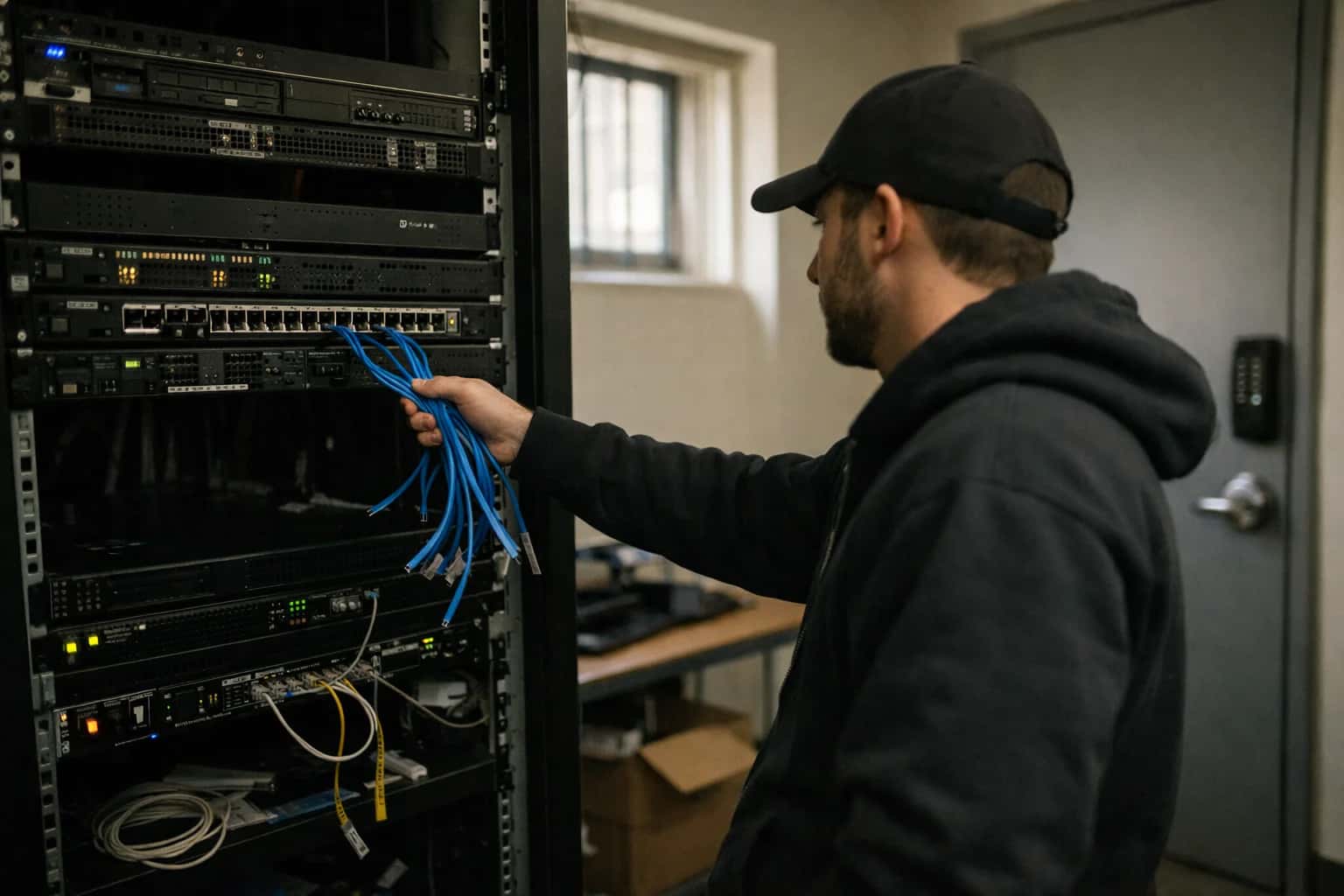
HARDWARE-LEVEL DATA PROTECTION
What is Confidential Computing?
A hardware-based security paradigm that isolates data in use within a Trusted Execution Environment (TEE) or secure enclave, protecting sensitive workloads from the host operating system and cloud provider.
The technology relies on processor-level attestation to verify the integrity of the enclave before releasing sensitive data or cryptographic keys. By shrinking the trusted computing base to the CPU boundary, confidential computing enables secure multi-party data collaboration and privacy-preserving machine learning, allowing organizations to process regulated data in untrusted environments while maintaining technical assurance of confidentiality.
HARDWARE-BACKED SECURITY PRIMITIVES
Core Characteristics of Confidential Computing
Confidential Computing fundamentally shifts the security boundary from the operating system to the silicon, ensuring data remains encrypted even during active processing within a cryptographically isolated enclave.
Enabling Efficiency, Speed & Accuracy
Intelligent Analysis, Decision & Execution
We build AI systems for teams that need search across company data, workflow automation across tools, or AI features inside products and internal software.
Talk to Us
Search across company data
Give teams answers from docs, tickets, runbooks, and product data with sources and permissions.
Useful when people spend too long searching or get different answers from different systems.
Enterprise searchRAGPermissions
Read more
Automate internal workflows
Use AI to route work, draft outputs, trigger actions, and keep approvals and logs in place.
Useful when repetitive work moves across multiple tools and teams.
AI agentsWorkflow automationGovernance
Read more
Add AI to products and internal tools
Build assistants, guided actions, or decision support into the software your team or customers already use.
Useful when AI needs to be part of the product, not a separate tool.
AI integrationDecision supportModel routing
Read moreCONFIDENTIAL COMPUTING
Frequently Asked Questions
Clear, technical answers to the most common questions about hardware-based trusted execution environments and their role in securing data in use.
Confidential computing is a hardware-based security paradigm that protects data in use by performing computation within a Trusted Execution Environment (TEE) or secure enclave. Unlike traditional encryption that protects data at rest (storage) and in transit (network), confidential computing isolates sensitive workloads from the host operating system, hypervisor, and even the cloud provider itself. The CPU creates a hardware-enforced memory region where code and data are decrypted only inside the processor, remaining invisible to everything outside. This is achieved through memory encryption engines embedded in the silicon, which automatically encrypt and decrypt data as it moves between the CPU cache and main memory. The enclave's integrity is verified through remote attestation, a cryptographic process where the hardware generates a signed measurement of the enclave's initial state, allowing a remote party to verify that the correct code is running on genuine, trusted hardware before releasing secrets or processing sensitive data.

About the author
Prasad Kumkar
CEO & MD, Inference Systems
Prasad Kumkar is the CEO & MD of Inference Systems and writes about AI systems architecture, LLM infrastructure, model serving, evaluation, and production deployment. Over 5+ years, he has worked across computer vision models, L5 autonomous vehicle systems, and LLM research, with a focus on taking complex AI ideas into real-world engineering systems.
His work and writing cover AI systems, large language models, AI agents, multimodal systems, autonomous systems, inference optimization, RAG, evaluation, and production AI engineering.
LinkedIn
Limited slotsGet a Free AI Consultation
Partnered with leading AI, data, and software stack.





How We Work
Custom AI workflows for your Business
One-fit-all AI don't work for modern businesses. At Inferensys, we aim to understand your business & custom requirements; which we use to define most efficient agentic workflows, the data, and the tools for your business.
01
Review the use case
We understand the task, the users, and where AI can actually help.
Read more02
Pick the right approach
We define what needs search, automation, or product integration.
Read more03
Build the first useful version
We implement the part that proves the value first.
Read more04
Improve from there
We add the checks and visibility needed to keep it useful.
Read moreThe first call is a practical review of your use case and the right next step.
Talk to Us