Compliance Posture Management is the continuous aggregation, visualization, and scoring of an organization's real-time adherence to regulatory frameworks and internal policies across multi-cloud and hybrid infrastructure. It shifts compliance from periodic, point-in-time audits to a dynamic, always-on operational state, providing a unified dashboard of control effectiveness and residual risk.

Glossary
Compliance Posture Management
The continuous aggregation, visualization, and scoring of an organization's real-time adherence to regulatory frameworks and internal policies across multi-cloud and hybrid infrastructure.
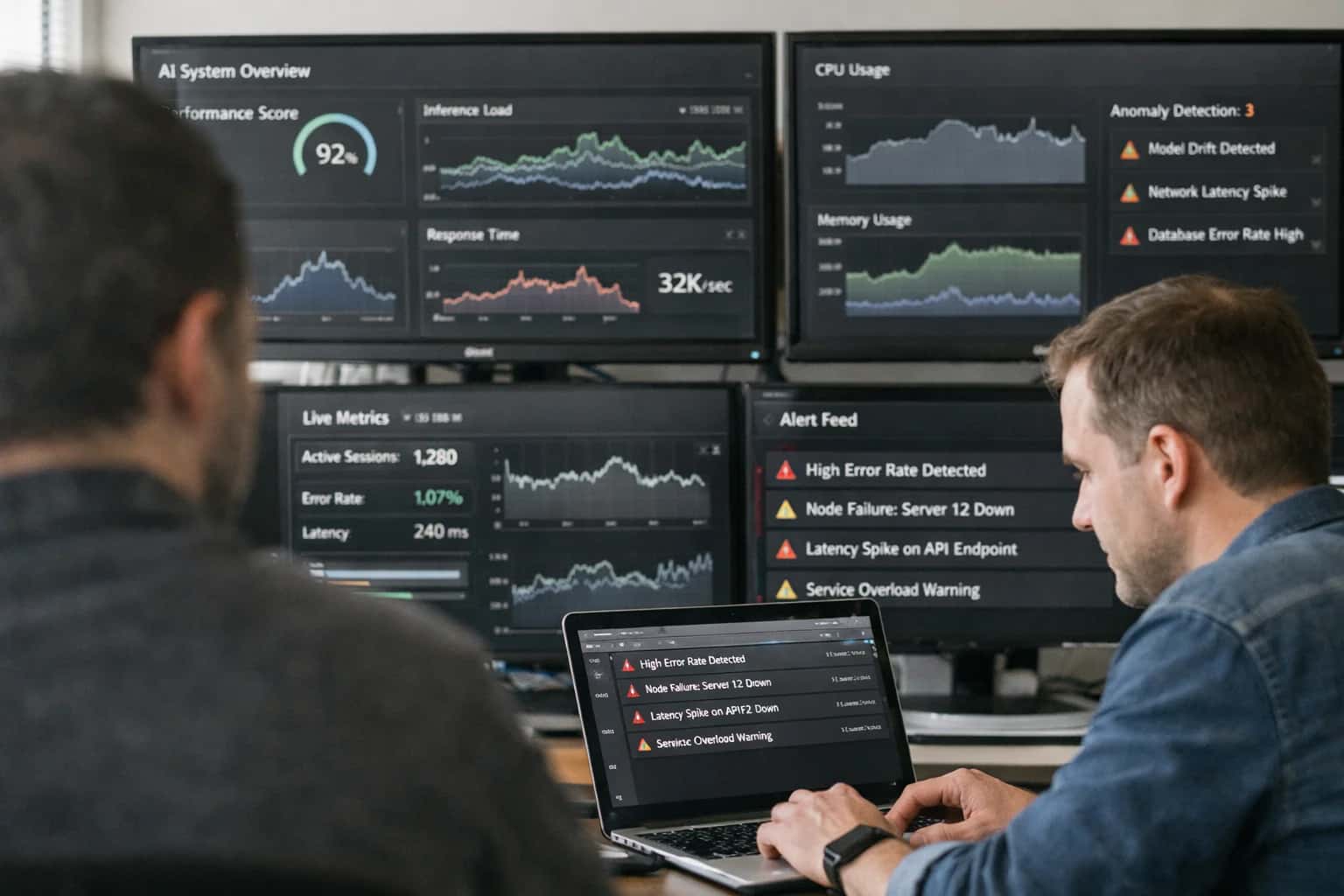
REAL-TIME GOVERNANCE VISIBILITY
What is Compliance Posture Management?
The continuous aggregation, visualization, and scoring of an organization's real-time adherence to regulatory frameworks and internal policies across multi-cloud and hybrid infrastructure.
By integrating with Policy-as-Code engines and Continuous Control Monitoring telemetry, a posture management system automatically maps technical controls to specific regulatory mandates. It calculates a quantifiable compliance score that instantly reflects regulatory drift, misconfigurations, or failed evidence collection, enabling security teams to prioritize remediation based on business impact.
CORE CAPABILITIES
Key Features of Compliance Posture Management
Compliance Posture Management aggregates, visualizes, and scores an organization's real-time adherence to regulatory frameworks and internal policies across multi-cloud and hybrid infrastructure.
01
Unified Control Mapping & Harmonization
Automatically maps overlapping security and privacy requirements from multiple regulatory frameworks—such as SOC 2, GDPR, and NIST 800-53—into a single Common Control Framework. This eliminates redundant testing by proving that a single technical control satisfies evidence requirements across multiple mandates, drastically reducing audit fatigue.
02
Real-Time Drift Detection & Scoring
Continuously compares the current operational state of cloud assets against a defined obligation register to identify regulatory drift. It calculates a dynamic compliance posture score (e.g., 85/100) by weighing the severity of misconfigurations, enabling instant visualization of risk exposure without waiting for a quarterly audit cycle.
03
Evidence-as-Code Collection
Replaces manual screenshots with automated, cryptographic evidence collection. The system programmatically gathers artifacts like API logs, configuration snapshots, and access records, then timestamps and signs them. This provides an immutable audit trail that proves the operating effectiveness of controls at a specific point in time.
04
Automated Remediation Playbooks
Triggers self-healing workflows immediately upon detecting a policy violation. For example, if a storage bucket is left publicly accessible, a pre-approved runbook can automatically apply encryption and restrict the access control list (ACL), closing the compliance gap in seconds rather than relying on a manual ticket queue.
05
Continuous Authorization to Operate (cATO)
Shifts security assessment from a point-in-time event to an ongoing state. By feeding real-time control validation data into the dashboard, the system maintains a live Authority to Operate status. This assures authorizing officials that the system remains within the established risk tolerance without requiring annual re-certification.
06
Vendor AI & Supply Chain Risk Integration
Ingests AI Bills of Materials (AIBOMs) and Software Bills of Materials (SBOMs) to map third-party dependencies against known vulnerability databases. It correlates vendor risk with internal posture, ensuring that a critical open-source library vulnerability immediately triggers a compliance exception flag in the unified dashboard.
COMPLIANCE POSTURE MANAGEMENT
Frequently Asked Questions
Clear, technical answers to the most common questions about aggregating, scoring, and visualizing real-time regulatory adherence across complex enterprise infrastructure.
Compliance Posture Management (CPM) is the continuous aggregation, visualization, and quantitative scoring of an organization's real-time adherence to regulatory frameworks and internal policies across multi-cloud and hybrid infrastructure. It works by ingesting telemetry from disparate security and infrastructure tools—such as cloud security posture management (CSPM) platforms, configuration management databases (CMDBs), and Policy-as-Code (PaC) engines—and normalizing that data against a unified control framework. A central analytics engine then maps technical control statuses to specific regulatory requirements (e.g., NIST 800-53, GDPR Article 32, SOC 2 CC6.1), calculating a dynamic compliance score that reflects the current risk exposure. Unlike periodic, point-in-time audits, CPM provides a live dashboard that highlights regulatory drift the moment a misconfiguration or policy violation occurs, enabling security and compliance teams to prioritize remediation based on actual business impact rather than static checklists.
DISCIPLINE DIFFERENTIATION
Compliance Posture Management vs. Related Disciplines
Distinguishing Compliance Posture Management from adjacent governance and monitoring functions across scope, frequency, and primary objective.
| Feature | Compliance Posture Management | Continuous Control Monitoring | Policy-as-Code | Regulatory Drift Detection |
|---|---|---|---|---|
Primary Objective | Aggregate, visualize, and score real-time adherence across all frameworks | Validate operating effectiveness of specific technical controls | Enforce compliance rules programmatically within CI/CD pipelines | Identify deviations caused by new or amended regulations |
Scope | Organization-wide, multi-cloud, multi-framework | Individual control or control family | Infrastructure and application configuration | Obligation register against current operational state |
Data Aggregation | ||||
Real-Time Scoring | ||||
Automated Remediation | ||||
Regulatory Change Monitoring | ||||
Policy Decision Engine | ||||
Audit Evidence Generation |
Enabling Efficiency, Speed & Accuracy
Intelligent Analysis, Decision & Execution
We build AI systems for teams that need search across company data, workflow automation across tools, or AI features inside products and internal software.
Talk to Us
Search across company data
Give teams answers from docs, tickets, runbooks, and product data with sources and permissions.
Useful when people spend too long searching or get different answers from different systems.
Enterprise searchRAGPermissions
Read more
Automate internal workflows
Use AI to route work, draft outputs, trigger actions, and keep approvals and logs in place.
Useful when repetitive work moves across multiple tools and teams.
AI agentsWorkflow automationGovernance
Read more
Add AI to products and internal tools
Build assistants, guided actions, or decision support into the software your team or customers already use.
Useful when AI needs to be part of the product, not a separate tool.
AI integrationDecision supportModel routing
Read more
About the author
Prasad Kumkar
CEO & MD, Inference Systems
Prasad Kumkar is the CEO & MD of Inference Systems and writes about AI systems architecture, LLM infrastructure, model serving, evaluation, and production deployment. Over 5+ years, he has worked across computer vision models, L5 autonomous vehicle systems, and LLM research, with a focus on taking complex AI ideas into real-world engineering systems.
His work and writing cover AI systems, large language models, AI agents, multimodal systems, autonomous systems, inference optimization, RAG, evaluation, and production AI engineering.
LinkedIn
Limited slotsGet a Free AI Consultation
Partnered with leading AI, data, and software stack.





How We Work
Custom AI workflows for your Business
One-fit-all AI don't work for modern businesses. At Inferensys, we aim to understand your business & custom requirements; which we use to define most efficient agentic workflows, the data, and the tools for your business.
01
Review the use case
We understand the task, the users, and where AI can actually help.
Read more02
Pick the right approach
We define what needs search, automation, or product integration.
Read more03
Build the first useful version
We implement the part that proves the value first.
Read more04
Improve from there
We add the checks and visibility needed to keep it useful.
Read moreThe first call is a practical review of your use case and the right next step.
Talk to Us