A protected attribute is a specific characteristic of an individual—such as race, gender, age, or disability status—that is safeguarded by anti-discrimination laws and ethical guidelines. In the context of machine learning, these attributes serve as the primary analytical dimensions against which algorithmic fairness is measured. The core principle is that an automated system's predictions or decisions should not systematically disadvantage an individual or group based solely on their membership in a legally protected class.

Glossary
Protected Attribute
A legally or ethically defined characteristic of an individual, such as race, gender, or age, that must not be used as a basis for unjustified discrimination in automated decisions.
LEGAL AND ETHICAL DATA CLASSIFICATION
What is a Protected Attribute?
A protected attribute is a legally or ethically defined characteristic of an individual that must not be used as the basis for unjustified discrimination in automated decision-making systems.
Identifying and isolating protected attributes is the foundational step in a bias audit. During model development, these variables are used to segment evaluation data for disparate impact testing and to calculate quantitative fairness metrics like equalized odds. While a model may not use the attribute as a direct input feature, proxy variables—such as zip code correlating with race—can inadvertently encode the same discriminatory signal, necessitating rigorous fairness-aware machine learning techniques to detect and mitigate their influence.
DEFINITIONAL FRAMEWORK
Key Characteristics of Protected Attributes
A legally or ethically defined characteristic of an individual that must not be used as a basis for unjustified discrimination in automated decisions. The following cards break down the essential properties that define and govern protected attributes in algorithmic systems.
01
Legal and Ethical Grounding
Protected attributes derive their status from anti-discrimination statutes, constitutional provisions, and international human rights frameworks. These characteristics are not chosen arbitrarily by data scientists but are defined by law.
- U.S. Context: Title VII of the Civil Rights Act, the Equal Credit Opportunity Act, and the Fair Housing Act enumerate race, color, religion, sex, and national origin as protected classes.
- EU Context: Article 21 of the EU Charter of Fundamental Rights and the General Data Protection Regulation (GDPR) prohibit discrimination based on sex, race, ethnic origin, religion, disability, age, and sexual orientation.
- Emerging Categories: Genetic information (GINA in the U.S.) and biometric data are increasingly codified as protected domains.
GDPR Art. 9
Special Category Data
ECOA + FCRA
U.S. Lending Protections
02
Direct vs. Proxy Discrimination
A protected attribute can be used to discriminate either directly (explicitly using the feature) or indirectly through proxy variables that encode the same information.
- Direct Use: A lending model that includes a
racecolumn as an input feature. This is explicitly prohibited in regulated domains. - Proxy Variables: Seemingly neutral features that statistically correlate with protected attributes. Redlining historically used ZIP codes as a proxy for race. Modern models may inadvertently use surname analysis or browsing history to reconstruct ethnicity.
- Residual Risk: Even after removing explicit protected attributes, deep learning models can reconstruct them from latent representations in unstructured data like images or text.
r > 0.8
Typical Proxy Correlation Threshold
03
Domain-Specific Enumeration
The set of protected attributes is context-dependent and varies by industry and jurisdiction. A characteristic protected in employment may not be protected in marketing.
- Employment (U.S. EEOC): Race, color, religion, sex (including pregnancy, sexual orientation, and gender identity), national origin, age (40+), disability, and genetic information.
- Lending (U.S. CFPB): Race, color, religion, national origin, sex, marital status, age, receipt of public assistance, and good faith exercise of rights under the Consumer Credit Protection Act.
- Housing (U.S. FHA): Race, color, national origin, religion, sex, familial status, and disability.
- Healthcare: Section 1557 of the ACA prohibits discrimination on the basis of race, color, national origin, sex, age, or disability in health programs.
04
Intersectionality and Compound Harm
Protected attributes do not operate in isolation. Intersectional discrimination occurs when overlapping identities create unique, compounded experiences of bias that are not captured by evaluating each attribute independently.
- Kimberlé Crenshaw's Framework: A Black woman may experience discrimination that is distinct from the sum of sexism and racism. An algorithm that is fair for 'women' and fair for 'Black individuals' may still be unfair for 'Black women'.
- Subgroup Analysis: Fairness evaluations must disaggregate metrics across intersectional subgroups. A model with acceptable demographic parity for gender and race separately may exhibit severe bias at the intersection.
- Computational Cost: Exhaustive intersectional testing grows combinatorially, requiring careful selection of statistically meaningful subgroups.
Gender Shades (2018)
Landmark Intersectional Audit
05
Observability and Collection Constraints
A fundamental tension exists between the need to audit for bias and the legal or policy restrictions on collecting protected attribute data.
- The GDPR Paradox: Article 9 prohibits processing special category data, yet Article 5 requires fairness. Auditing for discrimination requires knowing group membership, creating a compliance conflict.
- Proxy Methods: When direct collection is prohibited, auditors use Bayesian Improved Surname Geocoding (BISG) to probabilistically infer race from surname and census tract data.
- Self-Identification: Voluntary self-disclosure is the gold standard but suffers from non-response bias. The EEOC mandates EEO-1 reporting categories for employers with 100+ employees.
- Synthetic Audit Data: Generating synthetic datasets that preserve statistical properties of protected groups without real individual records is an emerging privacy-preserving audit technique.
06
Temporal and Jurisdictional Fluidity
The definition and scope of protected attributes are not static. They evolve through legislation, judicial precedent, and shifting societal norms.
- Bostock v. Clayton County (2020): The U.S. Supreme Court ruled that Title VII's prohibition on sex discrimination encompasses sexual orientation and gender identity, expanding the operational definition of a protected attribute.
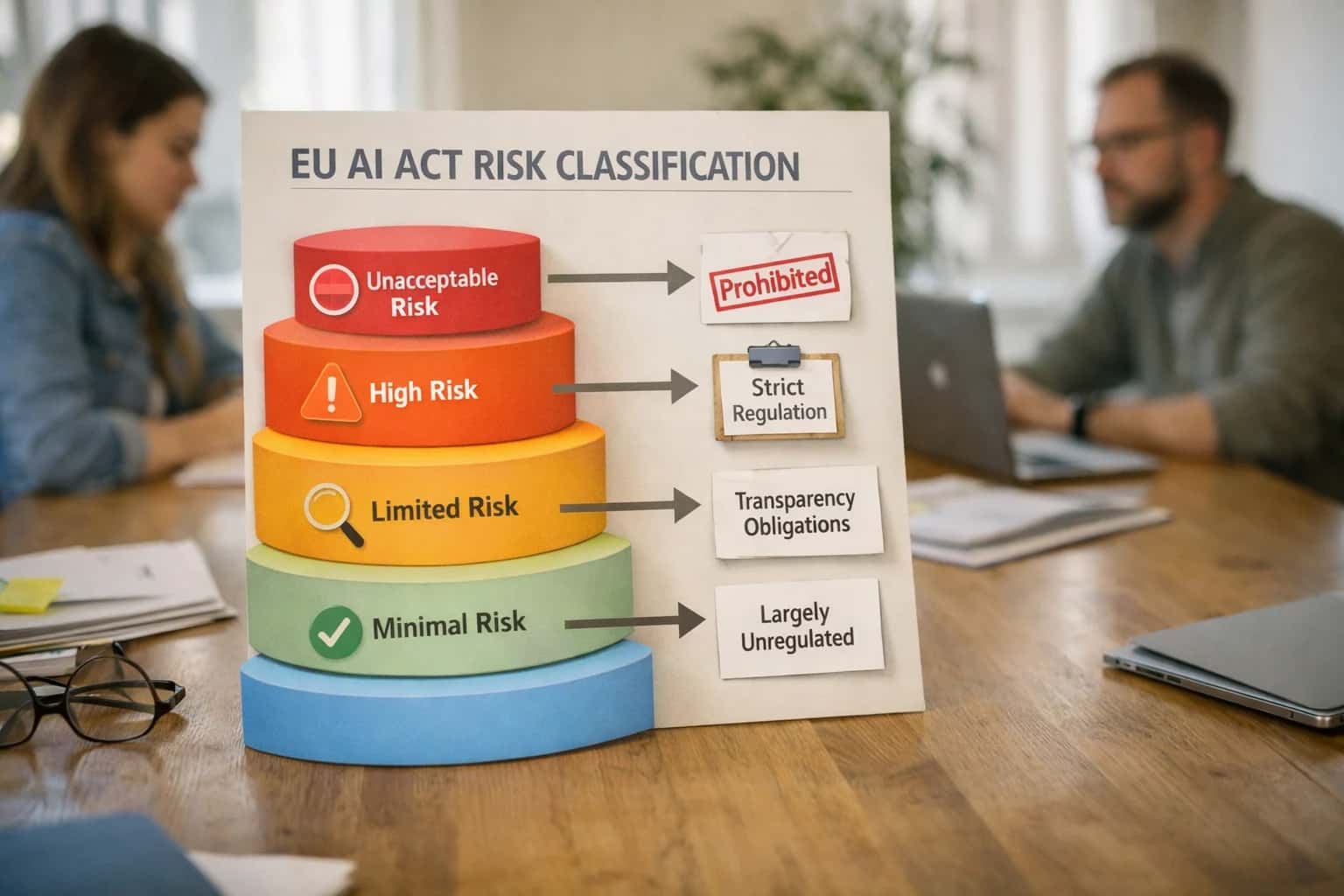
- EU AI Act (2024): Introduces a risk-based framework where the use of protected attributes in high-risk AI systems triggers mandatory conformity assessments and fundamental rights impact assessments.
- Algorithmic Class Definition: Future regulation may protect against discrimination based on inferred or predicted characteristics, not just self-identified ones, such as 'predicted pregnancy status' or 'inferred political affiliation.'
TAXONOMY OF BIAS-RELEVANT FEATURES
Protected Attributes vs. Sensitive Attributes vs. Proxy Variables
A comparison of three categories of variables that play distinct roles in algorithmic fairness, from legally codified characteristics to unintended statistical stand-ins.
| Feature | Protected Attribute | Sensitive Attribute | Proxy Variable |
|---|---|---|---|
Definition | A legally or ethically codified characteristic that must not be used as a basis for unjustified discrimination | Any characteristic that could be a source of social stigma, disadvantage, or privacy concern, whether legally protected or not | A non-sensitive variable that carries statistical information about a protected or sensitive attribute |
Legal status | Explicitly regulated by anti-discrimination law | May or may not be legally protected; often addressed by privacy regulations | Not legally regulated; often overlooked in compliance reviews |
Examples | Race, gender, age, disability status, religion | Sexual orientation, genetic information, trade union membership, geolocation | ZIP code, browser language preference, surname, music genre affinity |
Direct use in model | Prohibited or strictly constrained in high-stakes decisions | Strongly discouraged; requires explicit consent or legitimate purpose | Technically permissible but introduces indirect discrimination risk |
Discovery mechanism | Explicitly declared in data collection or policy documentation | Identified through data protection impact assessments | Detected via correlation analysis, mutual information, or adversarial testing |
Mitigation strategy | Remove from feature set or apply fairness constraints | Apply differential privacy, access controls, or purpose limitation | Audit for disparate impact; remove or transform if proxy effect is significant |
Regulatory framework | EU AI Act, GDPR Art. 9, U.S. Civil Rights Act, ECOA | GDPR Art. 9 special categories, CCPA sensitive data provisions | Indirectly covered by disparate impact doctrine and fairness testing requirements |
Failure consequence | Regulatory penalty, civil liability, mandatory model decommissioning | Privacy violation fines, reputational harm, data subject complaints | Undetected discrimination, fairness metric degradation, audit failure |
PROTECTED ATTRIBUTE ESSENTIALS
Frequently Asked Questions
Clear, technical answers to the most common questions about legally and ethically defined characteristics that must not be used as a basis for unjustified discrimination in automated decisions.
A protected attribute is a legally or ethically defined characteristic of an individual—such as race, gender, age, or disability status—that must not be used as a basis for unjustified discrimination in automated decision-making systems. In machine learning pipelines, these attributes serve as the demographic variables against which fairness metrics are computed and disparate impact is measured. The specific set of protected attributes varies by jurisdiction: U.S. federal law recognizes race, color, religion, sex, national origin, age, and disability, while the European Union AI Act extends protections to genetic features and political opinions. Engineering teams must explicitly identify and isolate these features during bias audits to ensure models do not produce discriminatory outcomes, even when the attribute is not directly used as a model feature—a phenomenon known as proxy discrimination.
Enabling Efficiency, Speed & Accuracy
Intelligent Analysis, Decision & Execution
We build AI systems for teams that need search across company data, workflow automation across tools, or AI features inside products and internal software.
Talk to Us
Search across company data
Give teams answers from docs, tickets, runbooks, and product data with sources and permissions.
Useful when people spend too long searching or get different answers from different systems.
Enterprise searchRAGPermissions
Read more
Automate internal workflows
Use AI to route work, draft outputs, trigger actions, and keep approvals and logs in place.
Useful when repetitive work moves across multiple tools and teams.
AI agentsWorkflow automationGovernance
Read more
Add AI to products and internal tools
Build assistants, guided actions, or decision support into the software your team or customers already use.
Useful when AI needs to be part of the product, not a separate tool.
AI integrationDecision supportModel routing
Read more
About the author
Prasad Kumkar
CEO & MD, Inference Systems
Prasad Kumkar is the CEO & MD of Inference Systems and writes about AI systems architecture, LLM infrastructure, model serving, evaluation, and production deployment. Over 5+ years, he has worked across computer vision models, L5 autonomous vehicle systems, and LLM research, with a focus on taking complex AI ideas into real-world engineering systems.
His work and writing cover AI systems, large language models, AI agents, multimodal systems, autonomous systems, inference optimization, RAG, evaluation, and production AI engineering.
LinkedIn
Limited slotsGet a Free AI Consultation
Partnered with leading AI, data, and software stack.





How We Work
Custom AI workflows for your Business
One-fit-all AI don't work for modern businesses. At Inferensys, we aim to understand your business & custom requirements; which we use to define most efficient agentic workflows, the data, and the tools for your business.
01
Review the use case
We understand the task, the users, and where AI can actually help.
Read more02
Pick the right approach
We define what needs search, automation, or product integration.
Read more03
Build the first useful version
We implement the part that proves the value first.
Read more04
Improve from there
We add the checks and visibility needed to keep it useful.
Read moreThe first call is a practical review of your use case and the right next step.
Talk to Us