Human-in-the-loop override is a governance mechanism that creates an immutable, cryptographically verifiable record when a human operator countermands an algorithmic output. This intervention, often triggered by low confidence scores or ethical boundary conditions, transforms the decision provenance by appending the operator's identity, timestamp, and rationale to the immutable audit trail, ensuring the action is attributable and cannot be repudiated.

Glossary
Human-in-the-Loop Override
A recorded event where a human operator intervenes to reverse or modify an automated system's decision, creating a critical audit point for accountability and regulatory compliance.
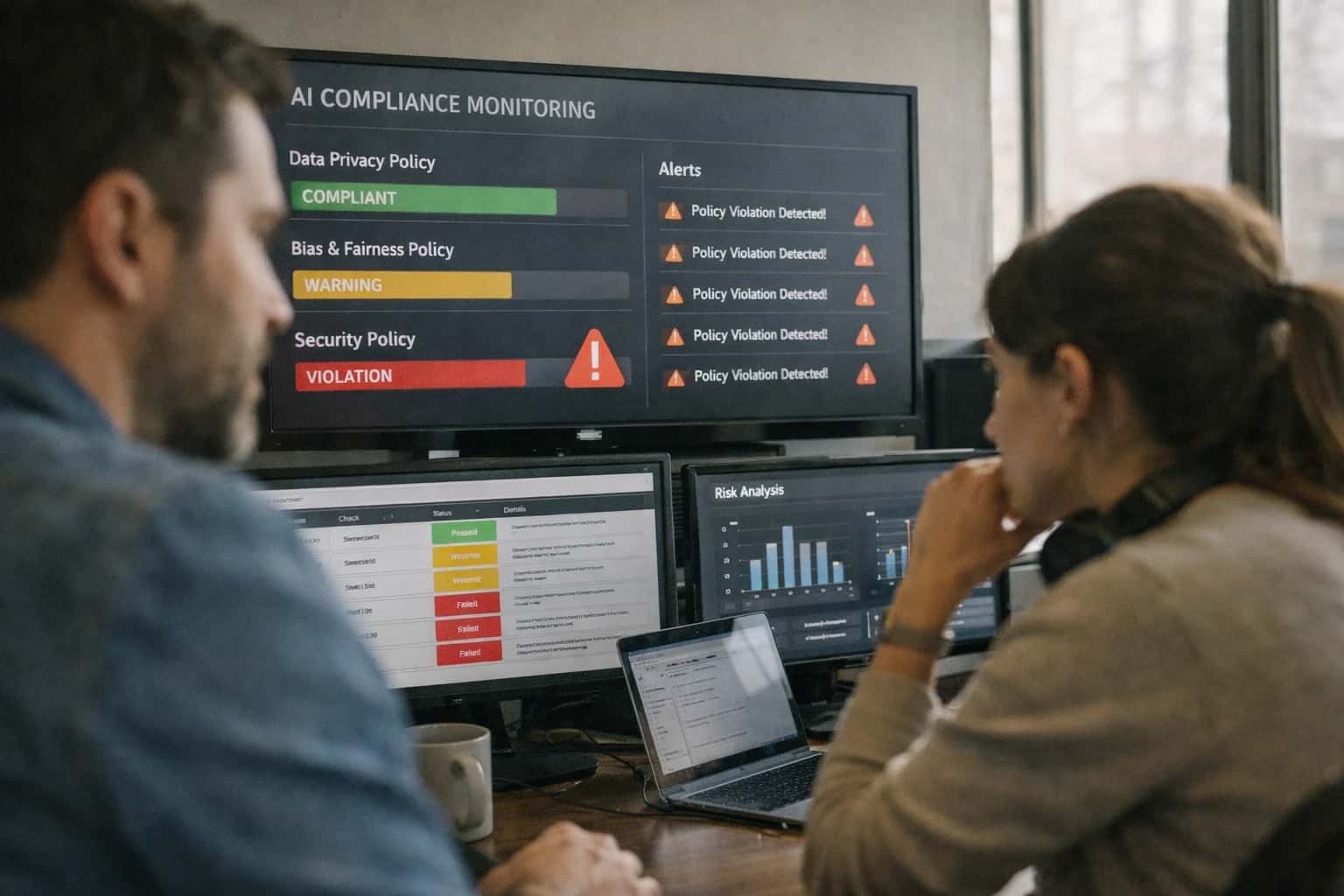
AUDITABLE INTERVENTION
What is Human-in-the-Loop Override?
A human-in-the-loop override is a formally recorded event where a human operator intervenes to reverse, modify, or halt an automated system's decision, establishing a critical point of accountability and non-repudiation in the audit trail.
The override event must be logged with deterministic serialization to capture the exact pre-intervention model inference fingerprint, the modified output, and the authorization context. This process is essential for compliance with regulations requiring meaningful human control, bridging the gap between automated policy-as-code enforcement and the nuanced judgment required for high-risk classification scenarios.
MECHANISMS OF ACCOUNTABILITY
Key Characteristics of an HITL Override
A Human-in-the-Loop (HITL) override is not merely a button press; it is a complex, auditable transaction that re-routes decision logic. The following characteristics define a robust, legally defensible override architecture.
01
Immutable State Transition
The override must be recorded as an immutable state transition within the decision log. The system captures the exact pre-override machine inference, the post-override human decision, and the delta between them. This creates a cryptographically verifiable chain of custody that proves the human intervention definitively altered the outcome, preventing disputes over whether the override was merely advisory or authoritative.
100%
Audit Completeness
02
Deterministic Serialization of Context
To ensure the override is reproducible for auditors, the entire decision context must undergo deterministic serialization before the human intervenes. This involves converting the model's input snapshot, active feature attributions (e.g., SHAP values), and system state into a canonical byte stream (like Canonical JSON). This guarantees that the exact information the human saw is preserved without ambiguity, enabling a perfect deterministic replay of the override event.
03
Cryptographic Non-Repudiation
A valid override requires cryptographic non-repudiation to bind the human operator's identity to the action. This is achieved through digital signatures using hardware-backed keys (e.g., FIDO2 or secure enclave signing). The system logs:
- The operator's unique signature over the override payload.
- A secure timestamp from a Trusted Timestamp Authority (RFC 3161). This provides undeniable proof of who acted and when, preventing the operator from later denying the intervention.
04
Policy-as-Code Authorization
The override action must be gated by a policy-as-code enforcement layer. Before the human decision is accepted, a rules engine validates the operator's role-based access against the specific risk classification of the automated decision. For example, a high-risk financial transaction override might require multi-party authorization. This prevents unauthorized overrides and ensures every intervention is compliant with internal governance before it is committed to the immutable audit trail.
05
Decision Provenance Linking
The override event must be linked back to the original machine prediction to maintain a complete decision provenance graph. The system records a model inference fingerprint—a composite hash of the model version, input data hash, and configuration parameters—and connects it to the human override record. This bidirectional linkage allows auditors to trace any human-amended outcome back to the specific model and data that triggered the initial automated action.
06
WORM-Compliant Storage
The final, authoritative record of the override must reside on WORM (Write-Once-Read-Many) storage. Once the human decision is serialized, signed, and committed, the storage medium physically or logically prevents any modification or deletion. This satisfies the strictest regulatory retention requirements by ensuring that the override record cannot be tampered with post hoc, even by system administrators, preserving the integrity of the chain of custody for the entire lifecycle of the audit log.
HUMAN-IN-THE-LOOP OVERRIDE
Frequently Asked Questions
Explore the critical mechanisms and governance protocols that define how human operators intervene in automated decision systems to ensure accountability and compliance.
A Human-in-the-Loop (HITL) Override is a recorded event where a human operator intervenes to reverse, modify, or halt an automated system's decision, creating a critical audit point for accountability. It functions as a safety valve within an automated decision logging framework. When an AI model generates a prediction or action, the system evaluates it against predefined confidence thresholds or risk rules. If the decision falls into a 'gray zone' or is flagged for high severity, it is routed to a human reviewer. The operator reviews the model inference fingerprint, input data, and SHAP value logging to understand the rationale. The operator's final action—approval, reversal, or modification—is then cryptographically signed and appended to the immutable audit trail, establishing a clear chain of custody and ensuring cryptographic non-repudiation of the human judgment.
Enabling Efficiency, Speed & Accuracy
Intelligent Analysis, Decision & Execution
We build AI systems for teams that need search across company data, workflow automation across tools, or AI features inside products and internal software.
Talk to Us
Search across company data
Give teams answers from docs, tickets, runbooks, and product data with sources and permissions.
Useful when people spend too long searching or get different answers from different systems.
Enterprise searchRAGPermissions
Read more
Automate internal workflows
Use AI to route work, draft outputs, trigger actions, and keep approvals and logs in place.
Useful when repetitive work moves across multiple tools and teams.
AI agentsWorkflow automationGovernance
Read more
Add AI to products and internal tools
Build assistants, guided actions, or decision support into the software your team or customers already use.
Useful when AI needs to be part of the product, not a separate tool.
AI integrationDecision supportModel routing
Read more
About the author
Prasad Kumkar
CEO & MD, Inference Systems
Prasad Kumkar is the CEO & MD of Inference Systems and writes about AI systems architecture, LLM infrastructure, model serving, evaluation, and production deployment. Over 5+ years, he has worked across computer vision models, L5 autonomous vehicle systems, and LLM research, with a focus on taking complex AI ideas into real-world engineering systems.
His work and writing cover AI systems, large language models, AI agents, multimodal systems, autonomous systems, inference optimization, RAG, evaluation, and production AI engineering.
LinkedIn
Limited slotsGet a Free AI Consultation
Partnered with leading AI, data, and software stack.





How We Work
Custom AI workflows for your Business
One-fit-all AI don't work for modern businesses. At Inferensys, we aim to understand your business & custom requirements; which we use to define most efficient agentic workflows, the data, and the tools for your business.
01
Review the use case
We understand the task, the users, and where AI can actually help.
Read more02
Pick the right approach
We define what needs search, automation, or product integration.
Read more03
Build the first useful version
We implement the part that proves the value first.
Read more04
Improve from there
We add the checks and visibility needed to keep it useful.
Read moreThe first call is a practical review of your use case and the right next step.
Talk to Us