A Trusted Execution Environment (TEE) is a hardware-enforced enclave that isolates sensitive computation from the main operating system, hypervisor, and other applications. It provides a hardware root of trust that cryptographically verifies the integrity of the code executing within it, ensuring that workloads cannot be inspected or tampered with by privileged users or compromised system software.

Glossary
Trusted Execution Environment (TEE)
A secure, isolated area within a main processor that guarantees the confidentiality and integrity of code and data loaded inside it, protecting sensitive computations from the host operating system.
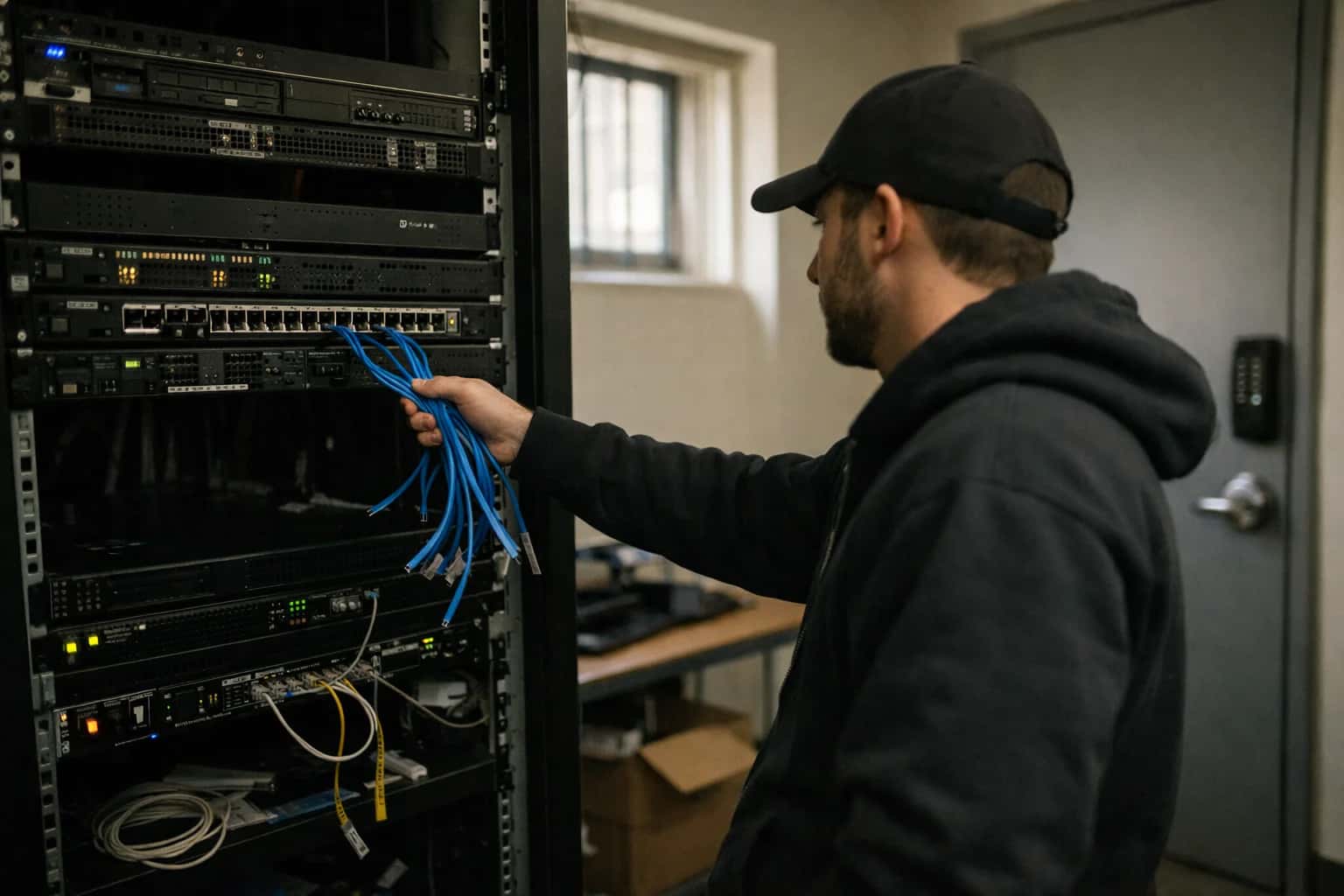
HARDWARE-BASED ISOLATION
What is a Trusted Execution Environment (TEE)?
A Trusted Execution Environment (TEE) is a secure, isolated area within a main processor that guarantees the confidentiality and integrity of code and data loaded inside it, protecting sensitive computations from the host operating system.
TEEs are foundational to confidential computing, enabling use cases like secure multi-party data sharing and private model inference. By encrypting data in use—closing the final gap alongside encryption at rest and in transit—a TEE protects proprietary machine learning models and sensitive inference data from cloud infrastructure administrators and insider threats.
HARDWARE-GRADE ISOLATION
Core Properties of a TEE
A Trusted Execution Environment (TEE) is defined by a set of hardware-enforced security guarantees that protect sensitive computation from the host operating system, hypervisor, and even physical attackers. These properties form the foundation of confidential computing.
02
Data Integrity
Guarantees that code and data inside the TEE cannot be modified by unauthorized entities.
- Mechanism: Cryptographic hashing and Message Authentication Codes (MACs) are computed over memory pages. Any tampering detected during a load operation triggers a fault.
- Protection: Defends against bus snooping and cold boot attacks where an attacker physically alters memory contents.
- Result: The workload either executes correctly or halts entirely—it never produces a result based on corrupted state.
04
Hardware Isolation
Enforces a strict boundary between the trusted world and the untrusted, rich execution environment.
- Physical Separation: Technologies like ARM TrustZone split the processor into two virtual cores with hardware access controls.
- Enclave Model: Intel SGX and AMD SEV carve out private memory regions that are inaccessible at any privilege level, including ring 0.
- Side-Channel Resistance: Modern TEEs include mitigations against cache-timing and page-fault attacks, though this remains an active area of adversarial research.
05
Sealing & Persistence
Allows a TEE to encrypt data for storage on untrusted media, binding it to a specific enclave identity.
- Seal to Enclave Identity: Data can only be decrypted by the exact same enclave code on the same CPU.
- Seal to Signing Identity: Data can be decrypted by any enclave signed by the same developer key, enabling secure software updates.
- Use Case: Storing long-term secrets, ledger state, or model weights on disk without exposing them to the host file system.
06
Secure Boot & Measured Launch
Establishes an unbroken chain of trust from firmware initialization to application execution.
- Process: Each stage of the boot process cryptographically measures the next stage before executing it, storing the hash in Platform Configuration Registers (PCRs).
- Verification: Attestation quotes include these PCR values, allowing a verifier to detect if the BIOS, bootloader, or OS has been compromised.
- Foundation: Without a verified boot chain, the integrity of the TEE itself cannot be guaranteed.
TRUSTED EXECUTION ENVIRONMENTS
Frequently Asked Questions
Explore the core concepts of hardware-based confidential computing, addressing how TEEs isolate sensitive AI workloads from the underlying infrastructure.
A Trusted Execution Environment (TEE) is a secure, isolated area within a main processor that guarantees the confidentiality and integrity of code and data loaded inside it, protecting sensitive computations from the host operating system, hypervisor, and even the cloud provider. It operates as a hardware-enforced enclave, also known as a secure enclave, that creates a distinct memory region inaccessible to any process outside the enclave, even those with kernel-level privileges. When data enters the TEE, it is decrypted and processed, but remains encrypted in memory outside the enclave boundaries. The hardware performs memory isolation and cryptographic measurement to verify that the code loaded is exactly what the developer intended, a process called attestation. This ensures that even if the host OS is compromised, the data and algorithms inside the TEE remain protected, making it a foundational technology for confidential computing in multi-tenant cloud environments.
Enabling Efficiency, Speed & Accuracy
Intelligent Analysis, Decision & Execution
We build AI systems for teams that need search across company data, workflow automation across tools, or AI features inside products and internal software.
Talk to Us
Search across company data
Give teams answers from docs, tickets, runbooks, and product data with sources and permissions.
Useful when people spend too long searching or get different answers from different systems.
Enterprise searchRAGPermissions
Read more
Automate internal workflows
Use AI to route work, draft outputs, trigger actions, and keep approvals and logs in place.
Useful when repetitive work moves across multiple tools and teams.
AI agentsWorkflow automationGovernance
Read more
Add AI to products and internal tools
Build assistants, guided actions, or decision support into the software your team or customers already use.
Useful when AI needs to be part of the product, not a separate tool.
AI integrationDecision supportModel routing
Read more
About the author
Prasad Kumkar
CEO & MD, Inference Systems
Prasad Kumkar is the CEO & MD of Inference Systems and writes about AI systems architecture, LLM infrastructure, model serving, evaluation, and production deployment. Over 5+ years, he has worked across computer vision models, L5 autonomous vehicle systems, and LLM research, with a focus on taking complex AI ideas into real-world engineering systems.
His work and writing cover AI systems, large language models, AI agents, multimodal systems, autonomous systems, inference optimization, RAG, evaluation, and production AI engineering.
LinkedIn
Limited slotsGet a Free AI Consultation
Partnered with leading AI, data, and software stack.





How We Work
Custom AI workflows for your Business
One-fit-all AI don't work for modern businesses. At Inferensys, we aim to understand your business & custom requirements; which we use to define most efficient agentic workflows, the data, and the tools for your business.
01
Review the use case
We understand the task, the users, and where AI can actually help.
Read more02
Pick the right approach
We define what needs search, automation, or product integration.
Read more03
Build the first useful version
We implement the part that proves the value first.
Read more04
Improve from there
We add the checks and visibility needed to keep it useful.
Read moreThe first call is a practical review of your use case and the right next step.
Talk to Us