A non-repudiation token is a cryptographically secure artifact that binds an entity to a specific event or transaction, making denial of participation computationally infeasible. In AI governance, this token typically consists of a digital signature generated by a private key uniquely held by the decision-making system, combined with a trusted timestamp from a Timestamping Authority (TSA). This dual mechanism proves both who made the decision and when it occurred, creating an unassailable chain of evidence for regulatory audits under frameworks like the EU AI Act.

Glossary
Non-Repudiation Token
A piece of cryptographic evidence, such as a digital signature or trusted timestamp, that prevents an entity from denying its involvement in a specific action, critical for legal accountability in AI decisions.
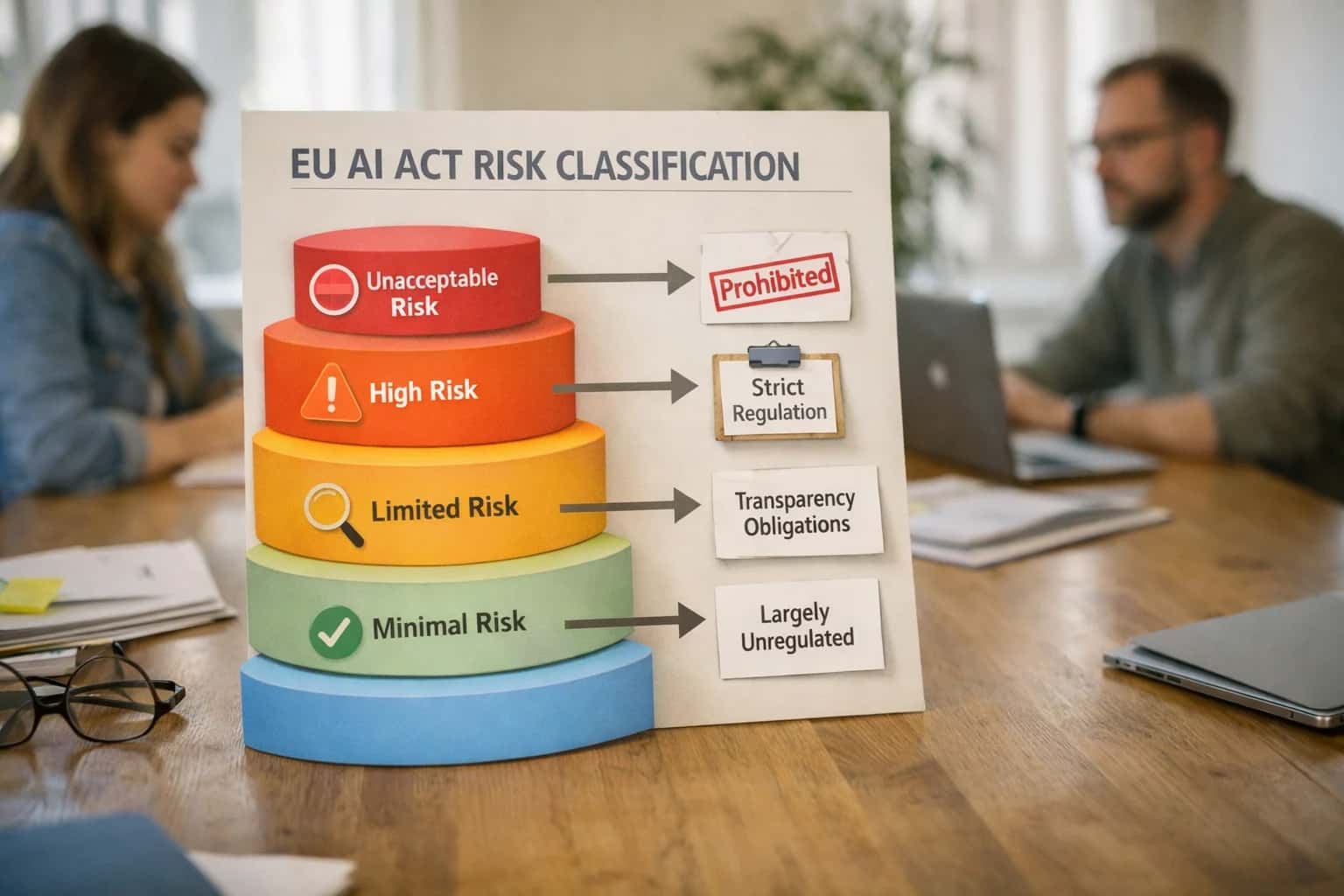
CRYPTOGRAPHIC ACCOUNTABILITY
What is Non-Repudiation Token?
A non-repudiation token is a piece of cryptographic evidence, such as a digital signature or trusted timestamp, that prevents an entity from plausibly denying its involvement in a specific action, establishing legal accountability for AI-driven decisions.
The token is generated by hashing the inference payload—including model inputs, outputs, and version metadata—and signing that hash with a hardware-backed private key stored in a Hardware Security Module (HSM). The resulting cryptographic proof is stored alongside the audit record in an append-only log, often anchored to a public blockchain via a Merkle root for independent verification. This ensures that even the system administrator cannot alter the log without detection, satisfying the strict non-repudiation requirements for high-risk automated decision-making.
NON-REPUDIATION TOKEN
Core Cryptographic Properties
The foundational cryptographic primitives that constitute a non-repudiation token, ensuring an entity cannot credibly deny its involvement in a specific AI-driven action or decision.
01
Digital Signature
A cryptographic mechanism using asymmetric cryptography to prove the authenticity and integrity of a digital message. The signer uses a private key to create the signature, and any party with the corresponding public key can verify it. This binds an identity to the logged AI decision, providing the core non-repudiation property.
- Algorithm examples: ECDSA, EdDSA, RSA-PSS
- Key property: Only the holder of the private key could have generated the valid signature.
02
Trusted Timestamp
A cryptographic token issued by a Timestamping Authority (TSA) that proves specific data existed at a particular point in time. The TSA binds the hash of the AI audit record to a certified time source, creating a verifiable chronology.
- Standard: RFC 3161
- Function: Prevents backdating of logs and establishes a precise sequence of events for legal admissibility.
03
Hash Chain Integrity
A sequential application of a cryptographic hash function where each link in the chain incorporates the hash of the previous record. This creates a tamper-evident structure: altering any single log entry would require recalculating all subsequent hashes, which is computationally infeasible.
- Common function: SHA-256
- Result: A verifiable, ordered sequence where the integrity of the entire chain depends on the integrity of every link.
04
Blockchain Anchoring
The process of embedding a single Merkle root or aggregate hash of a batch of audit logs into a public blockchain transaction. This leverages the blockchain's global consensus and immutability to provide an independent, external witness to the existence and integrity of the records at that point in time.
- Benefit: Decouples the integrity proof from the organization's own infrastructure.
- Mechanism: The transaction timestamp and block hash serve as an irrefutable, public anchor.
05
Hardware-Backed Key Security
The use of a Hardware Security Module (HSM) or Trusted Execution Environment (TEE) to generate and safeguard the private signing keys. The key material never leaves the secure hardware boundary in plaintext, ensuring the signing ceremony itself is non-repudiable and protected from host-level compromise.
- HSM: Dedicated physical device for key management and crypto-processing.
- TEE: A secure enclave within a main processor guaranteeing code and data confidentiality.
06
Quantum-Safe Long-Term Proofs
The application of post-quantum cryptography to ensure the non-repudiation of archived AI audit trails remains valid against future attacks by cryptographically relevant quantum computers. This involves replacing vulnerable algorithms like RSA and ECDSA with quantum-resistant alternatives.
- Threat: A future quantum computer could break current asymmetric cryptography, allowing an entity to repudiate a historically valid signature.
- Mitigation: Hybrid schemes combining classical and NIST-standardized post-quantum algorithms (e.g., CRYSTALS-Dilithium) for long-term archival integrity.
NON-REPUDIATION TOKEN
Frequently Asked Questions
Explore the cryptographic mechanisms that establish undeniable proof of origin and integrity for AI-driven actions and audit records.
A non-repudiation token is a piece of cryptographic evidence—typically a digital signature, trusted timestamp, or a combination thereof—that binds an entity to a specific action or data event, preventing them from plausibly denying their involvement. It works by generating a unique, mathematically verifiable artifact using the entity's private key and the transaction data. The process involves hashing the event data (e.g., an AI model's inference output) and encrypting that hash with the sender's private key. The resulting token can be verified by any third party using the corresponding public key, proving that only the holder of the private key could have created it. When combined with a Timestamping Authority (TSA), the token also proves the exact time of the action, establishing a robust chain of custody for legal and compliance purposes.
Enabling Efficiency, Speed & Accuracy
Intelligent Analysis, Decision & Execution
We build AI systems for teams that need search across company data, workflow automation across tools, or AI features inside products and internal software.
Talk to Us
Search across company data
Give teams answers from docs, tickets, runbooks, and product data with sources and permissions.
Useful when people spend too long searching or get different answers from different systems.
Enterprise searchRAGPermissions
Read more
Automate internal workflows
Use AI to route work, draft outputs, trigger actions, and keep approvals and logs in place.
Useful when repetitive work moves across multiple tools and teams.
AI agentsWorkflow automationGovernance
Read more
Add AI to products and internal tools
Build assistants, guided actions, or decision support into the software your team or customers already use.
Useful when AI needs to be part of the product, not a separate tool.
AI integrationDecision supportModel routing
Read moreNON-REPUDIATION TOKEN
Use Cases in AI Governance
A non-repudiation token provides cryptographic proof that a specific entity performed a specific action, preventing denial of involvement. In AI governance, these tokens are critical for establishing legal accountability for automated decisions.
01
Legal Admissibility of AI Decisions
Establishes a cryptographic chain of custody for high-risk AI outputs, ensuring they meet evidentiary standards in court. A non-repudiation token binds the model version, input data hash, inference output, and operator identity into a single, verifiable package. This prevents an organization from plausibly denying that a specific model generated a specific, potentially harmful, decision. The token serves as a digital witness, proving that the log was not retroactively altered and that the decision originated from a known, authenticated system.
02
Automated Compliance Reporting
Enables real-time, auditable proof of regulatory adherence. Each non-repudiation token acts as a self-contained compliance artifact that can be streamed to a Verifiable Data Registry. Key benefits include:
- Continuous monitoring: Auditors can cryptographically verify compliance without accessing raw data.
- Automated filings: Tokens can be aggregated to generate tamper-proof reports for regulations like the EU AI Act.
- Selective disclosure: Using schemes like BBS+ Signatures, a token can prove a decision was reviewed by a human without revealing the human's identity.
03
Securing Multi-Agent Workflows
In a Multi-Agent System, a single business process may involve a chain of delegated decisions. A non-repudiation token cryptographically seals each agent's action, creating an immutable provenance trail. This prevents a rogue or faulty agent from blaming another for a cascading failure. The token links each step via a hash chain, ensuring that the sequence of agentic decisions is tamper-evident and that each agent's liability is isolated and provable.
04
Verifiable Model Inference Logging
Creates a Model Inference Hash that acts as a non-repudiation token for a single prediction event. This token combines:
- The cryptographic hash of the input prompt.
- The generated output.
- The unique digest of the model weights (e.g., a SHA-256 of the safetensors file).
- A Timestamping Authority (TSA) counter-signature. This proves that a specific, unaltered model version produced a specific output at a specific time, which is essential for debugging model drift and contesting erroneous predictions.
05
Blockchain Anchoring for Independent Proof
To eliminate reliance on internal system integrity, the aggregate hash of a batch of non-repudiation tokens (a Merkle root) is periodically published to a public blockchain. This process, called blockchain anchoring, leverages the global consensus of a decentralized network to provide an irrefutable, external timestamp. Even if an organization's entire internal logging infrastructure is compromised, the anchored Merkle root proves that the audit trail existed in its exact state at that point in time, providing the highest level of non-repudiation.
06
Privacy-Preserving Audits with ZKPs
Combines non-repudiation tokens with Zero-Knowledge Proofs (ZKPs) to satisfy auditors without exposing sensitive business logic or personal data. An organization can generate a ZKP that proves: 'A valid non-repudiation token exists, signed by an authorized Hardware Security Module (HSM), confirming a human-in-the-loop approved this high-risk decision.' The auditor verifies the cryptographic proof but learns nothing about the decision's data, the model's architecture, or the human operator's identity, preserving trade secrets and user privacy.

About the author
Prasad Kumkar
CEO & MD, Inference Systems
Prasad Kumkar is the CEO & MD of Inference Systems and writes about AI systems architecture, LLM infrastructure, model serving, evaluation, and production deployment. Over 5+ years, he has worked across computer vision models, L5 autonomous vehicle systems, and LLM research, with a focus on taking complex AI ideas into real-world engineering systems.
His work and writing cover AI systems, large language models, AI agents, multimodal systems, autonomous systems, inference optimization, RAG, evaluation, and production AI engineering.
LinkedIn
Limited slotsGet a Free AI Consultation
Partnered with leading AI, data, and software stack.





How We Work
Custom AI workflows for your Business
One-fit-all AI don't work for modern businesses. At Inferensys, we aim to understand your business & custom requirements; which we use to define most efficient agentic workflows, the data, and the tools for your business.
01
Review the use case
We understand the task, the users, and where AI can actually help.
Read more02
Pick the right approach
We define what needs search, automation, or product integration.
Read more03
Build the first useful version
We implement the part that proves the value first.
Read more04
Improve from there
We add the checks and visibility needed to keep it useful.
Read moreThe first call is a practical review of your use case and the right next step.
Talk to Us