A Smart Contract for Leasing is a self-executing program stored on a distributed ledger that algorithmically enforces the terms of a spectrum access agreement. It automatically transfers temporary usage rights from a licensee to a lessee the instant a cryptographic payment is confirmed, eliminating the need for a manual broker or centralized Spectrum Access System (SAS) intermediary.

Glossary
Smart Contract for Leasing
Self-executing code on a distributed ledger that automatically enforces the terms of a spectrum access agreement, such as transferring usage rights upon receipt of a cryptocurrency payment.
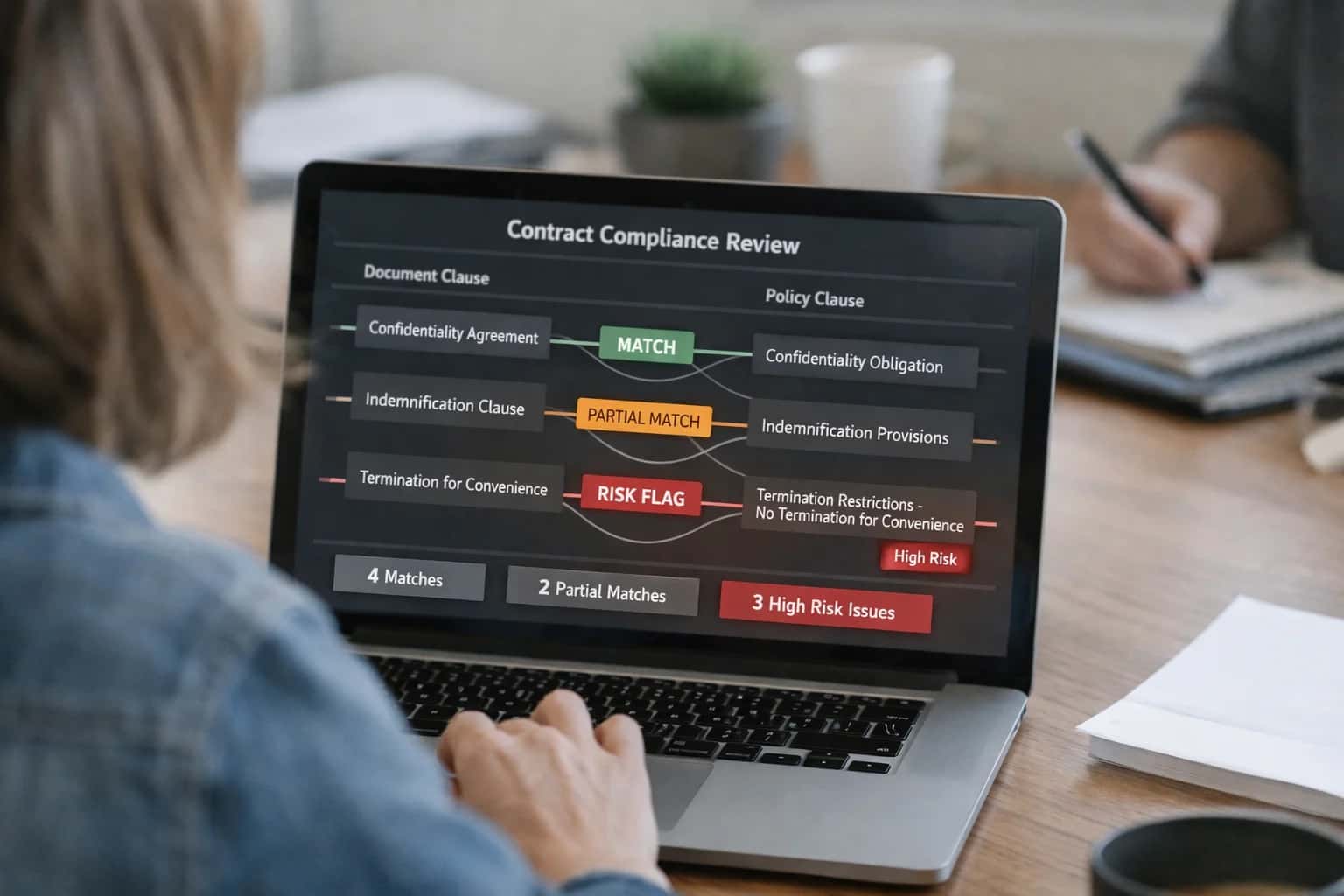
AUTOMATED SPECTRUM TRANSACTIONS
What is Smart Contract for Leasing?
A self-executing code agreement on a distributed ledger that automates the transfer of spectrum usage rights upon fulfillment of predefined conditions, such as a cryptocurrency payment.
By codifying rules from frameworks like Licensed Shared Access (LSA) directly into immutable code, the contract guarantees atomic settlement—spectrum access is granted only if payment succeeds. This mechanism enables real-time, micro-transaction-based spectrum sharing, creating a transparent, auditable, and trustless secondary market for Dynamic Spectrum Access.
AUTOMATED ENFORCEMENT
Core Characteristics of Spectrum Leasing Smart Contracts
Smart contracts for spectrum leasing transform traditional, slow, and manual license agreements into self-executing code on a distributed ledger. They automate the real-time transfer of usage rights upon cryptographic payment, ensuring trustless, transparent, and instantaneous spectrum access coordination.
01
Self-Executing Logic
The contract's terms are written directly in code. When a pre-defined condition is met, the agreement executes automatically without human intervention. For example, a secondary user's cryptocurrency payment to a specific wallet address instantly triggers a transaction that grants access rights for a defined frequency, time slot, and geolocation. This eliminates counterparty risk and the need for a manual broker.
02
Immutable and Transparent Audit Trail
Every transaction—from the initial offer and payment to the activation and termination of a lease—is cryptographically hashed and recorded on an immutable distributed ledger. This provides a single, verifiable source of truth for all parties, including regulators. The transparent audit trail simplifies dispute resolution and provides irrefutable proof of spectrum usage compliance for both the licensee and the lessee.
03
Tokenized Spectrum Access
Access rights are represented as digital tokens or non-fungible tokens (NFTs). A lease creates a time-bound, geofenced token that acts as a cryptographic key. Holding this token in a digital wallet authorizes a device to transmit on the specified frequency. This enables a fluid secondary market where spectrum rights can be fractionalized, bundled, and traded with the same efficiency as digital assets.
04
Automated Dispute Resolution
The contract can integrate with on-chain oracles that monitor real-world spectrum usage. If an oracle reports a violation, such as a primary user's pre-emption signal, the contract can autonomously execute a penalty clause. This might involve slashing a staked security deposit from the lessee and instantly returning it to the licensee, all without litigation. This mechanism enforces spectrum etiquette programmatically.
05
Integration with Spectrum Access Systems (SAS)
A smart contract does not operate in isolation. It acts as a programmable interface to a regulatory system like the FCC's SAS in the CBRS band. The contract can programmatically query a SAS for channel availability and maximum permissible power levels before executing a lease. Upon lease execution, it can automatically register the new secondary user with the SAS, ensuring the entire process remains compliant with the three-tiered access framework.
06
Micropayment and Dynamic Pricing Models
The low transaction costs of certain distributed ledgers enable real-time, per-second spectrum leasing. A smart contract can implement a dynamic pricing curve where the cost per megahertz-minute fluctuates based on real-time demand and network congestion. This allows for granular, usage-based billing models—such as streaming payments via state channels—that are impossible with traditional monthly or annual license agreements.
Enabling Efficiency, Speed & Accuracy
Intelligent Analysis, Decision & Execution
We build AI systems for teams that need search across company data, workflow automation across tools, or AI features inside products and internal software.
Talk to Us
Search across company data
Give teams answers from docs, tickets, runbooks, and product data with sources and permissions.
Useful when people spend too long searching or get different answers from different systems.
Enterprise searchRAGPermissions
Read more
Automate internal workflows
Use AI to route work, draft outputs, trigger actions, and keep approvals and logs in place.
Useful when repetitive work moves across multiple tools and teams.
AI agentsWorkflow automationGovernance
Read more
Add AI to products and internal tools
Build assistants, guided actions, or decision support into the software your team or customers already use.
Useful when AI needs to be part of the product, not a separate tool.
AI integrationDecision supportModel routing
Read moreSPECTRUM LEASING CLARIFIED
Frequently Asked Questions
Clear, technical answers to the most common questions about using self-executing code on distributed ledgers to automate and enforce dynamic spectrum access agreements.
A smart contract for spectrum leasing is self-executing code deployed on a distributed ledger that programmatically enforces the terms of a spectrum access agreement between a licensee and a lessee. It works by automating the exchange of access rights for payment without intermediaries. When a lessee sends the required cryptocurrency or stablecoin to the contract's address, the code automatically verifies the payment, logs the transaction immutably, and triggers an authorized transmission to a Spectrum Access System (SAS) or Geolocation Database to activate the lessee's transmission rights for a predefined duration, frequency, and geographic zone. Upon expiration or violation of interference limits, the contract can automatically revoke access and release the spectrum back to the pool, creating a frictionless, auditable secondary market.

About the author
Prasad Kumkar
CEO & MD, Inference Systems
Prasad Kumkar is the CEO & MD of Inference Systems and writes about AI systems architecture, LLM infrastructure, model serving, evaluation, and production deployment. Over 5+ years, he has worked across computer vision models, L5 autonomous vehicle systems, and LLM research, with a focus on taking complex AI ideas into real-world engineering systems.
His work and writing cover AI systems, large language models, AI agents, multimodal systems, autonomous systems, inference optimization, RAG, evaluation, and production AI engineering.
LinkedIn
Limited slotsGet a Free AI Consultation
Partnered with leading AI, data, and software stack.





How We Work
Custom AI workflows for your Business
One-fit-all AI don't work for modern businesses. At Inferensys, we aim to understand your business & custom requirements; which we use to define most efficient agentic workflows, the data, and the tools for your business.
01
Review the use case
We understand the task, the users, and where AI can actually help.
Read more02
Pick the right approach
We define what needs search, automation, or product integration.
Read more03
Build the first useful version
We implement the part that proves the value first.
Read more04
Improve from there
We add the checks and visibility needed to keep it useful.
Read moreThe first call is a practical review of your use case and the right next step.
Talk to Us