Constant False Alarm Rate (CFAR) is an adaptive signal processing algorithm that dynamically adjusts a detection threshold to maintain a constant, pre-defined probability of false alarm ($P_{FA}$) in the presence of fluctuating background noise or clutter. It achieves this by continuously estimating the local noise power from a set of reference cells surrounding the cell under test (CUT) and scaling the threshold accordingly, ensuring the detector's false alarm rate remains stable regardless of environmental changes.

Glossary
Constant False Alarm Rate (CFAR)
An adaptive threshold-setting algorithm that maintains a fixed probability of false alarm despite variations in background noise power, critical for reliable energy detection.
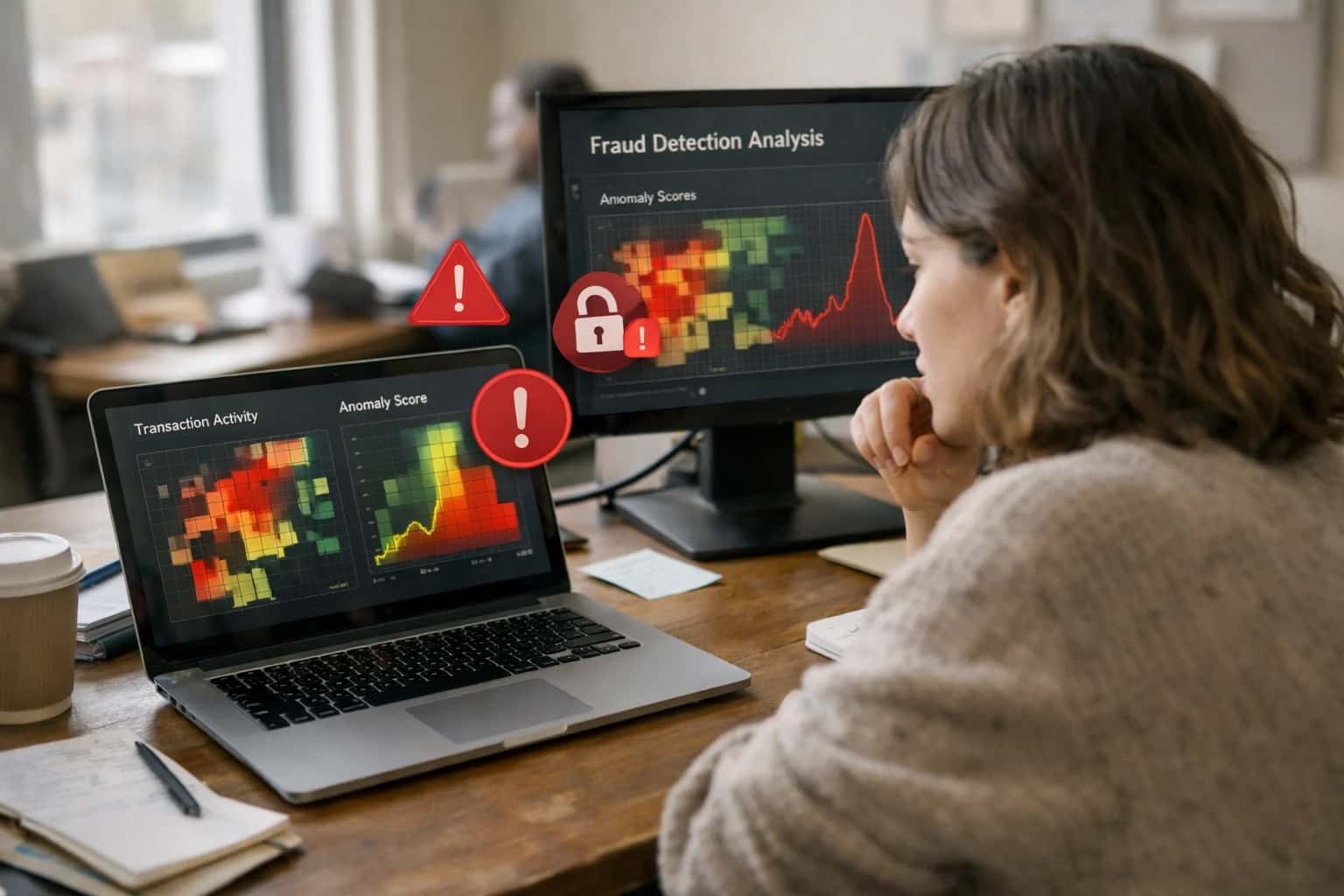
ADAPTIVE THRESHOLD DETECTION
What is Constant False Alarm Rate (CFAR)?
An adaptive threshold-setting algorithm that maintains a fixed probability of false alarm despite variations in background noise power, critical for reliable energy detection.
The most common variant, Cell-Averaging CFAR (CA-CFAR), computes the noise estimate by averaging the power in adjacent range or Doppler bins, assuming homogeneous interference. Advanced variants like Ordered-Statistic CFAR (OS-CFAR) and Greatest-Of CFAR (GO-CFAR) address non-homogeneous environments with multiple targets or clutter edges, preventing threshold inflation and target masking. CFAR is foundational in radar, cognitive radio, and spectrum sensing systems where reliable detection under noise uncertainty is paramount.
ADAPTIVE THRESHOLDING
Key CFAR Variants and Their Applications
While the core principle of CFAR is maintaining a constant false alarm rate, practical implementations vary significantly based on the assumed interference environment. The following variants represent the most widely deployed architectures for adapting the detection threshold to heterogeneous clutter and multi-target scenarios.
01
Cell-Averaging CFAR (CA-CFAR)
The foundational adaptive threshold technique that estimates the local noise power by calculating the arithmetic mean of the amplitudes within a set of reference cells surrounding the Cell Under Test (CUT).
- Optimal Performance: Achieves the highest probability of detection in homogeneous, exponentially distributed background clutter.
- Guard Cells: A ring of empty cells immediately adjacent to the CUT prevents signal energy from leaking into the reference window, which would bias the noise estimate upward.
- Key Limitation: Suffers severe masking effects in multi-target environments, where a closely spaced interfering target in the reference window inflates the threshold and suppresses detection of the primary target.
N = 16–32
Typical Reference Window Size
02
Greatest-Of CFAR (GO-CFAR)
Designed specifically to control false alarms at clutter edges—the transition zone between two regions of vastly different noise power. GO-CFAR splits the reference window into a leading and lagging half, calculates the mean of each, and selects the greater of the two as the noise estimate.
- Clutter Edge Robustness: Prevents the excessive false alarms that plague CA-CFAR when the CUT is in the low-power region but the reference window includes high-power clutter.
- Trade-off: Exhibits degraded detection performance in homogeneous environments compared to CA-CFAR, as the maximum operator introduces a constant bias into the threshold multiplier.
Leading + Lagging
Reference Window Halves
03
Smallest-Of CFAR (SO-CFAR)
The complementary strategy to GO-CFAR, optimized to resolve closely spaced targets. SO-CFAR computes the mean of the leading and lagging reference windows independently and selects the smaller of the two as the noise estimate.
- Multi-Target Resolution: If an interfering target falls entirely within one half of the reference window, the uncontaminated half provides a lower, uncorrupted noise estimate, allowing the primary target to be detected.
- Critical Weakness: Cannot control false alarms at clutter edges, as the smaller operator will select the low-power region's mean when the CUT is in the high-power region, causing a catastrophic spike in false detections.
Interfering Target
Primary Use Case
04
Ordered-Statistic CFAR (OS-CFAR)
A rank-based approach that abandons the arithmetic mean in favor of selecting the k-th largest sample from the sorted reference window as the noise estimate. This non-linear technique is inherently immune to multiple interfering targets, provided the number of interferers is less than the rank order parameter.
- Rank Parameter (k): Typically set to 3N/4, where N is the total number of reference cells. This value provides a robust compromise between CA-CFAR-like performance in homogeneous noise and tolerance to outliers.
- Computational Cost: Requires real-time sorting of the reference window, which historically limited its use to systems with dedicated digital signal processing hardware, though modern FPGAs have largely eliminated this constraint.
k = 3N/4
Typical Rank Selection
05
Censored CFAR (C-CFAR)
An iterative approach that actively identifies and excises interfering targets from the reference window before computing the noise estimate. C-CFAR applies an initial threshold to the reference cells, removes those exceeding it, and recalculates the mean using only the remaining, presumed noise-only, samples.
- Adaptive Censoring: The censoring depth dynamically adjusts to the number of detected interferers, making it highly effective in dense target environments where OS-CFAR's fixed rank parameter might fail.
- Convergence: Requires multiple iterations to stabilize the set of censored cells, introducing latency that must be accounted for in real-time system design.
Iterative
Processing Mode
06
Variability Index CFAR (VI-CFAR)
An adaptive, composite architecture that dynamically selects between CA-CFAR, GO-CFAR, and SO-CFAR based on real-time statistical tests performed on the reference window. VI-CFAR computes a variability index and a mean ratio to classify the environment as homogeneous, clutter edge, or multi-target.
- Hypothesis Testing: The variability index tests whether the reference cells are identically distributed, while the mean ratio compares the leading and lagging window averages.
- Decision Logic: A deterministic logic table maps the outcomes of these two tests to the optimal CFAR variant, providing near-optimal performance across all canonical interference scenarios without prior environmental knowledge.
3-in-1
Composite Architecture
CONSTANT FALSE ALARM RATE
Frequently Asked Questions
Explore the core mechanisms, design trade-offs, and practical implementations of CFAR algorithms used in modern spectrum sensing and radar systems.
Constant False Alarm Rate (CFAR) is an adaptive threshold-setting algorithm that dynamically adjusts the detection threshold to maintain a fixed, pre-defined probability of false alarm despite variations in background noise power and clutter. Unlike a fixed-threshold detector, which would drown in false positives as noise rises, CFAR continuously estimates the local interference level from neighboring reference cells. The core mechanism involves sliding a window of range or frequency bins across the data. For each Cell Under Test (CUT), the algorithm computes the average power of surrounding reference cells, multiplies it by a scaling factor derived from the desired false alarm probability, and compares the CUT power to this adaptive threshold. Guard cells immediately adjacent to the CUT are excluded from the noise estimate to prevent signal leakage from biasing the threshold upward, which would mask the target. This closed-loop estimation process ensures the detector maintains a constant false alarm rate across non-stationary noise environments, making it indispensable for reliable energy detection in cognitive radio and radar systems.
Enabling Efficiency, Speed & Accuracy
Intelligent Analysis, Decision & Execution
We build AI systems for teams that need search across company data, workflow automation across tools, or AI features inside products and internal software.
Talk to Us
Search across company data
Give teams answers from docs, tickets, runbooks, and product data with sources and permissions.
Useful when people spend too long searching or get different answers from different systems.
Enterprise searchRAGPermissions
Read more
Automate internal workflows
Use AI to route work, draft outputs, trigger actions, and keep approvals and logs in place.
Useful when repetitive work moves across multiple tools and teams.
AI agentsWorkflow automationGovernance
Read more
Add AI to products and internal tools
Build assistants, guided actions, or decision support into the software your team or customers already use.
Useful when AI needs to be part of the product, not a separate tool.
AI integrationDecision supportModel routing
Read more
About the author
Prasad Kumkar
CEO & MD, Inference Systems
Prasad Kumkar is the CEO & MD of Inference Systems and writes about AI systems architecture, LLM infrastructure, model serving, evaluation, and production deployment. Over 5+ years, he has worked across computer vision models, L5 autonomous vehicle systems, and LLM research, with a focus on taking complex AI ideas into real-world engineering systems.
His work and writing cover AI systems, large language models, AI agents, multimodal systems, autonomous systems, inference optimization, RAG, evaluation, and production AI engineering.
LinkedIn
Limited slotsGet a Free AI Consultation
Partnered with leading AI, data, and software stack.





How We Work
Custom AI workflows for your Business
One-fit-all AI don't work for modern businesses. At Inferensys, we aim to understand your business & custom requirements; which we use to define most efficient agentic workflows, the data, and the tools for your business.
01
Review the use case
We understand the task, the users, and where AI can actually help.
Read more02
Pick the right approach
We define what needs search, automation, or product integration.
Read more03
Build the first useful version
We implement the part that proves the value first.
Read more04
Improve from there
We add the checks and visibility needed to keep it useful.
Read moreThe first call is a practical review of your use case and the right next step.
Talk to Us