SEI Edge Deployment is the process of compressing and porting deep learning-based Specific Emitter Identification models onto low-SWaP (Size, Weight, and Power) hardware platforms to perform physical-layer device authentication locally, without cloud dependency. This involves applying techniques like post-training quantization, weight pruning, and neural architecture search to reduce the computational footprint of complex-valued neural networks so they can execute within the strict memory and processing limits of embedded software-defined radio (SDR) platforms or FPGA fabric, enabling real-time rogue device detection in disconnected or contested environments.

Glossary
SEI Edge Deployment
The optimization and deployment of emitter identification inference models directly on resource-constrained embedded systems or SDR platforms for real-time tactical use.
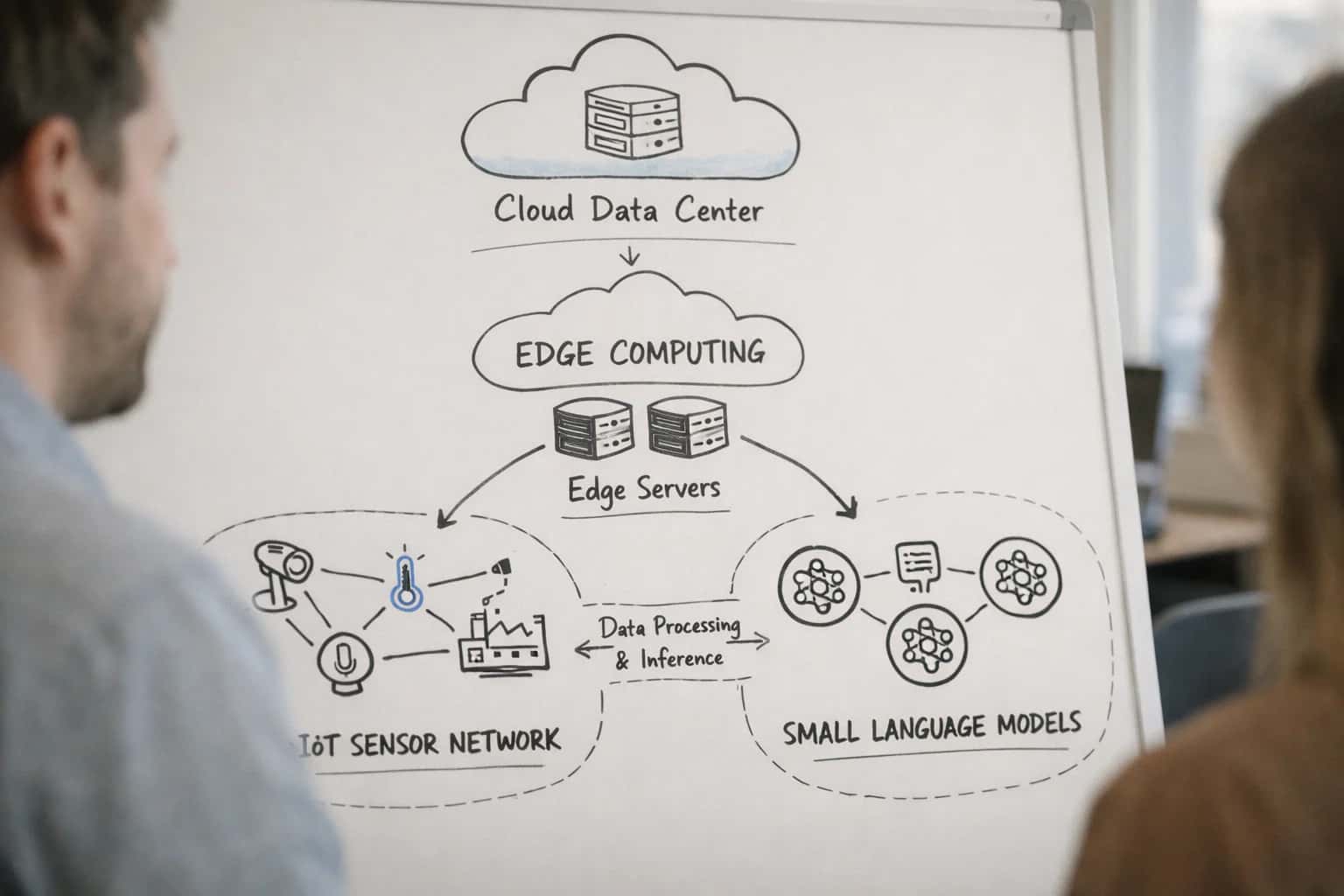
EMBEDDED EMITTER IDENTIFICATION
What is SEI Edge Deployment?
The engineering discipline focused on optimizing and deploying Specific Emitter Identification inference models directly onto resource-constrained embedded systems, software-defined radios, or field-programmable gate arrays for real-time, low-latency tactical authentication.
The primary challenge is preserving fingerprinting accuracy under aggressive model compression while maintaining microsecond-level inference latency required for tactical spectrum operations. Deployment pipelines must account for hardware-specific acceleration using Neural Processing Units (NPUs) or custom VHDL/Verilog synthesis, and often incorporate on-device adaptation loops to mitigate SEI concept drift caused by temperature fluctuations or component aging. This capability is critical for securing tactical mesh networks and IoT sensor grids where centralized authentication servers are unavailable or represent a single point of failure.
TACTICAL INFERENCE
Core Characteristics of SEI Edge Deployment
The defining architectural and performance attributes required to deploy Specific Emitter Identification (SEI) inference models directly onto resource-constrained embedded systems, SDR platforms, or tactical radios for real-time, low-latency physical-layer authentication.
01
Real-Time Inference Latency
The end-to-end processing time from signal capture to emitter classification must meet strict operational deadlines, typically < 10 milliseconds for tactical applications. This requires highly optimized inference pipelines that eliminate data transfer bottlenecks.
- Hard real-time constraints: Missed deadlines equate to mission failure in electronic warfare
- Pipeline optimization: Fusing signal pre-processing and neural network inference into a single, non-blocking execution graph
- Deterministic execution: Batching is eliminated; inference runs on a single sample or small mini-batch to guarantee predictable latency
< 10 ms
Tactical Latency Budget
02
Model Footprint Minimization
SEI models must be compressed to fit within the stringent memory and storage constraints of embedded FPGAs, ARM processors, or low-SWaP SDRs, often targeting a total model size of under 500 KB.
- Post-Training Quantization (PTQ): Reducing 32-bit floating-point weights to 8-bit integers (INT8) with minimal accuracy loss
- Weight Pruning: Removing near-zero connections in the neural network to create sparse compute graphs
- Knowledge Distillation: Training a compact 'student' model to mimic a larger, more accurate 'teacher' model's output distribution
< 500 KB
Target Model Size
03
On-Chip Signal Pre-Processing
Raw I/Q samples cannot be fed directly to a neural network. The edge device must perform feature extraction directly on the SDR's FPGA fabric to avoid overwhelming the general-purpose processor.
- Hardware-accelerated FFT: Generating spectrograms in real-time using dedicated DSP slices
- Pulse detection and gating: Isolating individual signal bursts from continuous streams before fingerprinting
- I/Q imbalance correction: Calibrating the receiver's own hardware impairments to prevent them from corrupting the transmitter's fingerprint
04
Power and Thermal Efficiency
Deployed on battery-powered or passively cooled systems, SEI inference must operate within a strict milliwatt power envelope. This dictates the choice of processing hardware and the complexity of the model architecture.
- Neural Processing Unit (NPU) offloading: Delegating matrix multiplications to dedicated, energy-efficient accelerators
- Dynamic voltage and frequency scaling (DVFS): Adjusting clock speeds based on current signal environment complexity
- Duty cycling: Activating the inference engine only upon signal detection to conserve power during idle periods
05
Over-the-Air Model Updates
SEI models suffer from concept drift as transmitter hardware ages or new devices appear. Edge deployments require a secure mechanism to receive updated model weights or adapt in the field without physical access.
- Delta updates: Transmitting only the compressed weight differentials, not the entire model
- Federated fine-tuning: Locally adapting the model to new channel conditions and sharing only encrypted gradient updates
- Cryptographic signing: Verifying the integrity and origin of model updates to prevent adversarial weight injection
06
Open-Set Recognition on Device
The edge model must not only classify known emitters but also detect and reject previously unseen rogue devices attempting network infiltration. This requires rejecting unknown signals with high confidence rather than forcing a wrong classification.
- Extreme Value Theory (EVT): Modeling the distribution of known emitter activation vectors to define a tight decision boundary
- Angular margin penalties: Training the model to produce compact, well-separated clusters for known devices, leaving vast empty space for unknowns
- Rejection threshold tuning: Balancing the False Acceptance Rate (FAR) against the False Rejection Rate (FRR) for the specific operational security posture
SEI EDGE DEPLOYMENT
Frequently Asked Questions
Addressing the core engineering challenges of deploying Specific Emitter Identification inference models directly onto resource-constrained embedded systems and SDR platforms for real-time tactical use.
SEI edge deployment is the process of optimizing and executing Specific Emitter Identification (SEI) deep learning inference models directly on resource-constrained embedded hardware, such as Software-Defined Radios (SDRs) or FPGA systems, rather than in a cloud data center. This is necessary for tactical and time-sensitive applications where low latency is non-negotiable; transmitting raw I/Q samples to a remote server introduces network delay that is unacceptable for real-time physical-layer authentication or electronic warfare. Furthermore, edge deployment ensures operational continuity in disconnected, intermittent, and limited (DIL) environments where cloud connectivity is unavailable, and it preserves data sovereignty by keeping sensitive signal intelligence strictly on the local device.
Enabling Efficiency, Speed & Accuracy
Intelligent Analysis, Decision & Execution
We build AI systems for teams that need search across company data, workflow automation across tools, or AI features inside products and internal software.
Talk to Us
Search across company data
Give teams answers from docs, tickets, runbooks, and product data with sources and permissions.
Useful when people spend too long searching or get different answers from different systems.
Enterprise searchRAGPermissions
Read more
Automate internal workflows
Use AI to route work, draft outputs, trigger actions, and keep approvals and logs in place.
Useful when repetitive work moves across multiple tools and teams.
AI agentsWorkflow automationGovernance
Read more
Add AI to products and internal tools
Build assistants, guided actions, or decision support into the software your team or customers already use.
Useful when AI needs to be part of the product, not a separate tool.
AI integrationDecision supportModel routing
Read more
About the author
Prasad Kumkar
CEO & MD, Inference Systems
Prasad Kumkar is the CEO & MD of Inference Systems and writes about AI systems architecture, LLM infrastructure, model serving, evaluation, and production deployment. Over 5+ years, he has worked across computer vision models, L5 autonomous vehicle systems, and LLM research, with a focus on taking complex AI ideas into real-world engineering systems.
His work and writing cover AI systems, large language models, AI agents, multimodal systems, autonomous systems, inference optimization, RAG, evaluation, and production AI engineering.
LinkedIn
Limited slotsGet a Free AI Consultation
Partnered with leading AI, data, and software stack.





How We Work
Custom AI workflows for your Business
One-fit-all AI don't work for modern businesses. At Inferensys, we aim to understand your business & custom requirements; which we use to define most efficient agentic workflows, the data, and the tools for your business.
01
Review the use case
We understand the task, the users, and where AI can actually help.
Read more02
Pick the right approach
We define what needs search, automation, or product integration.
Read more03
Build the first useful version
We implement the part that proves the value first.
Read more04
Improve from there
We add the checks and visibility needed to keep it useful.
Read moreThe first call is a practical review of your use case and the right next step.
Talk to Us