Rogue device detection operates on the principle that every transmitter possesses a Radio Frequency Distinct Native Attribute (RF-DNA) — a unique, unintentional signature caused by microscopic manufacturing variances in components like power amplifiers and oscillators. By continuously monitoring the physical layer, the system compares incoming signal features—such as I/Q imbalance, phase noise, and carrier frequency offset—against a whitelist of known authorized fingerprints. A mismatch triggers an immediate alert, identifying the device as rogue.

Glossary
Rogue Device Detection
The real-time identification of unauthorized or spoofed transmitters attempting to gain network access by detecting anomalies in their physical-layer fingerprint.
PHYSICAL-LAYER SECURITY
What is Rogue Device Detection?
Rogue device detection is a physical-layer security mechanism that identifies unauthorized or spoofed transmitters in real time by analyzing anomalies in their unique hardware-level radio frequency (RF) fingerprint.
This technique is fundamentally resistant to higher-layer identity spoofing, such as MAC address cloning, because it authenticates the physical hardware itself rather than a software-configurable identifier. Advanced implementations use open-set recognition models to simultaneously classify known devices and reject any transmitter whose fingerprint falls outside the learned authorized distribution. This provides zero-trust continuous authentication, detecting an adversary even if they perfectly mimic legitimate protocol behavior.
ROGUE DEVICE DETECTION
Frequently Asked Questions
Clear, technically precise answers to the most common questions about identifying unauthorized transmitters through physical-layer fingerprinting anomalies.
Rogue device detection is the real-time process of identifying unauthorized or spoofed transmitters attempting to gain network access by analyzing anomalies in their physical-layer fingerprint. Unlike traditional MAC-based authentication, which is trivially spoofed, this technique examines the unique, unintentional hardware impairments embedded in every transmitted waveform—such as I/Q imbalance, phase noise, and power amplifier non-linearity—to distinguish legitimate devices from impostors. When a device's RF fingerprint deviates from the enrolled profile of an authorized transmitter, the system flags it as rogue and can trigger automated quarantine or denial-of-service countermeasures. This approach provides a cryptographically independent second factor of authentication that operates at the physical layer, making it exceptionally difficult for adversaries to circumvent even with cloned MAC addresses or stolen cryptographic keys.
Enabling Efficiency, Speed & Accuracy
Intelligent Analysis, Decision & Execution
We build AI systems for teams that need search across company data, workflow automation across tools, or AI features inside products and internal software.
Talk to Us
Search across company data
Give teams answers from docs, tickets, runbooks, and product data with sources and permissions.
Useful when people spend too long searching or get different answers from different systems.
Enterprise searchRAGPermissions
Read more
Automate internal workflows
Use AI to route work, draft outputs, trigger actions, and keep approvals and logs in place.
Useful when repetitive work moves across multiple tools and teams.
AI agentsWorkflow automationGovernance
Read more
Add AI to products and internal tools
Build assistants, guided actions, or decision support into the software your team or customers already use.
Useful when AI needs to be part of the product, not a separate tool.
AI integrationDecision supportModel routing
Read morePHYSICAL-LAYER SECURITY
Key Features of Rogue Device Detection
Rogue device detection leverages deep learning to analyze unique hardware-level imperfections in transmitted waveforms, enabling real-time identification and rejection of unauthorized or spoofed transmitters before they gain network access.
01
Open-Set Recognition for Unknown Threats
Unlike traditional closed-set classifiers that force a decision among known devices, rogue detection systems employ open-set recognition to identify authorized transmitters while simultaneously flagging any previously unseen emitter as a potential threat.
- Rejects zero-day rogue devices without prior fingerprint enrollment
- Prevents forced misclassification of an attacker into a legitimate class
- Uses extreme value theory in the embedding space to define a decision boundary around known classes
02
MAC-Layer Cross-Referencing
A core detection mechanism involves cross-referencing the physical-layer RF fingerprint against the claimed MAC-layer identity. A mismatch immediately unmasks a spoofing attack, even if the cryptographic credentials are stolen.
- Detects MAC address spoofing in real-time
- Binds device identity to immutable hardware characteristics
- Provides defense-in-depth beyond 802.1X and WPA3
03
Channel-Robust Feature Extraction
Rogue detection models must distinguish hardware impairments from channel effects. Domain adversarial training forces the feature extractor to learn transmitter-specific signatures that remain stable despite varying multipath, fading, and Doppler conditions.
- Uses gradient reversal layers to confuse a channel condition classifier
- Extracts channel-invariant fingerprints for reliable operation in mobile environments
- Prevents environmental changes from triggering false rogue alerts
04
Continuous Authentication Framework
Moving beyond one-time authentication, rogue detection implements a zero-trust continuous authentication paradigm. The physical-layer identity is persistently validated throughout the entire session, detecting session hijacking attempts.
- Monitors I/Q stream integrity for mid-session device swapping
- Triggers immediate session termination on fingerprint deviation
- Integrates with SIEM systems for security orchestration and automated response
05
Adversarial Robustness Hardening
Sophisticated attackers may transmit low-power adversarial perturbations designed to fool the fingerprinting model. Rogue detection systems incorporate adversarial training and input transformation defenses to maintain accuracy under attack.
- Trains on projected gradient descent (PGD) adversarial examples
- Employs feature squeezing and spatial smoothing as pre-processing defenses
- Maintains >95% detection rate even under targeted evasion attempts
06
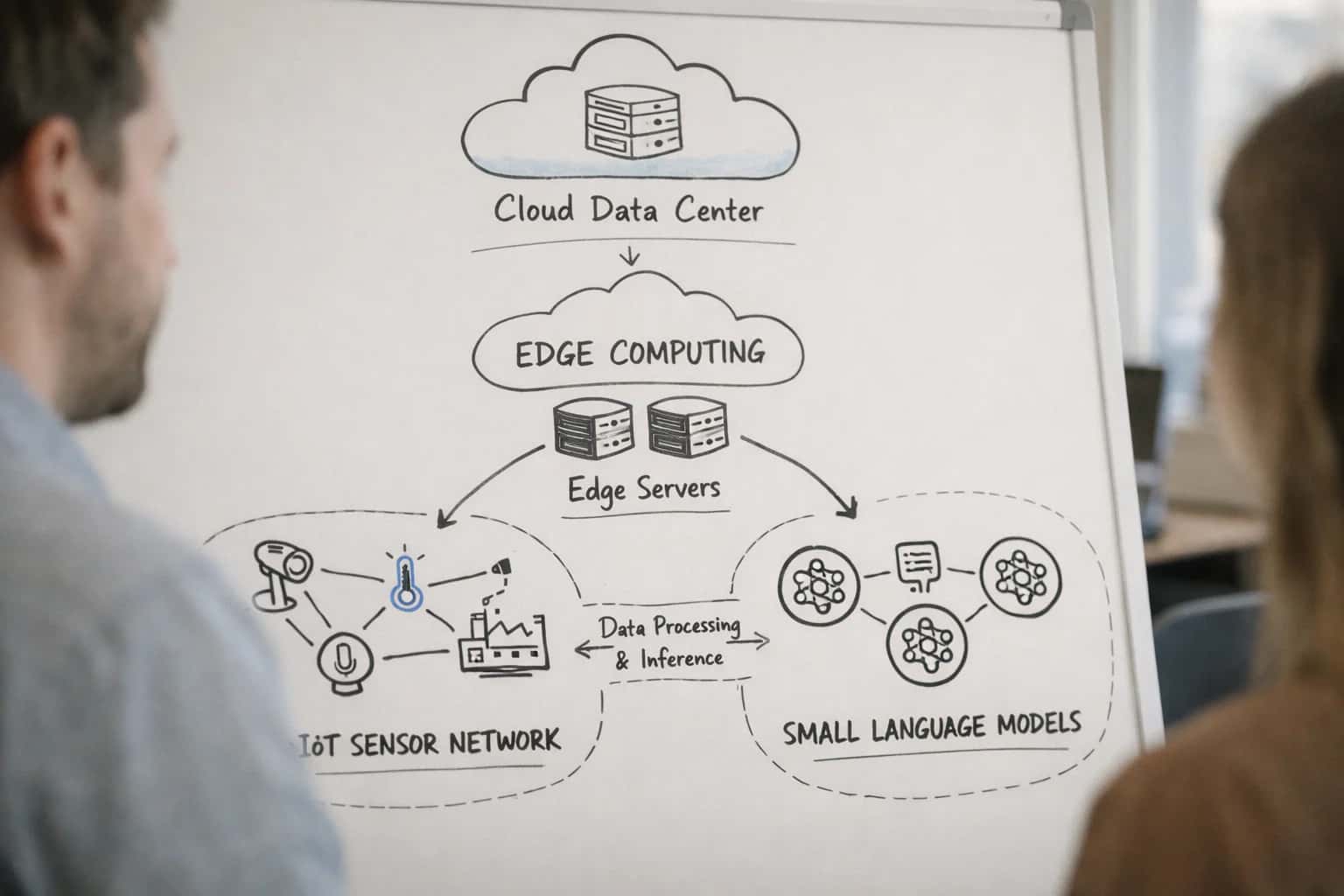
Real-Time Edge Inference
Tactical and IoT deployments require detection at the network edge with minimal latency. Models are optimized via post-training quantization and compiled for NPU acceleration to run directly on software-defined radio (SDR) platforms.
- Achieves inference latency of < 10 ms on embedded ARM and FPGA targets
- Operates without cloud connectivity for air-gapped and contested environments
- Supports continuous streaming inference on wideband I/Q data

About the author
Prasad Kumkar
CEO & MD, Inference Systems
Prasad Kumkar is the CEO & MD of Inference Systems and writes about AI systems architecture, LLM infrastructure, model serving, evaluation, and production deployment. Over 5+ years, he has worked across computer vision models, L5 autonomous vehicle systems, and LLM research, with a focus on taking complex AI ideas into real-world engineering systems.
His work and writing cover AI systems, large language models, AI agents, multimodal systems, autonomous systems, inference optimization, RAG, evaluation, and production AI engineering.
LinkedIn
Limited slotsGet a Free AI Consultation
Partnered with leading AI, data, and software stack.





How We Work
Custom AI workflows for your Business
One-fit-all AI don't work for modern businesses. At Inferensys, we aim to understand your business & custom requirements; which we use to define most efficient agentic workflows, the data, and the tools for your business.
01
Review the use case
We understand the task, the users, and where AI can actually help.
Read more02
Pick the right approach
We define what needs search, automation, or product integration.
Read more03
Build the first useful version
We implement the part that proves the value first.
Read more04
Improve from there
We add the checks and visibility needed to keep it useful.
Read moreThe first call is a practical review of your use case and the right next step.
Talk to Us