An RF digital twin is a dynamic software model that mirrors the exact radio frequency (RF) propagation characteristics, emitter locations, and interference patterns of a real-world physical space. Unlike a static Radio Environment Map (REM), a digital twin maintains a live, bidirectional data link with physical sensors and network elements, ingesting real-time telemetry to update its state. This synchronization allows the virtual model to reflect transient phenomena like moving interferers, weather-induced attenuation, and fluctuating traffic loads with high fidelity.

Glossary
RF Digital Twin
A high-fidelity, continuously synchronized virtual replica of a physical electromagnetic environment that allows network operators to simulate propagation changes, test spectrum policies, and optimize network configurations in real-time.
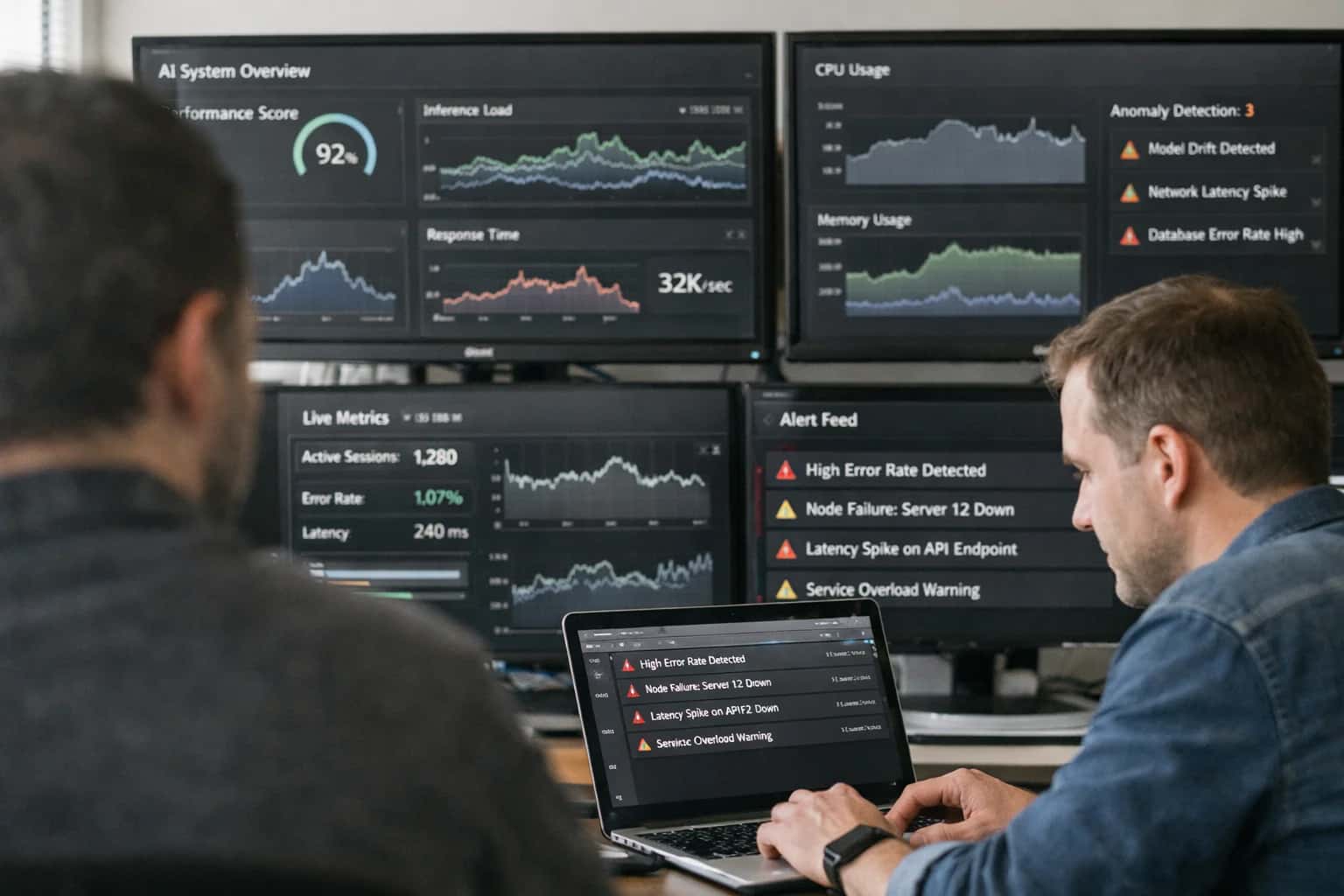
VIRTUALIZED ELECTROMAGNETIC ENVIRONMENT
What is an RF Digital Twin?
An RF digital twin is a high-fidelity, continuously synchronized virtual replica of a physical electromagnetic environment, enabling real-time simulation, policy testing, and network optimization.
The core utility of an RF digital twin lies in its capacity for non-disruptive 'what-if' analysis. Network operators can simulate the impact of new spectrum sharing policies, optimize beamforming configurations, or test cognitive radio algorithms against a virtual copy of the live environment without risking service degradation. By integrating a ray tracing engine with a 3D city model and real-time sensor data, the twin provides a sandbox for validating dynamic spectrum access strategies and predicting coverage holes before they manifest in the physical network.
VIRTUALIZED SPECTRUM
Core Characteristics of an RF Digital Twin
An RF Digital Twin is more than a static map; it is a synchronized, predictive, and interactive virtual replica of the physical electromagnetic environment. These core characteristics define its operational value for real-time spectrum management and mission rehearsal.
01
Continuous Physical-to-Virtual Synchronization
Unlike a static Radio Environment Map (REM), an RF Digital Twin maintains a high-fidelity state mirror through continuous data ingestion. It ingests real-time telemetry from distributed sensors, spectrum analyzers, and network elements to update propagation models instantaneously.
- Data Ingestion: Fuses heterogeneous inputs including IQ samples, geolocation pings, and weather data.
- Latency: Achieves near-real-time synchronization with sub-second latency to reflect dynamic interference events.
- State Reconciliation: Uses algorithms to resolve conflicts between sensor inputs, ensuring the virtual model matches physical reality.
02
Physics-Based Propagation Modeling
The twin relies on deterministic ray tracing engines and statistical models to simulate how radio waves interact with the physical world. It calculates multipath reflections, diffractions, and scattering using a 3D geometric database.
- Geospatial Inputs: Ingests Digital Elevation Models (DEM) and 3D City Models to account for terrain and clutter.
- Material Properties: Assigns electromagnetic permeability and conductivity values to building surfaces for accurate reflection loss.
- Model Hybridization: Combines ray tracing for dense urban canyons with empirical models like Longley-Rice for rural macro-cell coverage.
03
Predictive "What-If" Simulation Engine
A defining capability is the ability to simulate future states without affecting the live network. Operators can test spectrum policy changes or mission plans in a zero-risk sandbox.
- Scenario Testing: Simulate the impact of deploying a new 5G tower or activating a jammer before physical execution.
- Policy Optimization: Run thousands of iterations to find the optimal power and frequency allocation that maximizes capacity while minimizing interference.
- Predictive REM: Integrates time-series forecasting to project spectrum occupancy minutes or hours into the future, enabling proactive resource allocation.
04
AI-Native Anomaly and Interference Resolution
The digital twin leverages machine learning to autonomously identify and classify anomalies that deviate from the predicted baseline. It acts as a cognitive interference management system.
- Automatic Modulation Classification (AMC): Identifies unknown or adversarial signal types appearing in the environment.
- RF Fingerprinting: Authenticates transmitters by detecting hardware-level imperfections, flagging spoofing or rogue device attacks.
- Root Cause Analysis: Correlates a detected interference spike with specific physical events, such as a malfunctioning ballast or a moving vehicle, using spatial-temporal data.
05
Geospatial Data Fabric and Indexing
The twin is built on a robust geospatial data architecture that unifies all layers into a queryable, indexed fabric. It standardizes spatial indexing to correlate disparate data sets efficiently.
- H3 Hexagonal Grid: Often uses Uber's H3 discrete global grid system for distortion-minimizing spatial aggregation and hierarchical indexing.
- Multi-Layered Structure: Stacks layers for terrain, building clutter, real-time occupancy, predicted interference, and exclusion zones.
- Temporal Queries: Allows users to query the state of the spectrum at a specific coordinate and time in the past, present, or predicted future.
06
Closed-Loop Actuation and Control
The most advanced RF Digital Twins close the loop between sensing and actuation. Insights generated by the twin are automatically pushed to the physical network to optimize performance.
- Cognitive Radio Reconfiguration: Automatically pushes new frequency and power parameters to software-defined radios (SDRs) to avoid predicted interference.
- Spectrum Access System (SAS) Integration: Acts as the environmental sensing backbone for automated frequency coordination in CBRS bands.
- Dynamic Spectrum Sharing: Orchestrates real-time spectrum sharing between heterogeneous networks (e.g., radar and 5G) without human intervention.
Enabling Efficiency, Speed & Accuracy
Intelligent Analysis, Decision & Execution
We build AI systems for teams that need search across company data, workflow automation across tools, or AI features inside products and internal software.
Talk to Us
Search across company data
Give teams answers from docs, tickets, runbooks, and product data with sources and permissions.
Useful when people spend too long searching or get different answers from different systems.
Enterprise searchRAGPermissions
Read more
Automate internal workflows
Use AI to route work, draft outputs, trigger actions, and keep approvals and logs in place.
Useful when repetitive work moves across multiple tools and teams.
AI agentsWorkflow automationGovernance
Read more
Add AI to products and internal tools
Build assistants, guided actions, or decision support into the software your team or customers already use.
Useful when AI needs to be part of the product, not a separate tool.
AI integrationDecision supportModel routing
Read moreRF DIGITAL TWIN
Frequently Asked Questions
Explore the foundational concepts behind creating high-fidelity, continuously synchronized virtual replicas of the electromagnetic spectrum for simulation, policy testing, and real-time network optimization.
An RF Digital Twin is a high-fidelity, continuously synchronized virtual replica of a physical electromagnetic environment that allows network operators to simulate propagation changes, test spectrum policies, and optimize network configurations in real-time. It works by ingesting live data streams from distributed RF sensor fusion networks, geolocation databases, and digital elevation models (DEMs) to construct a dynamic radio environment map (REM). Unlike static propagation models, a digital twin maintains a bi-directional data flow: physical sensors feed the virtual model, and optimization commands from the model can be pushed back to physical cognitive radio architectures. The core computational engine typically combines ray tracing engines for deterministic urban path loss with Gaussian process regression for spatial interpolation of sparse measurements, creating a living model that reflects the current electromagnetic order of battle.

About the author
Prasad Kumkar
CEO & MD, Inference Systems
Prasad Kumkar is the CEO & MD of Inference Systems and writes about AI systems architecture, LLM infrastructure, model serving, evaluation, and production deployment. Over 5+ years, he has worked across computer vision models, L5 autonomous vehicle systems, and LLM research, with a focus on taking complex AI ideas into real-world engineering systems.
His work and writing cover AI systems, large language models, AI agents, multimodal systems, autonomous systems, inference optimization, RAG, evaluation, and production AI engineering.
LinkedIn
Limited slotsGet a Free AI Consultation
Partnered with leading AI, data, and software stack.





How We Work
Custom AI workflows for your Business
One-fit-all AI don't work for modern businesses. At Inferensys, we aim to understand your business & custom requirements; which we use to define most efficient agentic workflows, the data, and the tools for your business.
01
Review the use case
We understand the task, the users, and where AI can actually help.
Read more02
Pick the right approach
We define what needs search, automation, or product integration.
Read more03
Build the first useful version
We implement the part that proves the value first.
Read more04
Improve from there
We add the checks and visibility needed to keep it useful.
Read moreThe first call is a practical review of your use case and the right next step.
Talk to Us