A stream processor is a stateful computation engine designed to analyze and act upon unbounded data streams with minimal latency. Unlike traditional batch processing, which operates on finite, static datasets, a stream processor ingests an infinite flow of events—such as user clicks, sensor readings, or financial transactions—and executes logic on each record as it arrives. This enables real-time event-time processing, where operations like windowed aggregations and pattern matching are performed continuously, providing immediate insights and triggering instant actions within a data pipeline.

Glossary
Stream Processor
A computation engine that continuously processes unbounded streams of data records to perform operations like filtering, aggregation, and joining in real-time, as opposed to batch processing.
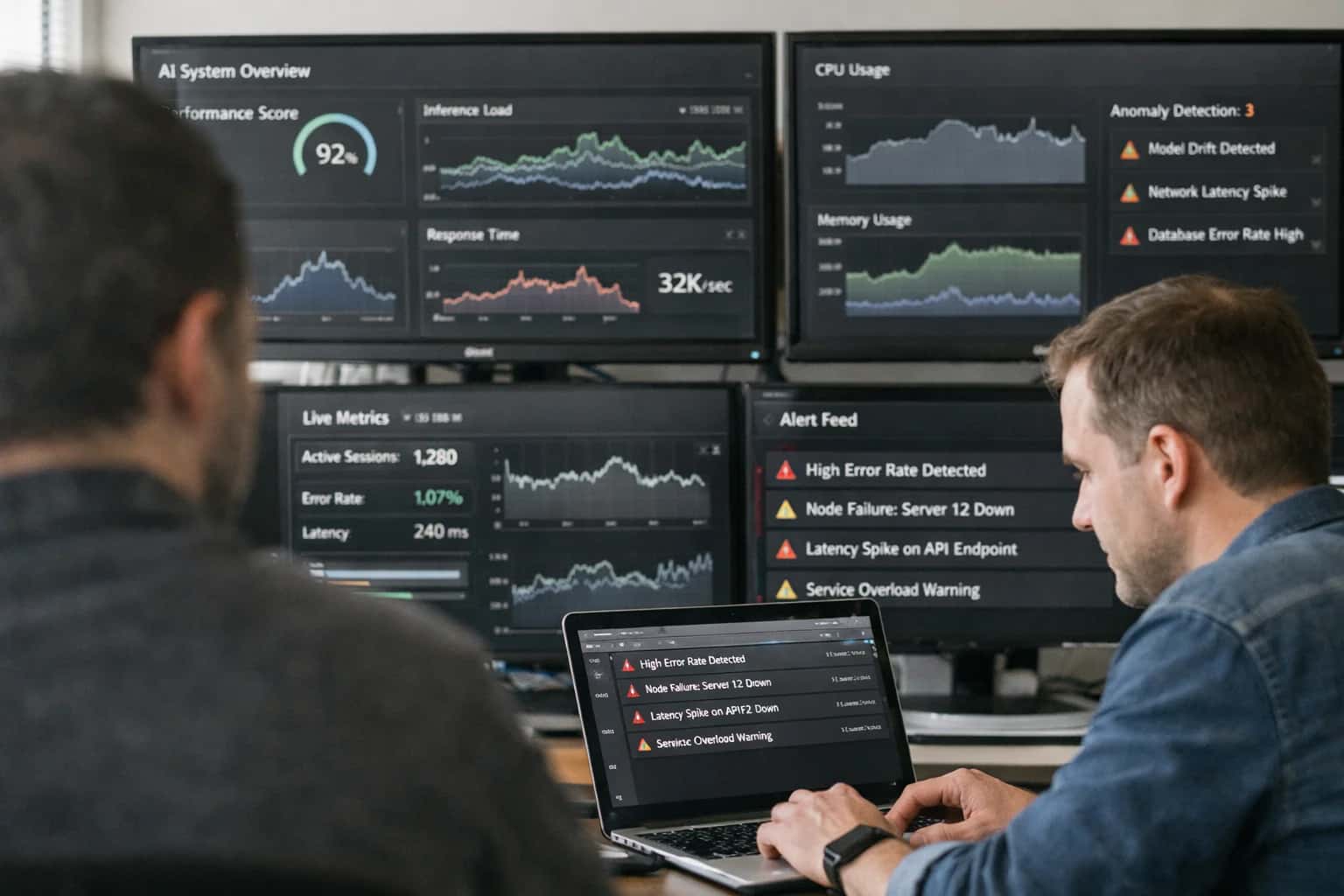
REAL-TIME COMPUTATION ENGINE
What is a Stream Processor?
A stream processor is a computation engine that continuously ingests and processes unbounded, real-time data records to perform operations like filtering, aggregation, and joining, as opposed to batch processing.
Modern stream processors, such as Apache Flink and Kafka Streams, provide fault tolerance through distributed checkpointing and guarantee processing semantics like exactly-once delivery. They maintain application state in a local state store, enabling complex, stateful operations like sessionization and stream-table joins without external database calls. By decoupling computation from storage and leveraging watermarks to handle out-of-order data, these engines form the backbone of event-driven architectures that power real-time personalization, fraud detection, and operational monitoring.
ARCHITECTURAL PRINCIPLES
Core Characteristics of Stream Processors
Stream processors are the computational engines that differentiate real-time systems from batch analytics. They operate on unbounded data flows, performing continuous computation with strict latency guarantees.
01
Unbounded Data Handling
Unlike batch processors that operate on finite, static datasets, a stream processor ingests a potentially infinite, continuously flowing dataset. It never assumes the data has ended. This requires an event-driven execution model where computation is triggered by the arrival of each new record, rather than a scheduled job. The processor must maintain a perpetual query that remains active indefinitely, processing data incrementally as it arrives.
02
Stateful Computation
Stream processors maintain local, fault-tolerant state to perform operations that require context beyond a single event. This state is stored in a state store, often an embedded RocksDB instance. Key operations requiring state include:
- Aggregations: Computing running counts, sums, or averages over windows.
- Joins: Correlating events from multiple streams based on a common key.
- Pattern Detection: Tracking sequences of events over time (e.g., abandoned cart). State is periodically persisted via checkpointing to durable storage for recovery.
03
Event Time vs. Processing Time
A critical distinction in stream processing is the difference between event time (when the event actually occurred in the real world) and processing time (when the system observed the event). Stream processors use watermarks—special timestamps injected into the data flow—to track event-time progress. A watermark with timestamp T asserts that the system believes all events with an event time earlier than T have been observed, allowing windows to be closed and results emitted correctly even with out-of-order data.
04
Exactly-Once Semantics
In distributed systems, failures can cause records to be reprocessed, leading to duplicate results. Stream processors implement exactly-once state semantics to ensure that state updates and downstream outputs are applied only once, even during retries. This is achieved through atomic checkpointing combined with idempotent sinks. The processor coordinates a distributed snapshot of the entire processing graph, ensuring all operators recover to a consistent state with no gaps or duplicates in the computation.
05
Windowing and Temporal Aggregation
Since streams are unbounded, aggregations must be scoped to finite time intervals called windows. Common window types include:
- Tumbling Windows: Fixed-size, non-overlapping, contiguous intervals (e.g., every 5 minutes).
- Sliding Windows: Fixed-size windows that slide by a specified interval, creating overlap (e.g., 10-minute window every 1 minute).
- Session Windows: Dynamically sized windows that group events separated by a period of inactivity, defined by a session gap. Windows are closed and results emitted when the watermark passes the window's end.
06
Backpressure Management
A fast upstream producer can overwhelm a slow downstream consumer. Stream processors implement backpressure as a natural flow-control mechanism. Unlike traditional message queues that buffer data, stream processors use blocking queues between operators. If a downstream operator is slow, the upstream operator's output buffer fills, causing it to block and stop reading from its own input, propagating the backpressure all the way to the source connector, effectively pausing ingestion until the bottleneck resolves.
PROCESSING PARADIGM COMPARISON
Stream Processing vs. Batch Processing
A technical comparison of continuous stream processing against traditional batch processing for data pipeline architectures.
| Feature | Stream Processing | Batch Processing | Micro-Batch Processing |
|---|---|---|---|
Processing Model | Continuous, record-by-record | Scheduled, bounded datasets | Small, frequent batches |
Latency | < 1 sec to milliseconds | Minutes to hours | Seconds to minutes |
Data Scope | Unbounded, infinite streams | Bounded, finite datasets | Unbounded, windowed chunks |
State Management | |||
Event Time Handling | |||
Exactly-Once Semantics | |||
Fault Tolerance | Checkpointing and replay | Job restart from beginning | Checkpointing per micro-batch |
Typical Throughput | Millions of events/sec | Petabytes per job | Hundreds of thousands/sec |
Use Case Fit | Real-time fraud detection, personalization | End-of-day reporting, ETL | Near-real-time dashboards |
Windowing Support | Tumbling, sliding, session | Tumbling, sliding | |
Backpressure Handling | |||
Resource Utilization | Always-on compute | Ephemeral, burst compute | Always-on, lower overhead |
Example Frameworks | Apache Flink, Kafka Streams | Apache Spark, Hadoop MapReduce | Spark Streaming, Storm Trident |
STREAM PROCESSOR ESSENTIALS
Frequently Asked Questions
Clear, technically precise answers to the most common questions about stream processing engines, their architectures, and operational characteristics.
A stream processor is a computation engine that continuously processes unbounded, real-time data streams record-by-record as they arrive, rather than operating on finite, static datasets. Unlike batch processing, which collects data over a window of time and processes it in bulk (introducing inherent latency), a stream processor executes logic—filtering, aggregation, joining, and pattern detection—with sub-second latency. The fundamental architectural difference is that stream processors maintain long-running operators with persistent state, enabling them to handle infinite data flows without a defined end. This makes them essential for use cases like fraud detection, real-time personalization, and operational monitoring where acting on data immediately is critical.
Enabling Efficiency, Speed & Accuracy
Intelligent Analysis, Decision & Execution
We build AI systems for teams that need search across company data, workflow automation across tools, or AI features inside products and internal software.
Talk to Us
Search across company data
Give teams answers from docs, tickets, runbooks, and product data with sources and permissions.
Useful when people spend too long searching or get different answers from different systems.
Enterprise searchRAGPermissions
Read more
Automate internal workflows
Use AI to route work, draft outputs, trigger actions, and keep approvals and logs in place.
Useful when repetitive work moves across multiple tools and teams.
AI agentsWorkflow automationGovernance
Read more
Add AI to products and internal tools
Build assistants, guided actions, or decision support into the software your team or customers already use.
Useful when AI needs to be part of the product, not a separate tool.
AI integrationDecision supportModel routing
Read more
About the author
Prasad Kumkar
CEO & MD, Inference Systems
Prasad Kumkar is the CEO & MD of Inference Systems and writes about AI systems architecture, LLM infrastructure, model serving, evaluation, and production deployment. Over 5+ years, he has worked across computer vision models, L5 autonomous vehicle systems, and LLM research, with a focus on taking complex AI ideas into real-world engineering systems.
His work and writing cover AI systems, large language models, AI agents, multimodal systems, autonomous systems, inference optimization, RAG, evaluation, and production AI engineering.
LinkedIn
Limited slotsGet a Free AI Consultation
Partnered with leading AI, data, and software stack.





How We Work
Custom AI workflows for your Business
One-fit-all AI don't work for modern businesses. At Inferensys, we aim to understand your business & custom requirements; which we use to define most efficient agentic workflows, the data, and the tools for your business.
01
Review the use case
We understand the task, the users, and where AI can actually help.
Read more02
Pick the right approach
We define what needs search, automation, or product integration.
Read more03
Build the first useful version
We implement the part that proves the value first.
Read more04
Improve from there
We add the checks and visibility needed to keep it useful.
Read moreThe first call is a practical review of your use case and the right next step.
Talk to Us