Event Stream Processing (ESP) is a computational paradigm that ingests, processes, and analyzes continuous, unbounded flows of event data in real-time, enabling systems to detect patterns and trigger actions within milliseconds of an event's occurrence. Unlike traditional batch processing, which operates on static, finite datasets at rest, ESP engines apply continuous queries, filters, aggregations, and pattern-matching logic against data in motion. This allows applications to derive immediate insights from high-velocity sources like clickstreams, IoT sensor telemetry, financial transactions, and application logs without first landing the data in a database.

Glossary
Event Stream Processing (ESP)
Event Stream Processing (ESP) is a computing paradigm that continuously processes and analyzes streams of event data in real-time to enable immediate detection of patterns and trigger automated actions.
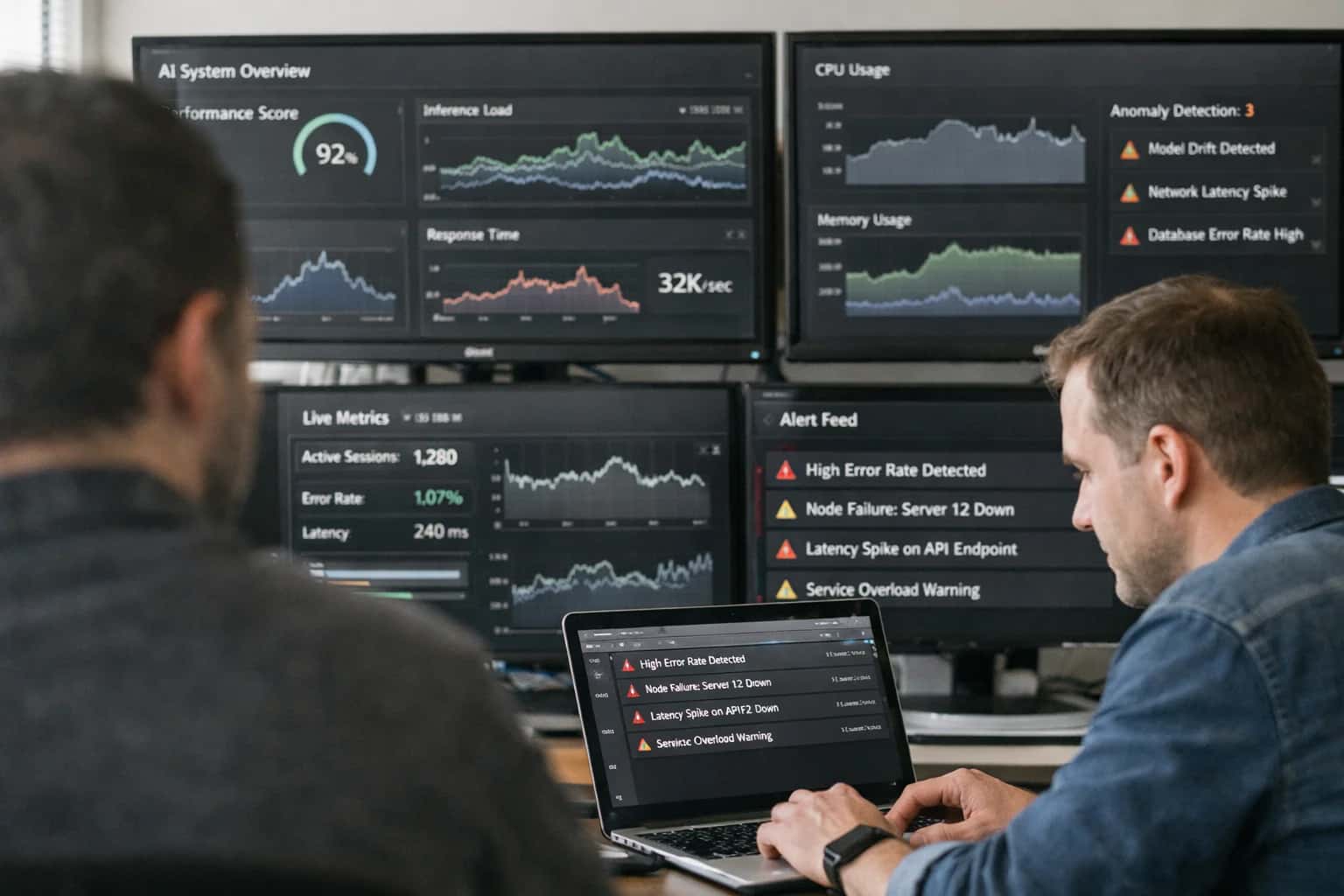
REAL-TIME DATA PARADIGM
What is Event Stream Processing (ESP)?
A computing paradigm that continuously processes and analyzes streams of event data in real-time to enable immediate detection of patterns and trigger automated actions.
ESP systems are foundational to real-time customer segmentation and hyper-personalization, where a user's live behavioral stream—page views, cart additions, and dwell time—must be analyzed instantly to assign them to a dynamic micro-segment. Core architectural components include windowed aggregations for computing metrics over sliding time intervals, watermarking to handle late-arriving data, and exactly-once semantics to guarantee state correctness despite failures. Frameworks like Apache Flink and Apache Kafka Streams implement these primitives, enabling stateful, fault-tolerant processing pipelines that power next-best-action engines and dynamic pricing algorithms.
CORE CAPABILITIES
Key Features of Event Stream Processing
Event Stream Processing (ESP) is defined by a set of architectural and functional capabilities that distinguish it from traditional batch processing. These features enable systems to handle unbounded, high-velocity data with low latency and high fault tolerance.
01
Unbounded Data Handling
Unlike batch processing, which operates on finite datasets, ESP is designed to process unbounded data streams that have no defined end. The system continuously ingests and processes events as they arrive, maintaining application state indefinitely. This is achieved through techniques like windowing and watermarks, which provide temporal boundaries for aggregations over an infinite stream without requiring the stream itself to stop.
02
Stateful Event Processing
ESP systems maintain durable, fault-tolerant state local to the processing engine. This allows applications to remember information across individual events, enabling complex operations like:
- Joins: Correlating events from multiple streams (e.g., matching a click to an impression).
- Aggregations: Computing running counts, sums, or averages over time windows.
- Pattern Detection: Tracking sequences of events to identify a state machine transition. State is typically backed by a local embedded key-value store like RocksDB and persisted to a checkpoint for recovery.
03
Exactly-Once Processing Semantics
A critical guarantee for transactional use cases, exactly-once semantics ensures that even in the event of a failure, each record's effect on the application state is applied precisely one time. This is implemented through a combination of distributed checkpointing and idempotent writes to sinks. During recovery, the system rewinds its state to the last consistent checkpoint and replays the source stream, preventing both data duplication and data loss.
04
Event Time vs. Processing Time
ESP distinguishes between two temporal domains:
- Event Time: The timestamp when an event actually occurred at its source.
- Processing Time: The wall-clock time when the event is observed by the processing engine. Using event time is essential for correctness in distributed systems where events can arrive out of order due to network delays. Watermarks are the mechanism used to track event time progress and signal when all events up to a certain timestamp are expected to have arrived, triggering windowed computations.
05
Low-Latency, High-Throughput Architecture
ESP engines are optimized for sub-second end-to-end latency while sustaining millions of events per second. This performance is achieved through:
- Pipelined execution: Operators process data without unnecessary disk I/O.
- Asynchronous checkpointing: State snapshots are taken continuously without pausing the data stream.
- Network-efficient shuffle: Data is redistributed between parallel operator instances using optimized network stacks. This architecture enables real-time use cases like fraud detection and dynamic pricing that cannot tolerate batch-processing delays.
06
CQRS and Event Sourcing Integration
ESP is a foundational technology for implementing Command Query Responsibility Segregation (CQRS) and Event Sourcing patterns. In this model, state-changing operations (commands) are captured as an immutable, append-only log of events. The ESP engine consumes this log to build and maintain materialized views or projections that serve query requests. This decouples the write model from the read model, allowing for independently scalable, highly optimized query performance for real-time customer segmentation.
DATA PROCESSING PARADIGMS
Event Stream Processing vs. Batch Processing
A technical comparison of continuous, real-time event stream processing against traditional scheduled batch processing for enterprise data workloads.
| Feature | Event Stream Processing | Batch Processing |
|---|---|---|
Processing Model | Continuous, record-by-record | Scheduled, bulk collection |
Latency | < 1 ms to seconds | Minutes to hours |
Data Scope | Unbounded, infinite streams | Bounded, finite datasets |
State Management | Stateful, incremental | Stateless or full recompute |
Output Cadence | Incremental, continuous | Complete, on job completion |
Fault Tolerance | Checkpointing and replay | Job restart from beginning |
Use Case Fit | Fraud detection, personalization | End-of-day reporting, ETL |
Complexity | Higher operational overhead | Simpler to implement and debug |
EVENT STREAM PROCESSING
Frequently Asked Questions
Clear, technically precise answers to the most common questions about real-time data processing architectures, state management, and delivery guarantees.
Event Stream Processing (ESP) is a computing paradigm that continuously ingests, processes, and analyzes unbounded sequences of event data records in real-time to enable immediate pattern detection and automated action. Unlike traditional batch processing, which operates on static, finite datasets at scheduled intervals, ESP systems process each event individually or in small, time-bounded windows as it arrives. The core mechanism involves a directed acyclic graph (DAG) of operators—such as filters, aggregators, and joiners—that transform and enrich the stream. Modern frameworks like Apache Flink and Apache Kafka Streams embed this logic directly into a distributed, fault-tolerant runtime, ensuring that stateful computations survive machine failures and deliver results with sub-millisecond latency.
Enabling Efficiency, Speed & Accuracy
Intelligent Analysis, Decision & Execution
We build AI systems for teams that need search across company data, workflow automation across tools, or AI features inside products and internal software.
Talk to Us
Search across company data
Give teams answers from docs, tickets, runbooks, and product data with sources and permissions.
Useful when people spend too long searching or get different answers from different systems.
Enterprise searchRAGPermissions
Read more
Automate internal workflows
Use AI to route work, draft outputs, trigger actions, and keep approvals and logs in place.
Useful when repetitive work moves across multiple tools and teams.
AI agentsWorkflow automationGovernance
Read more
Add AI to products and internal tools
Build assistants, guided actions, or decision support into the software your team or customers already use.
Useful when AI needs to be part of the product, not a separate tool.
AI integrationDecision supportModel routing
Read more
About the author
Prasad Kumkar
CEO & MD, Inference Systems
Prasad Kumkar is the CEO & MD of Inference Systems and writes about AI systems architecture, LLM infrastructure, model serving, evaluation, and production deployment. Over 5+ years, he has worked across computer vision models, L5 autonomous vehicle systems, and LLM research, with a focus on taking complex AI ideas into real-world engineering systems.
His work and writing cover AI systems, large language models, AI agents, multimodal systems, autonomous systems, inference optimization, RAG, evaluation, and production AI engineering.
LinkedIn
Limited slotsGet a Free AI Consultation
Partnered with leading AI, data, and software stack.





How We Work
Custom AI workflows for your Business
One-fit-all AI don't work for modern businesses. At Inferensys, we aim to understand your business & custom requirements; which we use to define most efficient agentic workflows, the data, and the tools for your business.
01
Review the use case
We understand the task, the users, and where AI can actually help.
Read more02
Pick the right approach
We define what needs search, automation, or product integration.
Read more03
Build the first useful version
We implement the part that proves the value first.
Read more04
Improve from there
We add the checks and visibility needed to keep it useful.
Read moreThe first call is a practical review of your use case and the right next step.
Talk to Us