Policy as Code is the software engineering practice of writing code to define, manage, and automatically enforce security and compliance policies. Using declarative languages like Rego and tools such as Open Policy Agent (OPA) Gatekeeper, organizations codify rules—such as 'storage buckets must not be public' or 'all data must be encrypted at rest'—into version-controlled, testable artifacts that execute as automated gates within CI/CD pipelines and infrastructure provisioning workflows.

Glossary
Policy as Code
Policy as Code (PaC) is the practice of writing code to define, manage, and automatically enforce security and compliance policies, ensuring infrastructure configurations meet standards like HIPAA.
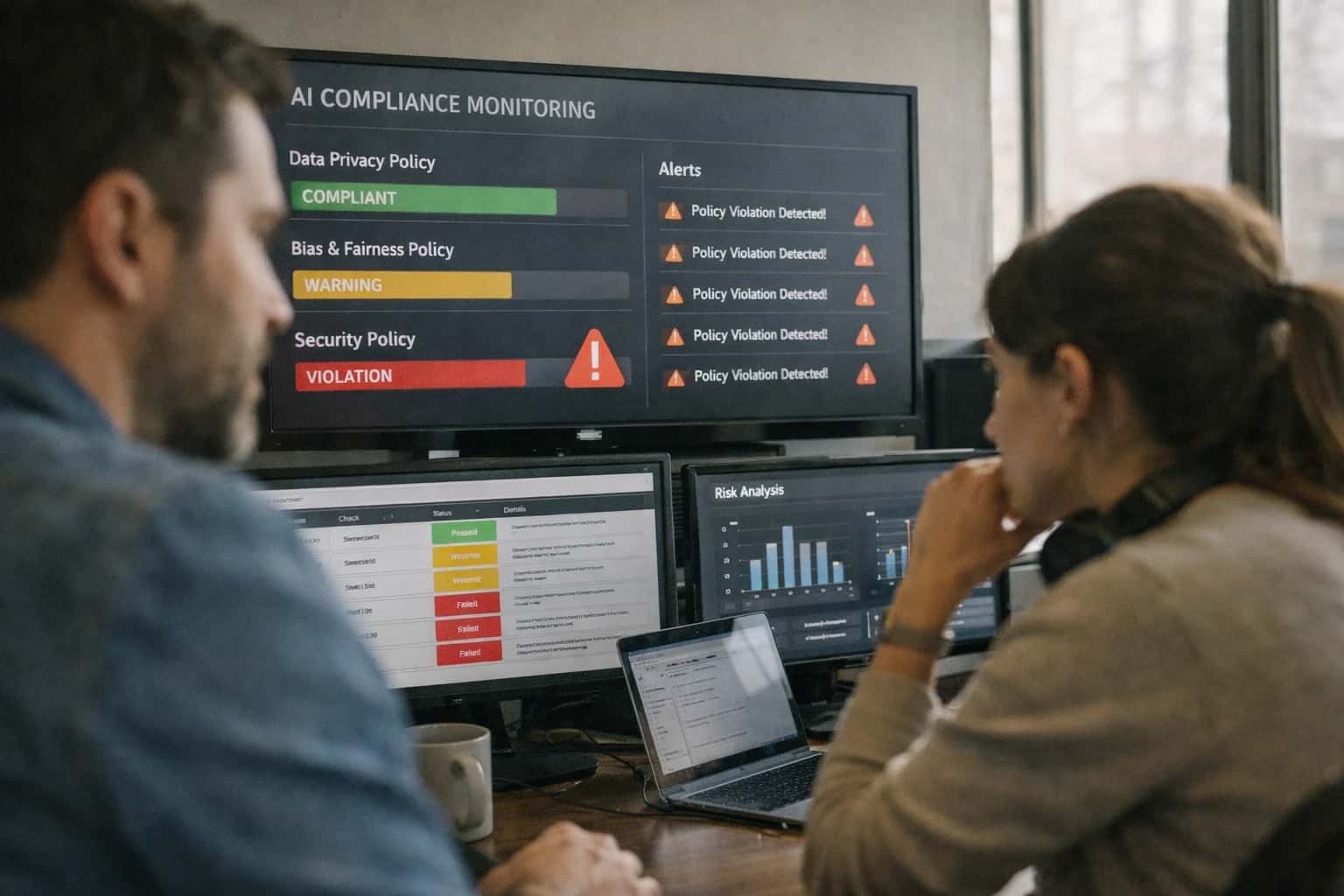
COMPLIANCE AUTOMATION
What is Policy as Code?
Policy as Code (PaC) is the practice of defining, managing, and automatically enforcing security and compliance rules through machine-readable code rather than manual processes.
In HIPAA-compliant Kubernetes environments, PaC enforces technical safeguards by preventing misconfigurations before deployment. For example, an OPA constraint can reject any pod that attempts to mount a host filesystem or lacks a required annotation for a Business Associate Agreement (BAA)-covered node pool, ensuring every workload meets encryption and network segmentation standards without manual security review.
AUTOMATED COMPLIANCE ENFORCEMENT
Core Characteristics of Policy as Code
Policy as Code transforms security and compliance rules from static documents into executable, version-controlled code. This approach enables automated enforcement, continuous auditing, and drift prevention across cloud-native healthcare infrastructure.
01
Declarative Policy Definition
Policies are expressed as declarative code that specifies the desired state of the system, not the procedural steps to achieve it. This shifts compliance from manual checklists to automated validation.
- Uses languages like Rego (OPA) or Kyverno policies
- Policies define what is allowed, not how to enforce it
- Example: A policy declares that all S3 buckets containing ePHI must have encryption enabled and public access blocked
- Declarative policies are idempotent — reapplying them produces the same result every time
Rego
Primary Policy Language
02
Admission Control Integration
Policy engines integrate directly into the Kubernetes admission control pipeline, intercepting API requests before resources are persisted. This creates a mandatory compliance gate that cannot be bypassed.
- ValidatingWebhookConfiguration calls the policy engine on resource creation or update
- MutatingWebhookConfiguration can automatically inject compliant defaults, such as adding required labels or sidecars
- Requests that violate policy are rejected with a clear violation message
- Example: A deployment requesting a container to run as root is denied before the pod is scheduled
< 10ms
Policy Evaluation Latency
03
Version-Controlled Compliance
Policies are stored in Git repositories alongside application code, bringing software development best practices to security governance. Every policy change is auditable, reviewable, and reversible.
- Policy changes go through pull request reviews and CI/CD pipelines
- Git history provides a complete audit trail of who changed what policy and when
- Rollback to a previous policy version is instantaneous
- Example: A HIPAA policy update requiring TLS 1.3 minimum is committed, reviewed by the security team, and deployed automatically across all clusters
04
Continuous Drift Detection
Policy engines continuously evaluate the actual state of infrastructure against the declared policy, detecting and remediating configuration drift. This closes the gap between point-in-time audits and real-time enforcement.
- OPA Gatekeeper's audit functionality periodically re-evaluates all existing resources
- Violations are surfaced as Kubernetes constraint violations with timestamps
- Integration with monitoring tools like Prometheus exposes compliance metrics
- Example: An operator manually removes encryption from an S3 bucket; the policy engine detects the drift within minutes and triggers an alert
05
HIPAA-Specific Constraint Templates
Reusable ConstraintTemplate resources encode HIPAA technical safeguards as parameterized policies. Security teams define the template once, and operations teams instantiate it with environment-specific parameters.
- Templates define the Rego logic for a class of violations
- Constraints bind the template to specific resources using match criteria
- Parameters allow customization:
requiredEncryptionAlgorithm: AES-256 - Example: A
RequireEncryptionAtResttemplate is instantiated with a constraint targeting all namespaces labeleddata-classification: phi
18
HIPAA Safe Harbor Identifiers
06
Policy Testing Frameworks
Policy as Code enables unit testing of compliance rules before they impact production workloads. This prevents misconfigured policies from blocking legitimate clinical operations.
- OPA's
opa testcommand runs assertions against Rego policies - Test fixtures simulate both compliant and non-compliant resource manifests
- Conftest integrates policy testing into existing test suites
- Example: A test verifies that a policy correctly allows a FHIR API pod with mTLS enabled while denying one without it
Enabling Efficiency, Speed & Accuracy
Intelligent Analysis, Decision & Execution
We build AI systems for teams that need search across company data, workflow automation across tools, or AI features inside products and internal software.
Talk to Us
Search across company data
Give teams answers from docs, tickets, runbooks, and product data with sources and permissions.
Useful when people spend too long searching or get different answers from different systems.
Enterprise searchRAGPermissions
Read more
Automate internal workflows
Use AI to route work, draft outputs, trigger actions, and keep approvals and logs in place.
Useful when repetitive work moves across multiple tools and teams.
AI agentsWorkflow automationGovernance
Read more
Add AI to products and internal tools
Build assistants, guided actions, or decision support into the software your team or customers already use.
Useful when AI needs to be part of the product, not a separate tool.
AI integrationDecision supportModel routing
Read morePOLICY AS CODE
Frequently Asked Questions
Clear, technical answers to the most common questions about defining, managing, and automatically enforcing security and compliance policies through machine-readable code.
Policy as Code (PaC) is the practice of writing code to define, manage, and automatically enforce security and compliance policies, rather than relying on manual checklists or tribal knowledge. It works by expressing rules—such as 'storage buckets must not be publicly readable' or 'all ePHI data must be encrypted at rest with AES-256'—in a high-level declarative language like Rego or a domain-specific policy language. A policy engine, such as Open Policy Agent (OPA), evaluates these rules against the state of your infrastructure in real-time. When integrated into a CI/CD pipeline or as a Kubernetes admission controller, the engine intercepts API requests, queries the policy, and returns an allow or deny decision. This transforms compliance from a periodic audit into a continuous, automated gate, ensuring that every infrastructure change is compliant before it is ever deployed. The core mechanism is the separation of the policy decision logic from the application business logic, enabling centralized governance across a heterogeneous stack.

About the author
Prasad Kumkar
CEO & MD, Inference Systems
Prasad Kumkar is the CEO & MD of Inference Systems and writes about AI systems architecture, LLM infrastructure, model serving, evaluation, and production deployment. Over 5+ years, he has worked across computer vision models, L5 autonomous vehicle systems, and LLM research, with a focus on taking complex AI ideas into real-world engineering systems.
His work and writing cover AI systems, large language models, AI agents, multimodal systems, autonomous systems, inference optimization, RAG, evaluation, and production AI engineering.
LinkedIn
Limited slotsGet a Free AI Consultation
Partnered with leading AI, data, and software stack.





How We Work
Custom AI workflows for your Business
One-fit-all AI don't work for modern businesses. At Inferensys, we aim to understand your business & custom requirements; which we use to define most efficient agentic workflows, the data, and the tools for your business.
01
Review the use case
We understand the task, the users, and where AI can actually help.
Read more02
Pick the right approach
We define what needs search, automation, or product integration.
Read more03
Build the first useful version
We implement the part that proves the value first.
Read more04
Improve from there
We add the checks and visibility needed to keep it useful.
Read moreThe first call is a practical review of your use case and the right next step.
Talk to Us