Medical tokenization is the process of segmenting unstructured clinical narrative into discrete units—words, subwords, or characters—that a language model can process. Unlike general-domain tokenization, it must preserve the semantic integrity of specialized entities like RxNorm drug names, SNOMED CT concepts, and complex abbreviations without fragmenting them into meaningless subword pieces.

Glossary
Medical Tokenization
Medical tokenization is the process of segmenting raw clinical text into atomic units using algorithms like Byte-Pair Encoding (BPE) or SentencePiece, often requiring vocabulary augmentation to handle specialized terms, abbreviations, and drug names not present in general-domain tokenizers.
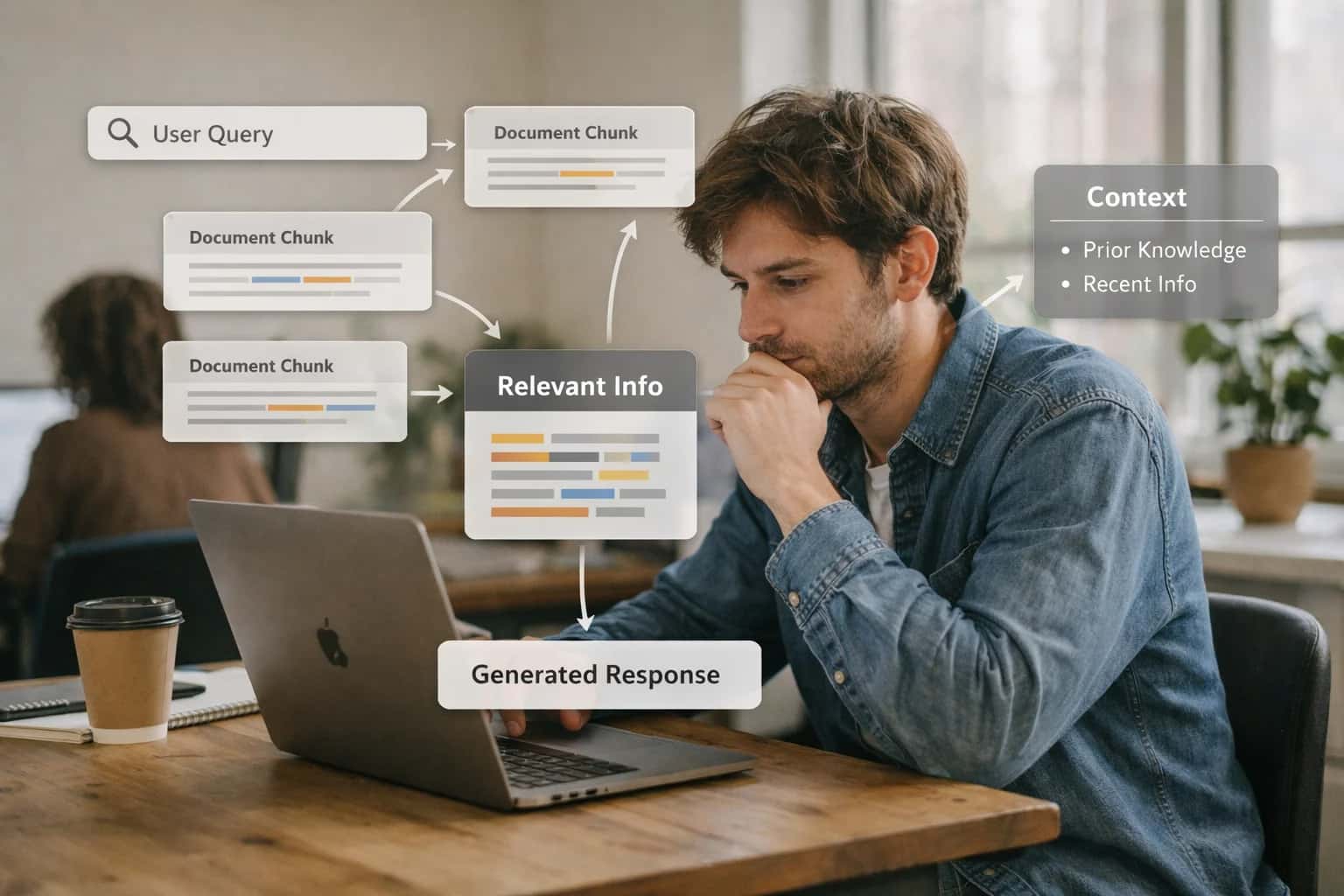
CLINICAL NLP PREPROCESSING
What is Medical Tokenization?
Medical tokenization is the foundational preprocessing step that segments raw clinical text into atomic units, or tokens, using algorithms specifically adapted to handle the unique vocabulary of healthcare.
This process typically relies on data-driven algorithms like Byte-Pair Encoding (BPE) or SentencePiece, which require vocabulary augmentation on corpora such as MIMIC-III to handle rare clinical terms. Effective tokenization prevents out-of-vocabulary issues and ensures that downstream models correctly interpret negated findings, lab values, and multi-word medical phrases.
CLINICAL NLP FUNDAMENTALS
Key Characteristics of Medical Tokenization
Medical tokenization adapts general-domain segmentation algorithms to the unique morphology of clinical language, ensuring that specialized terms, abbreviations, and drug names are preserved as meaningful atomic units rather than fragmented into subword gibberish.
01
Subword Tokenization Algorithms
Modern medical tokenizers rely on data-driven subword algorithms like Byte-Pair Encoding (BPE) and SentencePiece to balance vocabulary size with coverage. Unlike simple whitespace splitting, these algorithms learn to merge frequent character sequences from a clinical pretraining corpus. For example, the drug name 'acetaminophen' might be segmented into ['acet', 'amino', 'phen'] rather than broken on hyphens or lost entirely. This approach handles out-of-vocabulary terms by decomposing rare words into known subword units, critical for the long-tail distribution of medical terminology.
02
Clinical Vocabulary Augmentation
General-domain tokenizers fail catastrophically on clinical text because their vocabularies lack medical morphemes. A standard GPT tokenizer might encode 'hepatomegaly' as 4+ tokens like ['he', 'pat', 'ome', 'galy'], destroying semantic coherence. Vocabulary augmentation involves continuing BPE training on a target clinical corpus—such as MIMIC-III notes or PubMed abstracts—to add high-frequency medical subwords. This reduces sequence length, improves attention efficiency, and ensures that SNOMED CT concepts and RxNorm drug names are tokenized as minimal, meaningful units.
03
Abbreviation and Acronym Handling
Clinical text is dense with ambiguous abbreviations that challenge tokenization strategies. The string 'PT' could represent 'Physical Therapy,' 'Prothrombin Time,' or 'Patient' depending on context. A naive tokenizer treats it as a single token, losing disambiguation signals. Advanced medical tokenizers integrate contextual segmentation rules and may preserve surrounding punctuation—such as 'PT:' vs 'PT/' —as distinct tokens. This granularity allows downstream models to learn contextualized representations for each usage, preventing critical documentation errors in tasks like medication reconciliation.
04
Numerical and Measurement Tokenization
Clinical narratives contain dense numerical data—lab values, dosages, and vital signs—that general tokenizers fragment inconsistently. The phrase 'K+ 3.8 mmol/L' requires preserving the analyte, value, and unit as coherent units. Specialized medical tokenizers implement digit-aware splitting rules that treat numeric ranges, decimals, and unit suffixes as atomic tokens. This prevents a systolic blood pressure reading of '120/80' from being split into ['12', '0', '/', '8', '0'], which would destroy the clinical semantics and impair downstream structured extraction tasks.
05
Tokenization Impact on Context Windows
Inefficient tokenization directly constrains a model's effective context window. A clinical note that should fit within a 4,096-token limit may exceed it if rare medical terms are fragmented into multiple subwords. For example, 'pseudopseudohypoparathyroidism' might consume 8+ tokens in a general tokenizer versus 1-2 in a clinically-adapted one. This token bloat reduces the amount of patient history a model can attend to simultaneously, degrading performance on tasks requiring long-range temporal reasoning across an entire encounter or hospitalization.
06
Multilingual Clinical Tokenization
Global healthcare systems produce clinical text in dozens of languages, each with unique morphological challenges. German compound nouns like 'Krankenhausinformationssystem' require different merging strategies than English analytic constructions. Medical tokenizers trained on multilingual corpora like UMLS concept strings or translated biomedical literature must balance shared subword units across languages while preserving language-specific clinical morphemes. This enables cross-lingual transfer learning, where a model fine-tuned on English clinical notes can partially generalize to Spanish or German records through shared token representations.
MEDICAL TOKENIZATION
Frequently Asked Questions
Answers to the most critical technical questions about segmenting clinical text for healthcare-specific language models.
Medical tokenization is the process of segmenting unstructured clinical text into atomic units, or tokens, using subword algorithms like Byte-Pair Encoding (BPE) or SentencePiece, specifically adapted to handle the unique linguistic properties of healthcare data. Unlike general-domain tokenization, which is trained on web text and news articles, medical tokenization must contend with a high density of Protected Health Information (PHI) patterns, non-standard abbreviations (e.g., 'pt' for patient or prothrombin time), multi-word drug nomenclatures from RxNorm, and complex diagnostic codes like ICD-10-CM. A general-domain tokenizer often fragments a term like 'gastroenteritis' into sub-optimal pieces or splits a drug name like 'acetaminophen-codeine' incorrectly, losing semantic coherence. Medical tokenization requires vocabulary augmentation with domain-specific corpora such as MIMIC-III clinical notes and PubMed abstracts to ensure that specialized terms remain as intact, meaningful tokens, preserving the contextual embeddings that downstream models like ClinicalBERT rely on for accurate entity recognition and relation extraction.
Enabling Efficiency, Speed & Accuracy
Intelligent Analysis, Decision & Execution
We build AI systems for teams that need search across company data, workflow automation across tools, or AI features inside products and internal software.
Talk to Us
Search across company data
Give teams answers from docs, tickets, runbooks, and product data with sources and permissions.
Useful when people spend too long searching or get different answers from different systems.
Enterprise searchRAGPermissions
Read more
Automate internal workflows
Use AI to route work, draft outputs, trigger actions, and keep approvals and logs in place.
Useful when repetitive work moves across multiple tools and teams.
AI agentsWorkflow automationGovernance
Read more
Add AI to products and internal tools
Build assistants, guided actions, or decision support into the software your team or customers already use.
Useful when AI needs to be part of the product, not a separate tool.
AI integrationDecision supportModel routing
Read more
About the author
Prasad Kumkar
CEO & MD, Inference Systems
Prasad Kumkar is the CEO & MD of Inference Systems and writes about AI systems architecture, LLM infrastructure, model serving, evaluation, and production deployment. Over 5+ years, he has worked across computer vision models, L5 autonomous vehicle systems, and LLM research, with a focus on taking complex AI ideas into real-world engineering systems.
His work and writing cover AI systems, large language models, AI agents, multimodal systems, autonomous systems, inference optimization, RAG, evaluation, and production AI engineering.
LinkedIn
Limited slotsGet a Free AI Consultation
Partnered with leading AI, data, and software stack.





How We Work
Custom AI workflows for your Business
One-fit-all AI don't work for modern businesses. At Inferensys, we aim to understand your business & custom requirements; which we use to define most efficient agentic workflows, the data, and the tools for your business.
01
Review the use case
We understand the task, the users, and where AI can actually help.
Read more02
Pick the right approach
We define what needs search, automation, or product integration.
Read more03
Build the first useful version
We implement the part that proves the value first.
Read more04
Improve from there
We add the checks and visibility needed to keep it useful.
Read moreThe first call is a practical review of your use case and the right next step.
Talk to Us