Temporal reasoning for eligibility is the computational process by which an AI system interprets, sequences, and validates time-dependent clinical constraints—such as washout periods, disease progression timelines, or therapy sequences—against a patient's longitudinal health record. It moves beyond simple presence/absence checks to evaluate the chronological relationship between discrete medical events, ensuring a patient's history satisfies the precise temporal logic defined in a trial's inclusion and exclusion criteria.

Glossary
Temporal Reasoning for Eligibility
The AI capability to interpret and validate time-dependent clinical constraints, such as washout periods or disease progression timelines, against a patient's longitudinal record.
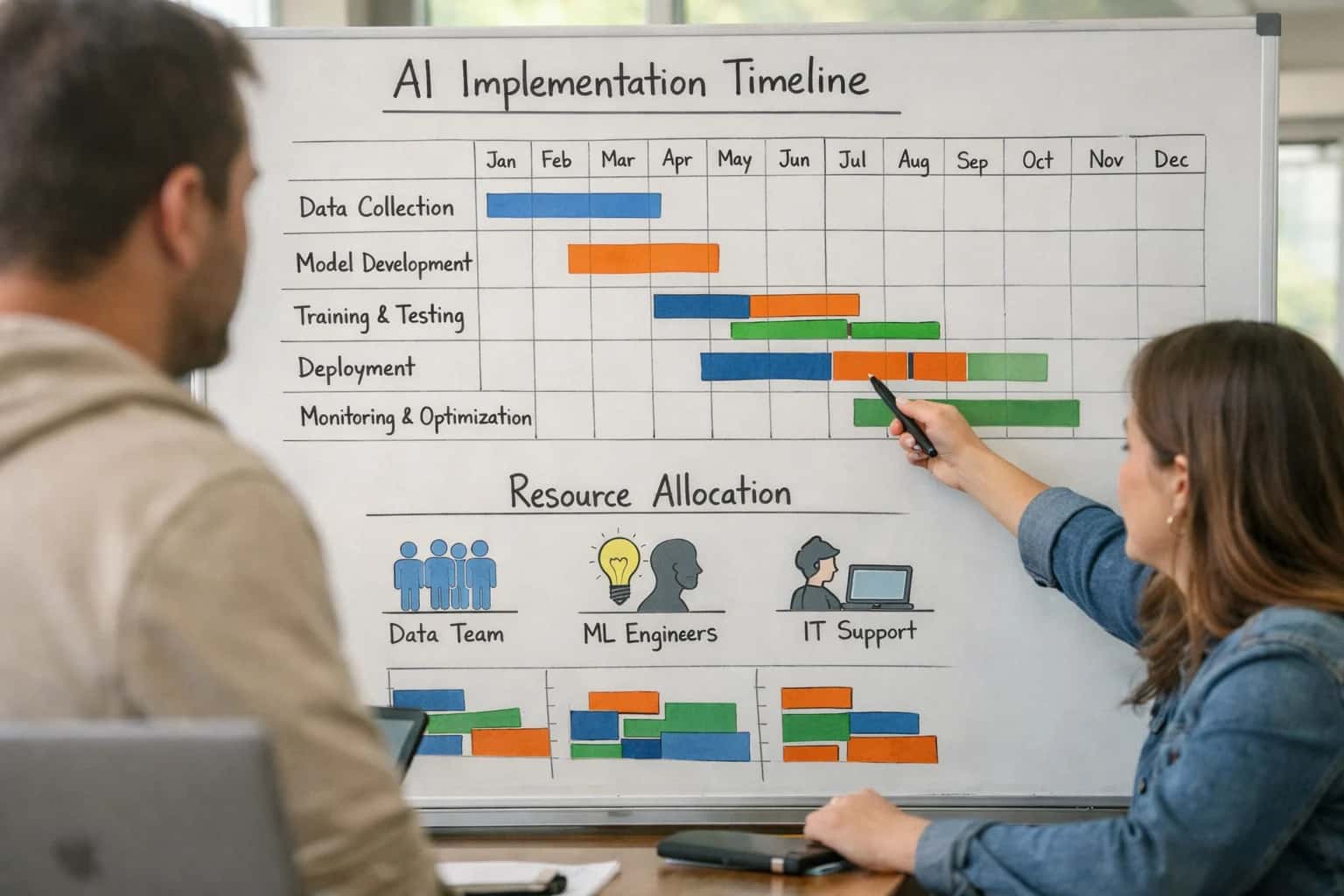
CHRONOLOGICAL CONSTRAINT VALIDATION
What is Temporal Reasoning for Eligibility?
The AI capability to interpret and validate time-dependent clinical constraints against a patient's longitudinal record to determine trial eligibility.
This capability relies on clinical event sequencing and patient timeline reconstruction to normalize disparate, timestamped data points from EHRs into a coherent chronology. The system must resolve relative temporal expressions like "within 4 weeks of enrollment" or "at least 6 months prior" and handle complex interval logic, such as verifying that a specific diagnosis occurred after a prior therapy but before disease progression, to produce a definitive eligibility determination.
CHRONOLOGICAL LOGIC
Core Capabilities of Temporal Reasoning Engines
The foundational mechanisms that allow AI systems to interpret, validate, and sequence time-dependent clinical constraints against a patient's complete longitudinal record.
01
Temporal Constraint Parsing
The automated extraction and normalization of time-bound logic from unstructured eligibility criteria. The engine identifies and structures complex temporal expressions such as 'within 28 days of enrollment', 'no myocardial infarction in the past 3 months', or 'progressive disease after at least 2 prior lines of therapy'.
- Converts free-text durations into machine-readable intervals (e.g.,
P28D,P3M) - Resolves anchor events like 'enrollment date' or 'start of treatment' to specific timestamps
- Handles relative temporal operators: before, after, during, within
- Distinguishes between point-in-time events and durational states
02
Event Sequencing and Chronology
The reconstruction of a patient's clinical timeline by ordering discrete medical events based on their timestamps. The engine assembles a longitudinal patient record from disparate data sources—encounters, lab results, medication orders, and diagnoses—to validate complex sequential logic.
- Orders events like diagnosis → first-line therapy → progression → second-line therapy
- Detects gaps and inconsistencies in timestamped data
- Validates that required sequences occurred in the correct temporal order
- Supports both absolute dates and relative ordering when precise timestamps are unavailable
03
Washout Period Validation
The automated verification that a sufficient drug-free interval has elapsed between a patient's last dose of a prohibited medication and the trial's screening date. This is critical for ensuring patient safety and protocol compliance.
- Calculates the interval between last administration date and screening date
- Cross-references prohibited medication lists from trial protocols
- Accounts for drug half-life and known pharmacokinetic washout durations
- Flags borderline cases where the washout window is within a configurable margin of error
04
Disease Progression Timeline Analysis
The evaluation of a patient's disease trajectory over time to determine if it meets protocol-specified progression requirements. The engine analyzes temporal patterns in tumor markers, imaging reports, and clinical assessments to validate criteria like 'documented progression within 6 months of last therapy.'
- Tracks RECIST criteria assessments across multiple timepoints
- Calculates progression-free survival intervals from treatment start dates
- Identifies the date of first documented progression for eligibility anchoring
- Distinguishes between radiographic progression and clinical progression events
05
Temporal Window Overlap Detection
The identification of conflicts where multiple time-dependent criteria impose incompatible windows on a patient's record. The engine detects when two required events must occur within overlapping but mutually exclusive timeframes.
- Evaluates all active temporal constraints simultaneously
- Detects impossible combinations (e.g., 'within 14 days' AND 'after 28 days')
- Prioritizes the most restrictive window when conflicts are resolvable
- Generates explicit conflict explanations for clinical reviewer audit
06
Relative Date Anchoring
The resolution of temporal expressions that reference a dynamic anchor point rather than a fixed calendar date. The engine binds relative references like 'date of informed consent,' 'Cycle 1 Day 1,' or 'time of randomization' to the appropriate patient-specific or protocol-defined timestamps.
- Maintains a registry of all protocol-defined anchor events
- Dynamically resolves anchors based on patient-specific milestone dates
- Handles nested relative references (e.g., '30 days after the last dose of prior therapy')
- Supports both forward-looking and retrospective temporal reasoning
TEMPORAL REASONING FOR ELIGIBILITY
Frequently Asked Questions
Explore the critical AI capability of interpreting and validating time-dependent clinical constraints against a patient's longitudinal record for accurate trial matching.
Temporal reasoning is the AI capability to interpret, sequence, and validate time-dependent clinical constraints—such as washout periods, disease progression timelines, and treatment sequences—against a patient's longitudinal medical record. Unlike simple keyword matching, temporal reasoning understands the chronological order and timing of events. For example, it can verify that a patient's last chemotherapy dose occurred more than 28 days before enrollment, or that a myocardial infarction happened within the last 6 months, not 6 years ago. This capability relies on clinical event sequencing, patient timeline reconstruction, and temporal constraint validation to ensure that a patient's medical history aligns with the protocol's time-window requirements. Without temporal reasoning, screening systems generate high rates of false positives by ignoring the critical dimension of time.
Enabling Efficiency, Speed & Accuracy
Intelligent Analysis, Decision & Execution
We build AI systems for teams that need search across company data, workflow automation across tools, or AI features inside products and internal software.
Talk to Us
Search across company data
Give teams answers from docs, tickets, runbooks, and product data with sources and permissions.
Useful when people spend too long searching or get different answers from different systems.
Enterprise searchRAGPermissions
Read more
Automate internal workflows
Use AI to route work, draft outputs, trigger actions, and keep approvals and logs in place.
Useful when repetitive work moves across multiple tools and teams.
AI agentsWorkflow automationGovernance
Read more
Add AI to products and internal tools
Build assistants, guided actions, or decision support into the software your team or customers already use.
Useful when AI needs to be part of the product, not a separate tool.
AI integrationDecision supportModel routing
Read more
About the author
Prasad Kumkar
CEO & MD, Inference Systems
Prasad Kumkar is the CEO & MD of Inference Systems and writes about AI systems architecture, LLM infrastructure, model serving, evaluation, and production deployment. Over 5+ years, he has worked across computer vision models, L5 autonomous vehicle systems, and LLM research, with a focus on taking complex AI ideas into real-world engineering systems.
His work and writing cover AI systems, large language models, AI agents, multimodal systems, autonomous systems, inference optimization, RAG, evaluation, and production AI engineering.
LinkedIn
Limited slotsGet a Free AI Consultation
Partnered with leading AI, data, and software stack.





How We Work
Custom AI workflows for your Business
One-fit-all AI don't work for modern businesses. At Inferensys, we aim to understand your business & custom requirements; which we use to define most efficient agentic workflows, the data, and the tools for your business.
01
Review the use case
We understand the task, the users, and where AI can actually help.
Read more02
Pick the right approach
We define what needs search, automation, or product integration.
Read more03
Build the first useful version
We implement the part that proves the value first.
Read more04
Improve from there
We add the checks and visibility needed to keep it useful.
Read moreThe first call is a practical review of your use case and the right next step.
Talk to Us