Business Activity Monitoring (BAM) is software that aggregates, analyzes, and presents real-time data on key performance indicators (KPIs) and business transactions to enable immediate operational response. It functions by continuously ingesting event streams from diverse enterprise applications—such as ERP, CRM, and supply chain systems—and applying predefined rules or thresholds to detect anomalies, bottlenecks, or SLA breaches as they occur, rather than retrospectively.

Glossary
Business Activity Monitoring (BAM)
Software that provides real-time dashboards and alerts on key performance indicators and business transactions to enable rapid operational response.
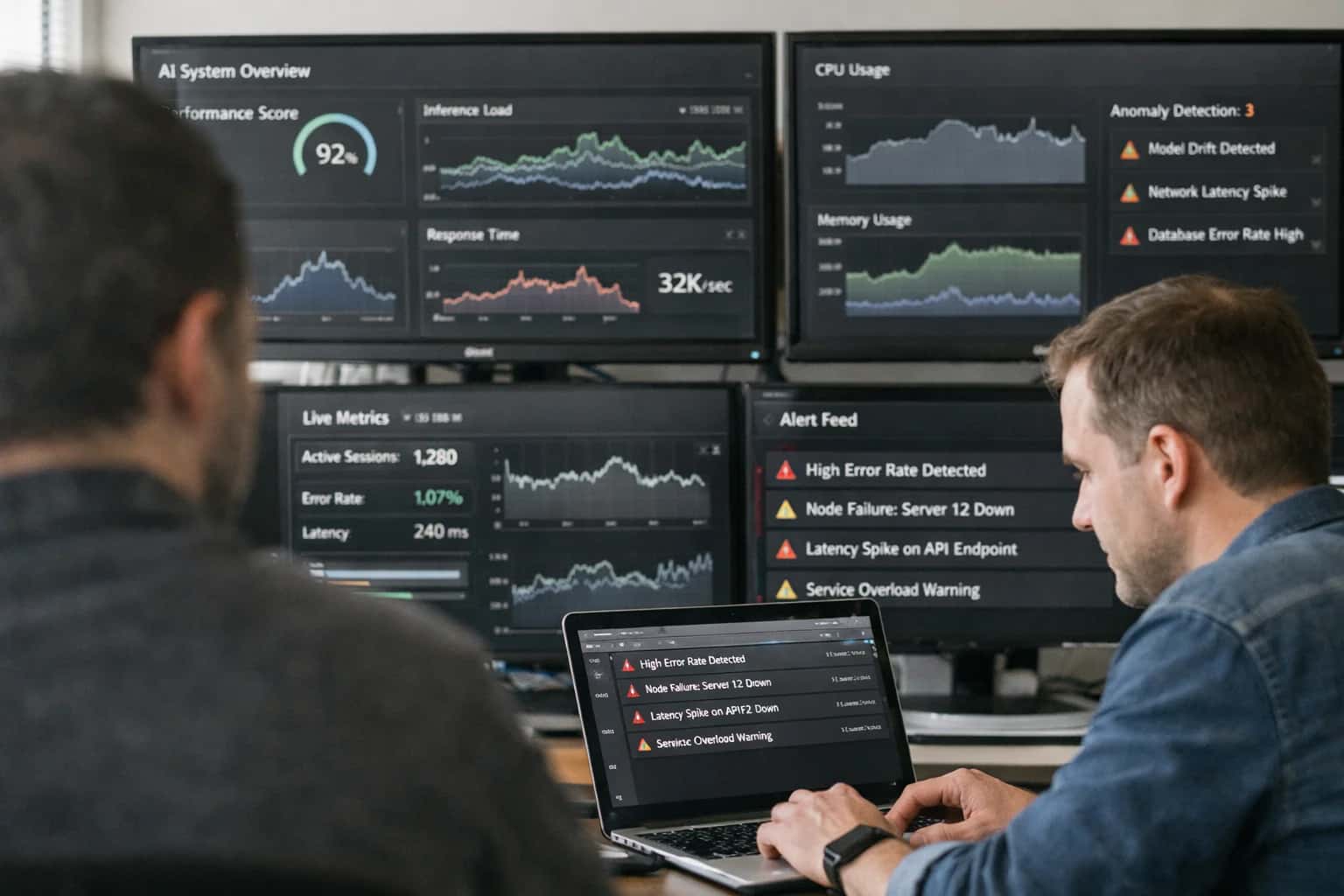
REAL-TIME OPERATIONAL INTELLIGENCE
What is Business Activity Monitoring (BAM)?
Business Activity Monitoring (BAM) is a category of enterprise software that provides real-time visibility into business processes and transactions through aggregated dashboards and automated alerts.
The core architectural components of a BAM system include a Complex Event Processing (CEP) engine for pattern detection, a visualization layer for role-specific dashboards, and an alerting mechanism that pushes notifications to decision-makers. By providing a live, data-driven abstraction of operational health, BAM closes the latency gap between event occurrence and management intervention, transforming raw transactional data into actionable intelligence for supply chain control towers and autonomous remediation workflows.
CORE CAPABILITIES
Key Features of BAM Platforms
Business Activity Monitoring platforms provide the real-time operational nervous system for modern enterprises. These core features transform raw event streams into actionable intelligence, enabling rapid response to exceptions.
01
Real-Time Dashboard Visualization
Provides a graphical, sub-second view of business process health. Unlike static reports, these dashboards aggregate streaming Key Performance Indicators (KPIs) and Key Risk Indicators (KRIs) into heat maps, geographic overlays, and status grids. This allows operations managers to visually track On-Time In-Full (OTIF) rates or order cycle times as they fluctuate, enabling immediate situational awareness without querying a database.
< 1 sec
Data Refresh Latency
02
Complex Event Processing (CEP)
The analytical brain of a BAM system. CEP engines analyze streaming data from multiple sources to identify meaningful patterns, correlations, and causal relationships that simple threshold checks miss. For example, a CEP rule might detect a supply chain disruption by correlating a Geofence Violation Alert with a sudden temperature spike from an IoT Sensor Fusion stream, triggering a composite alert that a cold chain shipment is both off-route and at risk of spoilage.
03
Dynamic Threshold Tuning
Eliminates static alert fatigue by automatically adjusting trigger limits based on historical volatility and current context. Instead of firing an alert when inventory drops below a fixed 100 units, the system learns that demand during a specific promotion spikes 300% and adjusts the threshold accordingly. This Intelligent Alert Suppression ensures that human operators only receive high-fidelity, actionable notifications, dramatically reducing false positives and improving Mean Time to Resolve (MTTR).
04
Automated Playbook Execution
Moves beyond simple notification to closed-loop action. When a specific alert condition is met—such as a SLA Breach Predictor flagging a shipment at 95% risk of delay—the BAM platform can automatically trigger a predefined digital workflow. This Closed-Loop Remediation might involve rebooking freight via a Freight Matching Engine, notifying the customer, and updating the Order Promising Logic, all without human intervention.
05
Canonical Data Schema Integration
The foundational data engineering layer that makes monitoring possible. BAM platforms ingest data from disparate systems like ERPs, TMS, and IoT platforms, each with its own format. A Canonical Data Schema normalizes this data into a unified structure, while an API Gateway Federation layer manages the secure, governed flow of information. This ensures that a 'shipment' object from the warehouse system is semantically identical to one from the carrier, enabling accurate cross-functional analysis.
06
Predictive Milestone Engine
Augments real-time monitoring with forward-looking intelligence. By applying machine learning to historical transit data and live signals like weather and port congestion, the engine forecasts the completion time of critical events. It generates an ETA Confidence Score—a probabilistic metric quantifying the reliability of an arrival estimate. This allows logistics teams to shift from reactive firefighting to proactive exception management hours or days before a failure occurs.
BUSINESS ACTIVITY MONITORING
Frequently Asked Questions
Clear answers to the most common technical and strategic questions about Business Activity Monitoring (BAM) and its role in modern supply chain intelligence.
Business Activity Monitoring (BAM) is a software layer that provides real-time dashboards and alerts on key performance indicators (KPIs) and business transactions to enable rapid operational response. It works by aggregating streaming data from disparate enterprise systems—such as ERP, CRM, and supply chain management platforms—and applying Complex Event Processing (CEP) rules to detect patterns, anomalies, or threshold breaches. When a defined condition is met, BAM triggers an alert to a human operator or, in advanced architectures, directly to an Autonomous Resolution Agent. Unlike traditional batch reporting, BAM operates on event streams, providing sub-second latency visibility into the current state of business processes like order-to-cash or procure-to-pay.
OPERATIONAL INTELLIGENCE COMPARISON
BAM vs. Related Monitoring Disciplines
How Business Activity Monitoring differs from adjacent operational intelligence and observability disciplines in scope, data type, and primary use case.
| Feature | Business Activity Monitoring (BAM) | Complex Event Processing (CEP) | Application Performance Monitoring (APM) |
|---|---|---|---|
Primary Focus | Business process KPIs and transaction outcomes | Pattern detection across event streams | System health, latency, and resource utilization |
Data Source | Application logs, databases, ERP/CRM transactions | Sensor data, market feeds, network events | Server metrics, code traces, infrastructure telemetry |
End User | Business analysts, operations managers | Data engineers, algorithmic traders | DevOps engineers, SREs |
Real-time Dashboards | |||
Historical Trend Analysis | |||
Automated Remediation | |||
Typical Latency | Sub-second to seconds | Milliseconds | Sub-second |
Correlates Business Context |
Enabling Efficiency, Speed & Accuracy
Intelligent Analysis, Decision & Execution
We build AI systems for teams that need search across company data, workflow automation across tools, or AI features inside products and internal software.
Talk to Us
Search across company data
Give teams answers from docs, tickets, runbooks, and product data with sources and permissions.
Useful when people spend too long searching or get different answers from different systems.
Enterprise searchRAGPermissions
Read more
Automate internal workflows
Use AI to route work, draft outputs, trigger actions, and keep approvals and logs in place.
Useful when repetitive work moves across multiple tools and teams.
AI agentsWorkflow automationGovernance
Read more
Add AI to products and internal tools
Build assistants, guided actions, or decision support into the software your team or customers already use.
Useful when AI needs to be part of the product, not a separate tool.
AI integrationDecision supportModel routing
Read more
About the author
Prasad Kumkar
CEO & MD, Inference Systems
Prasad Kumkar is the CEO & MD of Inference Systems and writes about AI systems architecture, LLM infrastructure, model serving, evaluation, and production deployment. Over 5+ years, he has worked across computer vision models, L5 autonomous vehicle systems, and LLM research, with a focus on taking complex AI ideas into real-world engineering systems.
His work and writing cover AI systems, large language models, AI agents, multimodal systems, autonomous systems, inference optimization, RAG, evaluation, and production AI engineering.
LinkedIn
Limited slotsGet a Free AI Consultation
Partnered with leading AI, data, and software stack.





How We Work
Custom AI workflows for your Business
One-fit-all AI don't work for modern businesses. At Inferensys, we aim to understand your business & custom requirements; which we use to define most efficient agentic workflows, the data, and the tools for your business.
01
Review the use case
We understand the task, the users, and where AI can actually help.
Read more02
Pick the right approach
We define what needs search, automation, or product integration.
Read more03
Build the first useful version
We implement the part that proves the value first.
Read more04
Improve from there
We add the checks and visibility needed to keep it useful.
Read moreThe first call is a practical review of your use case and the right next step.
Talk to Us