XBRL Tagging Automation replaces the error-prone, labor-intensive process of manually assigning XBRL taxonomy concepts to individual line items in financial statements. The AI engine parses the semantic meaning of financial disclosures—such as 'Revenue from Contracts with Customers' or 'Property, Plant, and Equipment'—and maps them to the precise, authoritative element in the relevant taxonomy, such as US-GAAP or IFRS, by understanding accounting context and dimensional qualifiers.

Glossary
XBRL Tagging Automation
The use of artificial intelligence to automatically map financial data from supplier reports to standardized eXtensible Business Reporting Language (XBRL) tags, enabling machine-readable and comparable financial analysis.
What is XBRL Tagging Automation?
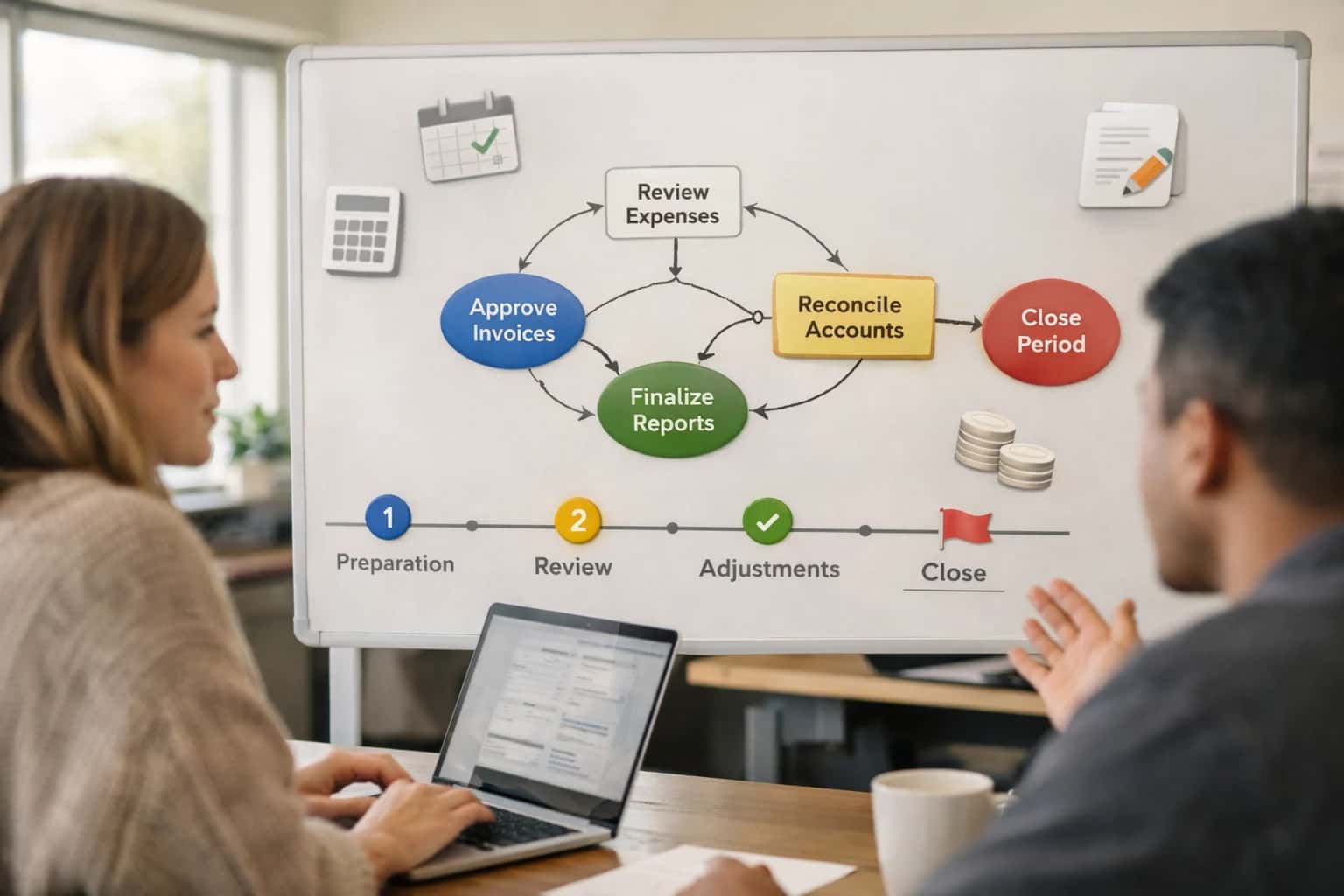
XBRL Tagging Automation is the application of artificial intelligence, particularly natural language processing and machine learning, to automatically map financial data from unstructured or semi-structured supplier reports to standardized eXtensible Business Reporting Language (XBRL) taxonomy tags, enabling machine-readable, comparable, and auditable financial analysis without manual intervention.
This process leverages entity recognition and deep learning classifiers trained on millions of previously tagged filings to handle ambiguous or company-specific line items. The system resolves complex tagging challenges, including the selection of appropriate axes, members, and calculation relationships, ensuring the resulting XBRL instance document is not only syntactically valid but also semantically consistent with the underlying financial reporting logic required by regulators.
MECHANISMS
Key Features of XBRL Tagging Automation
Core technical components that enable AI to transform unstructured financial data into machine-readable, comparable XBRL-tagged reports for supplier risk analysis.
01
Semantic Concept Mapping
The engine that bridges the gap between a supplier's proprietary chart of accounts and the standardized XBRL taxonomy. Instead of simple keyword matching, the AI uses transformer-based embeddings to understand the meaning of a line item like 'Remuneration to key management' and map it to the correct US-GAAP or IFRS concept.
- Vector similarity search matches concepts based on contextual meaning, not just text strings.
- Handles multi-lingual reports by mapping foreign-language financial terms to the correct English XBRL tag.
- Learns from historical mapping corrections, continuously improving accuracy for industry-specific terminology.
02
Context-Aware Dimensional Tagging
Beyond identifying the core concept (e.g., 'Revenue'), the system must apply the correct dimensional qualifiers. The AI parses the report's structure and footnotes to automatically apply metadata axes.
- Explicit member tagging: Identifies segments like 'Geographic Area = APAC' or 'Product Line = Widget X' from table headers and narrative text.
- Scenario analysis: Distinguishes between 'Actual' and 'Budgeted' values based on document context.
- Unit detection: Automatically identifies and registers the correct unit of measure (e.g.,
iso4217:USD,xbrli:shares,xbrli:pure) to prevent critical validation errors.
03
Calculation Linkbase Validation
An automated integrity layer that prevents nonsensical filings. After tagging, the AI reconstructs the XBRL calculation linkbase to verify that summation items (like 'Total Current Assets') mathematically equal the sum of their component parts as defined in the taxonomy.
- Real-time inconsistency flagging: Instantly alerts an analyst if a supplier's reported 'Gross Profit' does not equal 'Revenue' minus 'Cost of Goods Sold'.
- Weight handling: Correctly assigns positive or negative weights to concepts within a calculation tree.
- Pre-emptive error correction: Catches tagging mistakes that would cause a filing to be rejected by a regulator like the SEC, saving significant remediation time.
04
Footnote-to-Tag Linkage
The most complex aspect of XBRL tagging is linking narrative disclosures to the specific numeric facts they explain. The AI parses unstructured footnote text to create structured relationships.
- Policy extraction: Automatically tags accounting policy disclosures (e.g., 'Basis of Consolidation') and links them to the relevant financial statement line items.
- Table reconciliation: Reads complex tables within footnotes (e.g., debt maturity schedules) and tags each cell with the correct dimensional structure.
- Entity relationship mapping: Identifies and tags related-party transactions described in narrative text, linking them to the correct counterparty.
05
Multi-Format Document Ingestion
The automation pipeline begins with robust document understanding, capable of ingesting supplier reports in any format without pre-processing. The AI handles the inherent messiness of real-world financial documents.
- Native PDF parsing: Extracts text and table structures from scanned image-based PDFs using optical character recognition (OCR) and from text-based PDFs with precise positional awareness.
- Spreadsheet intelligence: Reads Excel and CSV files, understanding merged cells, pivot tables, and custom formatting to identify the underlying data grid.
- HTML/XML extraction: Parses inline XBRL (iXBRL) documents and standard HTML filings, preserving the structural hierarchy.
06
Continuous Taxonomy Alignment
Financial reporting standards are not static. The automation system maintains a live connection to taxonomy publishers to ensure tags are always current and valid, preventing the use of deprecated concepts.
- Automated updates: Ingests new versions of the US-GAAP, IFRS, and other regulatory taxonomies as they are released.
- Deprecation management: Automatically flags and suggests replacements for any previously used tags that have been deprecated in a new taxonomy release.
- Extension taxonomy generation: When a supplier's unique reporting concept has no standard match, the AI can propose a logically structured company-specific extension element, ensuring completeness without breaking comparability.
XBRL TAGGING AUTOMATION
Frequently Asked Questions
Clear, technically precise answers to the most common questions about using AI to automate the mapping of financial data to XBRL taxonomies for supplier risk analysis.
XBRL tagging automation is the application of natural language processing (NLP) and machine learning to automatically map financial concepts from unstructured or semi-structured supplier reports to standardized eXtensible Business Reporting Language (XBRL) taxonomy elements. The process works by first ingesting a source document—such as a PDF annual report or an Excel spreadsheet—and extracting its textual and numerical content. A trained model then analyzes the contextual meaning of each line item, comparing it against the hierarchical structure and linkbases of a target taxonomy like US-GAAP or IFRS. The system assigns the correct XBRL concept tag, along with dimensional qualifiers for units, time periods, and reporting scenarios, transforming opaque financial data into a machine-readable, comparable format for automated supplier risk analysis.
Enabling Efficiency, Speed & Accuracy
Intelligent Analysis, Decision & Execution
We build AI systems for teams that need search across company data, workflow automation across tools, or AI features inside products and internal software.
Talk to Us
Search across company data
Give teams answers from docs, tickets, runbooks, and product data with sources and permissions.
Useful when people spend too long searching or get different answers from different systems.
Enterprise searchRAGPermissions
Read more
Automate internal workflows
Use AI to route work, draft outputs, trigger actions, and keep approvals and logs in place.
Useful when repetitive work moves across multiple tools and teams.
AI agentsWorkflow automationGovernance
Read more
Add AI to products and internal tools
Build assistants, guided actions, or decision support into the software your team or customers already use.
Useful when AI needs to be part of the product, not a separate tool.
AI integrationDecision supportModel routing
Read more
About the author
Prasad Kumkar
CEO & MD, Inference Systems
Prasad Kumkar is the CEO & MD of Inference Systems and writes about AI systems architecture, LLM infrastructure, model serving, evaluation, and production deployment. Over 5+ years, he has worked across computer vision models, L5 autonomous vehicle systems, and LLM research, with a focus on taking complex AI ideas into real-world engineering systems.
His work and writing cover AI systems, large language models, AI agents, multimodal systems, autonomous systems, inference optimization, RAG, evaluation, and production AI engineering.
LinkedIn
Limited slotsGet a Free AI Consultation
Partnered with leading AI, data, and software stack.





How We Work
Custom AI workflows for your Business
One-fit-all AI don't work for modern businesses. At Inferensys, we aim to understand your business & custom requirements; which we use to define most efficient agentic workflows, the data, and the tools for your business.
01
Review the use case
We understand the task, the users, and where AI can actually help.
Read more02
Pick the right approach
We define what needs search, automation, or product integration.
Read more03
Build the first useful version
We implement the part that proves the value first.
Read more04
Improve from there
We add the checks and visibility needed to keep it useful.
Read moreThe first call is a practical review of your use case and the right next step.
Talk to Us