A blockchain ledger is a cryptographically secured, append-only database that records transactions in chronologically ordered blocks. Each block contains a timestamp, a cryptographic hash of the previous block, and a batch of validated data—such as temperature readings, custody transfers, or geofencing events—creating an unalterable chain of provenance that no single party can retroactively modify without network consensus.

Glossary
Blockchain Ledger
An immutable, distributed digital record used in the cold chain to create a tamper-proof, shared audit trail of all custody transfers and environmental conditions across multiple stakeholders.
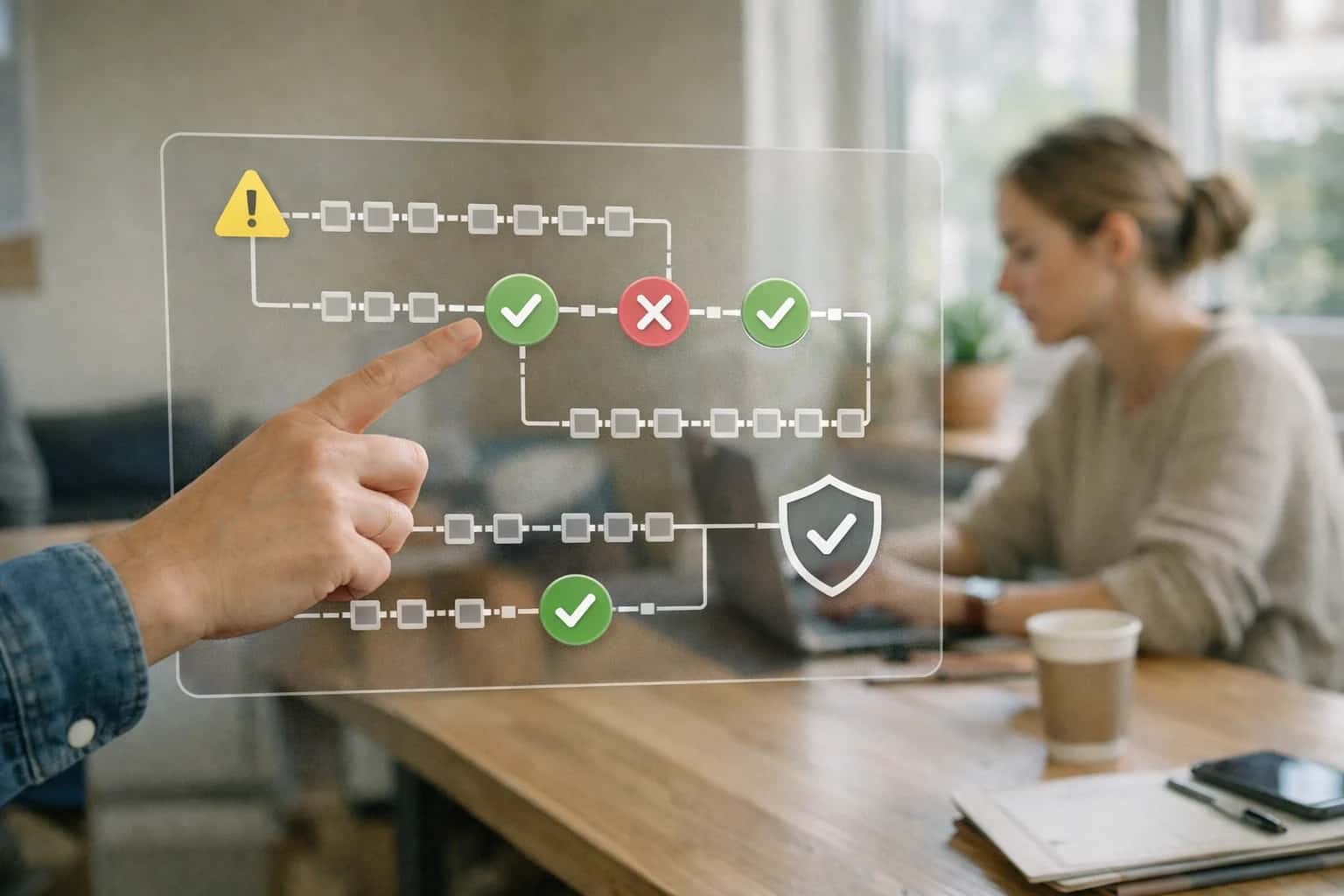
IMMUTABLE AUDIT TRAIL
What is Blockchain Ledger?
A blockchain ledger is an immutable, distributed digital record that creates a tamper-proof, shared audit trail of all custody transfers and environmental conditions across multiple stakeholders in the cold chain.
In cold chain monitoring, the ledger serves as a shared source of truth among manufacturers, logistics providers, and quality assurance teams. Smart contracts automatically execute compliance logic, such as flagging a cold chain break when a Mean Kinetic Temperature threshold is exceeded, while the distributed architecture eliminates disputes by providing every stakeholder with an identical, independently verifiable record of a product's thermal history.
IMMUTABLE AUDIT TRAIL
Core Properties of a Blockchain Ledger
A blockchain ledger provides a cryptographically secure, append-only record of all cold chain events. Unlike traditional databases, it creates a shared, tamper-proof source of truth that eliminates disputes between manufacturers, logistics providers, and dispensers.
01
Immutability and Tamper Resistance
Once a custody transfer or temperature reading is recorded on the ledger, it cannot be altered or deleted. Each block contains a cryptographic hash of the previous block, creating a chain where any retroactive change would require recalculating all subsequent hashes—a computationally infeasible task. This guarantees the integrity of the audit trail for regulatory submissions under 21 CFR Part 11 and GDP guidelines.
02
Decentralized Consensus
No single stakeholder controls the ledger. A consensus mechanism—such as Practical Byzantine Fault Tolerance (PBFT) or Proof of Authority (PoA)—requires multiple permissioned nodes to validate each transaction before it is committed. This prevents a manufacturer, carrier, or pharmacy from unilaterally falsifying a temperature log. The shared governance model aligns with the multi-stakeholder nature of cold chain compliance.
03
Smart Contract Automation
Self-executing code deployed on the ledger can automate critical cold chain workflows. A smart contract can be programmed to:
- Automatically flag a shipment as quarantined if a temperature excursion exceeds a defined threshold
- Trigger an alert to a Quality Assurance Manager when a Mean Kinetic Temperature (MKT) calculation breaches a limit
- Release payment only when an IoT sensor confirms compliant conditions via an oracle
04
Cryptographic Provenance
Every asset on the chain is represented by a unique cryptographic identifier. As the product moves through the cold chain, each custody transfer is signed with the sender's private key and verified by the receiver. This creates an unbroken chain of digital signatures that proves exactly which entity possessed the goods at every moment, enabling precise track and trace from manufacturer to patient.
05
Shared Single Source of Truth
All permissioned participants—manufacturers, 3PL providers, wholesalers, and dispensers—view the same synchronized ledger. This eliminates the costly reconciliation of disparate ERP systems and spreadsheets. When a dispute arises over a cold chain break, the shared ledger serves as the definitive, court-admissible record, dramatically reducing the time and cost of root cause analysis.
06
Integration with IoT Oracles
A blockchain ledger is only as trustworthy as the data it ingests. Oracles bridge the gap between off-chain physical sensors and the on-chain record. A secure oracle cryptographically signs IoT sensor telemetry—such as temperature, humidity, and shock data from a LoRaWAN-connected logger—before anchoring a hash of that data to the ledger. This provides verifiable proof that the raw sensor data existed at a specific moment without storing the full payload on-chain.
Enabling Efficiency, Speed & Accuracy
Intelligent Analysis, Decision & Execution
We build AI systems for teams that need search across company data, workflow automation across tools, or AI features inside products and internal software.
Talk to Us
Search across company data
Give teams answers from docs, tickets, runbooks, and product data with sources and permissions.
Useful when people spend too long searching or get different answers from different systems.
Enterprise searchRAGPermissions
Read more
Automate internal workflows
Use AI to route work, draft outputs, trigger actions, and keep approvals and logs in place.
Useful when repetitive work moves across multiple tools and teams.
AI agentsWorkflow automationGovernance
Read more
Add AI to products and internal tools
Build assistants, guided actions, or decision support into the software your team or customers already use.
Useful when AI needs to be part of the product, not a separate tool.
AI integrationDecision supportModel routing
Read moreBLOCKCHAIN LEDGER
Frequently Asked Questions
Clear, technical answers to the most common questions about how distributed ledger technology creates immutable, multi-stakeholder audit trails for cold chain logistics.
A blockchain ledger is an append-only, cryptographically chained data structure distributed across multiple independent nodes that creates an immutable, tamper-proof record of all cold chain events. In cold chain logistics, each custody transfer, temperature reading, or excursion alert is recorded as a transaction within a block. Once validated by a consensus mechanism, that block is cryptographically hashed and linked to the previous block, forming an unbreakable chain. Because the ledger is replicated across all stakeholders—manufacturers, carriers, 3PLs, and dispensers—no single party can retroactively alter a temperature log or custody timestamp without detection. This provides a single source of truth for regulatory audits under GDP and 21 CFR Part 11, eliminating disputes over when and where a thermal excursion occurred.

About the author
Prasad Kumkar
CEO & MD, Inference Systems
Prasad Kumkar is the CEO & MD of Inference Systems and writes about AI systems architecture, LLM infrastructure, model serving, evaluation, and production deployment. Over 5+ years, he has worked across computer vision models, L5 autonomous vehicle systems, and LLM research, with a focus on taking complex AI ideas into real-world engineering systems.
His work and writing cover AI systems, large language models, AI agents, multimodal systems, autonomous systems, inference optimization, RAG, evaluation, and production AI engineering.
LinkedIn
Limited slotsGet a Free AI Consultation
Partnered with leading AI, data, and software stack.





How We Work
Custom AI workflows for your Business
One-fit-all AI don't work for modern businesses. At Inferensys, we aim to understand your business & custom requirements; which we use to define most efficient agentic workflows, the data, and the tools for your business.
01
Review the use case
We understand the task, the users, and where AI can actually help.
Read more02
Pick the right approach
We define what needs search, automation, or product integration.
Read more03
Build the first useful version
We implement the part that proves the value first.
Read more04
Improve from there
We add the checks and visibility needed to keep it useful.
Read moreThe first call is a practical review of your use case and the right next step.
Talk to Us