Active RFID is an automatic identification technology where a battery-powered transponder actively and continuously broadcasts its unique identifier and associated sensor data to dedicated reader infrastructure. Unlike passive RFID tags that rely on backscattering energy from a reader, active tags contain an internal power source, enabling them to transmit signals over distances of 100 meters or more and through challenging materials, making them ideal for real-time location systems (RTLS) in logistics and industrial environments.

Glossary
Active RFID
Active RFID is a radio-frequency identification technology where a battery-powered tag continuously broadcasts its signal, enabling real-time location tracking (RTLS) and environmental monitoring over long distances.
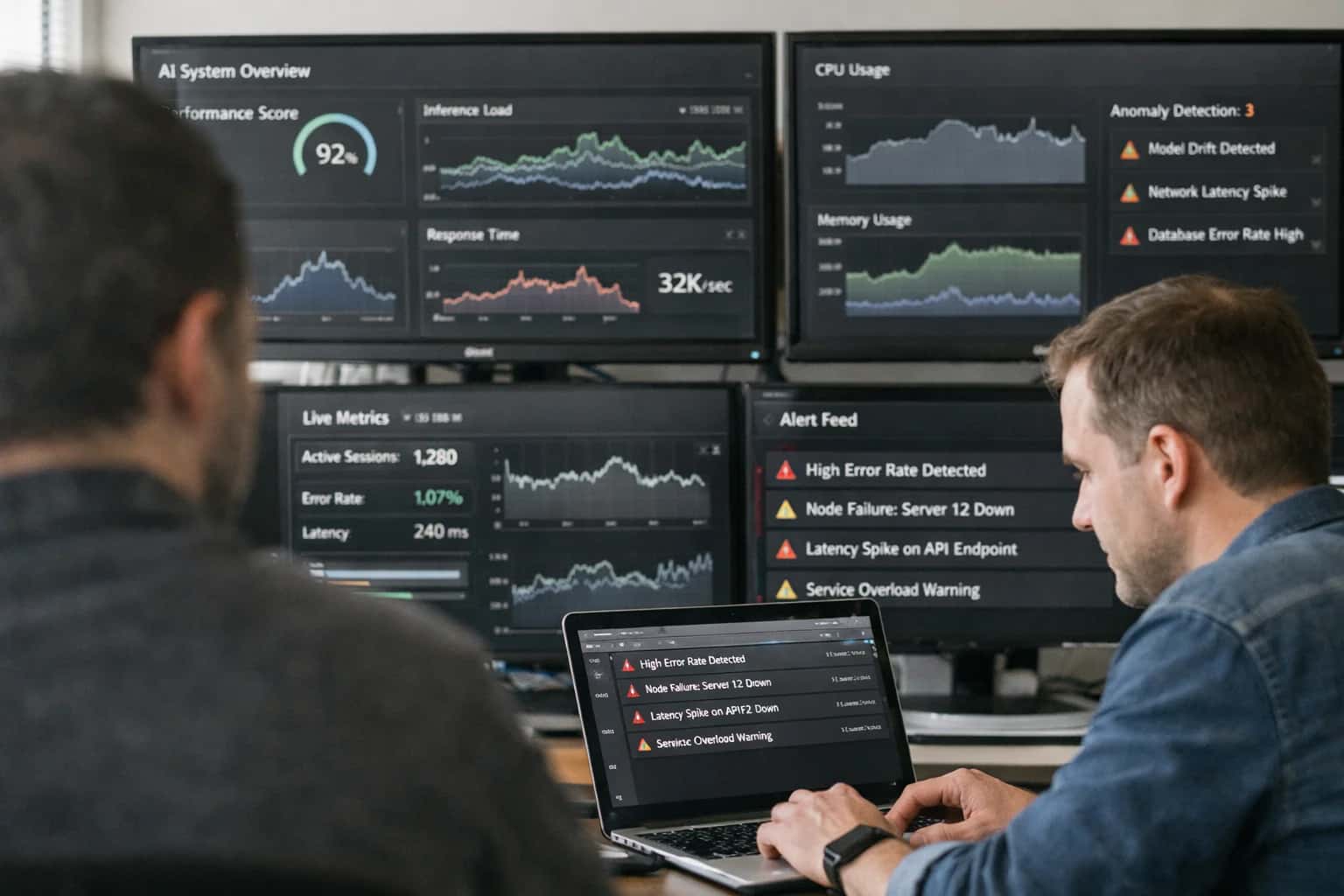
REAL-TIME LOCATION SYSTEM
What is Active RFID?
Active RFID is a radio-frequency identification technology where a battery-powered tag continuously broadcasts its signal, enabling real-time location tracking (RTLS) and environmental monitoring over long distances.
In cold chain monitoring, active RFID tags often integrate temperature, humidity, and shock sensors, transmitting environmental telemetry at configurable intervals to edge gateways or mesh network nodes. This persistent beaconing architecture allows for immediate excursion management alerts and continuous in-transit visibility (ITV) without requiring manual scanning, providing a deterministic data stream for digital twin simulations and regulatory compliance under Good Distribution Practice (GDP).
TECHNOLOGY COMPARISON
Active RFID vs. Passive RFID
A technical comparison of battery-powered active RFID tags and field-powered passive RFID tags for cold chain monitoring and real-time location tracking applications.
| Feature | Active RFID | Passive RFID | Battery-Assisted Passive (BAP) |
|---|---|---|---|
Power Source | Internal battery (3-5 year life) | Reader's electromagnetic field | Internal battery + reader field backscatter |
Read Range | 100+ meters (up to 300m outdoors) | 0.1-12 meters (typically < 3m) | 10-30 meters |
Tag Cost (per unit) | $15-50 | $0.10-1.50 | $3-10 |
Continuous Environmental Monitoring | |||
Real-Time Location Tracking (RTLS) | |||
Data Transmission Interval | Continuous (1 sec to 5 min configurable) | On-demand (only when interrogated) | Periodic beacon (10 sec to 1 min) |
Onboard Sensor Integration | |||
Typical Cold Chain Application | Pallet-level ULT monitoring, intermodal containers | Case-level inventory, portal scanning | Semi-active logging, reusable totes |
CORE CAPABILITIES
Key Features of Active RFID for Cold Chain
Active RFID systems provide the foundational real-time infrastructure for autonomous cold chain intelligence, enabling continuous monitoring and automated exception management for high-value, temperature-sensitive biologics.
01
Continuous Beaconing & Real-Time Visibility
Unlike passive tags that wait for a reader, active RFID tags are battery-powered and continuously broadcast a unique identifier. This constant beaconing enables Real-Time Location Systems (RTLS) to provide sub-second latency on asset location. For cold chain, this means a shipment's position and status are always known without manual scanning, creating a true In-Transit Visibility (ITV) data stream that feeds directly into digital twins and control towers.
02
Integrated Environmental Sensing
Modern active tags function as multi-sensor IoT platforms, not just ID broadcasters. They integrate thermistors, hygrometers, accelerometers, and light sensors to capture a complete environmental profile. Key monitored parameters include:
- Temperature: High-precision monitoring for cryogenic and ULT ranges.
- Humidity: Critical for lyophilized drugs and diagnostic kits.
- Shock & Tilt: Detecting mishandling or toppling events.
- Light Exposure: Verifying container integrity for light-sensitive compounds. This telemetry is time-stamped and associated with the unique tag ID at the point of sensing.
03
Long-Range Communication Architecture
Active RFID systems operate on dedicated radio frequencies (typically 433 MHz or 2.45 GHz) with significantly higher output power than passive UHF systems. This enables reliable read ranges of 100 meters to over 1 kilometer, making them ideal for monitoring large-volume cold storage warehouses, yard management, and cross-docking operations. The extended range reduces the density of required reader infrastructure, lowering total cost of ownership for large pharmaceutical distribution centers.
04
Mesh Networking & Data Redundancy
Advanced active RFID ecosystems form wireless mesh networks where tags can communicate with each other, not just with fixed readers. If a tag temporarily loses connection to the primary Edge Gateway, it can relay its buffered sensor data through a neighboring tag. This architecture ensures 99.9%+ data completeness for regulatory compliance under 21 CFR Part 11 and GDP guidelines, even in RF-challenged environments like metal shipping containers or dense pallet configurations.
05
Edge-Based Excursion Logic
Active tags are not passive data loggers; they are edge computing nodes. Each tag stores its acceptable temperature range and can execute local excursion management logic. The moment a sensor reading violates a threshold, the tag immediately triggers a visual LED alert and transmits a high-priority alarm packet. This Edge AI Inference capability ensures that critical cold chain breaks are detected and communicated in milliseconds, independent of cloud connectivity, enabling immediate human or automated intervention.
06
Geofencing & Asset Association
Active RFID infrastructure enables dynamic geofencing by associating tag IDs with specific logical zones defined in software. When a tagged pallet of vaccines enters a designated quarantine area or leaves a validated shipping lane, the system automatically generates a timestamped event. This automates chain-of-custody logging and Track and Trace compliance, providing the foundational data for an immutable Blockchain Ledger or a Digital Product Passport without manual scanning.
Enabling Efficiency, Speed & Accuracy
Intelligent Analysis, Decision & Execution
We build AI systems for teams that need search across company data, workflow automation across tools, or AI features inside products and internal software.
Talk to Us
Search across company data
Give teams answers from docs, tickets, runbooks, and product data with sources and permissions.
Useful when people spend too long searching or get different answers from different systems.
Enterprise searchRAGPermissions
Read more
Automate internal workflows
Use AI to route work, draft outputs, trigger actions, and keep approvals and logs in place.
Useful when repetitive work moves across multiple tools and teams.
AI agentsWorkflow automationGovernance
Read more
Add AI to products and internal tools
Build assistants, guided actions, or decision support into the software your team or customers already use.
Useful when AI needs to be part of the product, not a separate tool.
AI integrationDecision supportModel routing
Read moreACTIVE RFID CLARIFIED
Frequently Asked Questions
Precise answers to the most common technical and operational questions about battery-powered active RFID systems for real-time location and cold chain monitoring.
Active RFID is a radio-frequency identification technology where a battery-powered tag continuously broadcasts its unique identifier and sensor data via an internal transmitter. Unlike passive tags that rely on a reader's electromagnetic field for power, active tags initiate communication autonomously. The tag's radio signal is received by strategically placed RFID readers or access points, which calculate the tag's location using techniques like Received Signal Strength Indication (RSSI) or Time Difference of Arrival (TDoA). This data is then forwarded to a Real-Time Location System (RTLS) software platform, providing continuous, long-range visibility of assets across warehouses, yards, and transit lanes without manual scanning.

About the author
Prasad Kumkar
CEO & MD, Inference Systems
Prasad Kumkar is the CEO & MD of Inference Systems and writes about AI systems architecture, LLM infrastructure, model serving, evaluation, and production deployment. Over 5+ years, he has worked across computer vision models, L5 autonomous vehicle systems, and LLM research, with a focus on taking complex AI ideas into real-world engineering systems.
His work and writing cover AI systems, large language models, AI agents, multimodal systems, autonomous systems, inference optimization, RAG, evaluation, and production AI engineering.
LinkedIn
Limited slotsGet a Free AI Consultation
Partnered with leading AI, data, and software stack.





How We Work
Custom AI workflows for your Business
One-fit-all AI don't work for modern businesses. At Inferensys, we aim to understand your business & custom requirements; which we use to define most efficient agentic workflows, the data, and the tools for your business.
01
Review the use case
We understand the task, the users, and where AI can actually help.
Read more02
Pick the right approach
We define what needs search, automation, or product integration.
Read more03
Build the first useful version
We implement the part that proves the value first.
Read more04
Improve from there
We add the checks and visibility needed to keep it useful.
Read moreThe first call is a practical review of your use case and the right next step.
Talk to Us