A Challenge-Response Pair (CRP) is the foundational authentication mechanism for a Physical Unclonable Function (PUF), consisting of a digital input stimulus (the challenge) and the deterministic, unique, and physically-derived output (the response) generated by a specific hardware instance. The response is a function of the challenge and the deep, unclonable physical variations of the silicon.

Glossary
Challenge-Response Pair (CRP)
A Challenge-Response Pair (CRP) is the fundamental authentication mechanism for a Physical Unclonable Function (PUF), consisting of a digital input stimulus and the unique, deterministic, and physically-derived output response from a specific hardware instance.
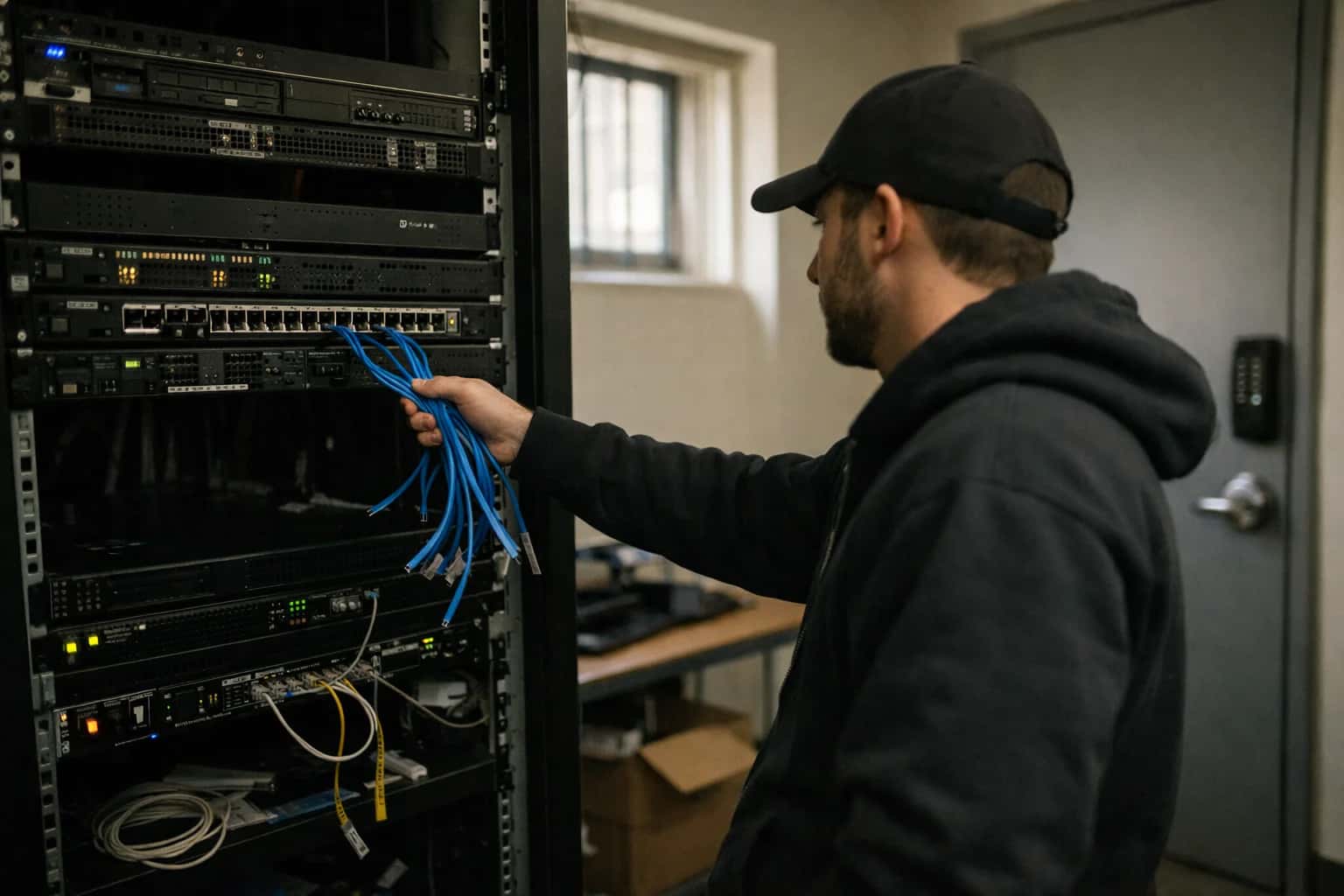
AUTHENTICATION MECHANISM
What is Challenge-Response Pair (CRP)?
The fundamental unit of authentication for a Physical Unclonable Function (PUF), linking a specific input stimulus to its unique, physically-derived output.
During enrollment, a set of CRPs is collected from a trusted device and stored in a secure database. Authentication is performed by issuing a stored challenge and verifying that the live device's response matches the enrolled response within an acceptable error margin, thereby binding the digital identity to the irremovable physical fingerprint of the hardware.
PUF FUNDAMENTALS
Key Characteristics of CRPs
A Challenge-Response Pair is the atomic unit of authentication for a Physical Unclonable Function. It maps a digital input stimulus to a unique, repeatable, and physically-derived output that serves as a hardware root of trust.
01
Deterministic Repeatability
The same challenge applied to the same PUF instance must always produce an identical response within an acceptable noise margin. This is not a probabilistic function; it is a physical mapping. Minor variations due to thermal noise or voltage fluctuations are corrected using error-correcting codes (ECCs) and fuzzy extractors to regenerate a stable cryptographic key from the noisy response.
< 10^-6
Target Bit Error Rate
02
Physical Unclonability
The CRP behavior is rooted in sub-micron process variations during semiconductor manufacturing. These variations—random dopant fluctuations, oxide thickness variations, and line-edge roughness—are uncontrollable and impossible to replicate. Even the original manufacturer cannot produce two identical PUF instances. An adversary cannot clone the CRP mapping by reverse engineering the chip, as the physical disorder is functionally opaque.
03
One-Way Functionality
Given a response, it must be computationally infeasible to derive the corresponding challenge or predict the response to a new challenge. This property mirrors a cryptographic one-way function but is physically enforced. Machine learning attacks attempting to model the CRP behavior are thwarted by designing PUFs with exponential challenge-response space and non-linear physical interactions, such as those found in arbiter PUFs with feed-forward loops.
04
Tamper-Evident Pairing
Any physical intrusion attempt—such as micro-probing, focused ion beam (FIB) editing, or decapsulation—inevitably alters the underlying physical structure of the PUF. This alteration destroys or measurably changes the original CRP mapping. The stored reference responses will no longer match the post-attack responses, providing a robust tamper-evidence mechanism. This is critical for Hardware Security Modules (HSMs) and anti-counterfeiting applications.
05
Exponential Challenge Space
A strong PUF must support a vast number of unique challenges to prevent brute-force modeling attacks. The challenge space grows exponentially with the number of physical components. For example, an arbiter PUF with 128 stages offers 2^128 possible challenges. This massive space ensures that an adversary cannot collect a complete CRP database to train a predictive model, a defense against machine learning-based modeling attacks.
06
Enrollment and Verification Flow
The lifecycle of a CRP has two phases:
- Enrollment: A trusted party applies a set of randomly selected challenges to the PUF and securely stores the corresponding responses in a database. This creates the device's golden reference.
- Verification: In the field, the verifier sends one of the stored challenges. The device's PUF generates a response, which is compared to the enrolled reference. Authentication succeeds if the Hamming distance is below a threshold.
PHYSICAL UNCLONABLE FUNCTIONS
Frequently Asked Questions
Clear, technically precise answers to the most common questions about the challenge-response pair mechanism, the foundational authentication protocol for hardware security primitives.
A Challenge-Response Pair (CRP) is the fundamental authentication mechanism of a Physical Unclonable Function (PUF), consisting of a digital input stimulus (the challenge) and the unique, deterministic, physically-derived output (the response) from a specific hardware instance. The process works by exploiting the inherent, random process variation introduced during semiconductor manufacturing. When a specific challenge bit-string is applied to the PUF circuit, the microscopic physical differences in transistor threshold voltages, wire delays, or ring oscillator frequencies create a unique race condition or delay path. This physical phenomenon is digitized to produce a repeatable response. The same challenge applied to a different, physically distinct chip—even one from the same wafer—will yield a completely different response due to the unclonable nature of the random physical variations. This creates a massive, unique set of CRPs that serves as the hardware's cryptographic root of trust.
Enabling Efficiency, Speed & Accuracy
Intelligent Analysis, Decision & Execution
We build AI systems for teams that need search across company data, workflow automation across tools, or AI features inside products and internal software.
Talk to Us
Search across company data
Give teams answers from docs, tickets, runbooks, and product data with sources and permissions.
Useful when people spend too long searching or get different answers from different systems.
Enterprise searchRAGPermissions
Read more
Automate internal workflows
Use AI to route work, draft outputs, trigger actions, and keep approvals and logs in place.
Useful when repetitive work moves across multiple tools and teams.
AI agentsWorkflow automationGovernance
Read more
Add AI to products and internal tools
Build assistants, guided actions, or decision support into the software your team or customers already use.
Useful when AI needs to be part of the product, not a separate tool.
AI integrationDecision supportModel routing
Read more
About the author
Prasad Kumkar
CEO & MD, Inference Systems
Prasad Kumkar is the CEO & MD of Inference Systems and writes about AI systems architecture, LLM infrastructure, model serving, evaluation, and production deployment. Over 5+ years, he has worked across computer vision models, L5 autonomous vehicle systems, and LLM research, with a focus on taking complex AI ideas into real-world engineering systems.
His work and writing cover AI systems, large language models, AI agents, multimodal systems, autonomous systems, inference optimization, RAG, evaluation, and production AI engineering.
LinkedIn
Limited slotsGet a Free AI Consultation
Partnered with leading AI, data, and software stack.





How We Work
Custom AI workflows for your Business
One-fit-all AI don't work for modern businesses. At Inferensys, we aim to understand your business & custom requirements; which we use to define most efficient agentic workflows, the data, and the tools for your business.
01
Review the use case
We understand the task, the users, and where AI can actually help.
Read more02
Pick the right approach
We define what needs search, automation, or product integration.
Read more03
Build the first useful version
We implement the part that proves the value first.
Read more04
Improve from there
We add the checks and visibility needed to keep it useful.
Read moreThe first call is a practical review of your use case and the right next step.
Talk to Us