An Over-the-Air (OTA) Update is a cryptographically secured mechanism for remotely deploying new software, firmware, or machine learning model weights to a fielded software-defined radio (SDR) system via its existing wireless communication link, eliminating the need for physical access. This process typically involves transmitting a signed, encrypted binary payload over a dedicated management channel, which the target device authenticates, verifies for integrity, and installs into a redundant memory partition to ensure atomicity.

Glossary
Over-the-Air Update
A secure mechanism for remotely deploying new modulation classification models or firmware to a fielded SDR system without requiring physical access.
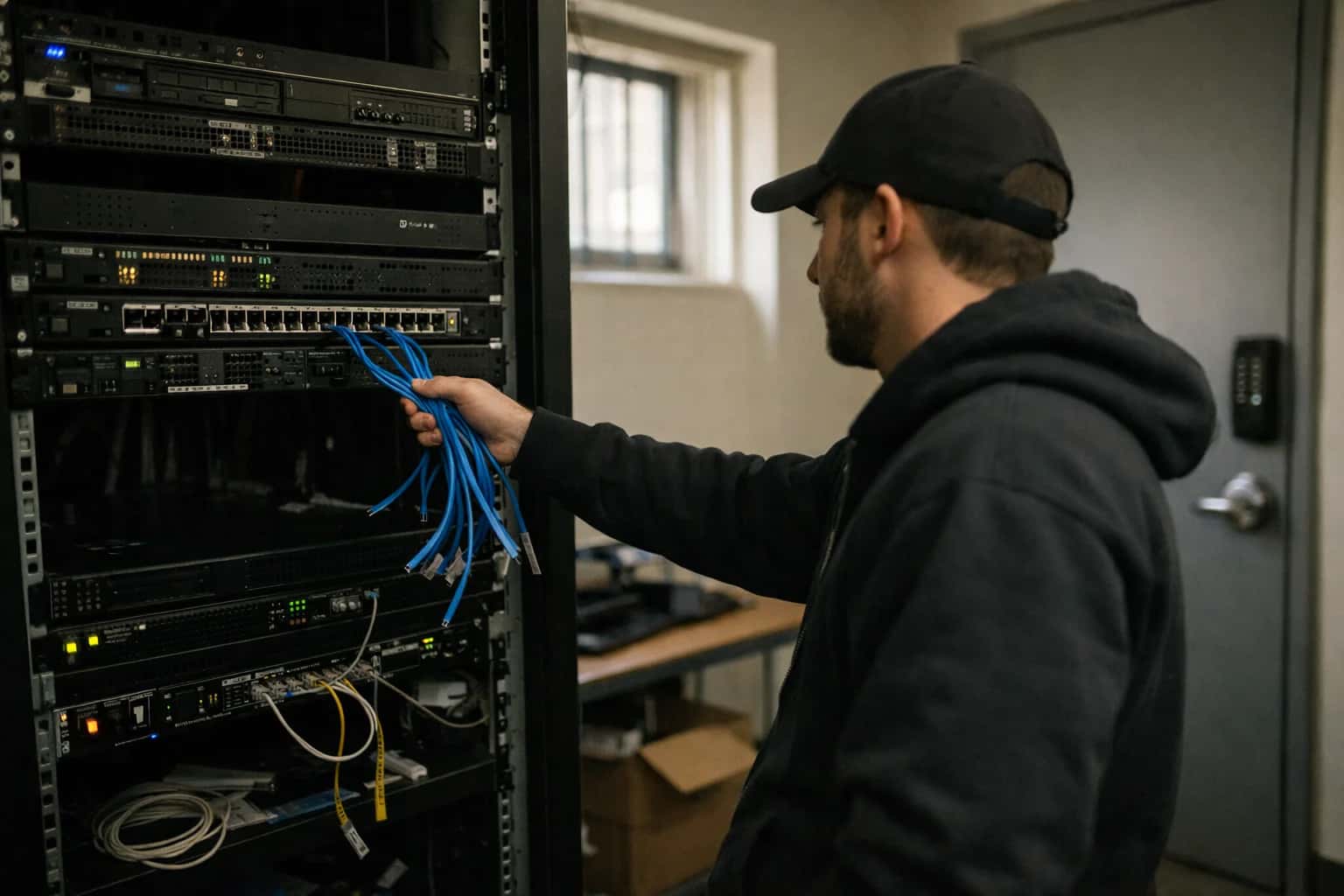
REMOTE DEPLOYMENT
What is an Over-the-Air Update?
A secure mechanism for remotely deploying new modulation classification models or firmware to a fielded SDR system without requiring physical access.
In the context of real-time spectrum classification, OTA updates are critical for maintaining operational relevance. They allow engineers to push retrained INT8-quantized models to an Edge TPU or FPGA to counter new adversarial waveforms or adapt to evolving spectral environments without recalling hardware. A robust OTA architecture relies on secure bootloaders, differential delta updates to minimize bandwidth over constrained tactical links, and a fail-safe rollback mechanism to a known-good firmware image in the event of a corrupted transfer.
SECURE UPDATE MECHANISMS
Core Characteristics of Secure OTA Architectures
A secure Over-the-Air (OTA) update system for fielded SDRs must guarantee authenticity, integrity, and operational continuity. The following architectural pillars define a robust pipeline for remotely deploying new modulation classification models and firmware.
01
Cryptographic Code Signing
The foundational trust anchor for any OTA mechanism. Before deployment, the update package is hashed and encrypted with a private key. The edge device uses a hardcoded public key to verify the signature before flashing.
- Elliptic Curve Digital Signature Algorithm (ECDSA) is preferred for its balance of security and computational efficiency on embedded systems.
- Prevents binary manipulation and man-in-the-middle attacks during transit.
- Ensures the firmware originates from a trusted authority and has not been altered.
02
Atomic Image Swapping (A/B Partitioning)
A fail-safe strategy that maintains two separate firmware partitions on the device's non-volatile memory. The new update is written to the inactive partition while the system runs from the active one.
- On successful verification, a bootloader switch flips the active partition.
- If the new image fails to boot or the classifier accuracy drops below a threshold, the system automatically rolls back to the previous known-good state.
- Eliminates the risk of bricking a remote device due to a corrupted update.
03
Delta Update Mechanisms
Instead of transmitting the entire multi-gigabyte firmware image, a delta update computes a binary patch representing only the differences between the current version and the new version.
- Drastically reduces bandwidth consumption and transmission time over constrained tactical links.
- Utilizes algorithms like bsdiff or HDiffPatch to generate compact patches.
- Critical for updating large neural network weights where only specific layers have been fine-tuned, minimizing the over-the-air transfer size.
04
Mutual Authentication (mTLS)
Standard one-way TLS is insufficient for critical infrastructure. Mutual Transport Layer Security requires both the update server and the client SDR device to present certificates.
- The server authenticates the hardware identity of the fielded radio before granting access to the update package.
- Prevents rogue devices from connecting to the update infrastructure and stops rogue servers from pushing malicious payloads.
- Relies on a Public Key Infrastructure (PKI) with unique device certificates burned into secure elements during manufacturing.
05
Streaming Decompression & Verification
Edge SDRs often lack the RAM to buffer an entire compressed update package. Streaming architectures decompress and verify data chunk-by-chunk as it arrives.
- Uses stream ciphers or AEAD (Authenticated Encryption with Associated Data) schemes like ChaCha20-Poly1305.
- Each chunk is decrypted and its hash chain is validated before being written to flash memory.
- Prevents the storage of unverified code and protects against flash wear-out attacks caused by partial writes.
06
Canary Deployment & Telemetry
A risk mitigation strategy where the OTA update is initially pushed to a small, representative subset of the device fleet. The system monitors operational metrics before a full rollout.
- Monitors inference accuracy of the new modulation classifier against a held-out test set in the live environment.
- Tracks system health metrics like CPU temperature, memory leaks, and RF front-end calibration drift.
- Automated pipelines halt the global deployment if the canary group triggers an anomaly alert, ensuring a single bad model does not cripple the entire network.
OVER-THE-AIR UPDATE MECHANISMS
Frequently Asked Questions
Clear answers to the most common questions about securely deploying new modulation classification models and firmware to remote SDR systems without physical intervention.
An over-the-air (OTA) update is a secure mechanism for remotely deploying new software, firmware, or machine learning models to a fielded software-defined radio (SDR) system without requiring physical access. The process begins with a trusted update server packaging the new artifact—such as a retrained modulation classifier—into a cryptographically signed binary blob. The remote SDR periodically polls for updates or receives a push notification over a low-bandwidth control channel. Upon verification of the digital signature against a hardware-rooted public key, the system downloads the payload into a secondary partition. A final integrity check using a SHA-256 hash confirms the artifact is uncorrupted before the bootloader swaps the active and inactive partitions, activating the new model on the next reboot cycle.
Enabling Efficiency, Speed & Accuracy
Intelligent Analysis, Decision & Execution
We build AI systems for teams that need search across company data, workflow automation across tools, or AI features inside products and internal software.
Talk to Us
Search across company data
Give teams answers from docs, tickets, runbooks, and product data with sources and permissions.
Useful when people spend too long searching or get different answers from different systems.
Enterprise searchRAGPermissions
Read more
Automate internal workflows
Use AI to route work, draft outputs, trigger actions, and keep approvals and logs in place.
Useful when repetitive work moves across multiple tools and teams.
AI agentsWorkflow automationGovernance
Read more
Add AI to products and internal tools
Build assistants, guided actions, or decision support into the software your team or customers already use.
Useful when AI needs to be part of the product, not a separate tool.
AI integrationDecision supportModel routing
Read more
About the author
Prasad Kumkar
CEO & MD, Inference Systems
Prasad Kumkar is the CEO & MD of Inference Systems and writes about AI systems architecture, LLM infrastructure, model serving, evaluation, and production deployment. Over 5+ years, he has worked across computer vision models, L5 autonomous vehicle systems, and LLM research, with a focus on taking complex AI ideas into real-world engineering systems.
His work and writing cover AI systems, large language models, AI agents, multimodal systems, autonomous systems, inference optimization, RAG, evaluation, and production AI engineering.
LinkedIn
Limited slotsGet a Free AI Consultation
Partnered with leading AI, data, and software stack.





How We Work
Custom AI workflows for your Business
One-fit-all AI don't work for modern businesses. At Inferensys, we aim to understand your business & custom requirements; which we use to define most efficient agentic workflows, the data, and the tools for your business.
01
Review the use case
We understand the task, the users, and where AI can actually help.
Read more02
Pick the right approach
We define what needs search, automation, or product integration.
Read more03
Build the first useful version
We implement the part that proves the value first.
Read more04
Improve from there
We add the checks and visibility needed to keep it useful.
Read moreThe first call is a practical review of your use case and the right next step.
Talk to Us