Drift remediation is a core mechanism within declarative configuration and GitOps frameworks that enforces the single source of truth for infrastructure. When a system's actual, observed state deviates from the desired state defined in a version-controlled repository—a phenomenon known as configuration drift—the reconciliation loop automatically triggers a corrective action. This process eliminates manual configuration errors and prevents security vulnerabilities introduced by ad-hoc, out-of-band changes to production environments.

Glossary
Drift Remediation
The automated process of detecting and correcting unauthorized or unintended changes to a system's configuration, restoring it to its declared desired state to ensure compliance and stability.
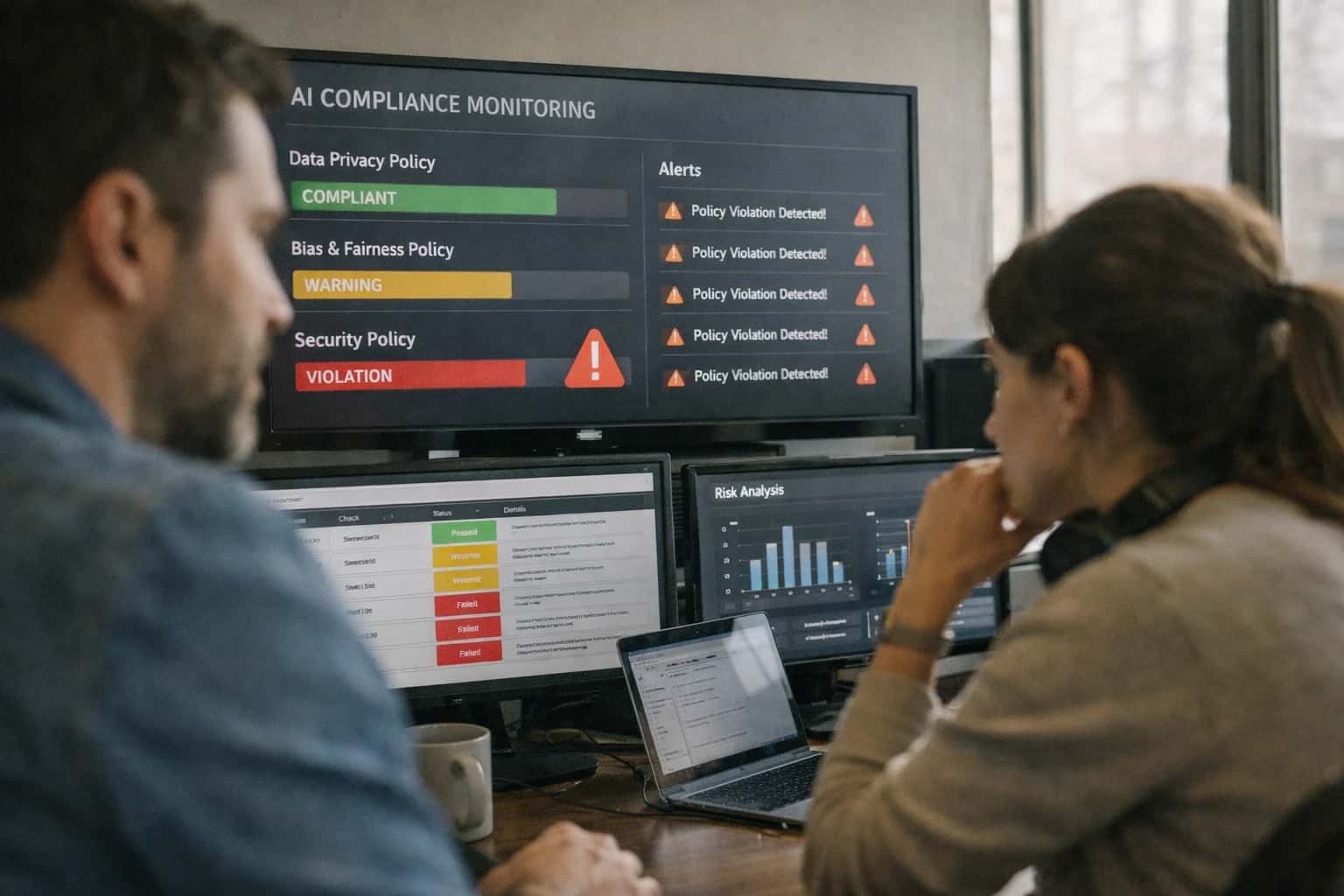
CONFIGURATION MANAGEMENT
What is Drift Remediation?
Drift remediation is the automated process of detecting and correcting unauthorized or unintended changes to a system's configuration, restoring it to its declared desired state to ensure compliance and stability.
The remediation engine typically operates within a closed-loop automation architecture, such as a Kubernetes Operator or an O-RAN Non-Real-Time RIC. It continuously compares the live state against the declarative model and executes an idempotent operation to enforce convergence. By automatically reverting unauthorized modifications, drift remediation guarantees operational consistency, simplifies audit compliance, and is a foundational requirement for achieving true self-healing network capabilities in zero-touch provisioning systems.
DRIFT REMEDIATION EXPLAINED
Frequently Asked Questions
Drift remediation is the automated process of detecting and correcting unauthorized or unintended changes to a system's configuration, restoring it to its declared desired state. Explore the core concepts, mechanisms, and best practices that underpin this critical component of zero-touch network provisioning.
Drift remediation is the automated process of detecting and correcting unauthorized or unintended changes to a system's configuration, restoring it to its declared desired state to ensure compliance and stability. It works by continuously comparing the observed state of a resource against its desired state defined in a source of truth, such as a Git repository. When a discrepancy, or "drift," is detected, a reconciliation loop is triggered. This loop automatically executes a set of corrective actions—such as re-applying a configuration template or restarting a service—to eliminate the delta and bring the system back into alignment without human intervention. This mechanism is foundational to self-healing networks and GitOps operational frameworks.
Enabling Efficiency, Speed & Accuracy
Intelligent Analysis, Decision & Execution
We build AI systems for teams that need search across company data, workflow automation across tools, or AI features inside products and internal software.
Talk to Us
Search across company data
Give teams answers from docs, tickets, runbooks, and product data with sources and permissions.
Useful when people spend too long searching or get different answers from different systems.
Enterprise searchRAGPermissions
Read more
Automate internal workflows
Use AI to route work, draft outputs, trigger actions, and keep approvals and logs in place.
Useful when repetitive work moves across multiple tools and teams.
AI agentsWorkflow automationGovernance
Read more
Add AI to products and internal tools
Build assistants, guided actions, or decision support into the software your team or customers already use.
Useful when AI needs to be part of the product, not a separate tool.
AI integrationDecision supportModel routing
Read more
About the author
Prasad Kumkar
CEO & MD, Inference Systems
Prasad Kumkar is the CEO & MD of Inference Systems and writes about AI systems architecture, LLM infrastructure, model serving, evaluation, and production deployment. Over 5+ years, he has worked across computer vision models, L5 autonomous vehicle systems, and LLM research, with a focus on taking complex AI ideas into real-world engineering systems.
His work and writing cover AI systems, large language models, AI agents, multimodal systems, autonomous systems, inference optimization, RAG, evaluation, and production AI engineering.
LinkedIn
Limited slotsGet a Free AI Consultation
Partnered with leading AI, data, and software stack.





How We Work
Custom AI workflows for your Business
One-fit-all AI don't work for modern businesses. At Inferensys, we aim to understand your business & custom requirements; which we use to define most efficient agentic workflows, the data, and the tools for your business.
01
Review the use case
We understand the task, the users, and where AI can actually help.
Read more02
Pick the right approach
We define what needs search, automation, or product integration.
Read more03
Build the first useful version
We implement the part that proves the value first.
Read more04
Improve from there
We add the checks and visibility needed to keep it useful.
Read moreThe first call is a practical review of your use case and the right next step.
Talk to Us