Configuration drift detection is the automated, continuous auditing of live network element parameters against a golden baseline—a version-controlled, authoritative configuration state. The mechanism identifies unauthorized, accidental, or out-of-band changes that deviate from the intended operational design, creating a delta report of inconsistencies that threaten network stability, security posture, and regulatory compliance.

Glossary
Configuration Drift Detection
An automated auditing process that continuously compares the running configuration of network elements against a defined golden baseline to identify unauthorized changes or inconsistencies that threaten stability.
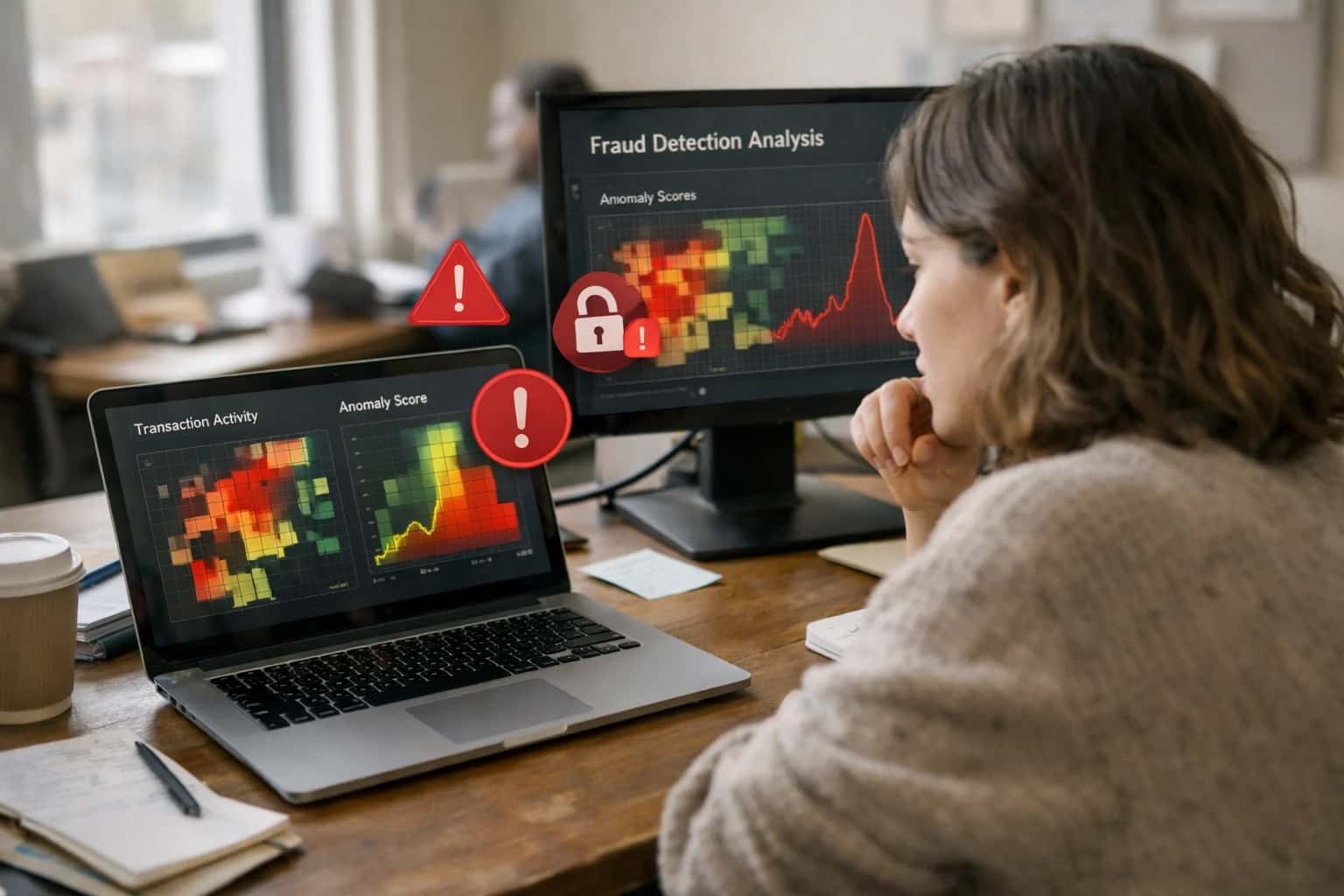
GOLDEN BASELINE ENFORCEMENT
What is Configuration Drift Detection?
Configuration drift detection is an automated auditing process that continuously compares the running configuration of network elements against a defined golden baseline to identify unauthorized changes or inconsistencies that threaten stability.
In Self-Organizing Networks (SON), drift detection acts as a critical safety net for closed-loop automation, ensuring that autonomous optimization functions like Mobility Load Balancing (MLB) or Coverage and Capacity Optimization (CCO) have not inadvertently pushed parameters outside acceptable bounds. By integrating with RAN Intelligent Controllers (RICs) via the O1 interface, the system can trigger automated remediation—reverting to the golden baseline—or generate alerts for manual intervention, preventing cascading failures.
AUTOMATED AUDIT MECHANISMS
Key Features of Configuration Drift Detection
Configuration drift detection provides the continuous assurance layer required for truly autonomous networks. By comparing live network state against a golden baseline, these mechanisms prevent the silent degradation that undermines closed-loop automation.
01
Golden Baseline Definition
The golden baseline is the single source of truth representing the intended, authorized configuration for a network element or service. It is typically version-controlled and stored in a central repository.
- Intent-derived: Generated from high-level business policies rather than manual scripting
- Vendor-agnostic: Stored in a normalized data model (e.g., YANG) to abstract away CLI syntax
- Immutable history: Every approved change is tracked, enabling rollback to any previous known-good state
02
Continuous Reconciliation Loop
The core engine that performs a state diff between the running configuration on a network element and the golden baseline at a defined cadence. This is not a one-time audit but a perpetual closed-loop process.
- Near-real-time polling: Uses protocols like NETCONF/YANG or gNMI to pull live state
- Syntactic and semantic comparison: Detects both literal text changes and functionally equivalent but differently ordered configurations
- Event-driven triggers: Can be initiated by a network change notification rather than waiting for a polling interval
03
Drift Classification Engine
Not all drift is malicious or harmful. A classification engine categorizes detected deviations to prevent alarm fatigue and prioritize remediation actions.
- Authorized-but-unrecorded: A change made through an out-of-band channel that is valid but not yet reflected in the baseline
- Transient state: A temporary configuration set by a SON function (e.g., MLB) that is expected to revert
- Rogue configuration: An unauthorized, potentially malicious change requiring immediate rollback
- Configuration decay: Gradual performance degradation from accumulated minor, uncoordinated tweaks
04
Automated Remediation Playbooks
Detection without action is insufficient. Drift detection integrates with closed-loop automation to execute pre-approved remediation workflows without human intervention.
- Self-healing rollback: Automatically reverts the element to the last known golden baseline upon detecting a rogue change
- Baseline update: If drift is classified as authorized, the system updates the golden baseline to match the new running state
- Quarantine actions: Isolates a compromised network function from the topology to prevent cascading failures while awaiting human review
05
Compliance and Audit Trail
Every detected drift event, classification decision, and remediation action is immutably logged to provide a complete forensic history for regulatory compliance and post-mortem analysis.
- Immutable ledger: Records what changed, who (or which automation) changed it, and when
- Policy attestation: Generates cryptographic proof that the network state matches the defined intent for auditors
- Drift scoring: Assigns a quantitative risk score to each deviation based on the affected parameters and their security impact
06
Integration with Intent-Based Networking
Configuration drift detection is a critical assurance component within an Intent-Based Networking (IBN) architecture. It closes the loop between declared intent and operational reality.
- Intent assurance: Continuously verifies that the network is doing what the business specified
- Closed-loop feedback: Feeds drift metrics back into the intent engine to refine policy translation
- Multi-domain correlation: Correlates drift events across RAN, transport, and core to identify systemic configuration issues rather than isolated element faults
CONFIGURATION DRIFT DETECTION
Frequently Asked Questions
Clear, technical answers to the most common questions about automated configuration drift detection in self-organizing networks, covering mechanisms, baselines, and remediation strategies.
Configuration drift detection is an automated auditing process that continuously compares the running configuration of network elements against a defined golden baseline to identify unauthorized changes or inconsistencies that threaten stability. The mechanism operates by establishing a secure connection to each managed network element—such as a gNB, eNB, or router—and pulling its current running configuration at a defined polling interval. This live configuration is then parsed and normalized into a structured format, typically using YANG or vendor-specific data models, before being compared against the stored baseline using a semantic diff engine. Unlike simple text-based comparisons, a semantic diff understands the hierarchical structure and dependencies of network parameters, allowing it to identify not just literal changes but also logically conflicting configurations. When a drift event is detected, the system generates an alert with the specific parameter delta, a severity classification, and the timestamp of the last known compliant state, enabling operators to trace the root cause of the unauthorized modification.
Enabling Efficiency, Speed & Accuracy
Intelligent Analysis, Decision & Execution
We build AI systems for teams that need search across company data, workflow automation across tools, or AI features inside products and internal software.
Talk to Us
Search across company data
Give teams answers from docs, tickets, runbooks, and product data with sources and permissions.
Useful when people spend too long searching or get different answers from different systems.
Enterprise searchRAGPermissions
Read more
Automate internal workflows
Use AI to route work, draft outputs, trigger actions, and keep approvals and logs in place.
Useful when repetitive work moves across multiple tools and teams.
AI agentsWorkflow automationGovernance
Read more
Add AI to products and internal tools
Build assistants, guided actions, or decision support into the software your team or customers already use.
Useful when AI needs to be part of the product, not a separate tool.
AI integrationDecision supportModel routing
Read more
About the author
Prasad Kumkar
CEO & MD, Inference Systems
Prasad Kumkar is the CEO & MD of Inference Systems and writes about AI systems architecture, LLM infrastructure, model serving, evaluation, and production deployment. Over 5+ years, he has worked across computer vision models, L5 autonomous vehicle systems, and LLM research, with a focus on taking complex AI ideas into real-world engineering systems.
His work and writing cover AI systems, large language models, AI agents, multimodal systems, autonomous systems, inference optimization, RAG, evaluation, and production AI engineering.
LinkedIn
Limited slotsGet a Free AI Consultation
Partnered with leading AI, data, and software stack.





How We Work
Custom AI workflows for your Business
One-fit-all AI don't work for modern businesses. At Inferensys, we aim to understand your business & custom requirements; which we use to define most efficient agentic workflows, the data, and the tools for your business.
01
Review the use case
We understand the task, the users, and where AI can actually help.
Read more02
Pick the right approach
We define what needs search, automation, or product integration.
Read more03
Build the first useful version
We implement the part that proves the value first.
Read more04
Improve from there
We add the checks and visibility needed to keep it useful.
Read moreThe first call is a practical review of your use case and the right next step.
Talk to Us