A Slice SLA specifies the exact technical Key Performance Indicators (KPIs) a network slice instance must guarantee. These metrics typically include minimum throughput, maximum latency, packet error rate, and availability percentage. The agreement translates abstract service requirements into measurable, enforceable network behavior for a specific Slice as a Service (SlaaS) offering.

Glossary
Slice SLA
A formal contract between a slice tenant and a network operator that defines the quantifiable performance metrics, such as throughput, latency, and availability, a network slice instance must deliver, along with penalties for non-compliance.
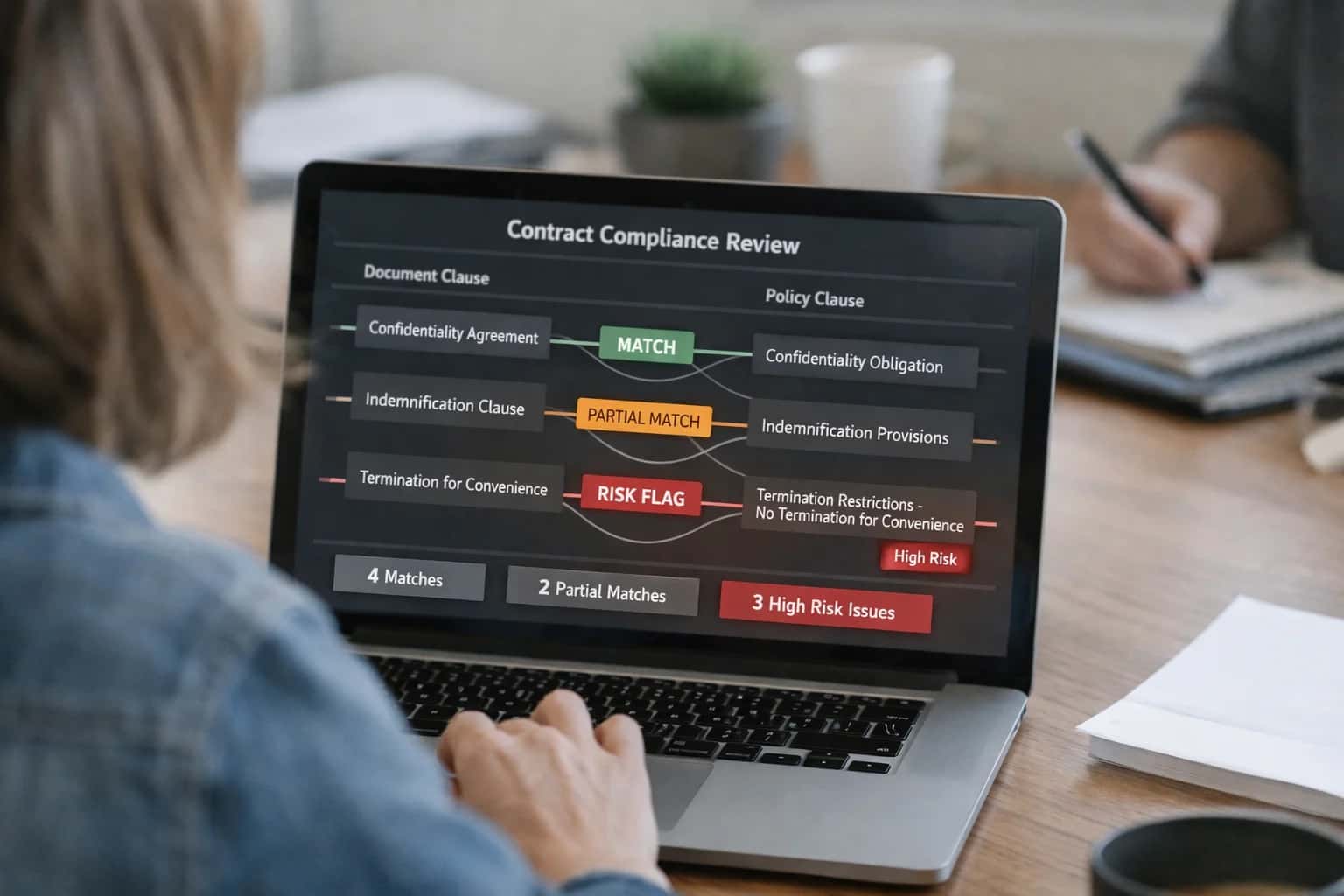
SERVICE LEVEL AGREEMENT
What is Slice SLA?
A Slice SLA is a formal, legally binding contract between a network slice tenant and the mobile network operator that defines the quantifiable performance metrics a specific network slice instance must deliver, along with the penalties for non-compliance.
The SLA also defines the financial and operational consequences of a breach. If the slice fails to meet its committed KPIs, the contract triggers predefined penalties, service credits, or remediation procedures. This formal structure is essential for industrial URLLC slices and enterprise customers who rely on deterministic network performance for mission-critical automation.
SERVICE LEVEL AGREEMENT PARAMETERS
Core Metrics Defined in a Slice SLA
A Slice SLA formalizes the quantifiable performance guarantees a network operator provides to a slice tenant. These metrics define the boundary between compliant service delivery and a contractual violation.
01
Throughput Guarantees
Defines the minimum and peak data rates a slice must deliver. This is typically specified per UE or per slice aggregate.
- Guaranteed Bit Rate (GBR): A fixed bandwidth commitment for constant-throughput services like real-time video.
- Maximum Bit Rate (MBR): The upper limit on data rate, used for traffic shaping and preventing resource hogging.
- Aggregate Slice Throughput: The total throughput capacity available to all UEs within the slice instance simultaneously.
A violation occurs when the measured throughput drops below the GBR for a defined measurement window.
99.999%
Typical GBR Availability Target
02
Latency Budget
Specifies the maximum acceptable one-way or round-trip delay for a data packet traversing the slice. This is the defining metric for URLLC slices.
- User Plane Latency: The delay between the UE and the User Plane Function (UPF) anchor point.
- E2E Latency: The total delay from the application client to the application server, including transport and core network.
- Jitter: The variation in packet delay, critical for deterministic industrial control loops.
Latency budgets are often defined at the 99.999th percentile to guarantee performance for the vast majority of packets.
< 1 ms
URLLC User Plane Latency Target
03
Availability & Reliability
Quantifies the percentage of time the slice is operational and the probability of successful data delivery within the latency budget.
- Slice Availability: The uptime percentage, often expressed as 'number of nines' (e.g., 99.999% allows ~5 minutes of downtime per year).
- Packet Success Rate: The fraction of packets successfully delivered within the latency constraint. A URLLC slice may require 99.999% reliability for 32-byte packets.
- Mean Time Between Failures (MTBF): The predicted elapsed time between inherent failures of the slice during operation.
These metrics are measured end-to-end, and a failure in any sub-component (RAN, transport, core) counts against the SLA.
99.9999%
Ultra-Reliability Packet Success Rate
04
Slice Capacity & UE Density
Defines the maximum number of concurrent users or devices the slice must support within a geographic area without performance degradation.
- UE Density: The maximum number of active UEs per square kilometer the slice can serve simultaneously.
- PDU Session Count: The total number of concurrent Protocol Data Unit sessions the slice control plane can manage.
- Connection Density: A 5G KPI requiring support for 1 million devices per km², relevant for massive IoT slices.
Exceeding these limits triggers slice admission control, where new session requests are rejected to protect existing SLA commitments.
1M devices/km²
5G mMTC Connection Density Target
05
Mobility Performance
Specifies the acceptable interruption time and handover success rate when a UE moves between cells while connected to the slice.
- Handover Interruption Time: The duration of a data path switch during a handover, targeted at 0 ms for seamless mobility in URLLC.
- Handover Success Rate: The percentage of attempted handovers that complete without a radio link failure.
- Maximum UE Speed: The highest velocity at which the slice guarantees its performance metrics (e.g., up to 500 km/h for high-speed train slices).
These metrics are critical for slices serving autonomous vehicles or high-speed rail, where a failed handover can be catastrophic.
0 ms
URLLC Seamless Handover Target
06
Energy Efficiency KPIs
Emerging SLA parameters that quantify the slice's power consumption relative to its delivered performance, driven by sustainability mandates.
- Energy Efficiency (EE): Measured in bits per Joule, defining the useful data transmitted per unit of energy consumed by the slice.
- Slice Carbon Footprint: The total greenhouse gas emissions attributable to the slice, calculated from its energy consumption and the grid's carbon intensity.
- Sleep Mode Ratio: The percentage of time network elements serving the slice spend in low-power states during low traffic periods.
These metrics align the tenant's operational requirements with the operator's net-zero commitments, creating a shared responsibility for energy optimization.
bits/Joule
Standard EE Measurement Unit
Enabling Efficiency, Speed & Accuracy
Intelligent Analysis, Decision & Execution
We build AI systems for teams that need search across company data, workflow automation across tools, or AI features inside products and internal software.
Talk to Us
Search across company data
Give teams answers from docs, tickets, runbooks, and product data with sources and permissions.
Useful when people spend too long searching or get different answers from different systems.
Enterprise searchRAGPermissions
Read more
Automate internal workflows
Use AI to route work, draft outputs, trigger actions, and keep approvals and logs in place.
Useful when repetitive work moves across multiple tools and teams.
AI agentsWorkflow automationGovernance
Read more
Add AI to products and internal tools
Build assistants, guided actions, or decision support into the software your team or customers already use.
Useful when AI needs to be part of the product, not a separate tool.
AI integrationDecision supportModel routing
Read moreSLICE SLA CLARIFICATIONS
Frequently Asked Questions
Clear, technical answers to the most common questions about the contractual performance guarantees, monitoring mechanisms, and enforcement policies governing network slice service level agreements.
A Slice SLA (Service Level Agreement) is a legally binding contract between a network slice tenant and a mobile network operator that defines the quantifiable performance metrics a specific Network Slicing Instance must deliver. It works by establishing clear, measurable Key Performance Indicators (KPIs)—such as throughput, latency, jitter, packet error rate, and availability—that are continuously monitored by the operator's Network Data Analytics Function (NWDAF). If the monitored performance falls below the agreed-upon threshold, the SLA triggers pre-defined penalties, which may include financial rebates or dynamic resource reallocation. The SLA also defines the slice's functional parameters, including its type (e.g., Guaranteed Bit Rate (GBR) Slice or Ultra-Reliable Low-Latency Communication (URLLC) Slice), the geographic service area, and the required degree of Slice Isolation from other tenants.

About the author
Prasad Kumkar
CEO & MD, Inference Systems
Prasad Kumkar is the CEO & MD of Inference Systems and writes about AI systems architecture, LLM infrastructure, model serving, evaluation, and production deployment. Over 5+ years, he has worked across computer vision models, L5 autonomous vehicle systems, and LLM research, with a focus on taking complex AI ideas into real-world engineering systems.
His work and writing cover AI systems, large language models, AI agents, multimodal systems, autonomous systems, inference optimization, RAG, evaluation, and production AI engineering.
LinkedIn
Limited slotsGet a Free AI Consultation
Partnered with leading AI, data, and software stack.





How We Work
Custom AI workflows for your Business
One-fit-all AI don't work for modern businesses. At Inferensys, we aim to understand your business & custom requirements; which we use to define most efficient agentic workflows, the data, and the tools for your business.
01
Review the use case
We understand the task, the users, and where AI can actually help.
Read more02
Pick the right approach
We define what needs search, automation, or product integration.
Read more03
Build the first useful version
We implement the part that proves the value first.
Read more04
Improve from there
We add the checks and visibility needed to keep it useful.
Read moreThe first call is a practical review of your use case and the right next step.
Talk to Us