A spectrum digital twin is a real-time, software-based mirror of a physical radio frequency (RF) environment, integrating data from spectrum sensing, propagation models, and network telemetry. It provides a sandbox where cognitive radio and dynamic spectrum access algorithms can be stress-tested against realistic interference and mobility patterns without risking harmful disruption to live incumbent users.

Glossary
Spectrum Digital Twin
A high-fidelity, virtualized replica of the radio frequency environment that allows operators to safely simulate, test, and optimize complex AI-driven spectrum sharing algorithms before live deployment.
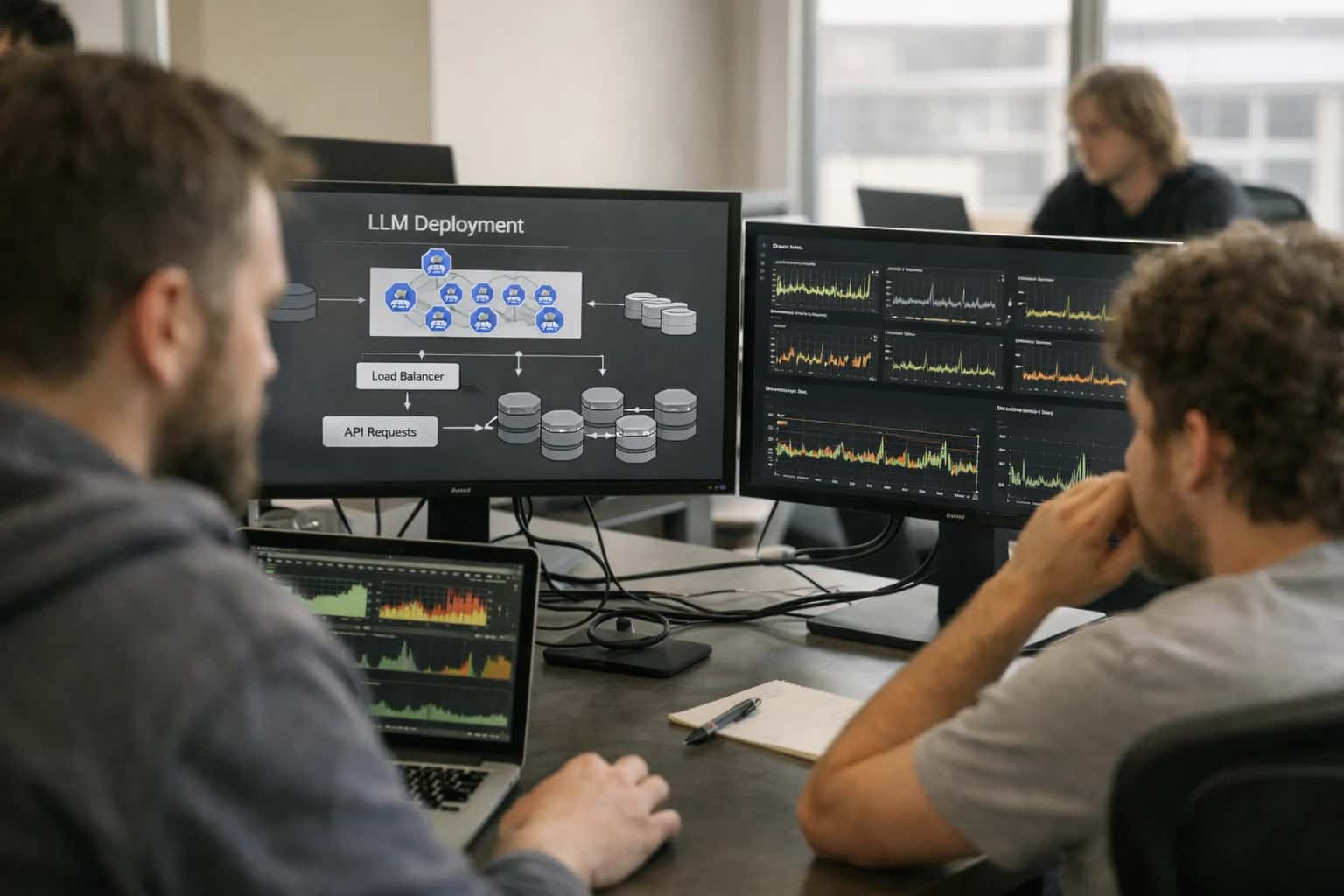
VIRTUALIZED RF ENVIRONMENT
What is Spectrum Digital Twin?
A spectrum digital twin is a high-fidelity, virtualized replica of the radio frequency environment that allows operators to safely simulate, test, and optimize complex AI-driven spectrum sharing algorithms before live deployment.
By enabling safe, offline simulation of complex scenarios, the twin accelerates the development of RAN Intelligent Controller (RIC) xApps and rApps for predictive load balancing and energy-efficient network slicing. This closed-loop validation framework is essential for achieving the deterministic, zero-touch automation required for intent-based spectrum configuration in dense, contested electromagnetic environments.
CORE ATTRIBUTES
Key Characteristics
A Spectrum Digital Twin is defined by its ability to create a high-fidelity, synchronized virtual replica of the radio frequency environment. The following characteristics distinguish it from a simple static simulation.
01
High-Fidelity Physics-Based Modeling
Replicates the electromagnetic environment with extreme precision, moving beyond statistical models to incorporate deterministic physics.
- Ray tracing for precise signal propagation and multipath prediction
- 3D geospatial data integration for terrain, buildings, and foliage
- Material properties that accurately affect reflection, diffraction, and penetration loss
- Dynamic object modeling for vehicles, pedestrians, and environmental changes
02
Real-Time Data Synchronization
Maintains a continuous, bidirectional link with the live network, ingesting telemetry to ensure the twin is a current, not historical, representation.
- Ingests real-time Channel State Information (CSI) and Radio Environment Map (REM) data
- Synchronizes with O-RAN RIC interfaces for live Key Performance Indicators (KPIs)
- Updates propagation models based on current spectrum occupancy and interference levels
- Creates a feedback loop where live data refines the model, and model insights inform the live network
03
AI/ML Algorithm Sandboxing
Provides a safe, offline environment to train, test, and validate complex AI-driven spectrum sharing algorithms before they touch a live network.
- Safely test Deep Reinforcement Learning (DRL) agents for dynamic spectrum access
- Validate predictive load balancing and energy-efficient network slicing policies
- Stress-test incumbent protection mechanisms against rare but critical interference scenarios
- Accelerate training by parallelizing millions of simulated network hours without real-world risk
04
What-If Scenario Simulation
Enables operators to simulate hypothetical deployments and extreme conditions that are impossible or too costly to create in a live network.
- Simulate a new Citizens Broadband Radio Service (CBRS) tier of users before deployment
- Model the impact of a large public event on spectrum occupancy and network load
- Test the coexistence of New Radio Unlicensed (NR-U) and Wi-Fi in a shared 6 GHz band
- Evaluate the performance of a new Non-Orthogonal Multiple Access (NOMA) scheme in a dense urban canyon
05
Multi-Domain Integration
Fuses disparate data domains into a single, unified virtual environment, breaking down silos between RAN, core, and regulatory databases.
- Integrates Spectrum Access System (SAS) policies directly into the simulation logic
- Combines RAN topology with edge computing resource availability
- Models user equipment mobility patterns from aggregated network telemetry
- Links spectrum strategy to business outcomes like spectrum trading valuation and SLA compliance
06
Closed-Loop Policy Assurance
Continuously verifies that deployed AI-driven spectrum policies are achieving their intended business and technical objectives without unintended side effects.
- Monitors for Primary User Emulation Attacks (PUEA) and other security threats in simulation
- Validates that an intent-based spectrum configuration is correctly translated into RAN actions
- Ensures spectrum slicing KPIs for latency and throughput are met under simulated load
- Provides auditable evidence of incumbent protection for regulatory compliance reporting
SPECTRUM DIGITAL TWIN
Frequently Asked Questions
Explore the foundational concepts behind creating high-fidelity virtual replicas of the radio frequency environment for safe, offline AI optimization.
A Spectrum Digital Twin is a high-fidelity, virtualized replica of a real-world radio frequency (RF) environment that maintains a continuous, bidirectional data link with its physical counterpart. It works by ingesting real-time telemetry from distributed sensors, Radio Environment Maps (REMs), and network elements to create a synchronized simulation. This allows operators to safely test, analyze, and optimize complex AI-driven spectrum sharing algorithms—such as those used in Dynamic Spectrum Access (DSA)—before deploying them into a live network. The twin models propagation physics, user mobility, and interference patterns to predict outcomes with high accuracy, enabling proactive network management rather than reactive troubleshooting.
Enabling Efficiency, Speed & Accuracy
Intelligent Analysis, Decision & Execution
We build AI systems for teams that need search across company data, workflow automation across tools, or AI features inside products and internal software.
Talk to Us
Search across company data
Give teams answers from docs, tickets, runbooks, and product data with sources and permissions.
Useful when people spend too long searching or get different answers from different systems.
Enterprise searchRAGPermissions
Read more
Automate internal workflows
Use AI to route work, draft outputs, trigger actions, and keep approvals and logs in place.
Useful when repetitive work moves across multiple tools and teams.
AI agentsWorkflow automationGovernance
Read more
Add AI to products and internal tools
Build assistants, guided actions, or decision support into the software your team or customers already use.
Useful when AI needs to be part of the product, not a separate tool.
AI integrationDecision supportModel routing
Read more
About the author
Prasad Kumkar
CEO & MD, Inference Systems
Prasad Kumkar is the CEO & MD of Inference Systems and writes about AI systems architecture, LLM infrastructure, model serving, evaluation, and production deployment. Over 5+ years, he has worked across computer vision models, L5 autonomous vehicle systems, and LLM research, with a focus on taking complex AI ideas into real-world engineering systems.
His work and writing cover AI systems, large language models, AI agents, multimodal systems, autonomous systems, inference optimization, RAG, evaluation, and production AI engineering.
LinkedIn
Limited slotsGet a Free AI Consultation
Partnered with leading AI, data, and software stack.





How We Work
Custom AI workflows for your Business
One-fit-all AI don't work for modern businesses. At Inferensys, we aim to understand your business & custom requirements; which we use to define most efficient agentic workflows, the data, and the tools for your business.
01
Review the use case
We understand the task, the users, and where AI can actually help.
Read more02
Pick the right approach
We define what needs search, automation, or product integration.
Read more03
Build the first useful version
We implement the part that proves the value first.
Read more04
Improve from there
We add the checks and visibility needed to keep it useful.
Read moreThe first call is a practical review of your use case and the right next step.
Talk to Us