A Trusted Execution Environment (TEE) is a hardware-enforced enclave that isolates sensitive code and data from the main operating system. It provides confidential computing by ensuring that workloads inside the enclave are invisible to unauthorized processes, even if the OS or hypervisor is compromised. This is achieved through hardware-based memory encryption and access control mechanisms built directly into the processor.

Glossary
Trusted Execution Environment (TEE)
A secure area of a main processor that guarantees code and data loaded inside is protected with respect to confidentiality and integrity, isolated from the host operating system.
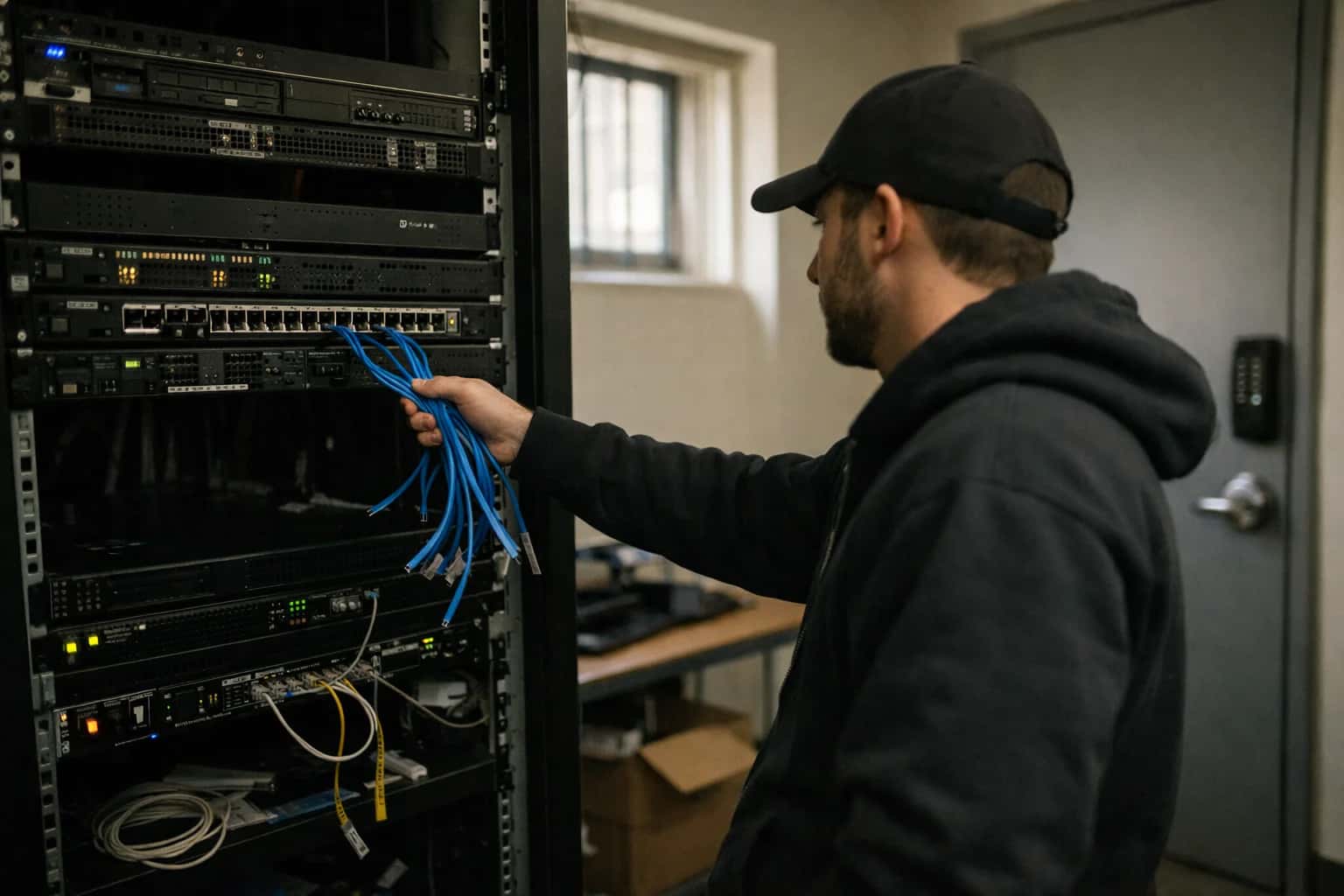
HARDWARE-BASED ISOLATION
What is Trusted Execution Environment (TEE)?
A Trusted Execution Environment (TEE) is a secure area within a main processor that guarantees the confidentiality and integrity of code and data loaded inside it, isolating sensitive computations from the host operating system, hypervisor, and other applications.
TEEs enable remote attestation, a cryptographic process where the hardware generates a signed proof verifying the enclave's identity and that its code has not been tampered with. Implementations like Intel SGX and AMD SEV allow mutually distrustful parties to collaborate on sensitive data, as the data owner can cryptographically verify the execution environment before releasing secrets for processing.
HARDWARE-GRADE ISOLATION
Key Features of a TEE
A Trusted Execution Environment (TEE) is not a single technology but a set of hardware-enforced guarantees. These features collectively ensure that sensitive computation and data remain confidential and unmodified, even if the host operating system or hypervisor is compromised.
01
Hardware-Enforced Isolation
The TEE carves out a private region of the main processor, often called an enclave (e.g., Intel SGX) or secure world (e.g., ARM TrustZone). This creates a strict hardware boundary. Code and data inside this region are physically isolated from all other software, including:
- The host operating system
- The hypervisor
- Other applications
- Direct Memory Access (DMA) from peripherals
This isolation is enforced by the CPU's memory management unit and on-die memory encryption engines, not by software policy.
Hardware Root
Trust Boundary
02
Memory Encryption & Integrity
Data within a TEE is encrypted while in use in main memory (DRAM). The Memory Encryption Engine (MEE) transparently encrypts and decrypts cache lines as they move between the processor cache and external RAM. This prevents physical attacks like:
- Cold boot attacks: Freezing and reading DRAM chips
- Bus snooping: Intercepting data on the memory bus
- DMA attacks: Malicious peripherals reading memory
Modern implementations also include memory integrity trees (e.g., MACs) to detect replay attacks and unauthorized modifications to encrypted memory.
AES-XTS
Typical Cipher
03
Remote Attestation
A critical feature that allows a remote client to cryptographically verify exactly what software is running inside a TEE before sending secrets. The process works as follows:
- The TEE hardware generates a measurement—a cryptographic hash of the enclave's initial code and data.
- The CPU signs this measurement with a device-specific key fused into the hardware at manufacture.
- The resulting attestation report is sent to the remote client.
- The client verifies the signature against the manufacturer's public key infrastructure (e.g., Intel IAS, AMD SEV-SNP VCEK).
This proves the enclave is running unmodified code on genuine hardware.
Cryptographic
Proof of Identity
04
Sealed Storage
TEEs provide a mechanism to securely persist secrets to untrusted local storage (e.g., a hard drive). Data is encrypted with a key derived from the specific enclave's identity and the CPU's hardware root key. This ensures:
- Confidentiality: Only that exact enclave on that exact CPU can decrypt the data.
- Integrity: Tampering is detected.
- Rollback Protection: Optional versioning prevents an attacker from restoring a previous, valid sealed blob to bypass security updates.
This allows applications to maintain state across power cycles without trusting the OS file system.
Enclave-Bound
Decryption Scope
05
Minimal Trusted Computing Base (TCB)
A core design principle of TEEs is to radically reduce the Trusted Computing Base (TCB)—the set of all hardware and software that could compromise security if it contained a bug. In a TEE model, the TCB is stripped down to:
- The processor package itself
- The enclave application code
Crucially, the multi-million-line operating system kernel, device drivers, and hypervisor are excluded from the TCB. This drastically shrinks the attack surface, as a vulnerability in the OS scheduler or a network driver cannot directly read enclave memory.
OS Excluded
From TCB
06
Secure Scheduling & Interrupt Handling
To prevent side-channel attacks, the TEE manages context switching securely. When an interrupt occurs, the CPU's microcode saves the enclave's register state to a protected State Save Area (SSA) inside the encrypted memory region before handing control to the OS. The OS cannot inspect or modify these saved registers. This ensures that:
- Enclave secrets are never leaked to the untrusted OS during a context switch.
- The OS cannot manipulate the enclave's execution flow by altering the saved instruction pointer.
- Asynchronous Enclave Exit (AEX) is handled atomically by the hardware.
Atomic
State Save
CONFIDENTIAL COMPUTING COMPARISON
TEE vs. Other Confidential Computing Technologies
A technical comparison of Trusted Execution Environments against alternative cryptographic approaches for protecting data in use during computation.
| Feature | TEE (e.g., Intel SGX) | Fully Homomorphic Encryption | Multi-Party Computation |
|---|---|---|---|
Protection Scope | Data in use (computation) | Data in use (computation) | Data in use (computation) |
Underlying Mechanism | Hardware-enforced memory isolation | Lattice-based cryptography on ciphertexts | Secret sharing across distributed nodes |
Performance Overhead | 2-10% | 10,000-1,000,000x | 100-10,000x |
Requires Trusted Hardware | |||
Supports Arbitrary Computation | |||
Data Remains Encrypted During Compute | |||
Collusion Resistance | Single enclave boundary | Mathematically guaranteed | Up to threshold t of n parties |
Attestation Capability | Hardware-rooted remote attestation |
Enabling Efficiency, Speed & Accuracy
Intelligent Analysis, Decision & Execution
We build AI systems for teams that need search across company data, workflow automation across tools, or AI features inside products and internal software.
Talk to Us
Search across company data
Give teams answers from docs, tickets, runbooks, and product data with sources and permissions.
Useful when people spend too long searching or get different answers from different systems.
Enterprise searchRAGPermissions
Read more
Automate internal workflows
Use AI to route work, draft outputs, trigger actions, and keep approvals and logs in place.
Useful when repetitive work moves across multiple tools and teams.
AI agentsWorkflow automationGovernance
Read more
Add AI to products and internal tools
Build assistants, guided actions, or decision support into the software your team or customers already use.
Useful when AI needs to be part of the product, not a separate tool.
AI integrationDecision supportModel routing
Read moreTRUSTED EXECUTION ENVIRONMENTS
Frequently Asked Questions
Clear, technically precise answers to the most common questions about hardware-enforced secure enclaves, their operational mechanisms, and their role in confidential computing pipelines.
A Trusted Execution Environment (TEE) is a secure area within a main processor that guarantees the confidentiality and integrity of code and data loaded inside it, isolating them from the host operating system, hypervisor, and other applications. It operates as a hardware-enforced enclave where computations occur in a black-box fashion—even a user with root access cannot inspect the memory contents. The mechanism relies on a hardware root of trust that performs attestation, cryptographically verifying to a remote party that a specific enclave is running unmodified code on a genuine TEE-enabled platform. During execution, the CPU encrypts memory pages belonging to the enclave using an ephemeral key stored in the processor's memory encryption engine, ensuring that data in use remains protected against cold-boot attacks, DMA probes, and compromised system software. This creates a Confidential Computing environment where sensitive workloads—such as processing personally identifiable information or proprietary machine learning models—can be executed on untrusted cloud infrastructure without exposing data to the infrastructure provider.

About the author
Prasad Kumkar
CEO & MD, Inference Systems
Prasad Kumkar is the CEO & MD of Inference Systems and writes about AI systems architecture, LLM infrastructure, model serving, evaluation, and production deployment. Over 5+ years, he has worked across computer vision models, L5 autonomous vehicle systems, and LLM research, with a focus on taking complex AI ideas into real-world engineering systems.
His work and writing cover AI systems, large language models, AI agents, multimodal systems, autonomous systems, inference optimization, RAG, evaluation, and production AI engineering.
LinkedIn
Limited slotsGet a Free AI Consultation
Partnered with leading AI, data, and software stack.





How We Work
Custom AI workflows for your Business
One-fit-all AI don't work for modern businesses. At Inferensys, we aim to understand your business & custom requirements; which we use to define most efficient agentic workflows, the data, and the tools for your business.
01
Review the use case
We understand the task, the users, and where AI can actually help.
Read more02
Pick the right approach
We define what needs search, automation, or product integration.
Read more03
Build the first useful version
We implement the part that proves the value first.
Read more04
Improve from there
We add the checks and visibility needed to keep it useful.
Read moreThe first call is a practical review of your use case and the right next step.
Talk to Us