Deepfake detection employs convolutional neural networks and vision transformers to analyze spatial and temporal inconsistencies invisible to the human eye. These models are trained on large datasets of both authentic and manipulated media to learn the characteristic artifacts left by face-swapping autoencoders and generative adversarial networks, such as unnatural optical flow patterns or lip-sync inconsistencies.

Glossary
Deepfake Detection
Deepfake detection is the use of machine learning models to identify synthetic media where a person's likeness has been replaced or manipulated to create fraudulent video or audio recordings.
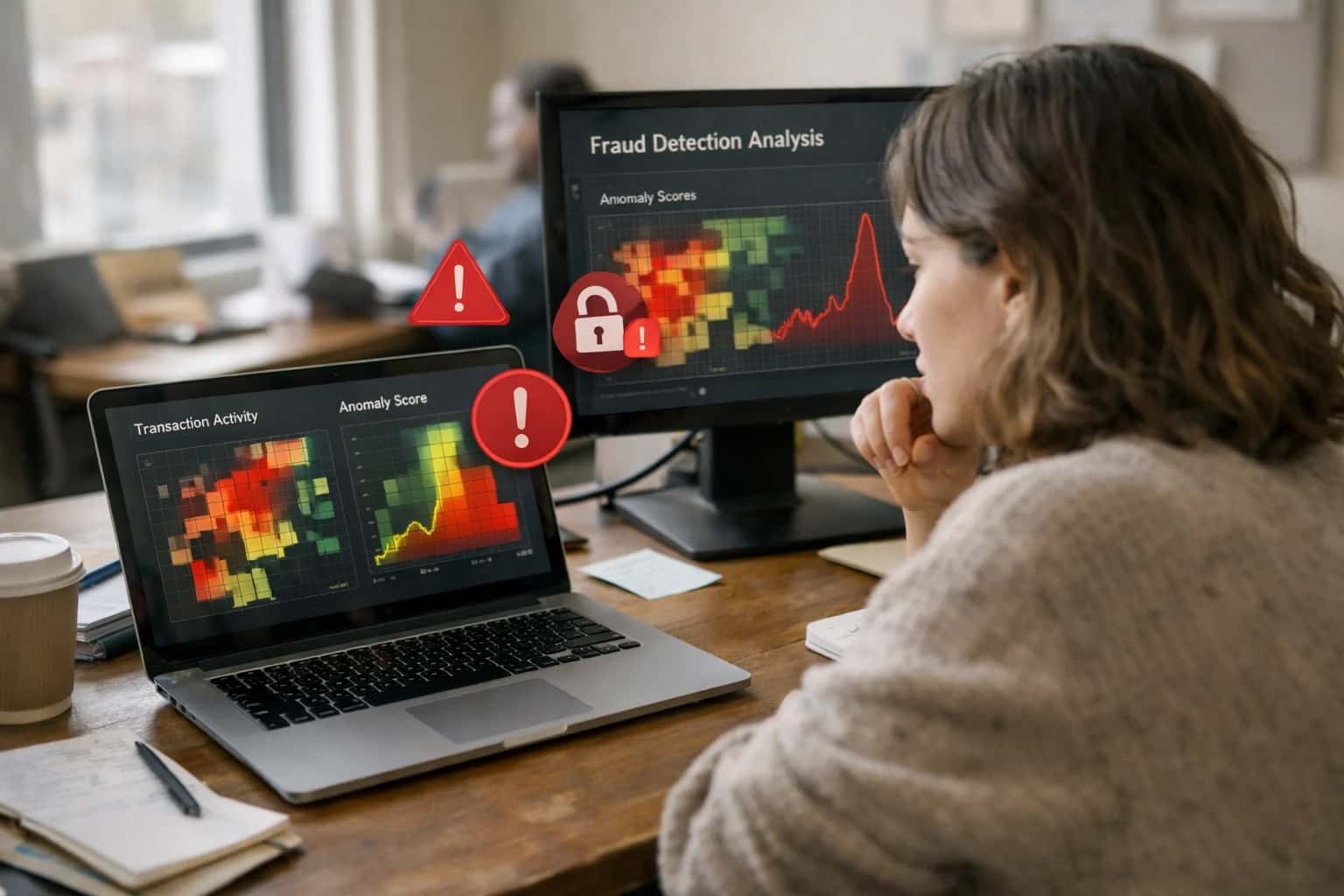
SYNTHETIC MEDIA FORENSICS
What is Deepfake Detection?
Deepfake detection is the forensic practice of using machine learning models to identify synthetic media where a person's likeness has been digitally replaced or manipulated, distinguishing fraudulent audio or video from authentic recordings.
Modern detection systems integrate multiple forensic streams, including frequency domain analysis to spot grid-like upsampling artifacts and photoplethysmography (PPG) analysis to verify the presence of a genuine cardiovascular pulse signal. The arms race between generative synthesis and detection remains dynamic, requiring continuous adaptation to novel manipulation architectures and adversarial robustness testing.
FORENSIC METHODOLOGIES
Key Deepfake Detection Techniques
A technical survey of the primary algorithmic and statistical approaches used to distinguish synthetic media from authentic recordings.
01
Frequency Domain Analysis
Transforms an image from its spatial representation into the frequency domain using Discrete Fourier Transform (DFT) or Discrete Cosine Transform (DCT). This exposes grid-like artifacts and unnatural high-frequency patterns generated by neural network upsampling layers that are invisible to the naked eye. Generative models often leave periodic peaks in the power spectrum due to transposed convolution operations. Analysts look for spectral centroids and banding anomalies that deviate from the 1/f law typical of natural photography.
DCT
Primary Transform
1/f law
Natural Baseline
02
Photoplethysmography (PPG) Analysis
A liveness detection method that extracts subtle, periodic variations in skin color caused by blood volume changes during the cardiac cycle. By magnifying these micro-color changes in facial regions of interest and analyzing the frequency spectrum, detectors can verify the presence of a living human cardiovascular system. Deepfake faces often fail to replicate the coherent spatiotemporal dynamics of genuine blood flow, exhibiting flat or non-physiological pulse signals.
60-120 BPM
Target Frequency
RGB
Signal Source
03
Phoneme-Viseme Mismatch Detection
A specific audio-visual forensic analysis that detects inconsistencies between spoken phonetic sounds and the observed mouth shapes required to produce them. A phoneme (the distinct unit of sound) must correspond to a specific viseme (the visual mouth configuration). Deepfake generators often produce plausible but incorrect viseme sequences, especially for bilabial consonants like /p/, /b/, and /m/, or fricatives like /f/ and /v/, where lip closure or teeth contact is physically precise.
44 phonemes
English Inventory
14-21
Viseme Classes
04
GAN Fingerprinting
The process of identifying unique, inherent artifacts left in synthetic images by the specific Generative Adversarial Network architecture used to create them. Every generator leaves a systematic 'fingerprint' in the pixel space, often a consequence of its specific upsampling operations, normalization layers, or training pipeline. These fingerprints can be extracted using a dedicated classifier trained on the noise residuals of known model families, enabling attribution to architectures like StyleGAN2, ProGAN, or StyleGAN3.
Noise Residual
Analysis Domain
Architecture
Attribution Target
05
Sensor Pattern Noise (PRNU) Analysis
A source camera identification method that extracts the unique, stable sensor pattern noise caused by silicon manufacturing imperfections. This Photo Response Non-Uniformity (PRNU) acts as a ballistic fingerprint for a specific camera sensor. By correlating the extracted noise residual from a query image against a known camera's reference pattern, analysts can verify if an image originated from that specific device. A missing or corrupted PRNU pattern suggests the image has been synthetically generated or heavily manipulated.
Pixel-level
Uniqueness
Correlation
Detection Metric
06
3D Morphable Model Fitting
A forensic technique that fits a parametric three-dimensional face model to a two-dimensional image to detect inconsistencies in the estimated shape, texture, and lighting parameters. By solving for the 3D geometry, albedo, and illumination coefficients that best explain the image, the system can flag faces where the recovered parameters are physically implausible. Face-swapped deepfakes often produce mismatches between the estimated 3D shape of the face and the surrounding head geometry or scene lighting.
Shape & Albedo
Estimated Parameters
Spherical Harmonics
Lighting Model
DEEPFAKE DETECTION INSIGHTS
Frequently Asked Questions
Explore the core forensic methodologies and machine learning techniques used to identify synthetic media where a person's likeness has been manipulated.
Deepfake detection is the process of using machine learning models and forensic analysis to identify synthetic media where a person's face or voice has been digitally replaced or manipulated. Detection systems work by analyzing spatio-temporal inconsistencies invisible to the human eye. These include physiological signals like photoplethysmography (PPG) patterns, which track subtle skin color variations caused by blood flow, and phoneme-viseme mismatches, where the mouth shapes do not perfectly align with the spoken sounds. Modern detectors often employ ensemble classifiers trained on high-dimensional forensic feature sets like the Spatial Rich Model (SRM) to distinguish authentic recordings from AI-generated fakes by identifying artifacts left by the generative model's upsampling or face-swapping algorithms.
Enabling Efficiency, Speed & Accuracy
Intelligent Analysis, Decision & Execution
We build AI systems for teams that need search across company data, workflow automation across tools, or AI features inside products and internal software.
Talk to Us
Search across company data
Give teams answers from docs, tickets, runbooks, and product data with sources and permissions.
Useful when people spend too long searching or get different answers from different systems.
Enterprise searchRAGPermissions
Read more
Automate internal workflows
Use AI to route work, draft outputs, trigger actions, and keep approvals and logs in place.
Useful when repetitive work moves across multiple tools and teams.
AI agentsWorkflow automationGovernance
Read more
Add AI to products and internal tools
Build assistants, guided actions, or decision support into the software your team or customers already use.
Useful when AI needs to be part of the product, not a separate tool.
AI integrationDecision supportModel routing
Read more
About the author
Prasad Kumkar
CEO & MD, Inference Systems
Prasad Kumkar is the CEO & MD of Inference Systems and writes about AI systems architecture, LLM infrastructure, model serving, evaluation, and production deployment. Over 5+ years, he has worked across computer vision models, L5 autonomous vehicle systems, and LLM research, with a focus on taking complex AI ideas into real-world engineering systems.
His work and writing cover AI systems, large language models, AI agents, multimodal systems, autonomous systems, inference optimization, RAG, evaluation, and production AI engineering.
LinkedIn
Limited slotsGet a Free AI Consultation
Partnered with leading AI, data, and software stack.





How We Work
Custom AI workflows for your Business
One-fit-all AI don't work for modern businesses. At Inferensys, we aim to understand your business & custom requirements; which we use to define most efficient agentic workflows, the data, and the tools for your business.
01
Review the use case
We understand the task, the users, and where AI can actually help.
Read more02
Pick the right approach
We define what needs search, automation, or product integration.
Read more03
Build the first useful version
We implement the part that proves the value first.
Read more04
Improve from there
We add the checks and visibility needed to keep it useful.
Read moreThe first call is a practical review of your use case and the right next step.
Talk to Us