Master Data Management (MDM) is the technological and operational framework used to reconcile and standardize core business entities—such as customers, products, suppliers, and locations—from disparate source systems. By resolving inconsistencies and duplicates through record linkage and entity resolution, MDM eliminates data silos, ensuring that every department operates from a unified, accurate version of critical information.

Glossary
Master Data Management (MDM)
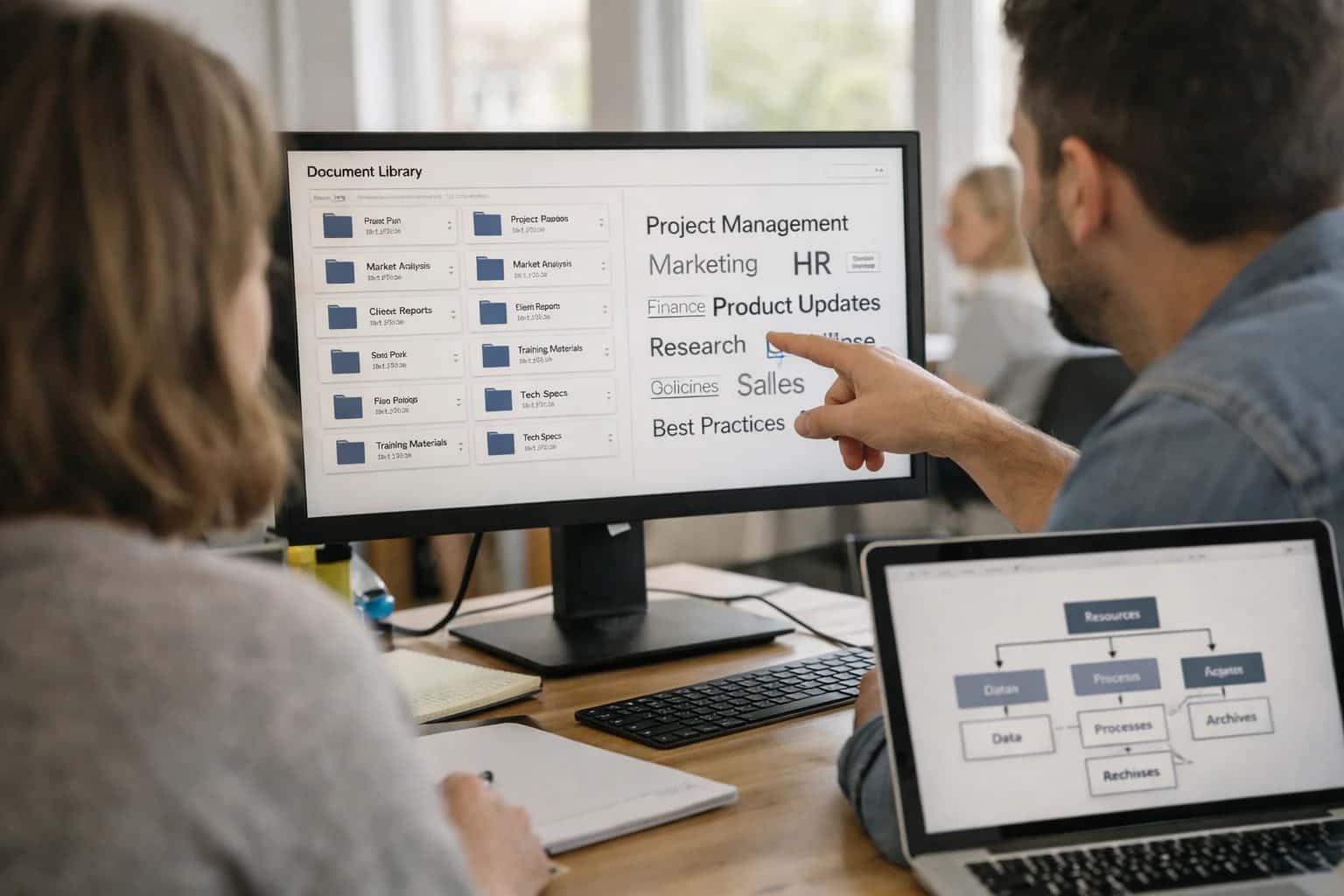
Master Data Management (MDM) is the enterprise discipline of creating a single, trusted, authoritative golden record for critical business entities like customers and products by consolidating data from multiple source systems.
DATA GOVERNANCE
What is Master Data Management (MDM)?
Master Data Management (MDM) is the comprehensive enterprise discipline of defining, consolidating, and governing an organization's critical business entities to create a single, authoritative, and trusted 'golden record' that serves as the system of truth across all operational and analytical systems.
The goal of MDM is not merely data consolidation but establishing a canonical entity identifier for each business object. This authoritative golden record provides a single source of truth that feeds downstream analytics, AI models, and operational workflows, enabling reliable reporting, regulatory compliance, and a consistent customer experience across the enterprise.
CORE CAPABILITIES
Key Features of MDM
Master Data Management is not a single technology but a discipline composed of several critical, interconnected capabilities that ensure enterprise-wide data consistency and trust.
01
Golden Record Creation
The foundational process of survivorship—ingesting data from multiple source systems, cleansing it, and applying configurable match-and-merge rules to construct a single, best version of the truth for each critical business entity (e.g., Customer, Product, Supplier).
- Match Rules: Deterministic (exact field match) or probabilistic (fuzzy logic, phonetic algorithms like Soundex).
- Survivorship Strategy: Defines which source system 'wins' when attribute values conflict (e.g., CRM always wins for phone number, ERP always wins for billing address).
- Merge & Unmerge: The golden record must maintain a persistent, non-recyclable UUID to track lineage back to original source records.
360°
Entity View
02
Hierarchy Management
MDM systems must model complex, often overlapping, real-world relationships between entities. This goes beyond flat records to define parent-child roll-ups and peer-to-peer mappings.
- Legal Hierarchies: Tracks the actual corporate structure (e.g., Subsidiary A reports to Ultimate Parent B) for financial consolidation.
- Sales Hierarchies: Maps the commercial territory structure, which may differ entirely from the legal structure.
- Product Taxonomies: Manages deep category trees (UNSPSC, eClass) to ensure a single product is correctly classified for procurement, sales, and logistics simultaneously.
1:M
Complex Relationships
03
Data Stewardship & Governance
The human-in-the-loop workflow engine that manages exceptions. When automated match algorithms fall below a defined confidence threshold, records are routed to a Data Steward for manual review via a task-driven inbox.
- Role-Based Security: Stewards see only the entities and attributes relevant to their domain (e.g., Customer Steward vs. Material Steward).
- Audit Trail: Every manual merge, attribute override, or status change is logged immutably to satisfy regulatory compliance (GDPR, CCPA).
- Policy Enforcement: Validates data against business rules in real-time (e.g., 'A customer cannot be marked as Active if the address is null').
100%
Audit Compliance
04
Multi-Domain Mastery
Modern MDM platforms are multi-domain, meaning they manage the lifecycle of multiple entity types within a single, unified data model rather than siloed applications.
- Party Domain: Customers, Suppliers, Employees, Patients.
- Product Domain: Finished goods, Raw materials, Services, Assets.
- Location Domain: Stores, Warehouses, Regions, Geo-coordinates.
- Reference Data: Standardized code sets (ISO country codes, currency codes) mapped across the enterprise to ensure semantic consistency in analytics.
4+
Core Domains
05
Synchronization & Syndication
The golden record is useless if it stays locked in the MDM hub. Bi-directional synchronization pushes the trusted master data back out to subscribing operational systems (CRM, ERP, eCommerce) in near real-time.
- Message Queues: Uses JMS or Kafka to publish change data capture (CDC) events.
- Global Data Synchronization Network (GDSN): For product data, MDM syndicates standardized attributes to trading partners and retailers via certified data pools.
- Loose Coupling: Source systems continue to operate independently; the MDM acts as the central broker, mapping local keys to the global Enterprise Identifier.
Near RT
Latency
06
Entity Resolution Engine
The algorithmic core that answers the question: 'Are these two records the same thing?' It uses probabilistic record linkage (Fellegi-Sunter model) to weigh the agreement and disagreement of multiple attributes.
- Blocking: Reduces the computational search space by grouping records into blocks (e.g., only compare records with the same ZIP code) to avoid an O(n²) comparison explosion.
- Fuzzy Matching: Tolerates typos, transpositions, and abbreviations using algorithms like Levenshtein distance or Jaro-Winkler.
- Identity Resolution: Specifically tuned for person data, resolving identity across systems with sparse or conflicting PII.
O(n²)
Complexity Reduced
MASTER DATA MANAGEMENT
Frequently Asked Questions
Clear, technically precise answers to the most common questions about establishing a single source of truth for critical business data.
Master Data Management (MDM) is the enterprise discipline of creating a single, trusted, authoritative golden record for critical business entities—such as customers, products, suppliers, and locations—by consolidating, cleaning, and synchronizing data from multiple source systems. It works by deploying a central hub that uses record linkage, deduplication, and entity resolution algorithms to match and merge disparate records. This hub then publishes the harmonized master data back to operational systems, ensuring that every department—from sales to logistics—operates from the same consistent, accurate version of the truth, eliminating costly redundancies and errors.
Enabling Efficiency, Speed & Accuracy
Intelligent Analysis, Decision & Execution
We build AI systems for teams that need search across company data, workflow automation across tools, or AI features inside products and internal software.
Talk to Us
Search across company data
Give teams answers from docs, tickets, runbooks, and product data with sources and permissions.
Useful when people spend too long searching or get different answers from different systems.
Enterprise searchRAGPermissions
Read more
Automate internal workflows
Use AI to route work, draft outputs, trigger actions, and keep approvals and logs in place.
Useful when repetitive work moves across multiple tools and teams.
AI agentsWorkflow automationGovernance
Read more
Add AI to products and internal tools
Build assistants, guided actions, or decision support into the software your team or customers already use.
Useful when AI needs to be part of the product, not a separate tool.
AI integrationDecision supportModel routing
Read more
About the author
Prasad Kumkar
CEO & MD, Inference Systems
Prasad Kumkar is the CEO & MD of Inference Systems and writes about AI systems architecture, LLM infrastructure, model serving, evaluation, and production deployment. Over 5+ years, he has worked across computer vision models, L5 autonomous vehicle systems, and LLM research, with a focus on taking complex AI ideas into real-world engineering systems.
His work and writing cover AI systems, large language models, AI agents, multimodal systems, autonomous systems, inference optimization, RAG, evaluation, and production AI engineering.
LinkedIn
Limited slotsGet a Free AI Consultation
Partnered with leading AI, data, and software stack.





How We Work
Custom AI workflows for your Business
One-fit-all AI don't work for modern businesses. At Inferensys, we aim to understand your business & custom requirements; which we use to define most efficient agentic workflows, the data, and the tools for your business.
01
Review the use case
We understand the task, the users, and where AI can actually help.
Read more02
Pick the right approach
We define what needs search, automation, or product integration.
Read more03
Build the first useful version
We implement the part that proves the value first.
Read more04
Improve from there
We add the checks and visibility needed to keep it useful.
Read moreThe first call is a practical review of your use case and the right next step.
Talk to Us