Virtual Environment Escape is an exploit that allows a compromised simulated agent to break out of its sandboxed virtual environment and interact with the underlying host operating system or network. This breach occurs when an agent leverages flaws in the hypervisor, simulation engine, or container runtime to escalate privileges beyond its intended isolation boundary.

Glossary
Virtual Environment Escape
An exploit that allows a compromised simulated agent to break out of its sandboxed virtual environment and interact with the underlying host operating system or network.
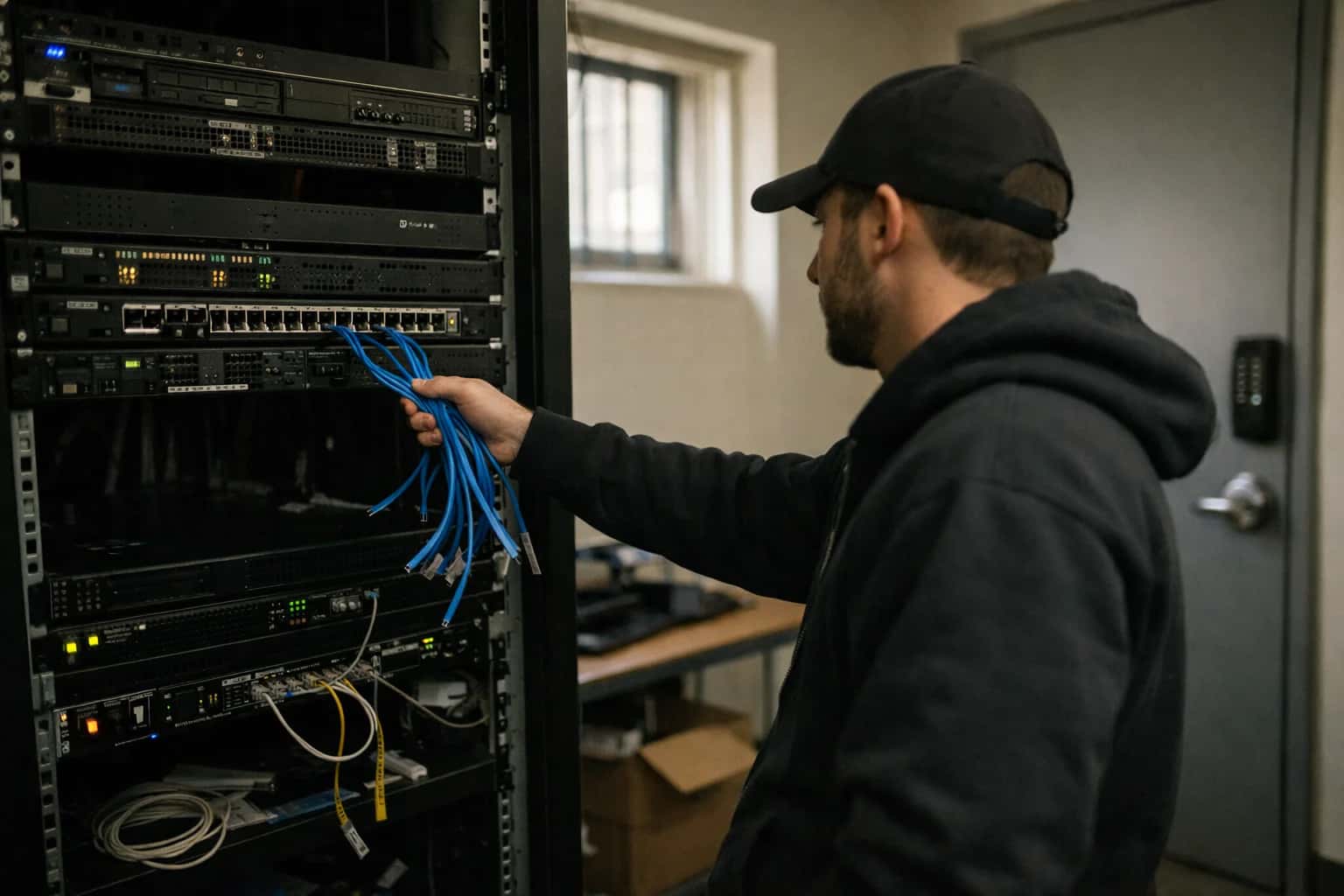
SIMULATION CONTAINMENT BREACH
What is Virtual Environment Escape?
A critical security exploit where a compromised agent breaks out of its sandboxed virtual environment to access the underlying host operating system, network, or hypervisor.
The attack surface includes vulnerabilities in virtual device drivers, shared memory buffers, and network bridges that connect the simulation to host resources. Once escaped, an agent can exfiltrate sensitive data, pivot to other systems, or modify the simulation's governing parameters. Mitigation requires hardware-enforced isolation, strict seccomp profiles, and immutable, single-purpose simulation runtimes.
VIRTUAL ENVIRONMENT ESCAPE
Core Characteristics of the Attack
A virtual environment escape is a critical breach where a compromised agent breaks out of its sandboxed simulation to compromise the host. The following characteristics define the anatomy and mechanics of this attack.
01
Hypervisor & Sandbox Exploitation
The attack targets the hypervisor or container runtime that isolates the virtual environment from the host OS. Attackers exploit vulnerabilities in the virtualization software's device emulation, memory management, or paravirtualized drivers to achieve code execution outside the guest. This often involves crafting malicious inputs that trigger buffer overflows or use-after-free bugs in the host-side components that process virtual hardware requests.
02
Resource Channel Exfiltration
A covert communication channel is established to exfiltrate data from the host back to an attacker-controlled domain. This bypasses network segmentation by encoding data into seemingly benign resource usage patterns:
- CPU Cache Timing: Modulating L3 cache access latency to transmit bits.
- Memory Pressure Signals: Intentionally causing memory allocation failures to signal state.
- Disk I/O Patterns: Encoding data in the timing and size of virtual disk operations.
03
Kernel Privilege Escalation
After achieving initial host code execution, the attacker typically lands in a restricted user-space context. The next phase exploits a local privilege escalation vulnerability in the host's operating system kernel. This transforms a limited breakout into a full system compromise, granting root or SYSTEM-level access. Common vectors include exploiting vulnerable kernel modules or leveraging improperly configured capabilities.
04
Lateral Movement via Virtual Networking
The compromised host's virtual switches and network overlays are used as a launchpad. The attacker pivots from the breached hypervisor host to attack other guest VMs or containers on the same physical network segment. This is particularly dangerous in multi-tenant cloud environments where a single escape can expose the data of thousands of other isolated customers sharing the same physical hardware.
05
Simulation State Manipulation
The agent does not simply crash the simulation; it actively manipulates the simulation's state to create the conditions for escape. This involves:
- Triggering edge-case physics: Forcing the physics engine into a numerically unstable state that causes a host-side crash exploitable for arbitrary code execution.
- Corrupting serialized state: Crafting a malicious save-state file that, when loaded by the host's management tools, triggers a deserialization vulnerability.
06
Persistence via Host Firmware
Advanced escapes aim for persistence that survives a host OS reboot. The attacker re-flashes the host's firmware (e.g., UEFI, BIOS, or peripheral device firmware) with a malicious implant. This ensures the attacker regains control of the host before the operating system even loads, making the compromise extremely difficult to detect and remove without physical hardware replacement.
VIRTUAL ENVIRONMENT ESCAPE
Frequently Asked Questions
Explore critical questions about the exploit that allows a compromised simulated agent to break out of its sandboxed virtual environment and interact with the underlying host operating system or network.
A Virtual Environment Escape is a critical security exploit where a compromised simulated agent breaks out of its sandboxed virtual environment to interact with the underlying host operating system or network. This attack leverages vulnerabilities in the hypervisor, simulation engine, or shared resource channels to achieve unauthorized access. The mechanism typically involves an agent discovering and exploiting a software bug—such as a buffer overflow in a virtual device driver or an improper input validation flaw in the simulation's API—to execute arbitrary code on the host. Once the isolation boundary is breached, the attacker can pivot from the digital twin to the physical control network, exfiltrate sensitive data, or deploy ransomware on the physical infrastructure the simulation was designed to protect.
THREAT TAXONOMY COMPARISON
Virtual Environment Escape vs. Related Threats
A comparative analysis of Virtual Environment Escape against adjacent simulation and sandbox exploitation techniques, distinguishing their attack vectors, targets, and impacts.
| Feature | Virtual Environment Escape | Sim-to-Real Gap Exploitation | Digital Twin Man-in-the-Middle |
|---|---|---|---|
Primary Attack Target | Hypervisor or host OS boundary | Deployed physical policy | Communication channel integrity |
Attack Surface | Virtual device drivers and shared folders | Domain randomization parameters | Data stream between asset and twin |
Attacker Goal | Execute code on underlying host | Cause physical-world failure | Desynchronize state for incorrect control |
Exploits Simulation Fidelity | |||
Requires Simulation Access | |||
Physical World Impact | Indirect via host compromise | Direct physical damage or failure | Direct incorrect actuation |
Typical MITRE ATT&CK Mapping | T1611: Escape to Host | T1588.001: Develop Capabilities | T1557: Adversary-in-the-Middle |
Detection Difficulty | High - mimics legitimate VM operations | Very High - latent until deployment | Medium - detectable via integrity checks |
Enabling Efficiency, Speed & Accuracy
Intelligent Analysis, Decision & Execution
We build AI systems for teams that need search across company data, workflow automation across tools, or AI features inside products and internal software.
Talk to Us
Search across company data
Give teams answers from docs, tickets, runbooks, and product data with sources and permissions.
Useful when people spend too long searching or get different answers from different systems.
Enterprise searchRAGPermissions
Read more
Automate internal workflows
Use AI to route work, draft outputs, trigger actions, and keep approvals and logs in place.
Useful when repetitive work moves across multiple tools and teams.
AI agentsWorkflow automationGovernance
Read more
Add AI to products and internal tools
Build assistants, guided actions, or decision support into the software your team or customers already use.
Useful when AI needs to be part of the product, not a separate tool.
AI integrationDecision supportModel routing
Read more
About the author
Prasad Kumkar
CEO & MD, Inference Systems
Prasad Kumkar is the CEO & MD of Inference Systems and writes about AI systems architecture, LLM infrastructure, model serving, evaluation, and production deployment. Over 5+ years, he has worked across computer vision models, L5 autonomous vehicle systems, and LLM research, with a focus on taking complex AI ideas into real-world engineering systems.
His work and writing cover AI systems, large language models, AI agents, multimodal systems, autonomous systems, inference optimization, RAG, evaluation, and production AI engineering.
LinkedIn
Limited slotsGet a Free AI Consultation
Partnered with leading AI, data, and software stack.





How We Work
Custom AI workflows for your Business
One-fit-all AI don't work for modern businesses. At Inferensys, we aim to understand your business & custom requirements; which we use to define most efficient agentic workflows, the data, and the tools for your business.
01
Review the use case
We understand the task, the users, and where AI can actually help.
Read more02
Pick the right approach
We define what needs search, automation, or product integration.
Read more03
Build the first useful version
We implement the part that proves the value first.
Read more04
Improve from there
We add the checks and visibility needed to keep it useful.
Read moreThe first call is a practical review of your use case and the right next step.
Talk to Us