A Software Bill of Materials (SBOM) is a structured, machine-readable inventory cataloging every open-source and proprietary component, library, and transitive dependency composing a software artifact. It serves as a formal, nested manifest, typically generated in formats like SPDX or CycloneDX, to provide complete transparency into the software supply chain.

Glossary
Software Bill of Materials (SBOM)
A formal, machine-readable inventory of all components, libraries, and dependencies that make up a software artifact, enabling vulnerability management and license compliance.
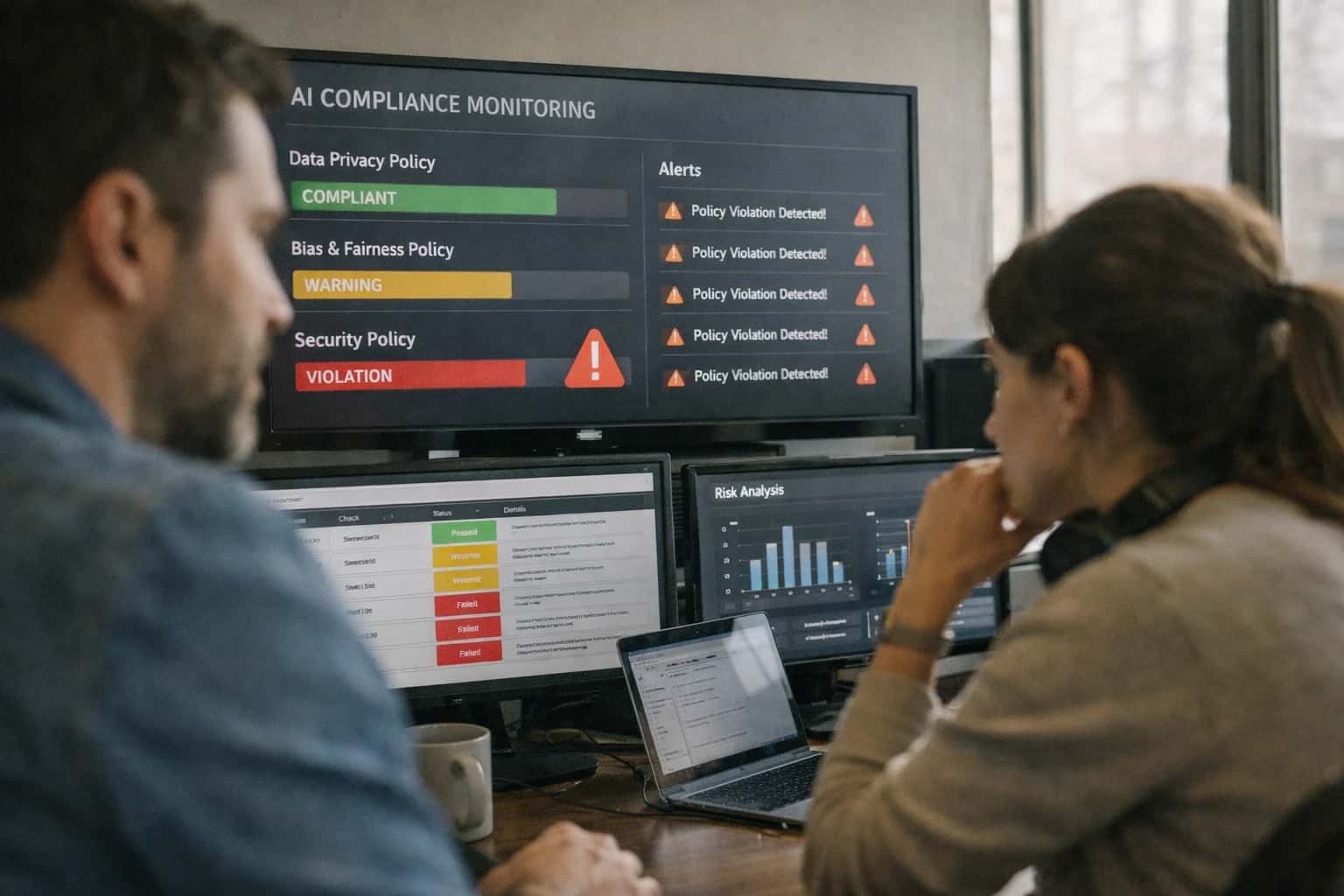
SUPPLY CHAIN TRANSPARENCY
What is Software Bill of Materials (SBOM)?
A Software Bill of Materials (SBOM) is a formal, machine-readable inventory that hierarchically lists all components, libraries, and dependencies within a software artifact. It provides the foundational data integrity required for vulnerability management and license compliance in modern software supply chains.
In the context of Secure Inter-Agent Communication, an SBOM is critical for verifying the integrity of agent binaries and container images before establishing trust. It allows security architects to cross-reference component inventories against vulnerability databases, ensuring that no compromised or unpatched dependency is introduced into the agent mesh, thereby preventing supply chain attacks that could compromise workload identity or inter-agent encryption channels.
ANATOMY OF A SOFTWARE BILL OF MATERIALS
Core Components of an SBOM
A Software Bill of Materials (SBOM) is a formal, machine-readable inventory detailing every component, library, and dependency within a software artifact. It provides the foundational data transparency required for vulnerability management, license compliance, and supply chain integrity verification.
01
Data Fields & Minimum Elements
The National Telecommunications and Information Administration (NTIA) defines baseline components every SBOM must contain. Supplier Name identifies the author, while Component Name and Version String uniquely identify the software unit. A Unique Identifier like a Package URL (pURL) or CPE provides a machine-readable key. Dependency Relationship maps how components connect, and the Author and Timestamp establish provenance and recency.
7
NTIA Minimum Fields
03
Dependency Graph & Relationship Mapping
An SBOM must articulate the hierarchical or graph-based relationships between components. It distinguishes between primary components (top-level software), transitive dependencies (indirectly included libraries), and runtime dependencies (required for execution). This mapping is critical for tracing a vulnerability like Log4Shell through deep dependency chains to determine actual exploitability.
04
Cryptographic Hash & Integrity Verification
Each component entry should include a cryptographic hash (e.g., SHA-256) to serve as a digital fingerprint. This allows consumers to verify that a retrieved artifact has not been tampered with or corrupted. By comparing the hash in the SBOM against the downloaded component, organizations can detect supply chain substitution attacks where a malicious actor replaces a legitimate library.
05
License Compliance & Inventory
An SBOM aggregates the declared licenses (e.g., MIT, GPL-3.0) and concluded licenses (human-verified) for all components. This enables automated license policy enforcement during CI/CD pipelines. Organizations can instantly audit a product for copyleft or incompatible licenses, preventing legal risk before a software release.
06
Vulnerability Exploitability Exchange (VEX)
A VEX document is a companion artifact to an SBOM that provides a machine-readable statement on the exploitability of a known vulnerability in a specific product context. It declares a status of Not Affected, Affected, Fixed, or Under Investigation. This eliminates false positives by allowing a supplier to assert that a component with a known CVE is not exploitable due to how it is used.
SBOM DEEP DIVE
Frequently Asked Questions
Clear, technical answers to the most common questions about Software Bill of Materials, from foundational concepts to implementation specifics.
A Software Bill of Materials (SBOM) is a formal, machine-readable inventory that comprehensively lists all components, libraries, and dependencies within a software artifact. It functions as a nested, hierarchical ingredient label for code, detailing the precise supply chain relationships between a final application and its constituent parts. An SBOM works by programmatically scanning source code, build artifacts, and container images to identify every direct and transitive dependency, then outputting this data in a standardized format like SPDX or CycloneDX. This structured data allows automated tools to instantly cross-reference the inventory against vulnerability databases, verify license compliance, and map the blast radius of a newly discovered zero-day exploit, transforming opaque binary blobs into transparent, auditable assemblies.
FORMAT COMPARISON
SBOM Standards: SPDX vs. CycloneDX
A technical comparison of the two dominant SBOM data formats, their origins, and their primary use cases in software supply chain security.
| Feature | SPDX | CycloneDX |
|---|---|---|
Originating Body | Linux Foundation | OWASP Foundation |
Primary Focus | License compliance and copyright | Security vulnerability and exploitability |
Data Format Versions | 2.3 (ISO/IEC 5962:2021) | 1.5 |
Serialization Formats | JSON, YAML, RDF/XML, tag:value, spreadsheet | JSON, XML, Protocol Buffers |
Component Identification | Package URL (purl), CPE, SWID | Package URL (purl), CPE, SWID |
Cryptographic Hashing | ||
Vulnerability Exploitability Exchange (VEX) | External reference via VDR | Native VEX support built-in |
Pedigree and Provenance | Full artifact lineage tracking | Component pedigree and ancestry fields |
Service Dependencies (SaaSBOM) | ||
Hardware Component Inventory (HBOM) | ||
Machine-Readable License Data | Full SPDX License List with exception handling | SPDX License ID or license expression |
NTIA Minimum Elements Compliance |
Enabling Efficiency, Speed & Accuracy
Intelligent Analysis, Decision & Execution
We build AI systems for teams that need search across company data, workflow automation across tools, or AI features inside products and internal software.
Talk to Us
Search across company data
Give teams answers from docs, tickets, runbooks, and product data with sources and permissions.
Useful when people spend too long searching or get different answers from different systems.
Enterprise searchRAGPermissions
Read more
Automate internal workflows
Use AI to route work, draft outputs, trigger actions, and keep approvals and logs in place.
Useful when repetitive work moves across multiple tools and teams.
AI agentsWorkflow automationGovernance
Read more
Add AI to products and internal tools
Build assistants, guided actions, or decision support into the software your team or customers already use.
Useful when AI needs to be part of the product, not a separate tool.
AI integrationDecision supportModel routing
Read more
About the author
Prasad Kumkar
CEO & MD, Inference Systems
Prasad Kumkar is the CEO & MD of Inference Systems and writes about AI systems architecture, LLM infrastructure, model serving, evaluation, and production deployment. Over 5+ years, he has worked across computer vision models, L5 autonomous vehicle systems, and LLM research, with a focus on taking complex AI ideas into real-world engineering systems.
His work and writing cover AI systems, large language models, AI agents, multimodal systems, autonomous systems, inference optimization, RAG, evaluation, and production AI engineering.
LinkedIn
Limited slotsGet a Free AI Consultation
Partnered with leading AI, data, and software stack.





How We Work
Custom AI workflows for your Business
One-fit-all AI don't work for modern businesses. At Inferensys, we aim to understand your business & custom requirements; which we use to define most efficient agentic workflows, the data, and the tools for your business.
01
Review the use case
We understand the task, the users, and where AI can actually help.
Read more02
Pick the right approach
We define what needs search, automation, or product integration.
Read more03
Build the first useful version
We implement the part that proves the value first.
Read more04
Improve from there
We add the checks and visibility needed to keep it useful.
Read moreThe first call is a practical review of your use case and the right next step.
Talk to Us