A guard model is a specialized, often smaller machine learning classifier deployed alongside a primary large language model (LLM) to act as an independent auditor. Its core function is to evaluate prompts and generated responses for policy violations, including toxic content, prompt injection attempts, and data leakage, providing a binary or multi-class safety verdict before content reaches the user or the primary model.

Glossary
Guard Model
A secondary, smaller classifier trained to evaluate the safety and integrity of inputs and outputs, acting as an independent auditor for a primary language model.
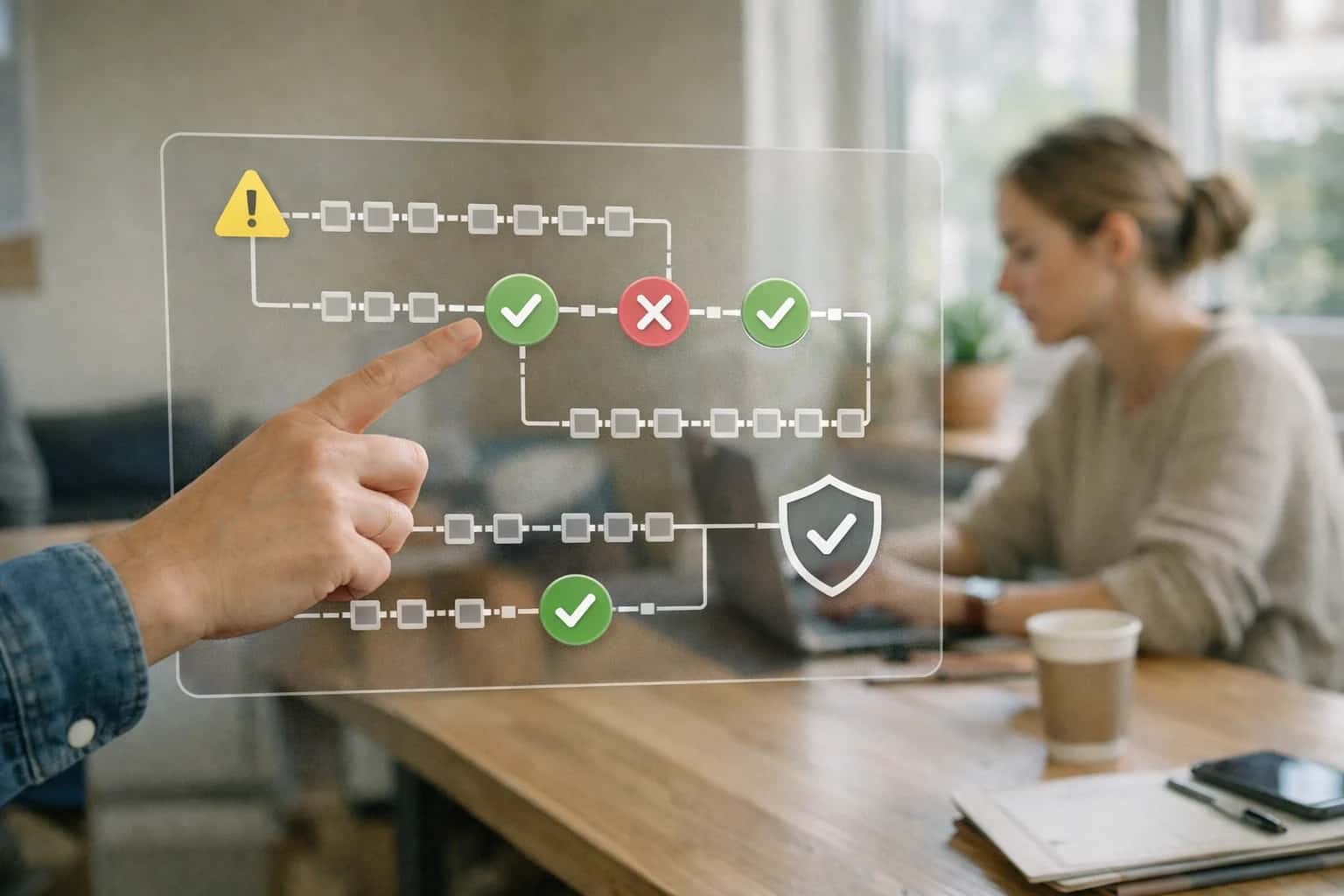
AI SAFETY ARCHITECTURE
What is a Guard Model?
A guard model is a secondary, independent classifier that audits the inputs and outputs of a primary language model to enforce safety policies and block adversarial content.
Unlike static rule-based filters, guard models leverage semantic understanding to detect nuanced adversarial attacks such as payload splitting or token smuggling that evade pattern matching. They operate as a dedicated safety layer, often fine-tuned on specific threat taxonomies, enabling real-time enforcement of instruction hierarchy and acting as a critical component in a defense-in-depth strategy for autonomous agent systems.
Independent Safety Auditors
Core Characteristics of Guard Models
Guard models function as specialized, secondary classifiers that independently evaluate the safety and integrity of inputs and outputs flowing through a primary language model system.
01
Independent Architecture
A guard model operates as a separate, isolated classifier from the primary language model it protects. This architectural separation ensures that a compromise of the main model does not automatically defeat the safety layer. Guard models are typically smaller, faster, and more deterministic than the generative models they audit, often using encoder-only architectures like BERT or DeBERTa fine-tuned for classification tasks rather than text generation. Their independence allows them to enforce policies that the primary model might be tricked into ignoring through prompt injection or jailbreak attempts.
02
Input and Output Filtering
Guard models evaluate both inbound prompts and outbound responses in real-time. On the input side, they detect:
- Prompt injection attempts that try to override system instructions
- Jailbreak patterns designed to bypass content policies
- Personally identifiable information (PII) in user queries
On the output side, they scan for:
- Toxic or harmful content generated by the model
- Data leakage where the model regurgitates training data
- Policy violations including unauthorized tool calls or code execution
This bidirectional filtering creates a safety sandwich around every model interaction.
03
Low-Latency Classification
Guard models are optimized for sub-millisecond inference to avoid introducing perceptible latency into user-facing applications. They achieve this through:
- Model distillation from larger teacher models into compact student architectures
- Quantization to INT8 or INT4 precision for faster computation
- ONNX or TensorRT compilation for hardware-accelerated inference
- Caching of frequent input patterns to skip redundant evaluations
This speed is critical because guard models sit in the critical path of every API call, and any added delay directly impacts user experience and system throughput.
04
Multi-Category Taxonomy
Guard models classify content against a predefined taxonomy of harm categories rather than making binary safe/unsafe decisions. Common categories include:
- Violence and extremism
- Hate speech and harassment
- Sexual content
- Self-harm and suicide
- Illegal activities
- Prompt injection and security violations
Each category typically returns a confidence score between 0 and 1, allowing downstream systems to apply category-specific routing logic—for example, blocking violence-related content while flagging borderline harassment for human review.
05
Explainable Decisions
Unlike the primary generative model, guard models can provide explicit reasoning for their classifications. They often output:
- Span-level annotations highlighting the exact tokens that triggered a violation
- Attention heatmaps showing which parts of the input contributed most to the decision
- Rule-matched patterns when deterministic detection methods fire alongside neural classification
This explainability is essential for auditability and compliance, allowing security teams to understand why content was blocked and to tune thresholds without blindly trusting a black-box classifier.
06
Continuous Adaptation
Guard models require ongoing fine-tuning and retraining to remain effective against evolving attack techniques. Adversaries constantly develop new jailbreak methods, obfuscation strategies, and social engineering patterns. A static guard model will quickly become obsolete. Effective guard model operations include:
- Adversarial training on newly discovered attack patterns
- Red-teaming exercises that probe for blind spots
- Canary token monitoring to detect when guard models themselves are being probed
- A/B testing of updated classifiers against production traffic before full deployment
This creates an arms race dynamic where the guard model must evolve as fast as the threats it defends against.
Enabling Efficiency, Speed & Accuracy
Intelligent Analysis, Decision & Execution
We build AI systems for teams that need search across company data, workflow automation across tools, or AI features inside products and internal software.
Talk to Us
Search across company data
Give teams answers from docs, tickets, runbooks, and product data with sources and permissions.
Useful when people spend too long searching or get different answers from different systems.
Enterprise searchRAGPermissions
Read more
Automate internal workflows
Use AI to route work, draft outputs, trigger actions, and keep approvals and logs in place.
Useful when repetitive work moves across multiple tools and teams.
AI agentsWorkflow automationGovernance
Read more
Add AI to products and internal tools
Build assistants, guided actions, or decision support into the software your team or customers already use.
Useful when AI needs to be part of the product, not a separate tool.
AI integrationDecision supportModel routing
Read moreGUARD MODEL SECURITY
Frequently Asked Questions
Explore the mechanics of secondary safety classifiers that act as independent auditors for primary language models, ensuring inputs and outputs remain within defined safety boundaries.
A guard model is a secondary, smaller classifier trained to evaluate the safety and integrity of inputs and outputs, acting as an independent auditor for a primary language model. It operates as a detached security layer that inspects prompts before they reach the main model and scrutinizes generated responses before they are returned to the user. Unlike the primary model's internal alignment, a guard model provides an objective, out-of-band assessment using a dedicated taxonomy of harm categories—such as toxicity, prompt injection, or data leakage. Because it is architecturally decoupled, an attacker compromising the primary model cannot easily disable the guard model, making it a critical component of a defense-in-depth strategy for autonomous agents.

About the author
Prasad Kumkar
CEO & MD, Inference Systems
Prasad Kumkar is the CEO & MD of Inference Systems and writes about AI systems architecture, LLM infrastructure, model serving, evaluation, and production deployment. Over 5+ years, he has worked across computer vision models, L5 autonomous vehicle systems, and LLM research, with a focus on taking complex AI ideas into real-world engineering systems.
His work and writing cover AI systems, large language models, AI agents, multimodal systems, autonomous systems, inference optimization, RAG, evaluation, and production AI engineering.
LinkedIn
Limited slotsGet a Free AI Consultation
Partnered with leading AI, data, and software stack.





How We Work
Custom AI workflows for your Business
One-fit-all AI don't work for modern businesses. At Inferensys, we aim to understand your business & custom requirements; which we use to define most efficient agentic workflows, the data, and the tools for your business.
01
Review the use case
We understand the task, the users, and where AI can actually help.
Read more02
Pick the right approach
We define what needs search, automation, or product integration.
Read more03
Build the first useful version
We implement the part that proves the value first.
Read more04
Improve from there
We add the checks and visibility needed to keep it useful.
Read moreThe first call is a practical review of your use case and the right next step.
Talk to Us