A Trusted Execution Environment (TEE) establishes a hardware-enforced enclave that isolates sensitive computation from the rich operating system, other applications, and even cloud providers. By executing code within this protected memory region, the TEE ensures that data in use cannot be inspected or modified by any process outside the enclave, even if the kernel is compromised.

Glossary
Trusted Execution Environment (TEE)
A secure, isolated area within a main processor that guarantees the confidentiality and integrity of code and data loaded inside it, protecting against unauthorized access from the host operating system.
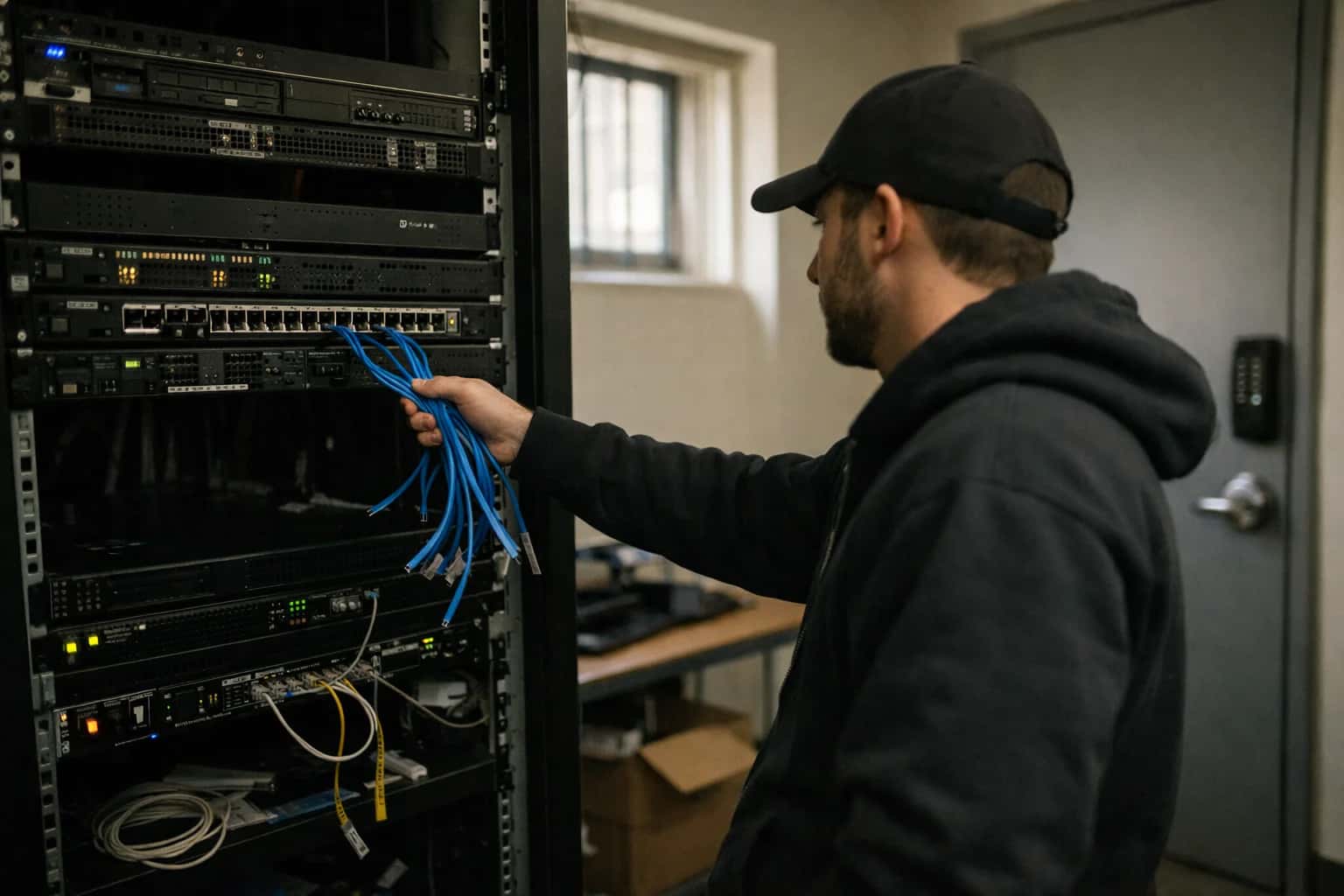
HARDWARE-BASED ISOLATION
What is Trusted Execution Environment (TEE)?
A Trusted Execution Environment (TEE) is a secure, isolated area within a main processor that guarantees the confidentiality and integrity of code and data loaded inside it, protecting against unauthorized access from the host operating system or hypervisor.
TEEs provide remote attestation, a cryptographic mechanism that allows a remote party to verify the exact identity and integrity of the code running inside the enclave before sending secrets. This hardware root of trust is foundational for confidential computing, enabling secure multi-party computation and protecting proprietary models from inversion attacks during inference on untrusted infrastructure.
HARDWARE-GRADE ISOLATION
Core Characteristics of a TEE
A Trusted Execution Environment (TEE) is defined by a set of hardware-enforced security properties that create an isolated enclave within a processor. These characteristics ensure that sensitive computation remains confidential and unmodified, even if the host operating system or hypervisor is compromised.
01
Hardware-Enforced Isolation
A TEE establishes a strict boundary between the secure world and the normal world at the silicon level. Code and data inside the enclave reside in a physically protected memory region that the host OS, hypervisor, and DMA-capable peripherals cannot access. This isolation is enforced by the memory management unit and on-chip bus fabric, not by software policy. Any attempt by an unauthorized process to read or write enclave memory triggers a hardware fault, ensuring that even a compromised kernel cannot exfiltrate secrets.
Hardware Root
Trust Anchor
02
Remote Attestation
Remote attestation is the cryptographic mechanism that allows a remote party to verify the identity, integrity, and trustworthiness of a TEE before provisioning secrets. The process works in three stages:
- Measurement: The TEE hardware generates a cryptographically signed hash of the enclave's initial code, data, and configuration.
- Verification: The remote party validates this attestation report against a trusted manufacturer's certificate chain.
- Provisioning: Only after successful verification are secrets like decryption keys transmitted over a secure channel. This prevents secrets from being sent to a malicious or tampered enclave.
03
Memory Encryption and Integrity
TEEs protect data confidentiality and integrity even against physical attackers with access to the DRAM bus. The Memory Encryption Engine (MEE) transparently encrypts all data written from the enclave cache to main memory and decrypts it on read. Simultaneously, a Message Authentication Code (MAC) tree verifies data integrity, detecting replay attacks, splicing, and bit-flip tampering. An attacker probing the memory bus with a logic analyzer sees only ciphertext, and any unauthorized modification causes a machine check exception, halting the compromised enclave.
04
Sealed Storage
Sealed storage allows a TEE to persist secrets to untrusted local storage, such as a hard drive, in a way that binds them to a specific enclave identity. Data is encrypted with a Sealing Key derived from the CPU's unique fuse key and the enclave's measurement hash. This creates two binding policies:
- Sealing to Enclave Identity: Only the exact same enclave binary on the same device can unseal the data.
- Sealing to Signing Authority: Any enclave signed by the same developer's key can unseal, enabling data migration across version updates. If the enclave code is modified, the derived key changes, rendering the sealed blob permanently inaccessible.
05
Minimal Trusted Computing Base (TCB)
A TEE dramatically reduces the Trusted Computing Base (TCB) for a secure workload. In a traditional stack, the TCB includes the entire OS, hypervisor, firmware, and all privileged daemons—millions of lines of code with a vast attack surface. A TEE excludes all of these. The TCB shrinks to just:
- The CPU package and its microcode.
- The enclave application code itself.
- A thin, verified runtime library. This minimization means that a vulnerability in the Linux kernel or a malicious cloud administrator cannot compromise the enclave's confidentiality or integrity.
06
Secure Scheduling and Context Switching
When the OS scheduler preempts an enclave thread, the TEE hardware must securely save and restore the enclave's state without leaking data. During a context switch, the CPU:
- Flushes the Enclave Page Cache (EPC) to encrypted main memory.
- Saves CPU register state to a protected State Save Area (SSA) frame.
- Clears all architectural registers to prevent data leakage to the next thread. This ensures that enclave execution is transparently multiplexed on shared cores while maintaining strict temporal isolation between the secure and normal worlds.
HARDWARE SECURITY COMPARISON
TEE vs. Other Hardware Security Approaches
Comparing Trusted Execution Environments with alternative hardware-based security technologies across key architectural and operational dimensions.
| Feature | TEE | HSM | Secure Enclave |
|---|---|---|---|
Protects data in use | |||
Protects data at rest | |||
Isolated execution environment | |||
Attestation capability | |||
General-purpose computation | |||
Typical attack surface size | Small (CPU-level) | Very small (dedicated chip) | Minimal (SoC-integrated) |
Performance overhead | 2-15% | N/A (offloads crypto only) | 1-5% |
Primary use case | Confidential computing, ML inference | Key management, signing | Biometric processing, device keys |
TEE SECURITY CLARIFIED
Frequently Asked Questions
Clear, technical answers to the most common questions about Trusted Execution Environments, their security properties, and their role in protecting sensitive AI workloads.
A Trusted Execution Environment (TEE) is a secure, isolated area within a main processor that guarantees the confidentiality and integrity of code and data loaded inside it, protecting against unauthorized access from the host operating system, hypervisor, and even physical attackers with direct hardware access. It works by establishing a hardware-enforced enclave—a private region of memory where computation occurs in isolation. When code and data are loaded into this enclave, the CPU verifies a cryptographic measurement (a hash) of the enclave's contents against an expected value, a process called attestation. Once verified, the enclave is decrypted inside the processor and execution begins. Any attempt by the OS, a malicious driver, or a DMA attack to read the enclave's memory is blocked at the hardware level. The data remains encrypted in DRAM and is only decrypted inside the CPU package. This creates a trusted computing base (TCB) that excludes the entire software stack except the enclave code itself, dramatically reducing the attack surface for sensitive computations like model inference on private data.
Enabling Efficiency, Speed & Accuracy
Intelligent Analysis, Decision & Execution
We build AI systems for teams that need search across company data, workflow automation across tools, or AI features inside products and internal software.
Talk to Us
Search across company data
Give teams answers from docs, tickets, runbooks, and product data with sources and permissions.
Useful when people spend too long searching or get different answers from different systems.
Enterprise searchRAGPermissions
Read more
Automate internal workflows
Use AI to route work, draft outputs, trigger actions, and keep approvals and logs in place.
Useful when repetitive work moves across multiple tools and teams.
AI agentsWorkflow automationGovernance
Read more
Add AI to products and internal tools
Build assistants, guided actions, or decision support into the software your team or customers already use.
Useful when AI needs to be part of the product, not a separate tool.
AI integrationDecision supportModel routing
Read more
About the author
Prasad Kumkar
CEO & MD, Inference Systems
Prasad Kumkar is the CEO & MD of Inference Systems and writes about AI systems architecture, LLM infrastructure, model serving, evaluation, and production deployment. Over 5+ years, he has worked across computer vision models, L5 autonomous vehicle systems, and LLM research, with a focus on taking complex AI ideas into real-world engineering systems.
His work and writing cover AI systems, large language models, AI agents, multimodal systems, autonomous systems, inference optimization, RAG, evaluation, and production AI engineering.
LinkedIn
Limited slotsGet a Free AI Consultation
Partnered with leading AI, data, and software stack.





How We Work
Custom AI workflows for your Business
One-fit-all AI don't work for modern businesses. At Inferensys, we aim to understand your business & custom requirements; which we use to define most efficient agentic workflows, the data, and the tools for your business.
01
Review the use case
We understand the task, the users, and where AI can actually help.
Read more02
Pick the right approach
We define what needs search, automation, or product integration.
Read more03
Build the first useful version
We implement the part that proves the value first.
Read more04
Improve from there
We add the checks and visibility needed to keep it useful.
Read moreThe first call is a practical review of your use case and the right next step.
Talk to Us