Runtime security shifts the focus from perimeter defense to the active detection of threats during execution. By analyzing system calls, file access patterns, and network connections, it identifies deviations from a known-good behavioral baseline. This approach is critical for autonomous agents, where a compromised tool call or prompt injection can trigger a chain of unauthorized actions that static analysis would miss.

Glossary
Runtime Security
The practice of monitoring and protecting an agent's execution environment in real-time by detecting anomalous system calls, file access patterns, and network connections that indicate a compromise.
DEFINITION
What is Runtime Security?
Runtime security is the practice of continuously monitoring and protecting an application's execution environment in real-time to detect and prevent anomalous behavior that indicates an active compromise.
Modern implementations leverage kernel-level instrumentation like eBPF to enforce least privilege execution without significant performance overhead. When an agent attempts an anomalous operation—such as accessing a restricted file or spawning an unexpected child process—the runtime security layer can trigger an alert, block the action via a Policy Enforcement Point, or initiate a Dead Man's Switch to terminate the compromised environment.
Real-Time Agent Protection
Core Characteristics of Runtime Security
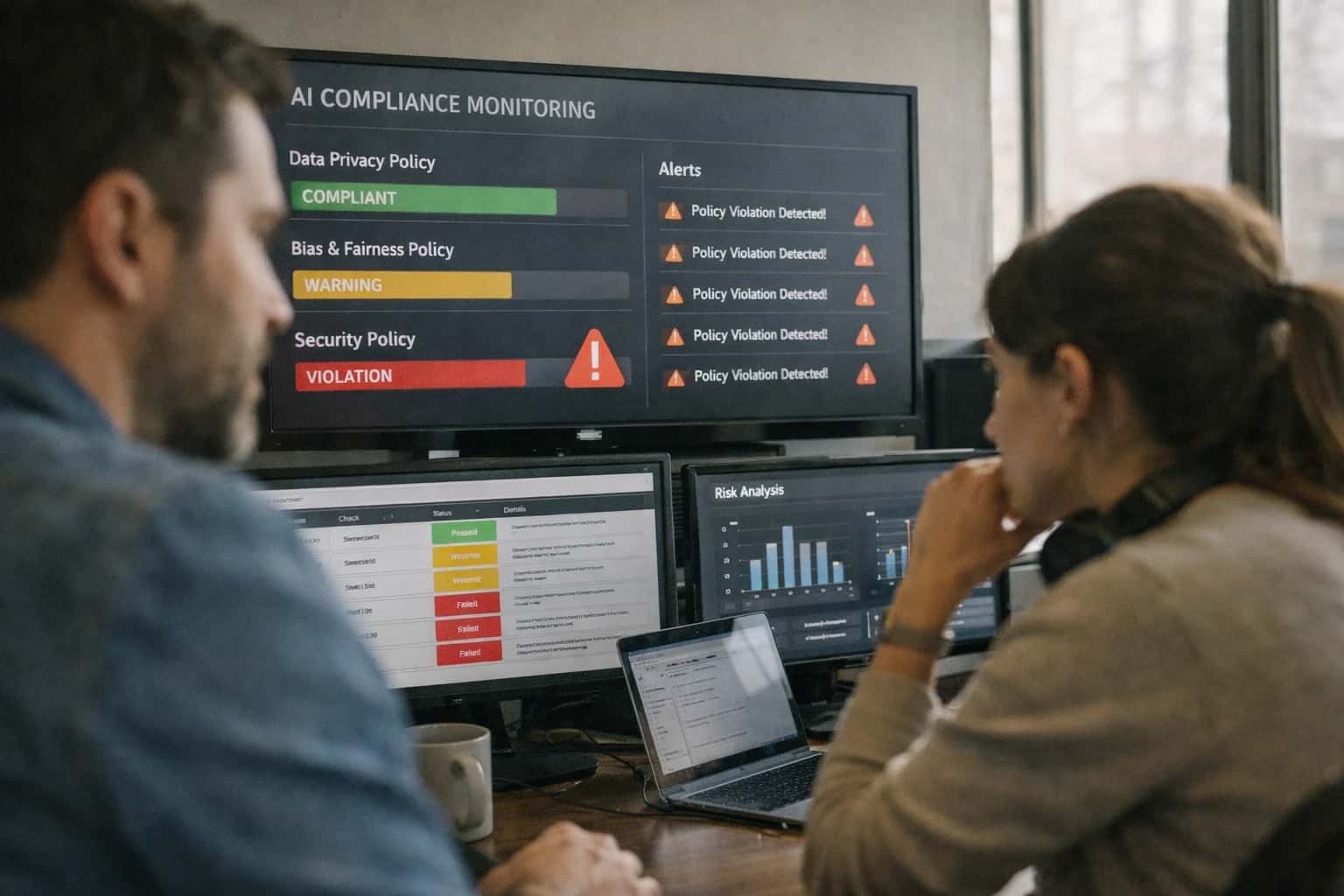
Runtime security for autonomous agents involves continuous monitoring and enforcement within the live execution environment to detect and neutralize threats that bypass static defenses.
02
File System Integrity Monitoring
Tracks all file access and modification patterns in real-time to prevent unauthorized data exfiltration or tampering. This goes beyond simple permission checks to analyze the context of access:
- Read-Watch: Alerts on an agent accessing sensitive files (e.g.,
/etc/shadow, private keys) outside its defined task scope. - Write-Watch: Blocks an agent from modifying its own configuration, prompt files, or executable binaries to prevent a persistent foothold.
- Exfiltration Prevention: Detects patterns of high-volume reads followed by network egress, a classic sign of data theft.
03
Network Connection Control & Egress Filtering
Enforces a default-deny posture for all outbound network connections from the agent's sandbox. Runtime security inspects Layer 7 (application layer) data, not just IPs and ports, to:
- Block connections to newly registered or uncategorized domains commonly used for command-and-control (C2).
- Terminate any connection that exhibits beaconing patterns (periodic, low-and-slow communication).
- Enforce DNS filtering to prevent the resolution of malicious domains, stopping an agent from phoning home even if it uses a hardcoded domain name.
04
Memory Space & Process Integrity
Protects the agent's runtime memory from advanced attacks that never touch the disk. Key techniques include:
- Memory Scanning: Using tools like ClamAV or custom YARA rules to scan an agent's allocated memory space for injected shellcode or known malware signatures.
- Process Hollowing Detection: Identifying if a legitimate agent process has been started in a suspended state, had its memory unmapped, and replaced with malicious code.
- Control Flow Integrity (CFI): Enforcing at the hardware or OS level that the agent's execution path follows a pre-computed control flow graph, instantly crashing the process if an attacker attempts to hijack execution via a buffer overflow.
05
Credential & Secret Access Monitoring
Agents often require API keys and secrets to function, making their runtime use a critical security chokepoint. This characteristic involves:
- Live Secret Scanning: Detecting if an agent's output or logs accidentally contain a plaintext secret or API key, and automatically revoking the credential.
- Just-in-Time (JIT) Credential Vending: Ensuring the agent only receives a short-lived, scoped token from a vault (like HashiCorp Vault) at the exact moment of execution, rather than having long-lived secrets in environment variables.
- Anomalous Secret Usage: Alerting if a secret is used from an unexpected geolocation, IP address, or by a process with a different hash than the one originally authorized.
06
Immutable & Ephemeral Execution
A foundational runtime security principle where the agent's environment is treated as disposable and unchangeable. This is enforced by:
- Read-Only Root Filesystem: The agent's core OS and application files are mounted as read-only, preventing any permanent installation of rootkits or backdoors.
- Ephemeral Instance Lifecycle: The entire sandbox (e.g., a MicroVM or container) is destroyed after a single task or a defined time-to-live (TTL). A fresh, known-good instance is provisioned for the next task, ensuring any in-memory compromise is wiped clean.
- Stateless Design: The agent's runtime has no persistent storage, forcing all state to be externalized to a secure, audited database, which prevents an attacker from hiding data within the execution environment.
RUNTIME SECURITY
Frequently Asked Questions
Answers to critical questions about securing autonomous agents during live execution, covering detection, isolation, and real-time enforcement.
Runtime security for autonomous agents is the practice of continuously monitoring and protecting an agent's live execution environment to detect and block anomalous behaviors that indicate a compromise. Unlike static analysis or build-time scanning, runtime security operates while the agent is actively making decisions, calling tools, and accessing data. It involves observing system calls, file access patterns, network connections, and process behavior in real-time. The goal is to identify deviations from a baseline of expected behavior—such as an agent attempting to read /etc/shadow, spawning a shell, or making an outbound connection to an unknown IP—and either terminate the action, alert a human operator, or trigger a kill switch. This is a critical layer in an agentic threat modeling framework because autonomous systems, by design, have the agency to perform high-impact actions, making post-incident forensics insufficient. Runtime security provides the active enforcement needed to constrain an agent's blast radius during a prompt injection or jailbreak attack.
Enabling Efficiency, Speed & Accuracy
Intelligent Analysis, Decision & Execution
We build AI systems for teams that need search across company data, workflow automation across tools, or AI features inside products and internal software.
Talk to Us
Search across company data
Give teams answers from docs, tickets, runbooks, and product data with sources and permissions.
Useful when people spend too long searching or get different answers from different systems.
Enterprise searchRAGPermissions
Read more
Automate internal workflows
Use AI to route work, draft outputs, trigger actions, and keep approvals and logs in place.
Useful when repetitive work moves across multiple tools and teams.
AI agentsWorkflow automationGovernance
Read more
Add AI to products and internal tools
Build assistants, guided actions, or decision support into the software your team or customers already use.
Useful when AI needs to be part of the product, not a separate tool.
AI integrationDecision supportModel routing
Read more
About the author
Prasad Kumkar
CEO & MD, Inference Systems
Prasad Kumkar is the CEO & MD of Inference Systems and writes about AI systems architecture, LLM infrastructure, model serving, evaluation, and production deployment. Over 5+ years, he has worked across computer vision models, L5 autonomous vehicle systems, and LLM research, with a focus on taking complex AI ideas into real-world engineering systems.
His work and writing cover AI systems, large language models, AI agents, multimodal systems, autonomous systems, inference optimization, RAG, evaluation, and production AI engineering.
LinkedIn
Limited slotsGet a Free AI Consultation
Partnered with leading AI, data, and software stack.





How We Work
Custom AI workflows for your Business
One-fit-all AI don't work for modern businesses. At Inferensys, we aim to understand your business & custom requirements; which we use to define most efficient agentic workflows, the data, and the tools for your business.
01
Review the use case
We understand the task, the users, and where AI can actually help.
Read more02
Pick the right approach
We define what needs search, automation, or product integration.
Read more03
Build the first useful version
We implement the part that proves the value first.
Read more04
Improve from there
We add the checks and visibility needed to keep it useful.
Read moreThe first call is a practical review of your use case and the right next step.
Talk to Us