Kata Containers is a container runtime that provides hardware-enforced workload isolation by running each container or pod inside its own dedicated lightweight virtual machine. Unlike standard containers that share a host kernel, Kata uses a highly optimized microkernel to create a strict security boundary, preventing a single container compromise from escalating into a container escape or host takeover.

Glossary
Kata Containers
A container runtime that provides the speed of containers with the security of virtual machines by running each container inside its own lightweight virtual machine using a dedicated microkernel.
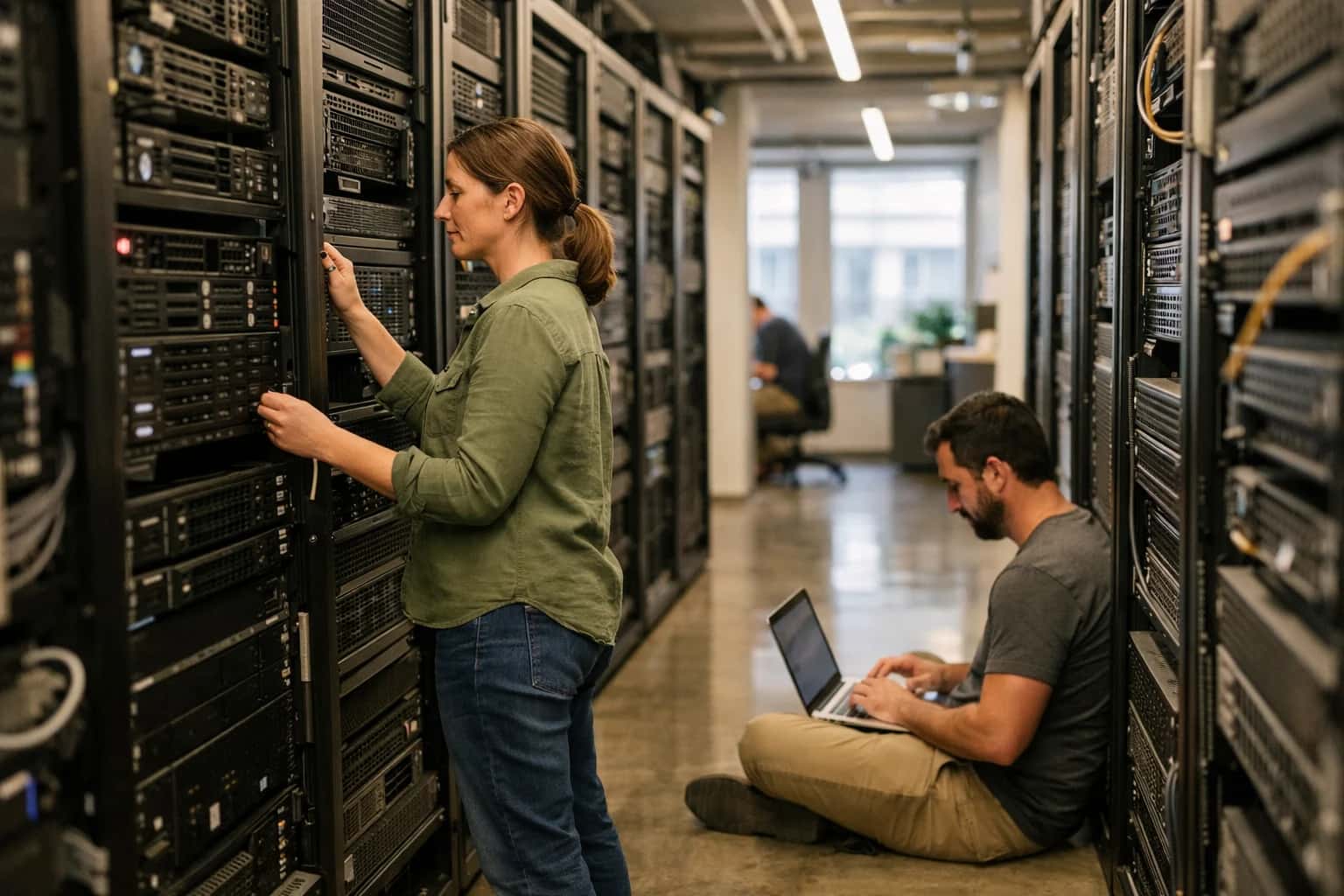
SECURE CONTAINER RUNTIME
What is Kata Containers?
Kata Containers is an open-source container runtime that provides the speed of containers with the security of virtual machines by running each container inside its own lightweight virtual machine using a dedicated microkernel.
This architecture delivers the deployment speed and resource efficiency of containers while offering the strong isolation guarantees of traditional virtual machines. By integrating seamlessly with Kubernetes and the Open Container Initiative (OCI) standards, Kata Containers enables multi-tenant and untrusted workloads to run securely on shared infrastructure without sacrificing performance or operational simplicity.
HARDWARE-ISOLATED CONTAINER SECURITY
Key Features of Kata Containers
Kata Containers merges the speed of standard containers with the security of virtual machines by wrapping each container in a dedicated, lightweight microVM. Here are the core architectural components that make this possible.
01
Dedicated MicroVM Isolation
Unlike traditional containers that share a host kernel, each Kata Container runs inside its own lightweight virtual machine with a dedicated, minimal Linux kernel. This provides hardware-enforced isolation using Intel VT-x or AMD-V, meaning a kernel exploit in one container cannot be used to compromise the host or peer containers. The attack surface is reduced from the entire host kernel to a tiny, purpose-built guest kernel with no unnecessary drivers or modules.
Hardware VT-x/AMD-V
Isolation Mechanism
< 100MB
Guest Kernel Footprint
02
OCI-Compliant Runtime
Kata Containers is fully compatible with the Open Container Initiative (OCI) runtime specification. This means it integrates transparently with Kubernetes and Docker via a standard containerd shim. Developers interact with Kata using the same kubectl or docker commands they already know. The security of a VM is delivered without changing the existing container orchestration workflow or tooling.
containerd
Integration Point
OCI
Runtime Standard
03
Minimalist Guest Kernel
Each microVM boots a stripped-down Linux kernel built specifically for running a single container payload. This kernel is compiled with only the essential features required for the workload, eliminating thousands of unnecessary drivers, filesystems, and legacy subsystems. The result is a dramatically reduced attack surface compared to a general-purpose host kernel, with fewer CVEs and a smaller trusted computing base.
04
Direct Device Assignment with VFIO
For performance-critical workloads like AI inference, Kata supports Virtual Function I/O (VFIO) to pass physical GPUs, FPGAs, or network cards directly into the guest VM. This bypasses the virtual IO layer, delivering near-native hardware performance while maintaining strict isolation. An agent performing GPU-accelerated computation cannot use that hardware to escape or snoop on the host.
~95%
Native GPU Throughput
05
Agent Sandboxing with Seccomp Integration
Even within the isolated microVM, Kata applies a second layer of defense by integrating with seccomp profiles. The guest kernel can restrict the container process to a limited set of system calls. This defense-in-depth approach means that even if an attacker compromises the application inside the VM, they are still constrained by a restrictive syscall allowlist, preventing further lateral movement.
06
Ephemeral Root Filesystem
Kata Containers can boot from a read-only, integrity-checked root filesystem image using dm-verity or similar mechanisms. The container's writable layer is stored in a temporary, memory-backed filesystem that is completely destroyed when the microVM shuts down. This ensures every agent execution starts from a known-good, immutable state, preventing persistent malware or state contamination between tasks.
KATA CONTAINERS FAQ
Frequently Asked Questions
Clear, technical answers to the most common questions about Kata Containers, the secure container runtime that combines the speed of containers with the isolation of lightweight virtual machines.
Kata Containers is an open-source container runtime that provides the speed and agility of standard containers with the strong security isolation of virtual machines. It works by wrapping each container or pod inside its own dedicated, lightweight virtual machine using a purpose-built, minimal Linux kernel. Unlike traditional containers that share the host kernel, Kata Containers uses a dedicated microkernel for each instance, eliminating the shared-kernel attack surface. The runtime is fully compatible with the Open Container Initiative (OCI) specification, meaning it integrates seamlessly with Kubernetes and Docker. The architecture consists of a runtime shim that communicates with a Virtual Machine Monitor (VMM) , typically QEMU or Firecracker, to launch a MicroVM with a stripped-down guest kernel containing only the services required to run the containerized process. This design provides hardware-enforced isolation through CPU virtualization extensions like Intel VT-x or AMD-V, while maintaining near-native performance through direct device assignment and virtio drivers.
ISOLATION SPECTRUM
Kata Containers vs. Traditional Containers vs. VMs
A comparative analysis of security isolation, resource overhead, and operational characteristics across three workload isolation technologies.
| Feature | Kata Containers | Traditional Containers | Virtual Machines |
|---|---|---|---|
Isolation Boundary | Dedicated microkernel per container | Shared host kernel | Dedicated monolithic kernel per VM |
Hardware Virtualization | |||
Attack Surface | Minimal (stripped microkernel) | Large (full host kernel syscall interface) | Moderate (full guest OS kernel) |
Startup Time | < 100 ms | < 10 ms | Seconds to minutes |
Memory Overhead | ~50 MB per instance | Negligible | ~500 MB to 2 GB per instance |
Namespace Isolation | |||
Seccomp/AppArmor Support | |||
Guest OS Required |
Enabling Efficiency, Speed & Accuracy
Intelligent Analysis, Decision & Execution
We build AI systems for teams that need search across company data, workflow automation across tools, or AI features inside products and internal software.
Talk to Us
Search across company data
Give teams answers from docs, tickets, runbooks, and product data with sources and permissions.
Useful when people spend too long searching or get different answers from different systems.
Enterprise searchRAGPermissions
Read more
Automate internal workflows
Use AI to route work, draft outputs, trigger actions, and keep approvals and logs in place.
Useful when repetitive work moves across multiple tools and teams.
AI agentsWorkflow automationGovernance
Read more
Add AI to products and internal tools
Build assistants, guided actions, or decision support into the software your team or customers already use.
Useful when AI needs to be part of the product, not a separate tool.
AI integrationDecision supportModel routing
Read more
About the author
Prasad Kumkar
CEO & MD, Inference Systems
Prasad Kumkar is the CEO & MD of Inference Systems and writes about AI systems architecture, LLM infrastructure, model serving, evaluation, and production deployment. Over 5+ years, he has worked across computer vision models, L5 autonomous vehicle systems, and LLM research, with a focus on taking complex AI ideas into real-world engineering systems.
His work and writing cover AI systems, large language models, AI agents, multimodal systems, autonomous systems, inference optimization, RAG, evaluation, and production AI engineering.
LinkedIn
Limited slotsGet a Free AI Consultation
Partnered with leading AI, data, and software stack.





How We Work
Custom AI workflows for your Business
One-fit-all AI don't work for modern businesses. At Inferensys, we aim to understand your business & custom requirements; which we use to define most efficient agentic workflows, the data, and the tools for your business.
01
Review the use case
We understand the task, the users, and where AI can actually help.
Read more02
Pick the right approach
We define what needs search, automation, or product integration.
Read more03
Build the first useful version
We implement the part that proves the value first.
Read more04
Improve from there
We add the checks and visibility needed to keep it useful.
Read moreThe first call is a practical review of your use case and the right next step.
Talk to Us