Trace correlation is the technique of linking disparate telemetry signals—such as logs, metrics, and events—to a specific distributed trace using a common identifier, typically a trace ID. This creates a unified, contextual view of a request's journey across services, enabling engineers to pivot seamlessly from high-level latency graphs to the specific log line or error metric that caused an issue. It transforms isolated data points into a coherent narrative for root cause analysis.

Glossary
Trace Correlation
Trace correlation is the technique of linking disparate telemetry signals like logs and metrics to a specific request trace using a common identifier, enabling unified analysis.
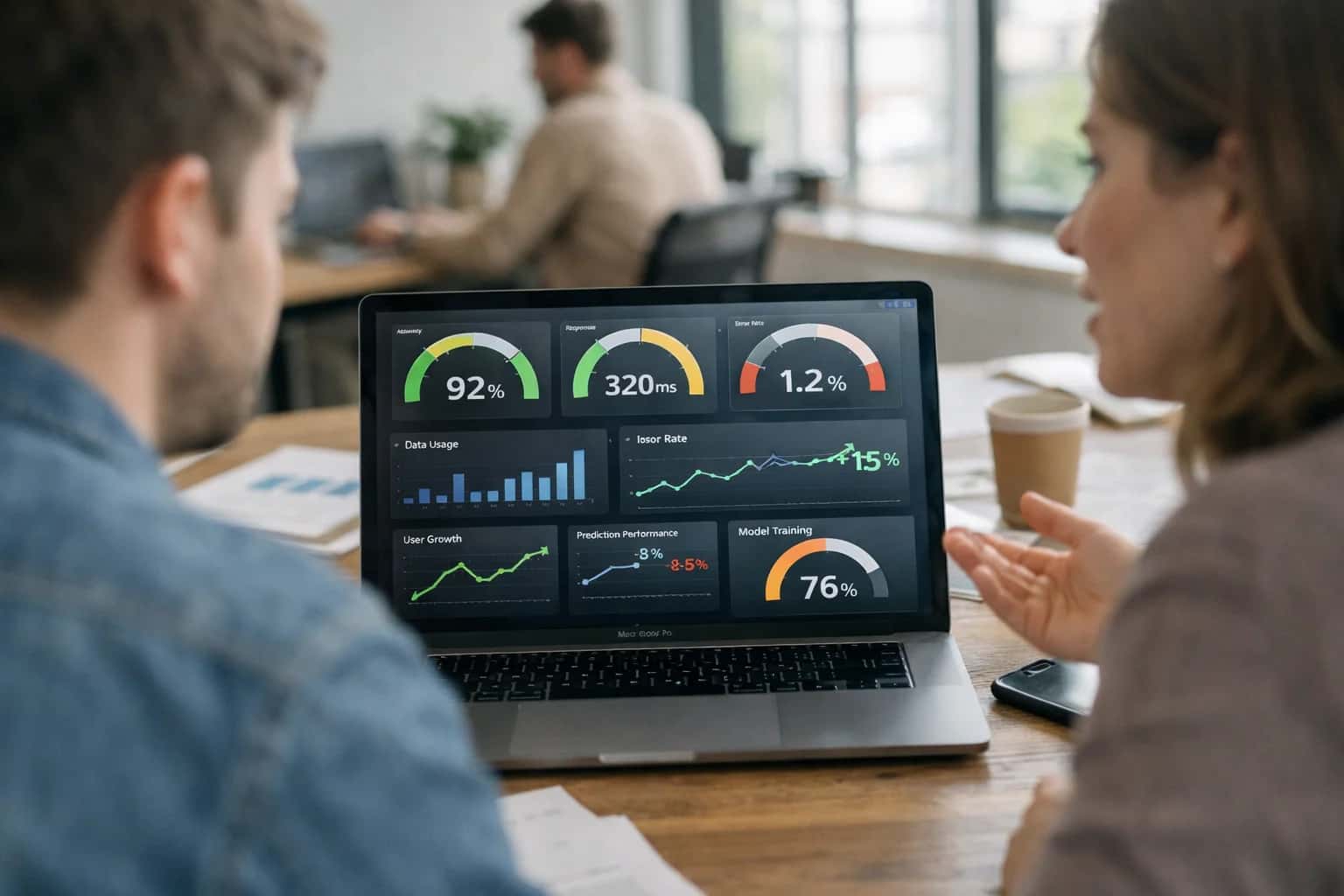
DISTRIBUTED TRACE COLLECTION
What is Trace Correlation?
Trace correlation is the foundational technique for unifying disparate telemetry signals in modern, distributed systems.
The mechanism relies on distributed context propagation, where the trace ID is injected into outbound requests via standards like W3C Trace Context headers. Backend systems like the OpenTelemetry Collector then use this ID to join data in pipelines. This correlation is critical for agentic observability, allowing the auditing of an autonomous agent's internal reasoning steps, external tool calls, and performance metrics within a single investigative pane.
DISTRIBUTED TRACE COLLECTION
Key Characteristics of Trace Correlation
Trace correlation is the foundational technique for unifying disparate telemetry signals by linking them to a specific request's execution path using a common identifier, enabling holistic system analysis.
01
Unified Telemetry via Common ID
The core mechanism of trace correlation is the use of a globally unique trace ID to act as a primary key across all observability data. This identifier is propagated across service boundaries via headers (e.g., W3C Trace Context). Any log line, metric event, or span generated during the request's lifecycle is tagged with this ID, creating a unified data model for analysis.
- Example: A single user request's trace ID (
4bf92f3577b34da6a3ce929d0e0e4736) appears in application logs, database query metrics, and individual spans from five different microservices.
02
Context Enrichment for Business Observability
Trace correlation enables the enrichment of low-level telemetry with high-level business context. After spans are generated, systems can attach span attributes like user.id=abc123, shopping.cart.total=299.99, or workflow.name=order_fulfillment. This transforms technical traces into business-transaction traces, allowing SREs and product teams to answer questions like "Why was user X's checkout slow?" instead of just "Why was service Y slow?"
03
Causal Linking Across Asynchronous Boundaries
Beyond linear request chains, trace correlation handles complex, asynchronous workflows using span links. A span in one trace can be linked to a span in another, preserving causality where direct parent-child relationships don't exist.
- Use Case: A batch job (Trace A) that queues 10,000 messages. Each message triggers an asynchronous worker (creating 10,000 separate Traces B-Z). Span links from each worker trace back to the originating batch span allow reconstruction of the entire workflow's impact and performance.
04
Foundation for Topological Analysis
Aggregated, correlated trace data is the raw material for deriving system topology. By analyzing the service and span.kind attributes (Client, Server, Producer, Consumer) across millions of traces, observability platforms can automatically generate service graphs. These graphs visualize dependencies, call directions, and error rates between services, providing an always-up-to-date architectural map essential for impact analysis and failure diagnosis.
05
Prerequisite for Intelligent Sampling
Effective trace correlation enables advanced tail sampling strategies. A collector can buffer an entire trace, correlate all its spans, and then apply a sampling decision based on the complete picture—not just the initial request.
- Sampling Rules: "Keep all traces with latency > 2s," "Sample 100% of traces containing an error span," or "Drop all healthy traces from service X." This ensures high-value traces (errors, slow performance) are retained for debugging while managing data volume and cost.
06
Integration with Logging and Metrics Pipelines
True trace correlation requires instrumentation libraries and agents to inject the trace context into logging frameworks (e.g., structured log fields) and metric exemplars. This creates a bidirectional bridge:
- Trace-to-Logs: From a slow span in a flame graph, directly query all related log entries from that service and moment in time.
- Metrics-to-Traces: From a spike in a database latency metric, examine exemplar traces that represent individual high-latency queries driving the aggregate. This closes the loop between different telemetry pillars.
PROTOCOL COMPARISON
Trace Correlation Methods & Standards
A comparison of the primary standards and vendor-specific formats used to propagate trace context across service boundaries for correlation.
| Protocol / Format | Standard Body / Vendor | Primary Transport | Key Identifier Fields | Widely Adopted |
|---|---|---|---|---|
W3C Trace Context | W3C Recommendation | HTTP Headers ( | trace-id, parent-id, trace-flags | |
B3 Propagation | OpenZipkin (de facto) | HTTP Headers ( | X-B3-TraceId, X-B3-SpanId, X-B3-ParentSpanId | |
OpenTelemetry Baggage | OpenTelemetry (CNCF) | HTTP Headers ( | User-defined key-value pairs | |
LightStep Trace Context | LightStep (now ServiceNow) | HTTP Headers ( | trace_id, span_id | |
Datadog Trace Context | Datadog | HTTP Headers ( | x-datadog-trace-id, x-datadog-parent-id | |
AWS X-Ray Trace Header | Amazon Web Services | HTTP Header ( | Root, Parent, Sampled | |
Google Cloud Trace | Google Cloud | HTTP Header ( | TRACE_ID, SPAN_ID (optional) | |
New Relic Trace Context | New Relic | HTTP Headers ( | trace.id, span.id, guid |
TRACE CORRELATION
Frequently Asked Questions
Trace correlation is the foundational technique for unifying disparate telemetry signals in modern, distributed systems. These questions address its core mechanisms, implementation, and value for engineers building observable agentic and microservices architectures.
Trace correlation is the technique of linking disparate telemetry signals—such as logs, metrics, and events—to a specific distributed trace using a common contextual identifier, enabling unified, causality-based analysis of system behavior. It works by propagating a globally unique trace ID at the inception of a request (e.g., from a user or an autonomous agent). As the request flows through services, agents, databases, and external APIs, this trace ID is injected into the context of every operation (span). Concurrently, application logs, performance metrics, and business events are tagged with this same trace ID. Observability backends can then use this ID to correlate all data associated with that single request, transforming isolated signals into a coherent narrative of the system's execution path.
Enabling Efficiency, Speed & Accuracy
Intelligent Analysis, Decision & Execution
We build AI systems for teams that need search across company data, workflow automation across tools, or AI features inside products and internal software.
Talk to Us
Search across company data
Give teams answers from docs, tickets, runbooks, and product data with sources and permissions.
Useful when people spend too long searching or get different answers from different systems.
Enterprise searchRAGPermissions
Read more
Automate internal workflows
Use AI to route work, draft outputs, trigger actions, and keep approvals and logs in place.
Useful when repetitive work moves across multiple tools and teams.
AI agentsWorkflow automationGovernance
Read more
Add AI to products and internal tools
Build assistants, guided actions, or decision support into the software your team or customers already use.
Useful when AI needs to be part of the product, not a separate tool.
AI integrationDecision supportModel routing
Read more
About the author
Prasad Kumkar
CEO & MD, Inference Systems
Prasad Kumkar is the CEO & MD of Inference Systems and writes about AI systems architecture, LLM infrastructure, model serving, evaluation, and production deployment. Over 5+ years, he has worked across computer vision models, L5 autonomous vehicle systems, and LLM research, with a focus on taking complex AI ideas into real-world engineering systems.
His work and writing cover AI systems, large language models, AI agents, multimodal systems, autonomous systems, inference optimization, RAG, evaluation, and production AI engineering.
LinkedIn
Limited slotsGet a Free AI Consultation
Partnered with leading AI, data, and software stack.





How We Work
Custom AI workflows for your Business
One-fit-all AI don't work for modern businesses. At Inferensys, we aim to understand your business & custom requirements; which we use to define most efficient agentic workflows, the data, and the tools for your business.
01
Review the use case
We understand the task, the users, and where AI can actually help.
Read more02
Pick the right approach
We define what needs search, automation, or product integration.
Read more03
Build the first useful version
We implement the part that proves the value first.
Read more04
Improve from there
We add the checks and visibility needed to keep it useful.
Read moreThe first call is a practical review of your use case and the right next step.
Talk to Us