Cost forecasting is the predictive analysis of future computational and financial expenditures for AI agent systems. It projects expenses by analyzing historical token consumption, API call metering data, and planned workload volumes against provider pricing models. This practice enables FinOps teams and CTOs to create accurate budgets, allocate compute credits, and prevent cost overruns by anticipating spend before it occurs.

Glossary
Cost Forecasting
Cost forecasting is the practice of predicting future AI operational expenses based on historical usage patterns, planned agent workloads, and pricing models to support budgeting and financial planning.
AGENT COST TELEMETRY
What is Cost Forecasting?
Cost forecasting is the practice of predicting future AI operational expenses based on historical usage patterns, planned agent workloads, and pricing models to support budgeting and financial planning.
Effective forecasting relies on granular cost attribution to specific agents, sessions, or business units, and integrates with agent telemetry pipelines for real-time data. It identifies key cost drivers like model choice and context length. This process is foundational to agentic observability, providing the financial foresight needed for scalable, economically sustainable autonomous operations.
COST FORECASTING
Key Inputs for Accurate Forecasting
Accurate AI cost forecasting requires integrating multiple, precise data streams. These inputs transform reactive expense tracking into proactive financial planning.
01
Historical Usage & Cost Data
The foundational input is granular, time-series data of past consumption. This includes:
- Token consumption per model, per request.
- API call volumes and associated fees to external services.
- Compute unit usage (e.g., GPU-seconds, vCPU-hours).
- Session-level costing to understand complete workflow expenses.
Historical patterns reveal baseline trends, seasonal spikes, and growth rates essential for time-series forecasting models like ARIMA or Prophet.
02
Planned Agent Workloads & Roadmaps
Forecasts must incorporate future business intent. Key inputs include:
- Product launch schedules that will drive new agent usage.
- Expected user growth and adoption curves for agent features.
- Planned A/B tests or canary deployments of new models.
- Scheduled batch processing jobs (e.g., nightly document analysis).
Integrating this data shifts forecasts from a simple extrapolation of the past to a scenario-based projection aligned with business strategy.
03
Pricing Models & Rate Cards
Forecasts are a function of volume * price. Accurate inputs require up-to-date knowledge of:
- Vendor pricing tiers (e.g., OpenAI's per-1K-token costs for GPT-4 Turbo vs. GPT-4).
- Commitment discounts (e.g., Google Cloud's CUDs, Azure's reservation instances).
- Egress fees for data retrieval from vector databases or cloud storage.
- Tool/API costs for integrated third-party services.
Changes in pricing, like a model deprecation or new tier introduction, must be modeled as discrete events in the forecast.
04
Agent Architecture & Cost Drivers
The technical design of the agent system dictates its cost profile. Forecasters must model:
- Context window sizes and expected prompt+completion lengths.
- Tool-calling patterns (frequency and cost of external API calls).
- Retrieval-Augmented Generation (RAG) complexity, impacting embedding and query costs.
- Orchestration overhead in multi-agent systems (inter-agent messaging).
Architectural changes, such as implementing a more efficient small language model for a specific task, directly alter the cost per action and must be factored in.
05
Business Metrics & Conversion Funnels
Linking cost to business value requires aligning with operational metrics:
- User activity forecasts (e.g., monthly active users, sessions per user).
- Expected success/conversion rates for agent-led workflows.
- Volume of processed units (e.g., documents analyzed, support tickets handled).
This enables forecasting not just raw expense, but also cost per action (CPA) and return on investment, making the budget defensible to financial stakeholders.
06
External Factors & Risk Variables
Robust forecasts account for variability and uncertainty. Inputs include:
- Market volatility in cloud service pricing.
- Planned vendor model releases that may change performance-per-dollar.
- Regulatory changes that could impact data processing costs.
- Historical anomaly data from cost overrun detection systems to model tail risks.
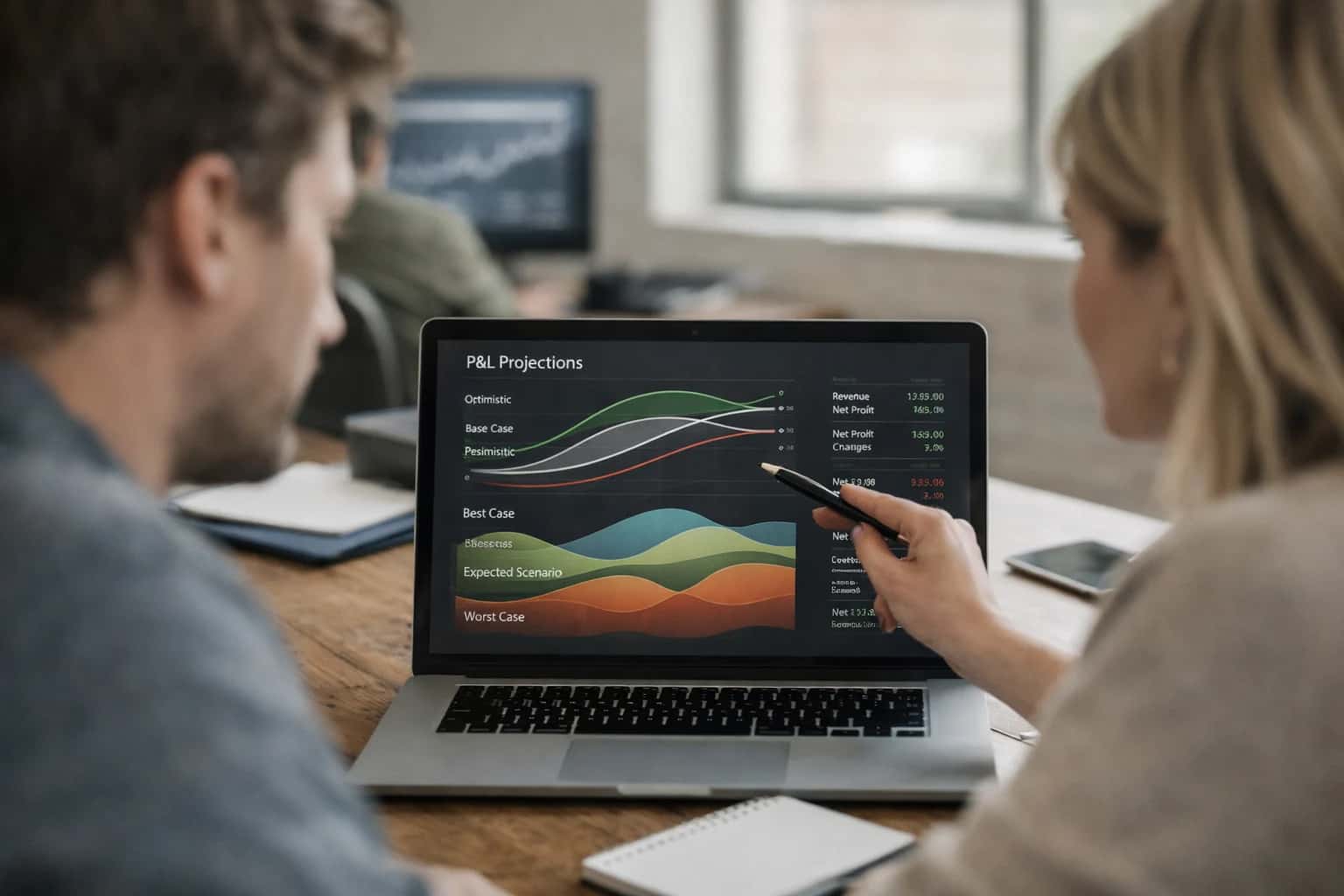
These factors are often used to generate forecast ranges (pessimistic, expected, optimistic) rather than a single point estimate.
METHOD COMPARISON
Common Cost Forecasting Methods
A comparison of techniques used to predict future AI operational expenses based on usage patterns, planned workloads, and pricing models.
| Method | Description | Primary Use Case | Data Requirements | Granularity | Automation Potential |
|---|---|---|---|---|---|
Historical Trend Extrapolation | Projects future costs by applying linear or non-linear growth rates to past consumption data. | High-level annual or quarterly budget planning for stable workloads. | Historical cost and usage logs (e.g., 6+ months). | Aggregate (e.g., monthly spend by model). | |
Unit Economics Modeling | Calculates cost by modeling the unit cost (e.g., cost per token, cost per API call) and multiplying by forecasted volume. | Per-feature or per-project budgeting; understanding cost drivers. | Granular unit costs and volume forecasts. | High (per request, per session). | |
Monte Carlo Simulation | Uses probabilistic models to run thousands of simulations with variable inputs (e.g., prompt length, session count) to generate a range of possible outcomes. | Risk assessment and creating confidence intervals for budgets in volatile environments. | Distributions for key variables (mean, variance). | Scenario-based ranges. | |
Agent Workload Simulation | Executes synthetic or representative agent tasks in a staging environment to measure resource consumption and extrapolate to production scale. | Forecasting costs for new, untested agentic workflows or architectures. | Detailed agent specifications and test scenarios. | Per-session, per-workflow. | |
Regression Analysis | Identifies statistical relationships between cost and multiple independent variables (e.g., user count, data retrieval volume, model mix) to build a predictive model. | Attributing cost changes to specific business metrics and drivers. | Time-series data for cost and all candidate driver variables. | Model-dependent, often aggregate. | |
Capacity-Based Forecasting | Ties costs directly to reserved or provisioned infrastructure capacity (e.g., GPU instances, inference endpoints), rather than usage. | Forecasting for dedicated, on-premises, or heavily reserved cloud infrastructure. | Infrastructure unit costs and capacity plans. | Per resource instance. | |
Rolling Window Average | Uses a simple moving average of recent historical costs (e.g., last 3 months) as the forecast for the next period. | Short-term, operational forecasting for workloads with minimal seasonality. | Recent historical cost data. | Aggregate (weekly, monthly). |
COST FORECASTING
Frequently Asked Questions
Cost forecasting is the practice of predicting future AI operational expenses based on historical usage patterns, planned agent workloads, and pricing models to support budgeting and financial planning. This FAQ addresses common questions about its mechanisms, challenges, and implementation.
AI cost forecasting is the systematic process of predicting future operational expenses for autonomous agent systems by analyzing historical data, planned workloads, and pricing structures. It works by aggregating granular telemetry—such as token consumption, API call volumes, and compute unit usage—into time-series models that project future spend under various scenarios. Effective forecasting requires integrating data from agent telemetry pipelines, API call logging, and resource metering systems to create a unified cost model. This model is then used to simulate different operational plans, such as increased user load or the deployment of new agent capabilities, to predict their financial impact. The output supports budgeting, capacity planning, and proactive cost overrun detection.
Enabling Efficiency, Speed & Accuracy
Intelligent Analysis, Decision & Execution
We build AI systems for teams that need search across company data, workflow automation across tools, or AI features inside products and internal software.
Talk to Us
Search across company data
Give teams answers from docs, tickets, runbooks, and product data with sources and permissions.
Useful when people spend too long searching or get different answers from different systems.
Enterprise searchRAGPermissions
Read more
Automate internal workflows
Use AI to route work, draft outputs, trigger actions, and keep approvals and logs in place.
Useful when repetitive work moves across multiple tools and teams.
AI agentsWorkflow automationGovernance
Read more
Add AI to products and internal tools
Build assistants, guided actions, or decision support into the software your team or customers already use.
Useful when AI needs to be part of the product, not a separate tool.
AI integrationDecision supportModel routing
Read more
About the author
Prasad Kumkar
CEO & MD, Inference Systems
Prasad Kumkar is the CEO & MD of Inference Systems and writes about AI systems architecture, LLM infrastructure, model serving, evaluation, and production deployment. Over 5+ years, he has worked across computer vision models, L5 autonomous vehicle systems, and LLM research, with a focus on taking complex AI ideas into real-world engineering systems.
His work and writing cover AI systems, large language models, AI agents, multimodal systems, autonomous systems, inference optimization, RAG, evaluation, and production AI engineering.
LinkedIn
Limited slotsGet a Free AI Consultation
Partnered with leading AI, data, and software stack.





How We Work
Custom AI workflows for your Business
One-fit-all AI don't work for modern businesses. At Inferensys, we aim to understand your business & custom requirements; which we use to define most efficient agentic workflows, the data, and the tools for your business.
01
Review the use case
We understand the task, the users, and where AI can actually help.
Read more02
Pick the right approach
We define what needs search, automation, or product integration.
Read more03
Build the first useful version
We implement the part that proves the value first.
Read more04
Improve from there
We add the checks and visibility needed to keep it useful.
Read moreThe first call is a practical review of your use case and the right next step.
Talk to Us