A cost driver is a primary factor, such as context window length, model size, or number of tool calls, that has a direct and significant impact on the total operational expense of an AI agent. These drivers are the fundamental levers that determine consumption of resources like tokens, GPU compute, and API calls, which translate directly into financial cost. Identifying and monitoring them is essential for cost attribution, budgeting, and efficiency optimization in production environments.

Glossary
Cost Driver
A cost driver is a primary factor, such as context window length or model size, that has a direct and significant impact on the total operational expense of an AI agent.
AGENT COST TELEMETRY
What is a Cost Driver?
In the context of AI agent operations, a cost driver is a primary, measurable factor that directly and significantly influences the total computational and financial expense of executing an autonomous system.
Effective agent cost telemetry requires instrumenting systems to track these drivers at a granular level, linking expenses to specific sessions, actions, or business units. Key related practices include token accounting for language model usage and API call metering for external service integrations. By modeling the relationship between drivers and total cost, engineering leaders can forecast expenses, set token budgets, and detect cost anomalies to prevent budgetary overruns and optimize agent design for economic efficiency.
COST DRIVER
Primary Cost Drivers in AI Agents
Understanding the key factors that directly influence the operational expense of autonomous AI agents is critical for financial planning and technical optimization. This breakdown details the most significant contributors to total cost of ownership.
01
Model Inference & Token Consumption
The direct cost of model execution is the most significant driver, calculated by the number of tokens processed. This includes:
- Input (Prompt) Tokens: The cost to process the user's query, system instructions, and any provided context.
- Output (Completion) Tokens: The cost to generate the agent's response, which is typically more expensive than input.
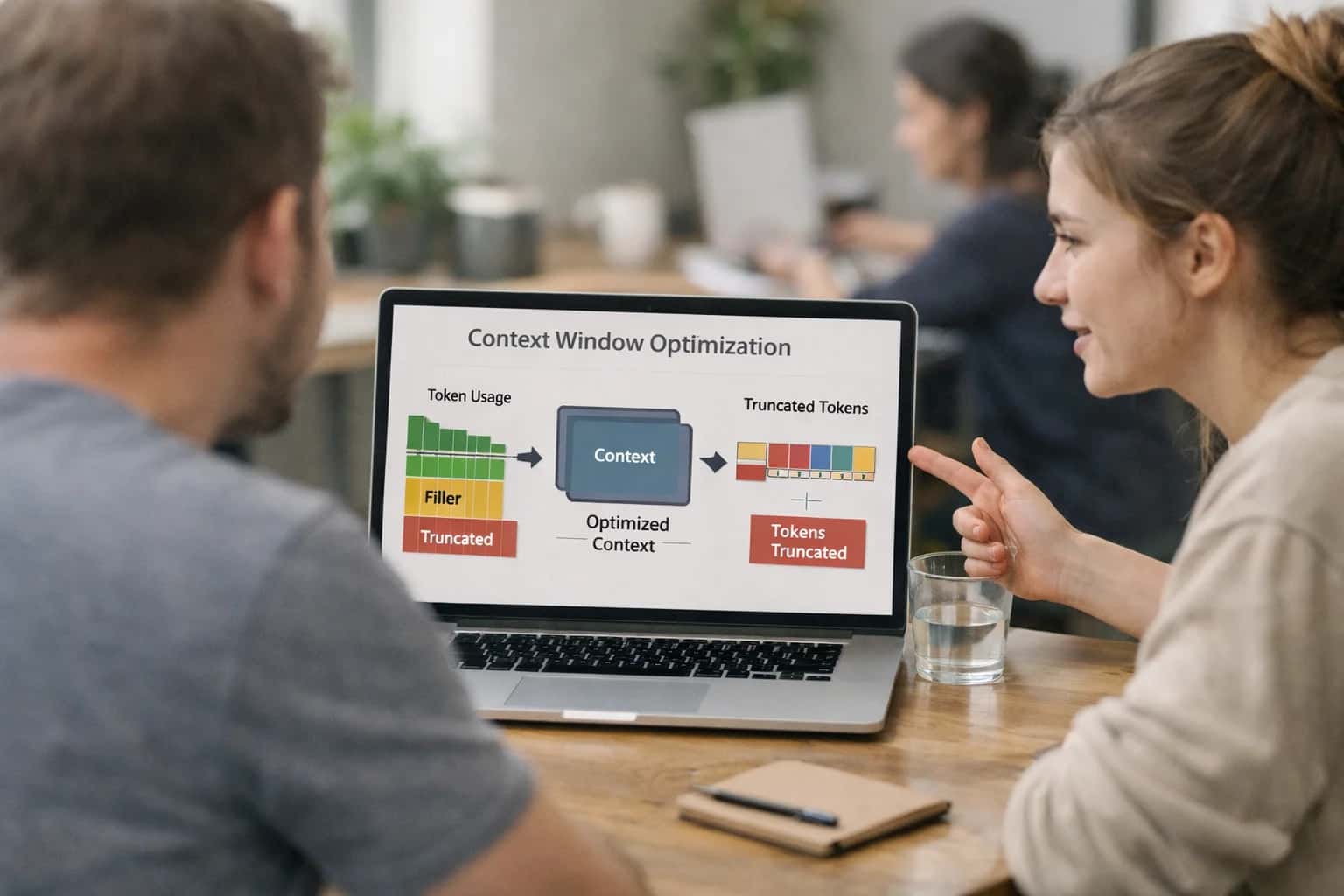
- Context Window Usage: Longer context windows (e.g., 128K tokens) increase the base cost per call, as the entire context is processed. Token efficiency in prompts and outputs is paramount for cost control.
~80%
Typical Cost Share
02
Tool Calling & External API Execution
Each time an agent calls an external tool or API, it incurs additional costs and latency. Key factors include:
- API Call Volume: The number of distinct calls to services like databases, search APIs, or custom functions.
- Third-Party API Pricing: Costs from services like SerpAPI for web search or paid data providers.
- Internal Compute Costs: Execution of proprietary functions or microservices that consume compute resources. API call metering is essential for attributing these distributed expenses.
03
Reasoning Complexity & Step Count
Agents using chain-of-thought, planning, or reflection loops perform multiple internal reasoning steps before a final output. This directly increases cost because:
- Multi-Turn Conversations: Each agent 'thought' or internal monologue consumes tokens.
- Iterative Refinement: Agents that re-evaluate and correct their work (ReAct, Reflexion) process significantly more tokens.
- Orchestration Overhead: Frameworks that manage these steps (e.g., LangGraph, CrewAI) add processing layers. More complex tasks lead to higher cost per session.
04
Context Management & Retrieval
Providing the agent with relevant context from external sources is a major cost component. This involves:
- Retrieval-Augmented Generation (RAG): Costs for querying vector databases or search indexes to find relevant documents.
- Context Length: Ingesting large retrieved documents into the model's context window drastically increases token counts.
- Knowledge Graph Queries: Executing complex graph traversals to fetch structured data. Inefficient retrieval that returns irrelevant data wastes the most expensive resource: model tokens.
05
Model Selection & Tier
The choice of foundation model has a non-linear impact on cost. Considerations include:
- Model Size & Capability: Larger, more capable models (e.g., GPT-4, Claude 3 Opus) are orders of magnitude more expensive per token than smaller ones (e.g., GPT-3.5-Turbo, Claude Haiku).
- Provider Pricing Models: Costs vary between OpenAI, Anthropic, Google, and open-source providers (where cost is primarily compute footprint).
- Specialized vs. General Models: Fine-tuned or domain-specific models may have higher per-call costs but achieve goals in fewer steps, affecting total cost per action.
06
Infrastructure & Orchestration Overhead
The supporting infrastructure for running agents introduces baseline and variable costs:
- Orchestration Runtime: Compute for the agent framework itself (e.g., CPU/memory for LangChain, AutoGen).
- State Management & Memory: Storage and query costs for maintaining agent conversation history and episodic memory.
- Observability & Logging: Processing and storing telemetry, distributed traces, and token audit trails.
- Networking & Latency: Data transfer costs, especially in multi-cloud or hybrid architectures. These costs scale with agent activity and are critical for cost attribution.
AGENT COST TELEMETRY
Managing and Optimizing Cost Drivers
A cost driver is a primary factor that directly and significantly impacts the total operational expense of an AI agent. This section details the key cost drivers in agentic systems and strategies for their management.
A cost driver is a primary factor, such as context window length, model size, or number of tool calls, that has a direct and significant impact on the total operational expense of an AI agent. In agentic systems, these drivers are the fundamental levers of financial consumption, determining the cost of token accounting, API call metering, and underlying compute unit usage. Identifying and instrumenting these drivers is the first step toward cost attribution and effective financial governance.
Optimization involves engineering controls around these key variables. Techniques include implementing token budgets, optimizing prompt architecture to reduce context length, selecting smaller, more efficient models via small language model engineering, and caching results to minimize redundant tool calls. Continuous monitoring through agent telemetry pipelines enables cost forecasting and anomaly detection, allowing teams to align agent capabilities with financial constraints without sacrificing performance.
PRIMARY FACTORS
Cost Driver Characteristics and Mitigations
This table compares the key characteristics, cost impact, and primary mitigation strategies for the major drivers of AI agent operational expense.
| Cost Driver | Primary Cost Impact | Typical Cost Range Impact | Key Mitigation Strategies |
|---|---|---|---|
Context Window Length | Linear increase in token consumption per request | High ($0.01 - $0.50+ per 1K tokens) | Prompt CompressionContext SummarizationSelective Recall |
Model Size / Tier | Exponential increase in per-token pricing | Very High (10x-100x between tiers) | Model CascadingTask-Specific Fine-TuningSmall Language Model (SLM) Deployment |
Number of Tool / API Calls | Per-call fees + increased token context | Medium-High ($0.001 - $0.10 per call) | Call BatchingResult CachingAgentic Planning to Minimize Calls |
Reasoning / Planning Steps | Multi-turn conversations increase total tokens | Medium (Adds 30-200% to base cost) | Step LimitingEfficient Planning ArchitecturesReflection-Triggered Loops |
Retrieval-Augmented Generation (RAG) Queries | Vector DB query cost + added context tokens | Low-Medium ($0.0001 - $0.01 per query) | Hybrid Search OptimizationChunk Size TuningEmbedding Model Efficiency |
Output Token Length | Direct per-token cost for generated content | Variable (Scales with verbosity) | Structured Output ConstraintsSummarization InstructionsToken Budget Enforcement |
Concurrent Sessions / Throughput | Infrastructure scaling (GPU/TPU instances) | High (Scales with user load) | Continuous BatchingDynamic Scaling PoliciesInference Optimization |
Data Ingestion / Preprocessing | Compute for embedding generation, ETL | Low-Medium (Often fixed, scales with data) | Incremental ProcessingEfficient Embedding ModelsPipeline Optimization |
COST DRIVER
Frequently Asked Questions
A cost driver is a primary factor that directly and significantly impacts the operational expense of an AI agent. This FAQ addresses key questions about identifying, measuring, and managing these critical financial variables.
A cost driver is a primary, measurable factor that has a direct and significant impact on the total operational expense of running an AI agent. Unlike incidental costs, cost drivers are the core variables that scale with usage and directly influence the bill from cloud providers or internal infrastructure. The most significant cost drivers are typically token consumption (for Large Language Model inference), model size/selection (e.g., GPT-4 vs. a smaller model), context window length, and the number and complexity of tool/API calls. Understanding these drivers is essential for cost attribution, budgeting, and optimizing agent architecture for financial efficiency.
Enabling Efficiency, Speed & Accuracy
Intelligent Analysis, Decision & Execution
We build AI systems for teams that need search across company data, workflow automation across tools, or AI features inside products and internal software.
Talk to Us
Search across company data
Give teams answers from docs, tickets, runbooks, and product data with sources and permissions.
Useful when people spend too long searching or get different answers from different systems.
Enterprise searchRAGPermissions
Read more
Automate internal workflows
Use AI to route work, draft outputs, trigger actions, and keep approvals and logs in place.
Useful when repetitive work moves across multiple tools and teams.
AI agentsWorkflow automationGovernance
Read more
Add AI to products and internal tools
Build assistants, guided actions, or decision support into the software your team or customers already use.
Useful when AI needs to be part of the product, not a separate tool.
AI integrationDecision supportModel routing
Read more
About the author
Prasad Kumkar
CEO & MD, Inference Systems
Prasad Kumkar is the CEO & MD of Inference Systems and writes about AI systems architecture, LLM infrastructure, model serving, evaluation, and production deployment. Over 5+ years, he has worked across computer vision models, L5 autonomous vehicle systems, and LLM research, with a focus on taking complex AI ideas into real-world engineering systems.
His work and writing cover AI systems, large language models, AI agents, multimodal systems, autonomous systems, inference optimization, RAG, evaluation, and production AI engineering.
LinkedIn
Limited slotsGet a Free AI Consultation
Partnered with leading AI, data, and software stack.





How We Work
Custom AI workflows for your Business
One-fit-all AI don't work for modern businesses. At Inferensys, we aim to understand your business & custom requirements; which we use to define most efficient agentic workflows, the data, and the tools for your business.
01
Review the use case
We understand the task, the users, and where AI can actually help.
Read more02
Pick the right approach
We define what needs search, automation, or product integration.
Read more03
Build the first useful version
We implement the part that proves the value first.
Read more04
Improve from there
We add the checks and visibility needed to keep it useful.
Read moreThe first call is a practical review of your use case and the right next step.
Talk to Us