An Audit Log Retention Policy is a formal governance document that specifies the mandatory duration, secure storage formats, and strict access controls for preserving immutable action ledgers and telemetry attestation records generated by autonomous agents. It is a core component of enterprise AI governance, directly addressing legal holds, regulatory audit trail requirements under frameworks like the EU AI Act, and the operational need for forensic state reconstruction. The policy ensures logs are available for cross-session auditing and behavioral drift detection while defining secure deletion protocols.

Glossary
Audit Log Retention Policy
A formal policy defining the duration, storage format, and access controls for retaining agent audit logs based on compliance, legal, and operational requirements.
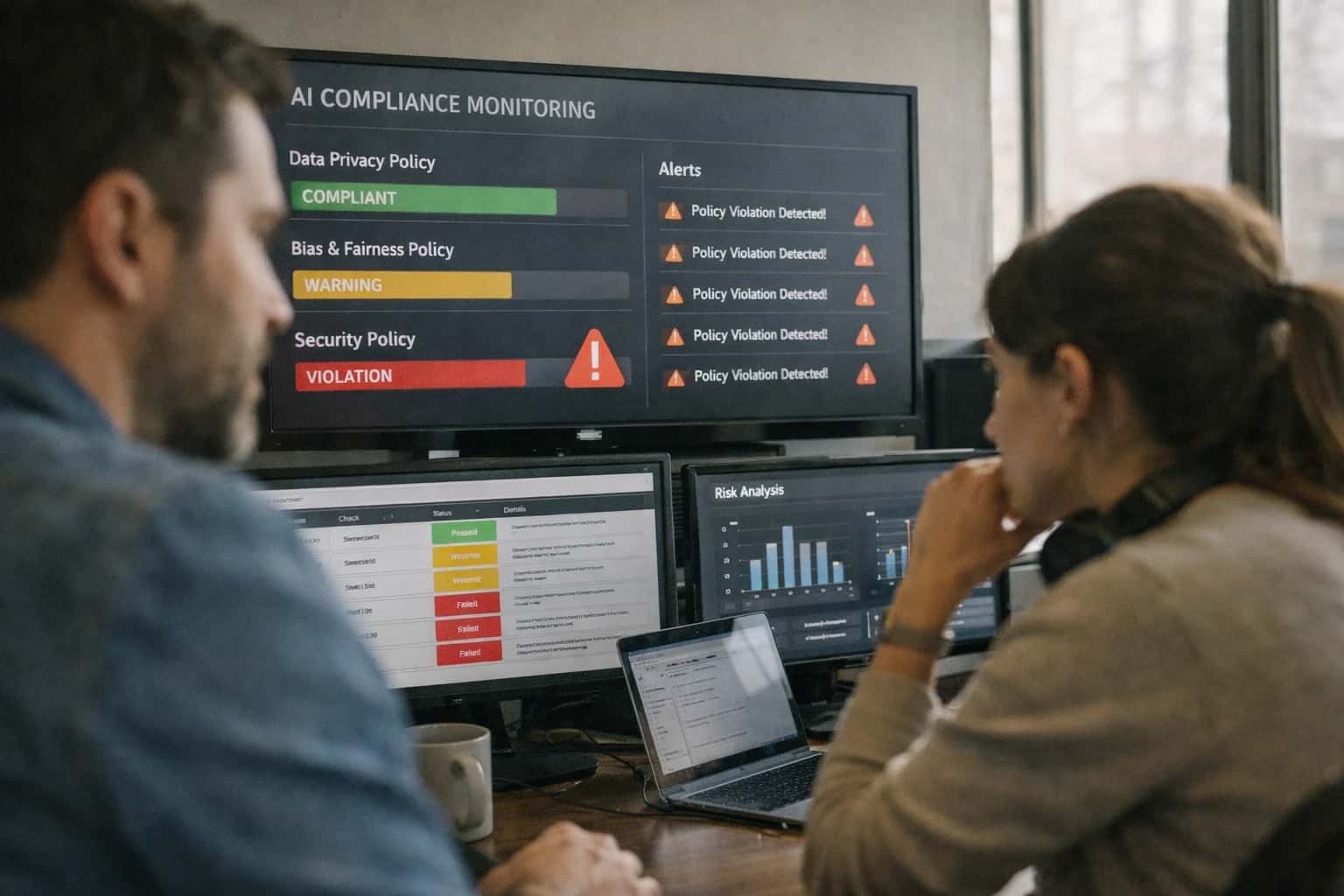
AGENT BEHAVIOR AUDITING
What is an Audit Log Retention Policy?
A formal policy defining the duration, storage format, and access controls for retaining agent audit logs based on compliance, legal, and operational requirements.
The policy operationalizes retention by classifying logs based on event criticality, linking retention periods to specific compliance checkpoints and risk profiles. It mandates technical implementations like tamper-evident logging and tamper-proof timestamping to guarantee evidential integrity. Furthermore, it governs the lifecycle from hot storage for real-time analysis to cold archival, ensuring cost-effective scalability while maintaining ready access for forensic timeline analysis and the generation of deterministic execution proofs during incident response or external audits.
AGENT BEHAVIOR AUDITING
Key Components of an Audit Log Retention Policy
A formal policy for agent audit logs must define specific, enforceable rules for data lifecycle, security, and access. These components ensure logs serve their purpose for compliance, forensics, and operational oversight.
01
Retention Duration & Legal Holds
The policy must define minimum and maximum retention periods for different log types, based on operational need and regulatory mandates (e.g., 7 years for financial records under SEC Rule 17a-4). A legal hold process must suspend automatic deletion if logs are relevant to litigation or investigation. For agents, logs related to high-impact decisions (e.g., financial trades, access grants) may require longer retention than routine operational telemetry.
02
Immutable Storage & Tamper Evidence
Core audit logs must be written to an immutable storage medium—a write-once, read-many (WORM) system—to prevent alteration or deletion. Techniques like cryptographic chaining (e.g., using hash chains or Merkle trees) make any tampering immediately evident. This is critical for non-repudiation and providing a deterministic execution proof for agent actions, as required by frameworks like the EU AI Act.
03
Access Controls & Least Privilege
Strict role-based access control (RBAC) governs who can read, search, or export audit logs. Access should follow the principle of least privilege:
- Security teams may have full read access for incident response.
- Compliance officers may access logs for specific regulatory audits.
- Developers may be restricted to anonymized or aggregated data for debugging. All access attempts themselves must be logged to create a meta-audit trail.
04
Log Schema & Data Normalization
The policy must enforce a standardized log schema for all agent events. This ensures consistency for querying and analysis. Key fields include:
- Timestamp (with microsecond precision and timezone).
- Agent/Session ID for traceability.
- Action Type (e.g.,
tool_call,state_transition). - Intent or high-level goal prompting the action.
- Input/Output Data (may be hashed or tokenized for PII).
- Compliance Checkpoint result.
- Cryptographic Signature of the entry.
05
Secure Deletion & Disposal
The policy must define a secure disposal process for logs that have exceeded their retention period. This involves more than simple file deletion; it requires cryptographic shredding or physical destruction of storage media to prevent forensic recovery. The process must be documented and auditable. For cloud-based logs, this involves using provider tools for definitive object expiration and ensuring backups are also purged.
06
Integrity Verification & Monitoring
Continuous integrity checks are required to ensure the audit trail remains intact and unaltered. This involves:
- Periodic hash verification of log files against a separately stored index.
- Monitoring for gaps in sequence numbers or timestamps.
- Using a Trusted Timestamping Authority (TSA) or blockchain anchoring to prove logs existed at a specific time and haven't been backdated. Alerts must trigger if tamper-evidence is detected, initiating a security incident response.
AUDIT LOG RETENTION POLICY
Frequently Asked Questions
A formal policy defining the duration, storage format, and access controls for retaining agent audit logs based on compliance, legal, and operational requirements.
An audit log retention policy is a formal governance document that specifies the mandatory duration, secure storage formats, authorized access controls, and eventual disposition procedures for the immutable action ledgers generated by autonomous AI agents. Its primary function is to ensure that detailed records of agent behavior—including all reasoning steps, tool calls, and state transitions—are preserved for a defined period to satisfy regulatory compliance, support forensic analysis, and enable performance benchmarking. Without such a policy, organizations risk being unable to prove deterministic execution or comply with laws like the EU AI Act during an investigation.
Enabling Efficiency, Speed & Accuracy
Intelligent Analysis, Decision & Execution
We build AI systems for teams that need search across company data, workflow automation across tools, or AI features inside products and internal software.
Talk to Us
Search across company data
Give teams answers from docs, tickets, runbooks, and product data with sources and permissions.
Useful when people spend too long searching or get different answers from different systems.
Enterprise searchRAGPermissions
Read more
Automate internal workflows
Use AI to route work, draft outputs, trigger actions, and keep approvals and logs in place.
Useful when repetitive work moves across multiple tools and teams.
AI agentsWorkflow automationGovernance
Read more
Add AI to products and internal tools
Build assistants, guided actions, or decision support into the software your team or customers already use.
Useful when AI needs to be part of the product, not a separate tool.
AI integrationDecision supportModel routing
Read more
About the author
Prasad Kumkar
CEO & MD, Inference Systems
Prasad Kumkar is the CEO & MD of Inference Systems and writes about AI systems architecture, LLM infrastructure, model serving, evaluation, and production deployment. Over 5+ years, he has worked across computer vision models, L5 autonomous vehicle systems, and LLM research, with a focus on taking complex AI ideas into real-world engineering systems.
His work and writing cover AI systems, large language models, AI agents, multimodal systems, autonomous systems, inference optimization, RAG, evaluation, and production AI engineering.
LinkedIn
Limited slotsGet a Free AI Consultation
Partnered with leading AI, data, and software stack.





How We Work
Custom AI workflows for your Business
One-fit-all AI don't work for modern businesses. At Inferensys, we aim to understand your business & custom requirements; which we use to define most efficient agentic workflows, the data, and the tools for your business.
01
Review the use case
We understand the task, the users, and where AI can actually help.
Read more02
Pick the right approach
We define what needs search, automation, or product integration.
Read more03
Build the first useful version
We implement the part that proves the value first.
Read more04
Improve from there
We add the checks and visibility needed to keep it useful.
Read moreThe first call is a practical review of your use case and the right next step.
Talk to Us