A memory compliance log is a specialized, immutable audit trail that records all activities within an agentic memory system that are relevant to data governance and regulatory frameworks like GDPR, HIPAA, or the EU AI Act. It systematically captures metadata for each operation, including the data accessed, the purpose of access, the user or agent identity, and the exact timestamp. This creates a verifiable record proving that memory usage adheres to data privacy, retention, and right-to-be-forgotten mandates.

Glossary
Memory Compliance Log
A Memory Compliance Log is a specialized, immutable audit trail that records all access and modification events within an agentic memory system specifically for demonstrating adherence to data privacy and regulatory frameworks like GDPR and HIPAA.
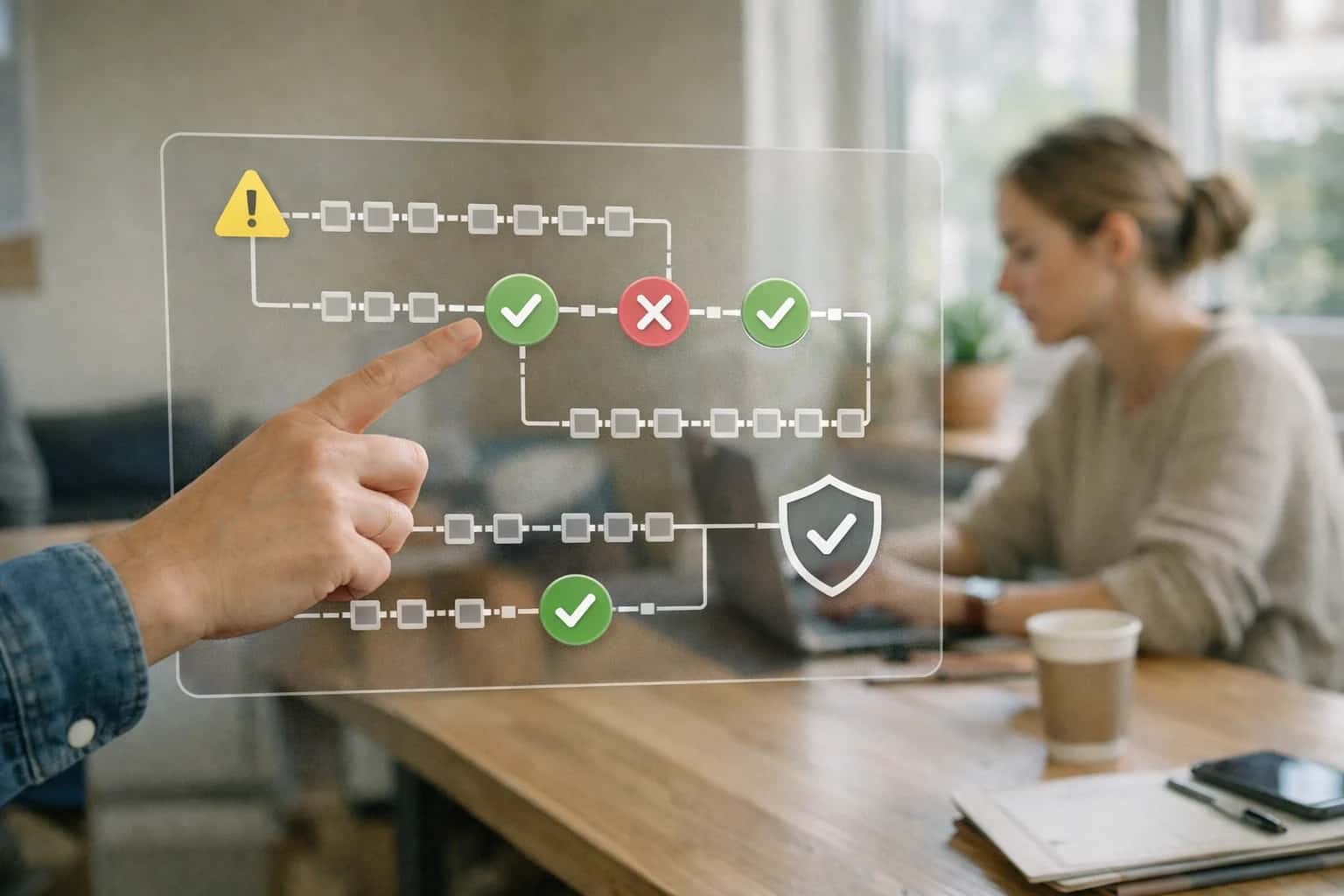
MEMORY OBSERVABILITY AND APIS
What is a Memory Compliance Log?
A specialized audit trail for agentic memory systems, designed to meet regulatory and governance requirements.
Unlike a general memory audit trail used for debugging, a compliance log is structured around legal predicates such as lawful basis for processing and data minimization. It integrates with memory access control systems to log authorization checks and may trigger automated redaction or encryption. For engineers, implementing this requires instrumenting the Memory Query API and Memory Write API to emit standardized events to a secure, tamper-evident storage backend, forming a critical component of enterprise AI governance.
MEMORY OBSERVABILITY AND APIS
Core Characteristics of a Compliance Log
A memory compliance log is a specialized audit trail that records memory system activities relevant to regulatory frameworks (e.g., GDPR, HIPAA). Its core characteristics ensure it meets stringent legal and operational requirements for data governance.
01
Immutable Chronological Record
The log is an append-only, time-ordered sequence of events. Once written, entries cannot be altered or deleted, creating a tamper-evident audit trail. This is foundational for proving the integrity of the log in a legal or forensic context. Entries are typically timestamped with high precision (e.g., nanosecond resolution) and may include a cryptographic hash chain where each entry's hash depends on the previous one, making any modification immediately detectable.
02
Purpose-Limited Data Access Logging
It records not just that data was accessed, but the legal basis or purpose for the access, as required by regulations like GDPR's 'purpose limitation' principle. Each log entry must link the accessed memory item (e.g., a user vector embedding) to a specific, declared processing purpose (e.g., 'fraud detection' or 'personalized recommendation'). This creates a map from data subject to processing activity, enabling audits to verify that data is not used for undisclosed or incompatible purposes.
03
Subject-Centric Data Provenance
Entries are indexed and queryable by data subject identifier (e.g., user ID, customer number). This allows for the efficient execution of Data Subject Access Requests (DSARs), such as the 'right to access' or 'right to be forgotten'. The log must provide a complete history for a given subject:
- What data about them is stored.
- When it was created, accessed, or modified.
- Which agent or process performed the action.
- The purpose of each action. This transforms the log from a system-centric stream into a subject-centric legal record.
04
Granular Actor Attribution
Every logged action is explicitly tied to the initiating entity, which can be:
- A human user (via authenticated session ID).
- An autonomous agent (via agent ID and session).
- A system process (via service account or job ID). This attribution is critical for non-repudiation and accountability. In multi-agent systems, this must capture the chain of delegation, logging not just the final agent that accessed memory, but the upstream agent or user that triggered the chain of reasoning leading to the access.
05
Context-Rich Event Payloads
Beyond basic 'who, what, when', entries contain rich metadata for forensic reconstruction. This includes:
- Session Context: The specific user conversation or agent task flow.
- Query Context: The exact natural language query or parameters that triggered the memory retrieval.
- Retrieval Context: The retrieval score and list of other candidate memory items considered.
- Regulatory Context: The specific article of law or clause of the data processing agreement cited as the legal basis for the action. This depth allows investigators to understand not just the action, but the intent and reasoning behind it.
06
Secure Storage with Controlled Access
The log itself is a high-value target and must be protected. Core security patterns include:
- Cryptographic Sealing: Periodic hashing or signing of log segments.
- Write-Once, Read-Many (WORM) Storage: Storing logs on immutable media or using object storage with legal holds.
- Strict Access Control: Access to query the compliance log is itself logged and restricted to authorized auditors and compliance officers.
- Retention Enforcement: Automated enforcement of mandated retention periods (e.g., 7 years for financial data), after which logs may be securely purged, often requiring a separate, logged authorization event.
MEMORY COMPLIANCE LOG
Frequently Asked Questions
A Memory Compliance Log is a specialized audit trail for agentic memory systems, engineered to meet regulatory and governance requirements. This FAQ addresses its core functions, technical implementation, and role in enterprise AI governance.
A Memory Compliance Log is a specialized, immutable audit trail that records all activities within an agentic memory system that are relevant to regulatory frameworks like GDPR, HIPAA, or the EU AI Act. Its primary function is to provide a verifiable record of data provenance, access, and purpose, enabling algorithmic accountability and demonstrating compliance during audits.
Unlike a general Memory Audit Trail used for debugging, a compliance log is structured around legal principles such as purpose limitation, data minimization, and right to explanation. It answers critical questions: Which user's data was accessed? By which agent or process? For what declared purpose? When did this occur? This log is a core component of Enterprise AI Governance, acting as the technical foundation for proving that autonomous systems handle sensitive information lawfully.
Enabling Efficiency, Speed & Accuracy
Intelligent Analysis, Decision & Execution
We build AI systems for teams that need search across company data, workflow automation across tools, or AI features inside products and internal software.
Talk to Us
Search across company data
Give teams answers from docs, tickets, runbooks, and product data with sources and permissions.
Useful when people spend too long searching or get different answers from different systems.
Enterprise searchRAGPermissions
Read more
Automate internal workflows
Use AI to route work, draft outputs, trigger actions, and keep approvals and logs in place.
Useful when repetitive work moves across multiple tools and teams.
AI agentsWorkflow automationGovernance
Read more
Add AI to products and internal tools
Build assistants, guided actions, or decision support into the software your team or customers already use.
Useful when AI needs to be part of the product, not a separate tool.
AI integrationDecision supportModel routing
Read more
About the author
Prasad Kumkar
CEO & MD, Inference Systems
Prasad Kumkar is the CEO & MD of Inference Systems and writes about AI systems architecture, LLM infrastructure, model serving, evaluation, and production deployment. Over 5+ years, he has worked across computer vision models, L5 autonomous vehicle systems, and LLM research, with a focus on taking complex AI ideas into real-world engineering systems.
His work and writing cover AI systems, large language models, AI agents, multimodal systems, autonomous systems, inference optimization, RAG, evaluation, and production AI engineering.
LinkedIn
Limited slotsGet a Free AI Consultation
Partnered with leading AI, data, and software stack.





How We Work
Custom AI workflows for your Business
One-fit-all AI don't work for modern businesses. At Inferensys, we aim to understand your business & custom requirements; which we use to define most efficient agentic workflows, the data, and the tools for your business.
01
Review the use case
We understand the task, the users, and where AI can actually help.
Read more02
Pick the right approach
We define what needs search, automation, or product integration.
Read more03
Build the first useful version
We implement the part that proves the value first.
Read more04
Improve from there
We add the checks and visibility needed to keep it useful.
Read moreThe first call is a practical review of your use case and the right next step.
Talk to Us