Threat modeling is a structured, iterative engineering process used to identify, quantify, and address the security risks associated with a system, application, or business process. It involves systematically analyzing system architecture, data flows, and trust boundaries to enumerate potential threats, vulnerabilities, and attack vectors. The core outcome is a prioritized list of security issues and a corresponding set of countermeasures or mitigations to be integrated into the design and development lifecycle, shifting security left.

Glossary
Threat Modeling
Threat modeling is a structured, proactive security analysis process used to identify potential threats, vulnerabilities, and attacks in a system design, prioritize them based on risk, and define countermeasures to mitigate their impact.
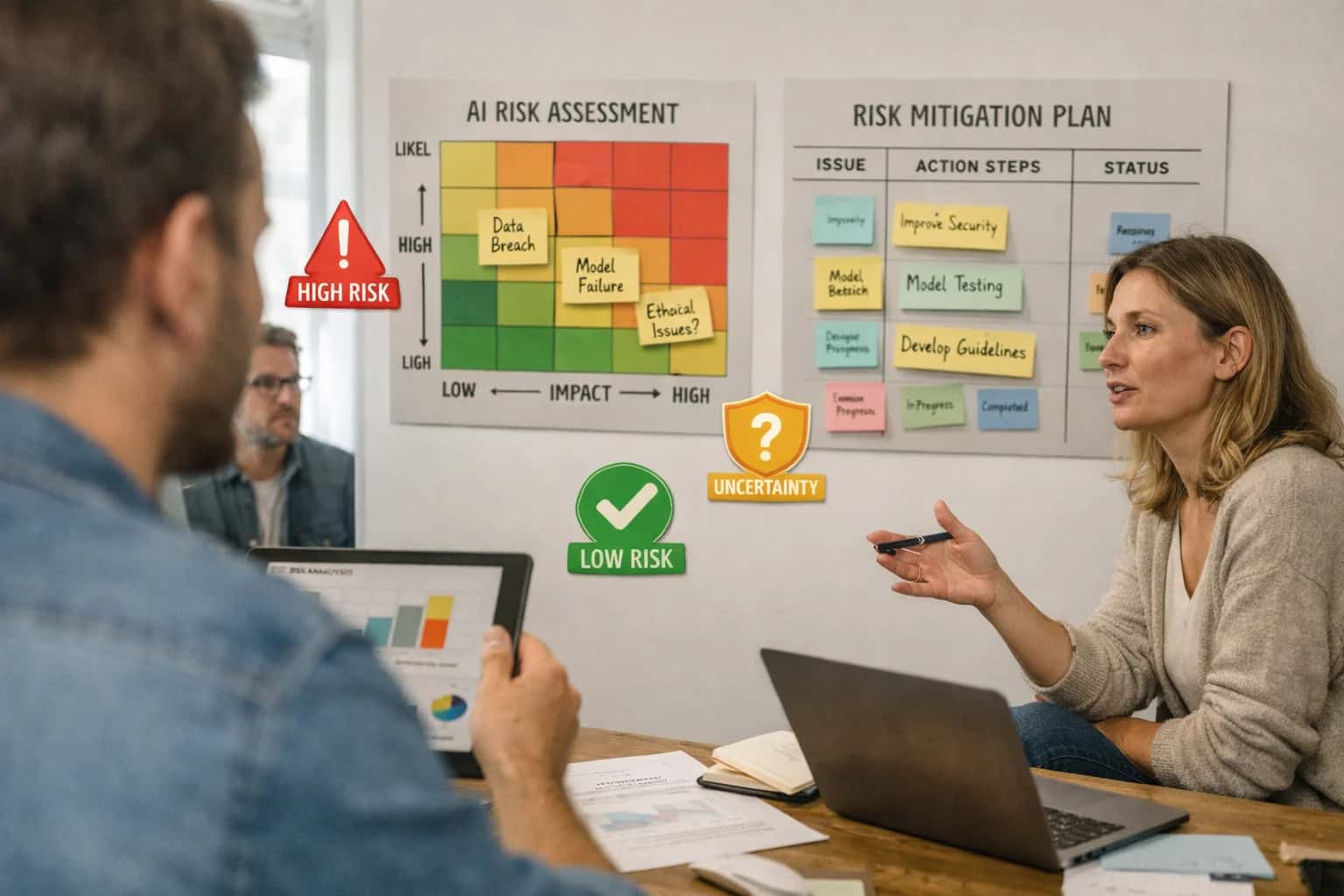
SECURITY METHODOLOGY
What is Threat Modeling?
A structured, proactive approach to identifying and mitigating security risks in system design.
Common methodologies include STRIDE (Spoofing, Tampering, Repudiation, Information Disclosure, Denial of Service, Elevation of Privilege) and PASTA (Process for Attack Simulation and Threat Analysis). In the context of autonomous AI systems, agentic threat modeling must address unique risks like prompt injection, training data poisoning, model inversion, and unintended agent cascading behaviors. It is a foundational practice for implementing security by design and adhering to the principle of least privilege.
THREAT MODELING METHODOLOGIES
Core Steps and Common Frameworks
Threat modeling is a proactive, structured process for identifying and mitigating security risks. It follows systematic steps and is supported by established frameworks to ensure comprehensive analysis.
01
The STRIDE Framework
STRIDE is a foundational threat categorization model developed by Microsoft. It provides a mnemonic for six classic threat types to guide identification:
- Spoofing: Impersonating a user or system.
- Tampering: Unauthorized modification of data.
- Repudiation: Denying an action occurred.
- Information Disclosure: Exposing data to unauthorized parties.
- Denial of Service: Degrading or disrupting service availability.
- Elevation of Privilege: Gaining unauthorized access rights. It is often paired with data flow diagrams (DFDs) to map threats to system components.
02
The DREAD Risk Assessment Model
DREAD is a qualitative risk rating system used to prioritize identified threats. It assigns scores (e.g., 1-10) across five dimensions:
- Damage Potential: How severe is the impact if exploited?
- Reproducibility: How easy is it to reproduce the attack?
- Exploitability: How much effort is required to launch the attack?
- Affected Users: How many users or systems are impacted?
- Discoverability: How easy is it to find the vulnerability? While subjective, it provides a structured way to compare and rank threats for remediation.
03
Process for Attack Simulation and Threat Analysis (PASTA)
PASTA is a risk-centric, seven-stage methodology that aligns business objectives with technical security requirements.
- Define Objectives & Scope
- Define Technical Scope
- Application Decomposition
- Threat Analysis
- Vulnerability & Weakness Analysis
- Attack Modeling & Simulation
- Risk & Impact Analysis Its stages integrate asset-centric, attacker-centric, and impact analysis views to produce actionable, risk-mitigated outputs.
04
The Four Core Questions
All threat modeling processes aim to answer four fundamental questions about a system:
- What are we building? (Create an architecture diagram or data flow).
- What can go wrong? (Identify threats using frameworks like STRIDE).
- What are we going to do about it? (Define countermeasures and mitigations).
- Did we do a good job? (Validate the model and iterate). This simple, iterative questioning forms the backbone of any effective threat modeling exercise.
05
Data Flow Diagrams (DFDs) & Trust Boundaries
A Data Flow Diagram is the primary visual tool for threat modeling. It maps:
- External Entities (users, systems)
- Processes (functions, services)
- Data Stores (databases, caches)
- Data Flows (communication paths) Critical to this map is the Trust Boundary, a line that separates components with different levels of trust (e.g., internet from internal network). Threats are analyzed where data crosses these boundaries, as these are prime attack surfaces.
06
Agentic System Specifics
For autonomous AI agents, threat modeling must address unique risks beyond traditional software:
- Prompt Injection: Manipulating agent instructions via crafted inputs.
- Training Data Poisoning: Corrupting the agent's foundational knowledge.
- Unintended Cascading Actions: A single compromised agent triggering harmful chain reactions in a multi-agent system.
- Model Inversion/Extraction: Stealing proprietary model logic or data.
- Context Window Manipulation: Exploiting memory or state management to induce biased or erroneous reasoning. Mitigations include strict input/output validation, sandboxed tool execution, and robust observability telemetry.
THREAT MODELING
Frequently Asked Questions
Threat modeling is a foundational security engineering practice for identifying and mitigating risks in system design. These questions address its core principles, methodologies, and specific application to autonomous agent systems.
Threat modeling is a structured, proactive process used to identify, quantify, and address security risks in a system during its design phase. It works by systematically analyzing a system's architecture, data flows, and trust boundaries to enumerate potential threats, prioritize them based on risk, and define specific countermeasures before implementation.
Core steps typically include:
- Decompose the Application: Create data flow diagrams (DFDs) to visualize components, data stores, processes, and trust boundaries.
- Identify Threats: Use a structured methodology like STRIDE (Spoofing, Tampering, Repudiation, Information Disclosure, Denial of Service, Elevation of Privilege) to generate a comprehensive list of potential attacks against each element.
- Mitigate Threats: For each identified threat, design and document security controls, such as authentication, encryption, or input validation.
- Validate & Document: Review the model and document findings in a threat model report for ongoing reference and audit.
This process transforms security from a reactive checklist into an integral part of the system design lifecycle.
Enabling Efficiency, Speed & Accuracy
Intelligent Analysis, Decision & Execution
We build AI systems for teams that need search across company data, workflow automation across tools, or AI features inside products and internal software.
Talk to Us
Search across company data
Give teams answers from docs, tickets, runbooks, and product data with sources and permissions.
Useful when people spend too long searching or get different answers from different systems.
Enterprise searchRAGPermissions
Read more
Automate internal workflows
Use AI to route work, draft outputs, trigger actions, and keep approvals and logs in place.
Useful when repetitive work moves across multiple tools and teams.
AI agentsWorkflow automationGovernance
Read more
Add AI to products and internal tools
Build assistants, guided actions, or decision support into the software your team or customers already use.
Useful when AI needs to be part of the product, not a separate tool.
AI integrationDecision supportModel routing
Read more
About the author
Prasad Kumkar
CEO & MD, Inference Systems
Prasad Kumkar is the CEO & MD of Inference Systems and writes about AI systems architecture, LLM infrastructure, model serving, evaluation, and production deployment. Over 5+ years, he has worked across computer vision models, L5 autonomous vehicle systems, and LLM research, with a focus on taking complex AI ideas into real-world engineering systems.
His work and writing cover AI systems, large language models, AI agents, multimodal systems, autonomous systems, inference optimization, RAG, evaluation, and production AI engineering.
LinkedIn
Limited slotsGet a Free AI Consultation
Partnered with leading AI, data, and software stack.





How We Work
Custom AI workflows for your Business
One-fit-all AI don't work for modern businesses. At Inferensys, we aim to understand your business & custom requirements; which we use to define most efficient agentic workflows, the data, and the tools for your business.
01
Review the use case
We understand the task, the users, and where AI can actually help.
Read more02
Pick the right approach
We define what needs search, automation, or product integration.
Read more03
Build the first useful version
We implement the part that proves the value first.
Read more04
Improve from there
We add the checks and visibility needed to keep it useful.
Read moreThe first call is a practical review of your use case and the right next step.
Talk to Us