Output verification is the final, programmatic check of an AI model's generated text for compliance with safety, factual accuracy, and formatting rules before delivery to an end user. It acts as a deterministic runtime guardrail, intercepting the model's raw output to apply validators, classifiers, and rule-based checks. This process ensures that even if the primary model's reasoning fails, a non-compliant response is blocked or corrected, enforcing a fail-safe boundary for production systems.

Glossary
Output Verification
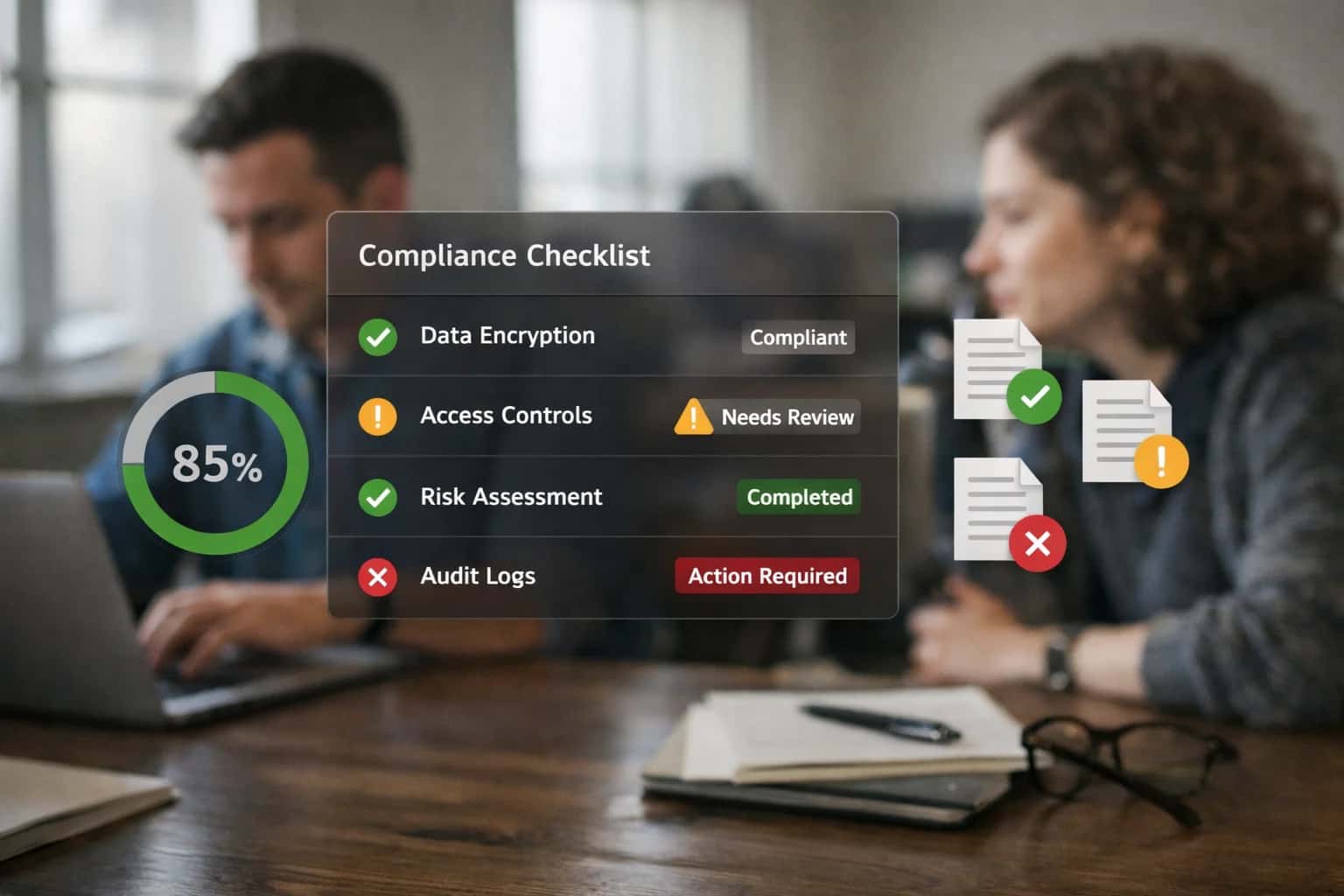
Output verification is the automated process of programmatically checking an AI model's generated text for compliance with safety, factual accuracy, and formatting rules before it is delivered to the end user.
CONSTITUTIONAL AI
What is Output Verification?
Output verification is a critical safety and quality control layer in autonomous AI systems.
This verification layer is distinct from the model's internal self-critique loop. While self-critique is a generative, reasoning-based process, output verification is an external, rule-based filter. It typically employs safety classifiers for harm detection, regex patterns for format compliance, and fact-checking APIs or knowledge graph lookups for accuracy. In agentic architectures, this step is a mandatory node in the execution graph, creating an audit trail and enabling explainable refusal when outputs violate defined policies.
CONSTITUTIONAL AI
Key Characteristics of Output Verification
Output verification is the final, programmatic checkpoint in an AI system, ensuring generated text complies with safety, accuracy, and formatting rules before user delivery. It is a critical component for deploying trustworthy, production-grade agents.
01
Post-Hoc Validation
Output verification operates after text generation is complete, acting as a final filter. This separates it from in-process guidance techniques like constrained decoding.
- Scope: Analyzes the complete, finalized output string.
- Mechanism: Applies rule-based checks, classifier models, or formal logic to the final text.
- Analogy: Similar to a quality assurance (QA) gate in a software deployment pipeline, catching defects before release.
02
Rule-Based & Model-Based Checks
Verification employs hybrid methods to enforce compliance:
- Rule-Based Checks: Validate syntax, structure, and format (e.g., JSON schema validation, regex for PII, keyword blocklists).
- Model-Based Checks: Use specialized classifiers (e.g., safety classifiers, factuality evaluators, toxicity detectors) to assess semantic content.
- Integration: Rules provide deterministic guarantees; models handle nuanced judgment. Systems often chain them: a rule checks for a valid JSON object, then a model evaluates the JSON's content for safety.
03
Deterministic Gatekeeping
A core function is to provide a deterministic pass/fail outcome. This is essential for enterprise Service Level Agreements (SLAs) and compliance audits.
- Action Triggers: A 'fail' result can trigger automatic actions:
- Blocking the output entirely.
- Triggering a refusal mechanism with an explanatory message.
- Initiating a self-critique loop for automatic revision.
- Escalating to a human-in-the-loop for review.
- Auditability: Every verification decision must be logged to an audit trail.
04
Multi-Dimensional Compliance
Verification checks span multiple critical dimensions of output quality and safety:
- Safety & Ethics: Adherence to a constitution or policy (e.g., no harmful instructions, biased statements).
- Factual Accuracy & Grounding: Consistency with provided context (Retrieval-Augmented Generation source documents) or known facts; detects hallucinations.
- Formatting & Schema: Compliance with required output structure (e.g., valid API call syntax, correct data types).
- Operational Boundaries: Ensures output stays within the agent's authorized domain and capability.
05
Integration with Governance Hooks
In production architectures, output verification is typically implemented as a governance hook—a modular software component inserted into the inference pipeline.
- Location: Often sits between the AI model and the API response.
- Design: Enables policy-as-code, where safety rules are version-controlled and deployed independently of the core model.
- Runtime Monitoring: This hook provides the data point for runtime monitoring dashboards, tracking violation rates and output quality over time.
06
Distinction from Input Guardrails
It is complementary to, but distinct from, input-side safety measures:
- Input Guardrails (e.g., jailbreak detection, prompt injection defense) sanitize and classify user queries before processing.
- Output Verification validates the system's response after generation.
- Defense-in-Depth: Together, they create a layered defense. An adversarial prompt that bypasses input checks can still be caught by output verification, preventing a harmful final response.
OUTPUT VERIFICATION
Frequently Asked Questions
Output verification is the final, programmatic checkpoint in an AI pipeline, ensuring generated text meets defined standards for safety, accuracy, and format before release.
Output verification is the process of programmatically checking an AI model's final generated text for compliance with safety, factual accuracy, and formatting rules before it is delivered to the end user. It functions as a deterministic filter or validation layer applied after text generation but before the response is finalized. The process typically involves running the output through a series of specialized checks, which can include:
- Safety classifiers to detect toxic or harmful content.
- Fact-checking modules that cross-reference claims against a trusted knowledge source.
- Format validators (e.g., JSON schema checkers, regex patterns) to ensure structural correctness.
- Rule-based scanners for prohibited keywords or PII leakage. If the output fails any check, the system can trigger a refusal mechanism, initiate a self-critique loop for revision, or return a default safe response, ensuring no non-compliant content exits the system boundary.
Enabling Efficiency, Speed & Accuracy
Intelligent Analysis, Decision & Execution
We build AI systems for teams that need search across company data, workflow automation across tools, or AI features inside products and internal software.
Talk to Us
Search across company data
Give teams answers from docs, tickets, runbooks, and product data with sources and permissions.
Useful when people spend too long searching or get different answers from different systems.
Enterprise searchRAGPermissions
Read more
Automate internal workflows
Use AI to route work, draft outputs, trigger actions, and keep approvals and logs in place.
Useful when repetitive work moves across multiple tools and teams.
AI agentsWorkflow automationGovernance
Read more
Add AI to products and internal tools
Build assistants, guided actions, or decision support into the software your team or customers already use.
Useful when AI needs to be part of the product, not a separate tool.
AI integrationDecision supportModel routing
Read more
About the author
Prasad Kumkar
CEO & MD, Inference Systems
Prasad Kumkar is the CEO & MD of Inference Systems and writes about AI systems architecture, LLM infrastructure, model serving, evaluation, and production deployment. Over 5+ years, he has worked across computer vision models, L5 autonomous vehicle systems, and LLM research, with a focus on taking complex AI ideas into real-world engineering systems.
His work and writing cover AI systems, large language models, AI agents, multimodal systems, autonomous systems, inference optimization, RAG, evaluation, and production AI engineering.
LinkedIn
Limited slotsGet a Free AI Consultation
Partnered with leading AI, data, and software stack.





How We Work
Custom AI workflows for your Business
One-fit-all AI don't work for modern businesses. At Inferensys, we aim to understand your business & custom requirements; which we use to define most efficient agentic workflows, the data, and the tools for your business.
01
Review the use case
We understand the task, the users, and where AI can actually help.
Read more02
Pick the right approach
We define what needs search, automation, or product integration.
Read more03
Build the first useful version
We implement the part that proves the value first.
Read more04
Improve from there
We add the checks and visibility needed to keep it useful.
Read moreThe first call is a practical review of your use case and the right next step.
Talk to Us