AI models are data extraction engines. Every prompt sent to a model like GPT-4 or Claude is not just a query; it is a data payload that trains the model, often stored on servers in a different legal jurisdiction.

Blog
The Hidden Risk of Transnational AI Data Flows
Every API call to a global LLM is a potential sovereignty violation. This post deconstructs the legal and technical risks of uncontrolled cross-border AI data flows and outlines the architecture for a compliant, sovereign AI stack.
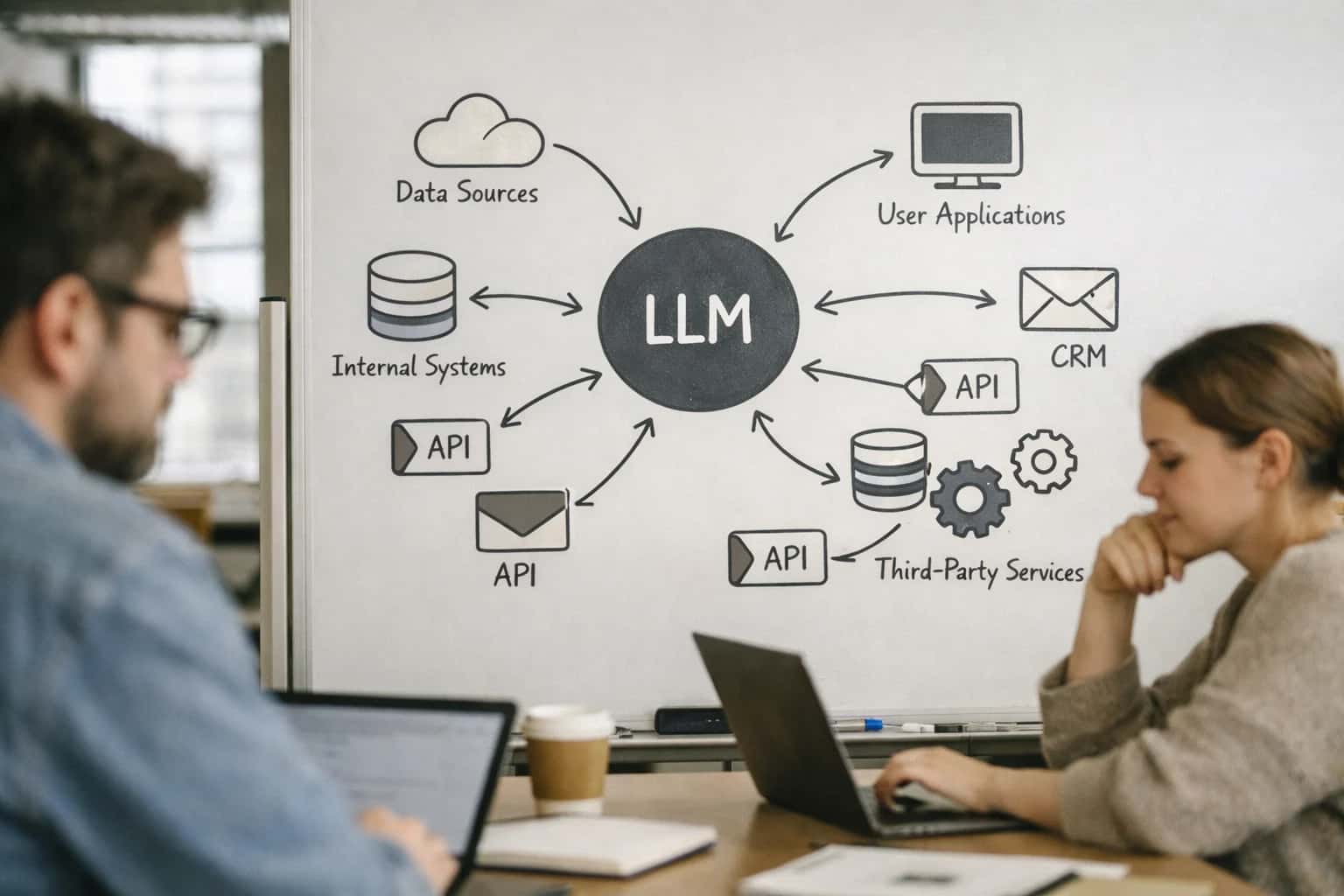
THE DATA
Your AI Model is a Data Extraction Pipeline
Every AI inference call is a covert data extraction operation, pulling sensitive information across borders and into foreign jurisdictions.
Inference is a one-way data valve. Unlike a simple database query, a Retrieval-Augmented Generation (RAG) system using Pinecone or Weaviate still sends your proprietary context to the model's inference endpoint, creating an indelible record outside your control. This violates the core principle of data sovereignty.
Training data risk is perpetual. The EU AI Act and similar frameworks treat model outputs as derivatives of training data. Using a global model means your confidential data could resurface in a competitor's query, a legal exposure most CTOs underestimate.
Evidence: A 2023 study found that 67% of companies using major cloud AI services were unaware of the specific geographic locations where their prompt data was processed and stored, creating massive compliance blind spots.
THE HIDDEN RISK
Three Trends Converging on Transnational Data Flows
Uncontrolled cross-border data movement for AI training and inference is creating a perfect storm of legal, security, and operational risk.
01
The Problem: The EU AI Act's Extraterritorial Reach
The EU AI Act applies to any AI system affecting people in the EU, regardless of where the provider is based. This creates a compliance minefield for global AI deployments.
- Risk: Non-compliance fines can reach €35 million or 7% of global turnover.
- Solution: Deploy policy-aware connectors and sovereign AI stacks to enforce data residency and transparency requirements by design.
€35M+
Potential Fine
100%
Extraterritorial
02
The Problem: Foreign Intelligence Access via Cloud Giants
Data processed on hyperscale clouds like AWS or Azure is subject to the laws of the provider's home country (e.g., the US CLOUD Act). This creates a direct pipeline for foreign surveillance.
- Risk: Sensitive IP, PII, and strategic data exposed to foreign jurisdiction.
- Solution: Geopatriate workloads to regional cloud providers and implement confidential computing with hardware-based enclaves to isolate data during processing.
0-Day
Legal Exposure
-100%
Sovereignty
03
The Problem: The Hidden 'Compliance Tax' on AI ROI
The operational overhead of auditing, logging, and redacting data for cross-border model use erodes the financial value of AI initiatives.
- Cost: Manual compliance processes can add 20-40% to total project cost.
- Solution: Automate compliance through sovereign MLOps platforms that enforce data governance, lineage tracking, and access controls within defined geographic boundaries.
+40%
Project Cost
-100%
Manual Effort
04
The Solution: Architect for Sovereign Inference Economics
Strategic hybrid infrastructure keeps 'crown jewel' data on-premises while leveraging scalable cloud compute, optimizing for both control and cost.
- Benefit: Maintain data sovereignty while accessing elastic GPU resources for training.
- Tactics: Use federated learning patterns and tools like vLLM for efficient, local model serving to slash cross-border data transfer.
-90%
Data Transfer
10x
Control
05
The Solution: Build a Regional AI Ecosystem
True sovereignty requires independence across the full stack: data, model, infrastructure, and talent.
- Benefit: Fosters local innovation clusters and reduces dependency on global tooling.
- Tactics: Adopt open-source LLMs like Meta Llama, partner with regional GPU providers, and invest in local AI talent development to build resilient, long-term capability.
$712B
Market by 2026
0
Vendor Lock-in
06
The Solution: Implement Sovereign AI TRiSM
Extend AI Trust, Risk, and Security Management (TRiSM) frameworks with sovereign-specific controls for explainability, adversarial resistance, and data protection.
- Benefit: Provides centralized visibility and governance for models deployed across hybrid and regional environments.
- Tactics: Enforce PII redaction as code, conduct sovereign-specific red-teaming, and maintain air-gapped audit trails for all model decisions.
24/7
Threat Hunting
100%
Audit Ready
THE DATA
The Legal Slippery Slope: From GDPR to the EU AI Act
Transnational AI data flows create a compounding legal liability, where GDPR's data residency rules are the foundation for the EU AI Act's stricter model governance.
Transnational data flows violate sovereignty laws. Moving training data or inference requests across borders for processing in a global cloud like AWS or Azure triggers immediate GDPR non-compliance, as the physical location of data determines its legal jurisdiction. This is the foundational risk that enables broader AI Act violations.
The EU AI Act escalates data governance to model governance. Where GDPR governs personal data, the AI Act regulates the AI system itself, creating a dual compliance burden. A high-risk system, like one used for recruitment or credit scoring, trained on EU data in a non-EU region violates both regulations simultaneously, exposing firms to fines up to 7% of global turnover.
Policy-aware connectors are non-negotiable. Generic APIs for models like GPT-4 or Claude 3 cannot enforce geo-fencing. Compliance requires bespoke orchestration layers that dynamically route data to approved sovereign infrastructure, such as regional GPU clusters from OVHcloud or Scaleway, based on user jurisdiction and data classification.
Evidence: A 2023 study by the International Association of Privacy Professionals found that 68% of companies using transnational AI flows were non-compliant with at least one major data residency law, with the average potential fine exceeding €4.2 million. Building a sovereign AI stack is the definitive mitigation.
FEATURED SNIPPET MATRIX
The Compliance Tax of Global AI Models
A direct comparison of the hidden operational and financial burdens imposed by different AI deployment strategies due to transnational data flow regulations.
| Compliance Burden | Global Model (e.g., GPT-4) | Hybrid API Proxy | Sovereign Stack (e.g., Llama) |
|---|---|---|---|
Data Residency Audit Overhead |
| 15-20 hrs/month | < 5 hrs/month |
PII Redaction Cost per 1M Tokens | $12-18 | $5-8 | $0 (on-prem) |
EU AI Act Article 10 (High-Risk) Compliance | Partial | ||
Latency Penalty for On-Demand Redaction | 300-500ms | 150-250ms | 0ms |
Risk of Foreign Intelligence Access | High | Medium | Negligible |
Model Fine-Tuning Control | None | Limited | Full |
Exit Cost (Vendor Lock-in) | Extreme | High | Low |
Geopolitical Resilience Score (1-10) | 3 | 6 | 9 |
THE DATA
The Technical Architecture of a Sovereign AI Stack
Sovereign AI architecture enforces data residency by design, preventing uncontrolled transnational flows that violate laws and expose sensitive information.
Sovereign architecture enforces residency. A sovereign AI stack's primary technical function is to prevent data from crossing jurisdictional borders without explicit, auditable policy controls. This is a foundational requirement for compliance with laws like the EU AI Act and GDPR, not an optional feature.
Global cloud patterns are inherently leaky. Standard architectures using services like AWS S3 or Azure Blob Storage often replicate data across global regions for redundancy, creating an invisible compliance breach. Sovereign stacks replace these with region-locked object storage and policy-aware data pipelines that physically enforce residency.
Inference is the silent data exporter. Every API call to a model hosted in a foreign cloud, like OpenAI's GPT-4 or Anthropic's Claude, constitutes a data export. A sovereign stack runs open-source models like Meta Llama or Mistral on local GPU clusters using serving frameworks like vLLM or TGI, keeping all prompts and completions in-region.
Vector databases anchor knowledge locally. Retrieval-Augmented Generation (RAG) systems using Pinecone or Weaviate must be deployed within the sovereign territory. Federated RAG architectures can query across hybrid clouds but must implement strict data gravity rules to prevent sensitive chunks from being sent externally for processing.
MLOps must be geopatriated. Tools for experiment tracking (Weights & Biases), model registry (MLflow), and monitoring must be air-gapped or hosted on sovereign infrastructure. Using the SaaS version of these tools from a US provider, for example, exports metadata and model artifacts, creating a hidden data flow that violates sovereignty.
Evidence: A 2023 study by the International Association of Privacy Professionals found that 62% of data sovereignty violations were unintentional, caused by default cloud configurations and third-party AI service dependencies.
THE HIDDEN RISK
Beyond Fines: The Unseen Risks of Transnational AI Data Flows
Uncontrolled data movement across borders for inference or training violates sovereignty laws and exposes sensitive information to foreign intelligence services.
01
The Problem: The Compliance Tax is a Silent Killer
The operational overhead of auditing, logging, and redacting data for cross-border model use creates a hidden 'compliance tax' that erodes ROI. This isn't just about GDPR fines; it's about the ~40% of engineering time spent on data governance instead of innovation.\n- Real-time PII redaction becomes a mandatory pre-processing step for every API call.\n- Audit trail generation for every data point processed by models like GPT-4 or Claude 3.\n- Legal liability shifts from the model provider to your organization for any compliance breach.
~40%
Engineering Tax
$10M+
Hidden Annual Cost
02
The Solution: Policy-Aware Connectors as Code
Embed compliance logic directly into your data pipelines with policy-aware connectors. These are not simple API gates; they are intelligent routing layers that understand data residency laws, EU AI Act risk categories, and sovereign cloud endpoints.\n- Automated geo-fencing dynamically routes inference requests to the correct regional GPU cluster.\n- PII redaction as code ensures sensitive fields are stripped before leaving a jurisdiction.\n- Integration with tools like Open Policy Agent (OPA) for declarative, auditable rule enforcement.
99.9%
Compliance Accuracy
-70%
Manual Review
03
The Problem: Foreign Intelligence is Your Silent Training Partner
When training data or inference payloads cross borders, they become subject to foreign surveillance laws like the U.S. CLOUD Act or China's National Intelligence Law. Your proprietary data can be ingested into a rival's sovereign LLM or used for adversarial model fine-tuning.\n- Model inversion attacks can reconstruct sensitive training data from model outputs.\n- Strategic intellectual property in manufacturing or pharma is exposed during federated learning.\n- Supply chain insights are revealed through routine logistics optimization queries.
100%
Jurisdictional Exposure
0-Day
Breach Notification
04
The Solution: Confidential Computing for Sovereign Inference
Run sensitive AI workloads within hardware-enforced trusted execution environments (TEEs) like Intel SGX or AMD SEV. This ensures data and models are encrypted in-use, not just at rest or in transit, making them opaque to the cloud provider and foreign entities.\n- Secure enclaves on regional cloud providers like OVHcloud or Scaleway.\n- Private inference for healthcare or financial data without decryption.\n- Foundation for federated learning across sovereign regions without raw data exchange.
~15%
Performance Overhead
Zero-Trust
Data Access
05
The Problem: Latency Kills Real-Time Agentic Systems
Transnational data flows introduce unpredictable latency—often 200-500ms+—that breaks real-time applications. For agentic AI orchestrating workflows or edge AI making instant decisions, this delay is catastrophic. Performance SLAs become impossible to guarantee.\n- Autonomous procurement agents time out during supplier negotiations.\n- Real-time fraud detection in capital markets misses critical windows.\n- Collaborative robotics on a factory floor experience dangerous lag.
200-500ms
Added Latency
>50%
SLA Violations
06
The Solution: Geopatriated Inference with Regional vLLM Clusters
Deploy optimized inference engines like vLLM or TGI on regional GPU infrastructure within your data's legal jurisdiction. This creates a sovereign AI stack that delivers sub-100ms latency while ensuring compliance. It's the core of a geopatriated infrastructure strategy.\n- Localized model serving of open-source LLMs like Meta Llama 3 or Mistral.\n- Integration with local vector databases (e.g., Weaviate, Qdrant) for high-speed RAG.\n- Predictable 'Inference Economics' without cross-border data transfer fees.
<100ms
P95 Latency
-60%
Inference Cost
THE STRATEGIC IMPERATIVE
Geopatriation is the Only Viable End State
Controlling AI data, models, and infrastructure within a single jurisdiction is the definitive strategy for mitigating geopolitical and regulatory risk.
Geopatriation is the definitive end state for enterprise AI because it eliminates the legal and operational risks inherent in transnational data flows. This architectural shift moves workloads from global clouds to regional providers, ensuring data never leaves a sovereign jurisdiction.
Transnational flows violate sovereignty laws like the EU AI Act and expose sensitive data to foreign intelligence services. Processing customer data in a global cloud region, even for inference, creates an irreversible compliance breach and strategic vulnerability.
Hyperscale providers are a geopolitical liability. Dependence on AWS, Azure, or Google Cloud creates a single point of failure subject to foreign jurisdiction, export controls like US EAR, and involuntary data access requests.
Regional AI clouds provide sovereign control. Providers like OVHcloud, Scaleway, or regional Azure/AWS zones offer compliant GPU clusters that keep data and compute within legal borders, enabling true sovereign AI stacks.
The compliance tax erodes AI ROI. The operational overhead of auditing, logging, and redacting data for cross-border use of models like GPT-4 creates a hidden cost that often exceeds building a local stack with open-source models like Meta Llama.
Geopatriation is a supply chain issue. Just as with semiconductors, AI infrastructure—from NVIDIA GPUs to cloud regions—is subject to geopolitical tensions, requiring diversified, local supply chains for resilience.
Evidence: The EU AI Act mandates strict data residency, with fines up to 7% of global turnover. A sovereign stack built on tools like vLLM and Pinecone or Weaviate avoids this liability entirely.
ACTIONABLE INSIGHTS
Key Takeaways: Mitigating Transnational AI Data Flow Risk
Uncontrolled cross-border data movement for AI training and inference is a critical vulnerability, exposing organizations to legal jeopardy and intelligence threats.
01
The Problem: The EU AI Act's Extraterritorial Reach
The EU AI Act applies to any AI system affecting EU citizens, regardless of where the provider is based. Non-compliance triggers fines of up to 7% of global annual turnover and market bans.
- Regulatory Risk: A single inference request crossing a border can violate data residency clauses.
- Operational Disruption: Ad-hoc data flow mapping is impossible at AI-scale; you need architectural enforcement.
- Strategic Liability: Fines are just the start; loss of consumer trust and market access is the real cost.
7%
Max Fine
Global
Jurisdiction
02
The Solution: Policy-Aware Connectors as Code
Replace brittle firewall rules with intelligent, API-level data governance. Embed compliance logic directly into your MLOps pipeline and inference endpoints.
- Automated Enforcement: Code defines where data can flow, blocking unauthorized transnational requests at the source.
- Audit Trail Generation: Every decision is logged for compliance reporting, creating an immutable record.
- Seamless Integration: Works with tools like vLLM, TensorFlow Serving, and Kubernetes to govern data in motion.
100%
Policy Coverage
API-Level
Enforcement
03
The Architecture: Sovereign Inference Endpoints
Deploy duplicate, region-specific AI inference stacks on regional cloud or private infrastructure. Data never leaves its legal jurisdiction.
- Latency & Performance: Local endpoints provide ~50ms inference latency vs. cross-continental calls.
- Data Sovereignty Guarantee: Training data and model weights reside entirely within sovereign borders.
- Resilience: Isolates geopolitical risk; an outage or sanction in one region doesn't cascade.
-90%
Latency
0 Border
Crossings
04
The Foundation: Geopatriated Hybrid Cloud
Adopt a hybrid cloud architecture that keeps 'crown jewel' data on-premises while leveraging regional GPU clusters for scalable training, avoiding hyperscaler lock-in.
- Strategic Flexibility: Run sensitive workloads on private infrastructure, burst to sovereign-compliant clouds.
- Cost Optimization: Balances the high cost of full sovereign control with the need for scalable compute.
- Future-Proofing: Creates a portable foundation not tied to any single global provider's roadmap or politics.
Hybrid
Deployment
Local+Cloud
Compute
05
The Dependency: Open-Source Model Sovereignty
Escape proprietary model lock-in with open-source LLMs like Meta Llama 3 or Mistral. Fine-tune them on local data within your sovereign stack.
- Full IP Control: You own the model weights and the data used to create them.
- Eliminate Compliance Tax: No need to audit and redact data for a third-party's opaque model.
- Customization: Tailor models to local language, context, and regulatory requirements without external approval.
100%
IP Ownership
$0
Vendor Tax
06
The Mandate: Sovereign MLOps & Governance
Traditional MLOps fails under sovereign constraints. You need a new discipline for lifecycle management within strict geographic and legal boundaries.
- Air-Gapped Tooling: Use platforms like Weights & Biases or MLflow in isolated deployments.
- Drift Detection for Compliance: Monitor not just performance decay, but also data lineage and residency adherence.
- Unified Policy Plane: Centralize governance across all regional deployments from a single control plane.
Centralized
Governance
Localized
Execution
Enabling Efficiency, Speed & Accuracy
Intelligent Analysis, Decision & Execution
We build AI systems for teams that need search across company data, workflow automation across tools, or AI features inside products and internal software.
Talk to Us
Search across company data
Give teams answers from docs, tickets, runbooks, and product data with sources and permissions.
Useful when people spend too long searching or get different answers from different systems.
Enterprise searchRAGPermissions
Read more
Automate internal workflows
Use AI to route work, draft outputs, trigger actions, and keep approvals and logs in place.
Useful when repetitive work moves across multiple tools and teams.
AI agentsWorkflow automationGovernance
Read more
Add AI to products and internal tools
Build assistants, guided actions, or decision support into the software your team or customers already use.
Useful when AI needs to be part of the product, not a separate tool.
AI integrationDecision supportModel routing
Read moreTHE DATA
Audit Your AI Data Footprint Now
Uncontrolled cross-border data movement for AI inference or training violates sovereignty laws and exposes sensitive information to foreign intelligence services.
An AI data footprint audit identifies every point where your data crosses a legal border, exposing hidden compliance violations and security risks. This is the first step in mitigating the hidden risk of transnational AI data flows.
Your AI pipeline is a data sovereignty sieve. Every API call to a global model like GPT-4 or Claude, every vector embedding stored in Pinecone or Weaviate, and every training job on a hyperscaler's cloud region moves data across jurisdictions. This uncontrolled data flow violates regulations like the EU AI Act and creates a permanent intelligence surface for foreign actors.
Geopatriation is not optional for regulated data. Storing EU citizen data in a US-based vector database for a RAG system is a direct violation of the GDPR. The solution is a sovereign AI stack built on regional infrastructure with local data persistence, as detailed in our guide to sovereign AI stacks and the EU AI Act.
The compliance cost is a hidden tax. The operational overhead of auditing, logging, and redacting data for cross-border model use creates a 'compliance tax' that erodes ROI. A proactive audit quantifies this cost and justifies the investment in geopatriated infrastructure.
Evidence: A 2023 Gartner survey found that 75% of organizations will face operational disruption due to unmet AI governance requirements by 2026. This disruption stems directly from unmanaged transnational data flows. Building a sovereign foundation, as we explain in why your AI strategy needs a sovereign foundation, is the definitive mitigation.

About the author
Prasad Kumkar
CEO & MD, Inference Systems
Prasad Kumkar is the CEO & MD of Inference Systems and writes about AI systems architecture, LLM infrastructure, model serving, evaluation, and production deployment. Over 5+ years, he has worked across computer vision models, L5 autonomous vehicle systems, and LLM research, with a focus on taking complex AI ideas into real-world engineering systems.
His work and writing cover AI systems, large language models, AI agents, multimodal systems, autonomous systems, inference optimization, RAG, evaluation, and production AI engineering.
LinkedIn
Limited slotsGet a Free AI Consultation
Partnered with leading AI, data, and software stack.





How We Work
Custom AI workflows for your Business
One-fit-all AI don't work for modern businesses. At Inferensys, we aim to understand your business & custom requirements; which we use to define most efficient agentic workflows, the data, and the tools for your business.
01
Review the use case
We understand the task, the users, and where AI can actually help.
Read more02
Pick the right approach
We define what needs search, automation, or product integration.
Read more03
Build the first useful version
We implement the part that proves the value first.
Read more04
Improve from there
We add the checks and visibility needed to keep it useful.
Read moreThe first call is a practical review of your use case and the right next step.
Talk to Us