
Blog
AI TRiSM: Trust, Risk, and Security Management
AI TRiSM: Trust, Risk, and Security Management
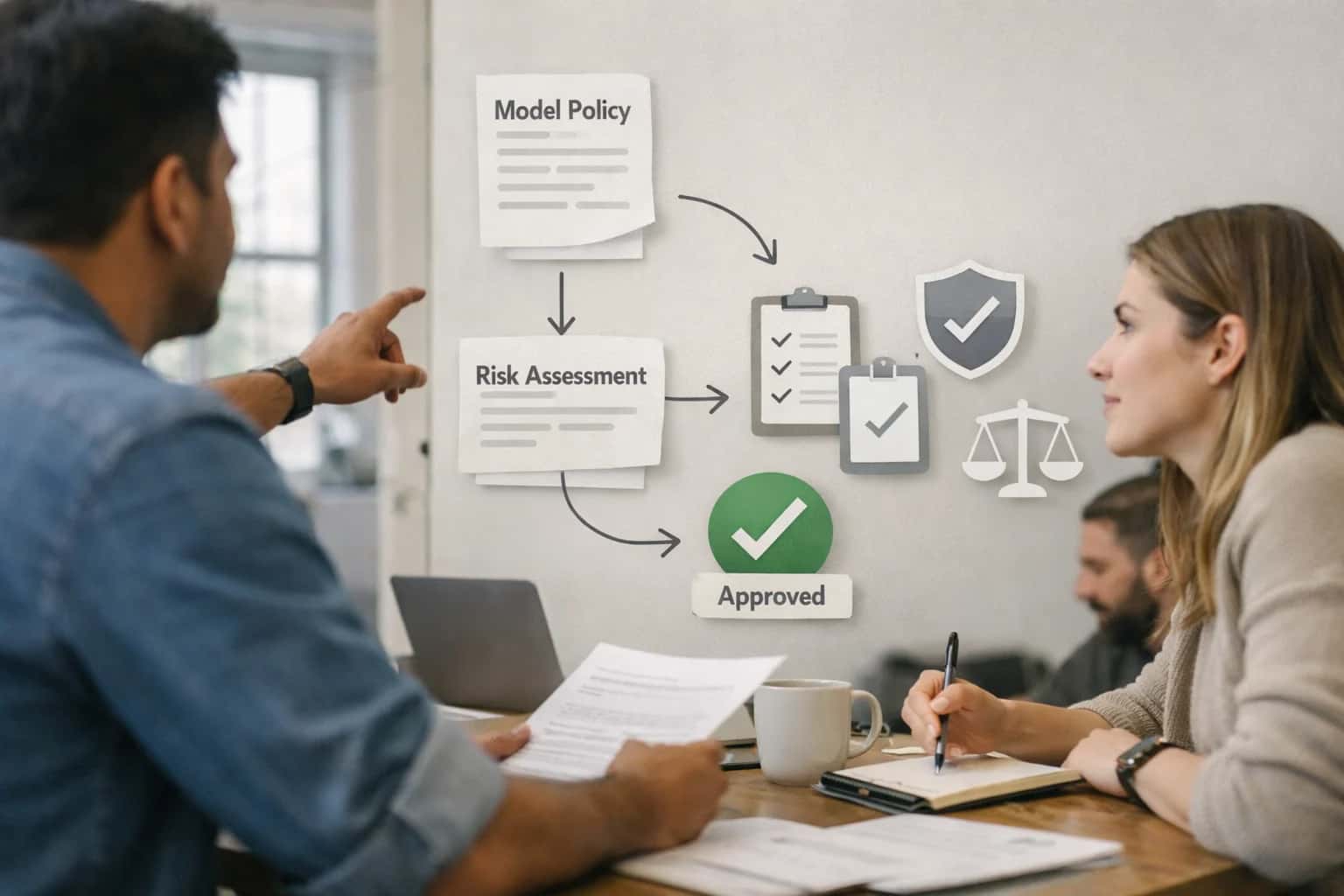
AI TRiSM encompasses five critical pillars: explainability, ModelOps, data anomaly detection, adversarial attack resistance, and data protection. This pillar addresses the 'Governance Paradox,' where organizations plan for agentic AI but lack the mature models to oversee it. Sub-topics include building explainable AI for credit scoring, red-teaming as a standard development lifecycle, and protecting models from manipulation in online payment processing.
Why Explainable AI is a Non-Negotiable for Credit Scoring
Regulatory compliance and risk management in finance demand transparent AI models, not black-box predictions.
The Hidden Cost of Ignoring Model Drift in Production
Unmonitored performance decay in deployed models silently erodes ROI and introduces unmanaged business risk.
Why Your AI Security Strategy is Already Obsolete
Traditional IT security frameworks fail to address novel threats like prompt injection and data poisoning in generative AI systems.
Why Adversarial Testing Must Be a Core Development Phase
Integrating red-teaming into the AI development lifecycle is the only way to build resilient, production-ready models.
The Regulatory Cost of Unexplainable AI Decisions
Failure to implement explainable AI frameworks leads to massive compliance penalties under regulations like the EU AI Act.
Why Data Anomaly Detection is Your First Line of Defense
Identifying poisoned or corrupted training data is more effective than trying to secure a compromised model post-deployment.
Why Red-Teaming AI is the Only Way to Ensure Resilience
Simulating real-world adversarial attacks exposes fundamental model flaws that traditional testing cannot find.
The Future of Data Protection is Confidential AI Processing
Privacy-enhancing technologies like homomorphic encryption and trusted execution environments are essential for processing sensitive data.
Why Model Explainability Will Make or Break AI Adoption
Stakeholder trust and regulatory approval hinge on an AI system's ability to justify its decisions in human-understandable terms.
The Future of AI Audits is Real-Time and Automated
Continuous, automated monitoring powered by tools like Weights & Biases is replacing periodic, manual compliance checks.
Why Your AI's Data Pipeline is Its Greatest Vulnerability
Attack surfaces in data ingestion and preprocessing are often overlooked, creating easy entry points for manipulation.
The Future of Secure AI is Zero-Trust for Models
Applying zero-trust principles to model access, inference, and training data is critical for enterprise AI security.
Why Agentic AI Demands a New Paradigm of Oversight
Autonomous agents that take actions require a robust Agent Control Plane for governance, not just monitoring.
Why Traditional Security Fails for Generative AI Systems
LLMs like GPT-4 and Claude introduce novel threat vectors like jailbreaking and prompt leakage that bypass conventional defenses.
Why Data Poisoning is the Silent Killer of AI Initiatives
Subtle corruption of training data can cripple model performance long before the attack is detected, undermining entire projects.
The Future of Model Security is Adversarial by Design
Building robustness against attacks like adversarial examples must be a core architectural principle, not a retrofit.
Why Your LLM is a Prime Target for Manipulation
The public-facing nature and complexity of large language models make them attractive and vulnerable to sophisticated prompt attacks.
Why Model Watermarking is Essential for Digital Provenance
Embedding verifiable signatures in AI-generated content is critical for combating misinformation and protecting intellectual property.
Why Anomaly Detection Must Evolve Beyond Simple Thresholds
Modern AI systems require multivariate, behavioral anomaly detection to identify complex drift and adversarial activity.
The Future of Secure AI Development is Shift-Left Testing
Integrating security, explainability, and bias testing early in the development lifecycle drastically reduces remediation cost and risk.
Why Data Protection and Model Protection are Inseparable
Securing the model is futile if the training data is compromised; a holistic AI TRiSM strategy must protect both.
Why Continuous Validation is the Heart of ModelOps
Automated, ongoing validation of model performance, fairness, and security is what separates operationalized AI from pilot projects.
Why Red-Teaming Must Simulate Real-World Adversaries
Effective AI red-teaming goes beyond academic exercises to mimic the tactics, techniques, and procedures of actual threat actors.
Why Protecting Training Data is as Critical as Protecting the Model
The integrity of the AI system is fundamentally rooted in its training data, making it a high-value target for attackers.
Why Adversarial Robustness Requires a Culture Shift
Building truly secure AI demands integrating security mindset into data science and MLOps teams, not just the security office.
The Future of AI Security Convergence: Blending IT Sec and Model Sec
Effective AI defense requires unifying traditional infrastructure security with specialized model security practices and tools.
Why Explainability Frameworks Must Speak the Language of Business
Technical model interpretability is useless unless it translates into actionable business insights for decision-makers.
Why Model Monitoring is a Continuous Fight, Not a Set-and-Forget Task
Production AI models exist in a dynamic environment where data, adversaries, and business requirements constantly evolve.
Why Data Anonymization is Often a False Promise in AI
Advanced re-identification attacks can easily compromise anonymized datasets, necessitating stronger privacy-enhancing technologies.
Why the 'Governance Paradox' is the Biggest Threat to Agentic AI
The rush to deploy autonomous agents is outpacing the development of the mature governance models required to control them.
Partnered with leading AI, data, and software stack.





How We Work
Custom AI workflows for your Business
One-fit-all AI don't work for modern businesses. At Inferensys, we aim to understand your business & custom requirements; which we use to define most efficient agentic workflows, the data, and the tools for your business.
01
Review the use case
We understand the task, the users, and where AI can actually help.
Read more02
Pick the right approach
We define what needs search, automation, or product integration.
Read more03
Build the first useful version
We implement the part that proves the value first.
Read more04
Improve from there
We add the checks and visibility needed to keep it useful.
Read moreThe first call is a practical review of your use case and the right next step.
Talk to Us