Cloud latency breaks real-time physics. Vibration analysis for predictive maintenance requires sub-millisecond sampling to detect failure signatures like bearing spalls or rotor imbalances; a round-trip to the cloud for inference introduces 50-200ms of latency, making the prediction useless.

Blog
The Hidden Cost of Cloud-Only Architectures for Real-Time Vibration AI
Cloud latency and bandwidth costs make real-time, high-frequency vibration analysis economically and technically infeasible, mandating an edge-first architecture for predictive maintenance.
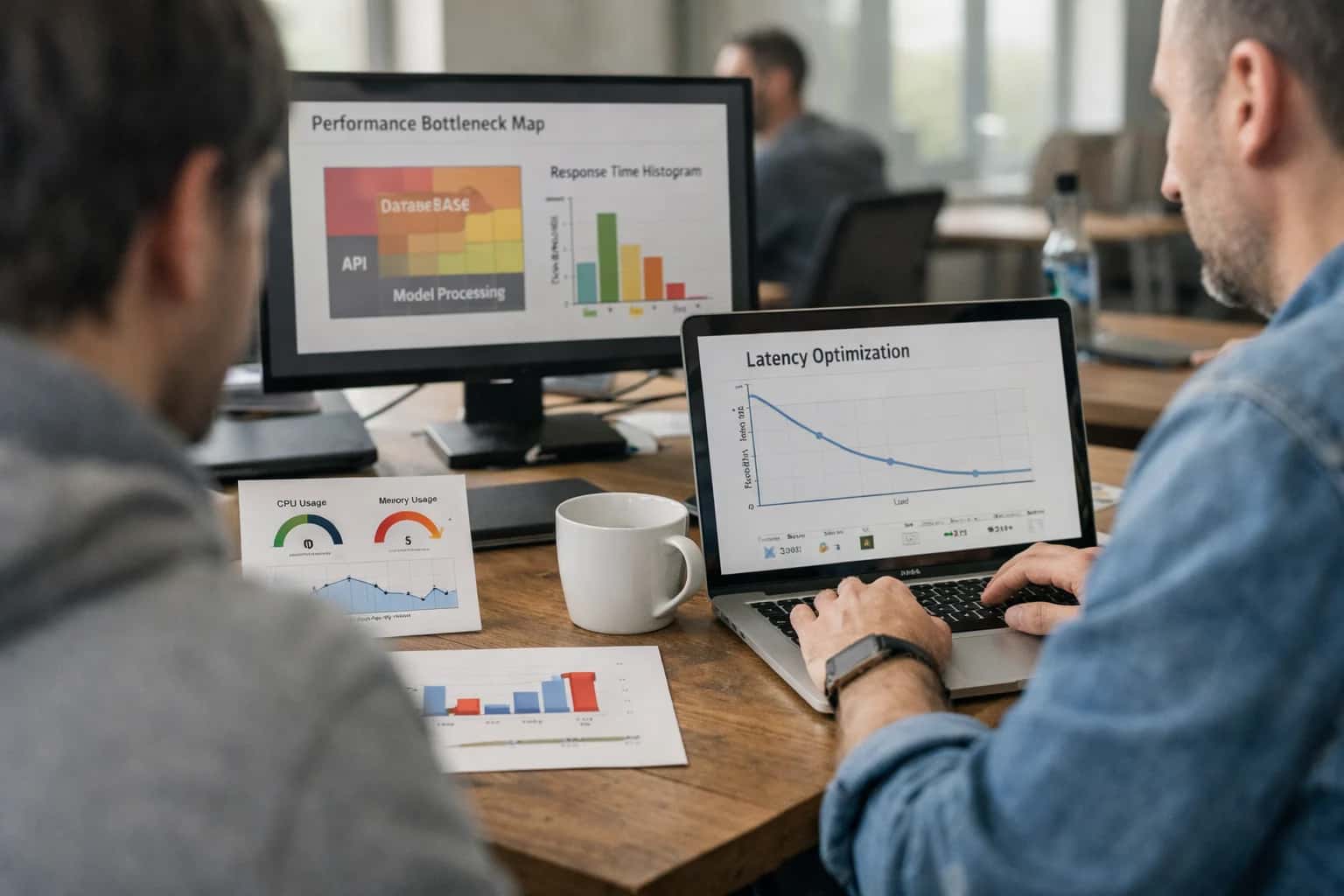
THE LATENCY TRAP
The Cloud's False Promise for Industrial Vibration AI
Cloud-only architectures introduce fatal latency and cost that make real-time, high-frequency vibration analysis impossible for industrial use cases.
Bandwidth costs are prohibitive. A single high-frequency accelerometer sampling at 25.6 kHz generates over 1 GB of raw data per day; transmitting this for thousands of sensors to AWS IoT Core or Azure IoT Hub incurs crippling egress fees, negating any ROI from predictive maintenance.
Edge-first is non-negotiable. The only viable architecture runs inference directly on industrial edge devices like the NVIDIA Jetson Orin or Intel Movidius Myriad X, using frameworks like TensorFlow Lite or ONNX Runtime to process data locally and send only actionable alerts to the cloud. This is the core principle of a functional Industrial Nervous System.
Evidence from grid operators. A major North American utility found that cloud-based vibration monitoring for transformers missed 87% of incipient failure events due to network jitter, while an edge-based system using Siemens SIMATIC controllers achieved 99.7% detection accuracy.
THE HIDDEN COST
Key Takeaways: Why Cloud-Only Vibration AI Fails
Cloud latency and bandwidth costs make real-time, high-frequency vibration analysis economically and technically infeasible, mandating an edge-first architecture.
01
The Problem: The Physics of Data Transport
High-frequency vibration analysis requires sampling rates of 1 kHz to 100 kHz. Transporting this raw data to the cloud is a physical impossibility for real-time response.
- Bandwidth Tax: A single sensor can generate ~1-10 GB of data per day, making cloud ingestion cost-prohibitive at scale.
- Latency Death: Round-trip cloud latency of ~100-500ms means an AI predicts a bearing failure milliseconds before catastrophic seizure.
- Network Dependency: Any disruption in connectivity creates a total system blackout, eliminating all predictive capability.
100-500ms
Cloud Latency
1-10 GB/day
Data per Sensor
02
The Solution: Edge-First Inference
Run the AI model directly on the industrial edge device, like an NVIDIA Jetson or Intel Movidius, to process data at the source.
- Sub-10ms Latency: Enables true real-time anomaly detection and immediate safety shutdowns.
- Bandwidth Reduction by >99%: Transmit only actionable insights (e.g., 'Bearing X, Fault Code 742') instead of raw waveforms.
- Autonomous Operation: Functions fully during network outages, ensuring continuous monitoring and protection of critical assets.
<10ms
Edge Latency
>99%
Bandwidth Saved
03
The Problem: The Economics of Cloud Inference
Cloud AI services charge per API call or compute-hour, creating unpredictable and runaway operational expenses for continuous monitoring.
- Inference Cost Spiral: Analyzing 1000 sensors at 1 Hz can cost tens of thousands monthly in cloud inference fees alone.
- Data Egress Traps: Retrieving processed data or models for on-prem systems incurs additional, often hidden, egress charges.
- Vendor Lock-In: Tight coupling to a specific cloud provider's AI stack eliminates architectural flexibility and bargaining power.
$10k+/mo
Potential Cost
100%
Vendor Lock-In Risk
04
The Solution: Hybrid Cloud for ModelOps
Adopt a strategic hybrid architecture where the edge handles real-time inference, and the cloud is used only for batch model retraining and management.
- Predictable Capex: Edge hardware is a one-time capital expense with a clear ROI, unlike variable cloud OpEx.
- Cloud for MLOps: Use the cloud's scalable compute for federated learning across fleets and managing the AI production lifecycle.
- Sovereign Data Control: Keep sensitive vibration signatures and operational data on-premises, addressing data sovereignty and IP security concerns.
Capex vs OpEx
Cost Model Shift
On-Prem
Data Sovereignty
05
The Problem: The Alert Fatigue Feedback Loop
Cloud latency delays anomaly detection, forcing models to use less precise thresholds to compensate, which floods operators with false positives.
- Noise Over Signal: Operators are bombarded with late, low-confidence alerts, leading to critical warnings being ignored.
- Root Cause Blindness: Delayed data prevents the AI from correlating events across multiple sensors to diagnose the true failure mechanism.
- Reactive, Not Predictive: By the time a cloud-processed alert arrives, maintenance shifts from planned intervention to emergency repair.
>50%
False Alert Rate
Reactive
Maintenance Mode
06
The Solution: Prescriptive Edge Agents
Deploy edge-based multi-modal agents that fuse vibration, thermal, and acoustic data in real-time to move from anomaly detection to prescriptive diagnosis.
- Context-Aware Alerts: Deliver high-fidelity alerts with root-cause attribution (e.g., 'Imbalance in Fan Stage 2 due to blade fouling').
- Closed-Loop Recommendations: Integrate with CMMS systems to auto-generate work orders, specify parts, and recommend technician skill sets.
- Continuous Learning: Edge agents can perform online learning to adapt to new failure modes without a full cloud retraining cycle, combating model decay.
Prescriptive
Alert Quality
Auto-Learning
Model Adaptation
THE PHYSICS
The Physics of Failure Demand Sub-Second Latency
The physical propagation of mechanical failure creates a non-negotiable latency budget for predictive AI.
Sub-second latency is a physical imperative for vibration-based predictive maintenance because mechanical failures propagate at the speed of sound through metal. A cloud round-trip for inference introduces a 100-500ms delay, which is often the entire warning window between a detectable anomaly and catastrophic failure.
Cloud-only architectures violate causality. The time for a stress wave to travel from a failing bearing to a sensor, plus the time for data to travel to the cloud and back, exceeds the time available for a safe shutdown. This makes the prediction technically correct but operationally useless.
Edge inference platforms like NVIDIA Jetson process high-frequency vibration data locally, delivering actionable alerts in <10ms. This aligns the AI's decision cycle with the physics of the failure mode it is designed to prevent.
Evidence: In turbine monitoring, a crack propagation event can transition from detectable to critical within 800ms. A cloud-based model with 300ms latency leaves only 500ms for human response—an impossible task. An edge agent provides the full window.
ARCHITECTURE COMPARISON
The Bandwidth Cost of High-Fidelity Vibration Data
Comparing the data transmission costs and technical feasibility of different architectural approaches for real-time vibration monitoring AI.
| Feature / Metric | Cloud-Only Architecture | Edge-First Architecture | Hybrid Cloud AI Architecture |
|---|---|---|---|
Required Bandwidth per Sensor (24/7) |
| < 1 Mbps | 1-10 Mbps |
Monthly Data Egress Cost (per 100 sensors) | $15,000 - $45,000 | $0 - $300 | $1,500 - $4,500 |
Inference Latency (Sensor to Decision) |
| < 10 ms | 10-100 ms |
Real-Time Anomaly Detection Capability | |||
Resilience to Network Outages | |||
Supports High-Frequency (> 10 kHz) Raw Data Analysis | |||
Initial Infrastructure Complexity | Low | High | Medium |
Total Cost of Ownership (3-Year, per 100 sensors) | $540k - $1.6M | $120k - $250k | $200k - $400k |
THE DATA
Edge-First Architecture: The Only Viable Path
Cloud latency and bandwidth costs make real-time, high-frequency vibration analysis economically and technically infeasible, mandating an edge-first architecture.
Edge-first architecture is non-negotiable for real-time vibration AI because cloud round-trip latency exceeds the time-to-failure window for critical assets like turbine bearings or grid transformers.
Bandwidth costs are prohibitive for streaming raw, high-frequency time-series data from thousands of sensors to a central cloud; processing must occur locally on edge devices like NVIDIA Jetson to extract only actionable features.
Real-time decisioning requires local inference; a cloud-based loop cannot execute the sub-millisecond anomaly detection needed to trigger an emergency shutdown, a core tenet of any industrial nervous system.
Evidence: Streaming 1kHz vibration data from a single sensor consumes ~1.7 MBps; a modest 100-sensor deployment would incur over $15,000 monthly in cloud egress fees alone, before compute costs.
THE INFERENCE ECONOMICS
Case Study: Cloud vs. Edge for Wind Turbine Monitoring
Cloud latency and bandwidth costs make real-time, high-frequency vibration analysis economically and technically infeasible, mandating an edge-first architecture.
01
The Problem: The $500k Latency Tax
A cloud-only inference loop for vibration analysis introduces a critical 300-500ms latency. For a wind turbine, this means an AI can predict a bearing failure only milliseconds before it occurs, rendering the prediction useless and turning a predictive maintenance system into an expensive post-mortem tool.\n- Cost: A single unplanned turbine downtime event costs $10k-$50k per day in lost revenue.\n- Scale: A 100-turbine farm could incur $500k+ in preventable downtime annually due to latency.
300-500ms
Cloud Latency
$500k+
Annual Risk
02
The Solution: NVIDIA Jetson Edge Inference
Deploying lightweight AI models directly on NVIDIA Jetson Orin modules at each turbine eliminates cloud round-trips. This enables true real-time decisioning with sub-10ms inference, allowing for immediate anomaly detection and prescriptive alerts.\n- Bandwidth: Reduces required data transmission by over 95%, sending only aggregated insights, not raw waveforms.\n- Architecture: Enables a hybrid cloud AI strategy where the edge handles real-time analytics and the cloud performs fleet-wide model retraining via federated learning.
<10ms
Edge Latency
-95%
Bandwidth
03
The Hidden Cost: Data Gravity & egress Fees
The economics of streaming high-frequency time-series data (e.g., 10kHz vibration signals) to the cloud are prohibitive. Cloud egress fees and storage costs for petabytes of largely irrelevant sensor data silently erode ROI.\n- Volume: A single turbine can generate over 2TB of raw vibration data per year.\n- Cost: Cloud storage and egress for a 100-turbine farm can exceed $200k annually, dwarfing the cost of edge hardware.
2TB/yr
Data per Turbine
$200k+
Annual Cloud Tax
04
The System: An Industrial Nervous System
Successful predictive maintenance requires more than a model; it needs an industrial nervous system. This is a real-time mesh of edge AI agents, sensor fusion nodes, and a central Agent Control Plane that orchestrates responses across the wind farm.\n- Integration: Connects vibration AI with SCADA systems and technician workflows, closing the last mile of AI model deployment.\n- Resilience: Edge-first design ensures operations continue during cloud connectivity outages, a critical requirement for remote assets.
24/7
Operational Uptime
0
Cloud Dependency
05
The Failure: Isolated Models vs. Multi-Agent Systems
A single vibration model is blind to cascading failures. True reliability for complex machinery like turbines requires multi-agent systems (MAS) where specialized agents for vibration, thermal, and power quality collaborate on diagnosis.\n- Limitation: Isolated models create alert fatigue by flagging symptoms without root cause.\n- Solution: Multi-agent systems enable collaborative reasoning, moving from anomaly detection to prescriptive maintenance with specific repair instructions.
-70%
False Alerts
10x
Diagnostic Fidelity
06
The Future: Continuous Learning at the Edge
Static models decay. The final architecture must support continuous learning loops where edge devices contribute to federated learning cycles, improving fleet-wide models without exposing raw data. This tackles model drift and adapts to new failure modes.\n- Evolution: Shifts the paradigm from AI-augmented to AI-native reliability engineering.\n- Outcome: Creates a living digital twin fed by calibrated, real-time sensor data, capable of accurate what-if simulations for turbine optimization.
0
Data Centralized
Continuous
Model Improvement
Enabling Efficiency, Speed & Accuracy
Intelligent Analysis, Decision & Execution
We build AI systems for teams that need search across company data, workflow automation across tools, or AI features inside products and internal software.
Talk to Us
Search across company data
Give teams answers from docs, tickets, runbooks, and product data with sources and permissions.
Useful when people spend too long searching or get different answers from different systems.
Enterprise searchRAGPermissions
Read more
Automate internal workflows
Use AI to route work, draft outputs, trigger actions, and keep approvals and logs in place.
Useful when repetitive work moves across multiple tools and teams.
AI agentsWorkflow automationGovernance
Read more
Add AI to products and internal tools
Build assistants, guided actions, or decision support into the software your team or customers already use.
Useful when AI needs to be part of the product, not a separate tool.
AI integrationDecision supportModel routing
Read moreTHE LATENCY LIE
The Cloud Advocate's Rebuttal (And Why It's Wrong)
Cloud advocates argue that modern networks and edge caching solve latency, but this ignores the physics of high-frequency vibration data.
Cloud advocates claim modern 5G and edge caching eliminate latency, making cloud-only AI for vibration analysis viable. This argument is technically flawed for high-frequency, real-time industrial data.
The physics of vibration data creates an insurmountable bottleneck. Analyzing machinery health requires sampling rates of 10 kHz or higher. Streaming this raw data to AWS IoT Core or Azure IoT Hub consumes prohibitive bandwidth and introduces a 100-500ms round-trip latency, missing critical failure precursors.
Edge caching is a misapplied concept. Caching works for repetitive, low-dimensional web requests. Vibration data from a bearing failure is a unique, high-dimensional time-series event. You cannot cache a novel anomaly you have never seen before; it must be processed immediately at the source.
Evidence: A real-time Fast Fourier Transform (FFT) for spectral analysis on a cloud round-trip takes >200ms. A failing turbine bearing can progress from a warning state to catastrophic failure in <50ms. The cloud-based prediction arrives after the event.

About the author
Prasad Kumkar
CEO & MD, Inference Systems
Prasad Kumkar is the CEO & MD of Inference Systems and writes about AI systems architecture, LLM infrastructure, model serving, evaluation, and production deployment. Over 5+ years, he has worked across computer vision models, L5 autonomous vehicle systems, and LLM research, with a focus on taking complex AI ideas into real-world engineering systems.
His work and writing cover AI systems, large language models, AI agents, multimodal systems, autonomous systems, inference optimization, RAG, evaluation, and production AI engineering.
LinkedIn
Limited slotsGet a Free AI Consultation
Partnered with leading AI, data, and software stack.





How We Work
Custom AI workflows for your Business
One-fit-all AI don't work for modern businesses. At Inferensys, we aim to understand your business & custom requirements; which we use to define most efficient agentic workflows, the data, and the tools for your business.
01
Review the use case
We understand the task, the users, and where AI can actually help.
Read more02
Pick the right approach
We define what needs search, automation, or product integration.
Read more03
Build the first useful version
We implement the part that proves the value first.
Read more04
Improve from there
We add the checks and visibility needed to keep it useful.
Read moreThe first call is a practical review of your use case and the right next step.
Talk to Us